Packard Custom Eight classic cars for sale
The Packard Custom Eight stands as a prime example of American luxury motoring, representing the peak of engineering and design refinement from Packard during its production era. Recognised for its smooth straight-eight engine and handcrafted quality, this model continues to attract enthusiasts who value authenticity and craftsmanship.
Search results
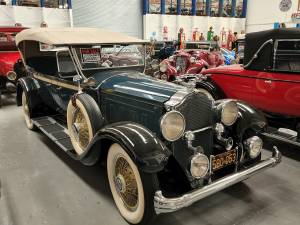
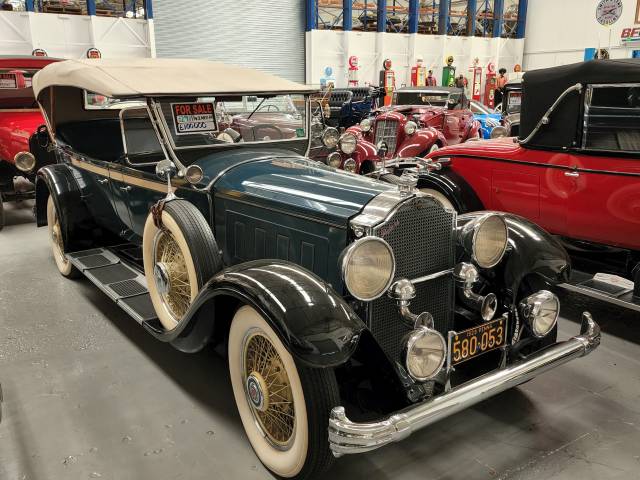
1929 | Packard Custom Eight 640 Touring Deluxe
1929 Packard 640 Touring Deluxe

Packard Custom Eight Classic Cars: Prices & Market Values
History of the Packard Custom Eight
Packard introduced the Custom Eight as its flagship series in the late 1920s, continuing production through various evolutions into the early 1950s. Developed as an answer to the need for top-tier luxury vehicles in the rapidly changing automotive landscape of pre- and post-war America, the Custom Eight was aimed at clients seeking understated luxury and technical excellence. From its early iterations, the Custom Eight set benchmarks in ride comfort, mechanical quietness and build quality, regularly serving as state cars and vehicles of dignitaries. The model’s lineage reflected Packard’s reputation for conservatism mixed with thoughtful innovation, maintaining classic American proportions and robust engineering throughout its lifecycle.
Model Series History
The Custom Eight first appeared as a progression from the earlier Packard Eight and Senior models, with each generation introducing advancements in chassis, running gear and finish options. Initially, it was positioned above the Standard Eight, offering longer wheelbases, superior interior materials and more powerful straight-eight engines. As competition intensified from Cadillac and Lincoln in the luxury segment, Packard continually updated the Custom Eight with improved drivetrains, suspension systems and optional features such as air conditioning and advanced radio equipment. After World War II, the Custom Eight was further refined with streamlined styling reflective of postwar tastes, before eventually yielding to newer luxury models as both Packard and the broader industry evolved.
Highlights and Features of the Packard Custom Eight
Noteworthy for its advanced engineering for the period, the Custom Eight boasted a robust inline eight-cylinder engine, delivering smooth torque and a refined driving experience. Extensive use of wool, leather and burled wood in the interior underscored Packard's dedication to luxury. Signature features included Packard’s cormorant hood ornament, optional overdrive for highway cruising and meticulously chromed fittings.
Technical Data
Special Editions and Collectible Models
Among the Custom Eight series, special attention is given by collectors to custom-bodied cars (e.g., by LeBaron, Dietrich or Rollston), limited production convertibles, and those equipped with rare accessories such as factory-installed air conditioning or high-spec radios. These variants typically command greater interest due to their combination of exclusivity and advanced equipment for the era.
Weak Spots and Common Issues
Owning a Packard Custom Eight requires close attention to the original mechanical systems. The straight-eight engine, while durable, depends on regular lubrication and precise carburettor tuning to avoid excessive wear or enrichment issues. Period-correct hydraulic brake systems need thorough maintenance to maintain safety. Interior restoration, particularly of original wood and upholstery, can be labor-intensive due to the craftsmanship involved. Sourcing rare trim pieces and correct body panels also presents a challenge, especially for special-bodied versions. Checking for evidence of frame repairs, engine rebuild quality, and authenticity of fitted accessories is essential before purchase.
Engine, Performance and Handling
The Packard Custom Eight’s straight-eight was engineered for effortless and quiet cruising. Early models produced ample torque at low revs, suiting the car’s significant weight and luxury mission. Post-war variants benefited from improvements in power output and smoother shifting due to better gearbox synchronisation. Handling was tuned for comfort rather than agility, with a focus on absorbing rough American roads rather than engaging in sporting manoeuvres. Braking and steering, while advanced for their time, require adjustment to period expectations, rewarding the driver with a stately and composed ride when properly maintained. Prominent examples include coachbuilt convertible coupes and sedans with elaborate trim levels and optional Packard accessories; these are favoured for their craftsmanship and represent the high point of Packard engineering.
Interior, Comfort, Exterior and Design
The design of the Custom Eight is marked by stately dimensions and an emphasis on both visual and tactile luxury. Interiors often featured deep pile carpeting, real wood dashboards, and finely stitched broadcloth or leather seats. Chromed hardware, ornate dashboards and auxiliary controls (such as for radios or rear privacy screens) highlight the attention to passenger comfort. The exterior profile, with its long hood, restrained use of chrome and signature grille, is unmistakably Packard. Certain years offered distinctive paint combinations, wheel trims and optional whitewall tyres. Accessories ranged from trunk-mounted luggage racks to rare in-dash clock features, depending on the coachbuilder or original specification.
Other Noteworthy Features
Some Custom Eight models featured early automatic transmissions (Ultramatic Drive in later years), enhancing ease of use. Art Deco influences are visible in trim and badging on specific series. Vehicles in original condition may display period correct accessories such as fog lights or custom vanity options ordered by first owners.
Summary
The Packard Custom Eight represents the culmination of American luxury engineering from its era, blending bespoke craftsmanship with technological refinement. Its strong presence in the supply and demand statistics within Packard listings reflects its status among marque specialists and dedicated enthusiasts. Maintenance-intensive but rewarding, the Custom Eight remains a reference point for collectors seeking honest classic motoring with historical depth.