Overland Model 46 classic cars for sale
The Overland Model 46 represents a distinct chapter in early American motoring, known for its robust engineering and straightforward mechanical design. With every existing listing in our marketplace focusing exclusively on this model, enthusiasts searching for an authentic prewar touring experience naturally gravitate towards the Model 46.
Search results
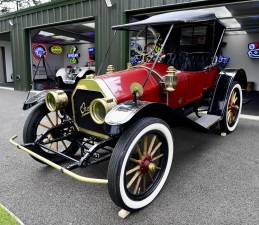

Overland Model 46 Classic Cars: Prices & Market Values
History of the Overland Model 46
Introduced by the Overland Automobile Company in the early 1910s, the Model 46 marked a transition towards larger, more comfortable touring cars for the growing middle class in the United States. Overland was already an established manufacturer focusing on value for money, durability, and ease of use. The Model 46 embodied these values, offering enhanced chassis rigidity and more advanced features compared to earlier models. Its arrival coincided with a period of growing infrastructure and automotive adoption, cementing Overland’s reputation as a manufacturer capable of delivering practicality with a touch of refinement.
Model History
The Model 46 followed in the footsteps of Overland’s early runabouts and touring cars, which were often lighter and less powerful. In the Model 46, buyers found a larger vehicle suitable for families or businessmen seeking reliability over bad roads. Production spanned a limited number of years, and the Model 46 was succeeded by more streamlined and powerful Willys-Overland models as the company adapted to evolving driver expectations and competitive pressure from rivals such as Ford and Chevrolet.
Highlights and Unique Features
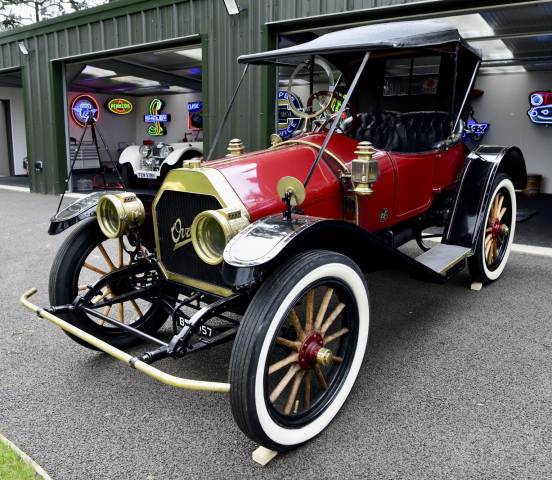
The Overland Model 46 distinguishes itself with its sturdy construction, mechanically operated brakes on all four wheels and a spacious, upright body designed to maximise passenger comfort on long journeys. Its simplicity of operation and maintenance proved attractive to early motorists unused to complex technology. With its classic lantern-style headlamps and distinctive radiator grille, the Model 46 is immediately recognisable among prewar vehicles. In our database, the Model 46 accounts for 100% of all Overland listings and 100% of Overland-related demand, marking it as the definitive Overland classic sought by collectors and enthusiasts alike.
Technical Data
Special Editions and Collectible Models
No factory-documented special editions of the Overland Model 46 are known, but period coachbuilders occasionally produced bespoke bodies, primarily for customers requiring commercial or taxi use. Surviving examples with unusual bodywork or period upgrades can command greater attention among collectors, but all Model 46s are valued for their authenticity.
Weak Spots and Common Issues
As with many cars from the veteran and Edwardian era, regular lubrication of mechanical joints and attention to exposed drivetrain components are critical. Age-related issues such as deterioration of wood framing, perished rubber components, and potential corrosion in the chassis or underbody are common. Original engine parts may be difficult to source, requiring specialist restoration know-how for authentic maintenance. Electrical systems, if upgraded or modified, should be checked for safe operation.
Engine, Transmission and Handling
With a four-cylinder engine delivering dependable torque at low revs, the Model 46 achieves modest cruising speeds, suitable for rural and city driving well-suited to its time. The three-speed manual gearbox is unsynchronised, requiring period-correct double clutching. Long wheelbase and robust suspension result in a stable but flexible ride, though cornering dynamics are limited by today’s standards. Mechanical brakes require preplanning for stops, a hallmark of prewar motoring. All supply and demand focuses on the Model 46, as shown by statistics.
Interior, Comfort, Exterior and Design
The Overland Model 46’s upright, open-body design, combined with practical details such as folding canvas tops and manually operated windscreens, define its era. The bench seating is spacious by contemporary standards. Period details such as brass fittings, lantern-style headlamps, and step plates highlight the car’s early motoring heritage. Some period examples may display aftermarket fittings or custom luggage racks, reflecting individual owner preferences.
Other Features
Among its authentic qualities, the Model 46 is noted for its simplicity and adaptability, often converted for light commercial tasks or fitted with rural accessories. Its appeal extends to veteran car rally circles, where eligibility for early motorcar events adds to its desirability.
Summary
The Overland Model 46 stands as the quintessential representative of its marque, attracting both early motoring enthusiasts and collectors. Its robust engineering, period-correct details, and straightforward mechanics make it a favourite entry point into prewar automotive preservation. With a unique position as the sole Overland classic present in today’s listings, the Model 46 continues to write its own history with every restored or well-cared-for survivor.