Morris Twenty-Five classic cars for sale
The Morris Twenty-Five stands as a testament to British engineering from the pre-war era, offering a distinctive blend of robust build quality and understated style. Highly regarded among classic British luxury saloons, the Twenty-Five remains a rare sight, reflecting the stately presence and mechanical advancement of Morris in the 1930s.
Search results
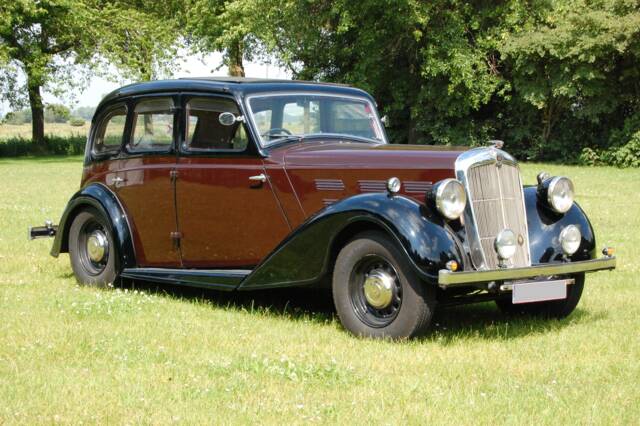
1936 | Morris Twenty-Five
Eine echte Rarität

Morris Twenty-Five listing references from Classic Trader
Below you will find listings related to your search that are no longer available on Classic Trader. Use this information to gain insight into availability, value trends, and current pricing for a "Morris Twenty-Five" to make a more informed purchasing decision.
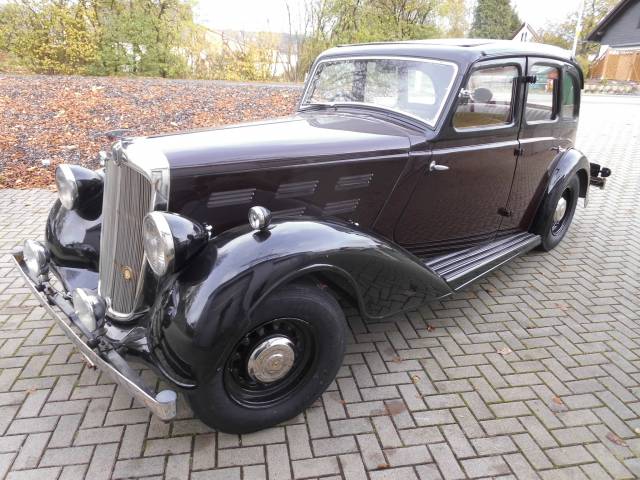
1936 | Morris Twenty-Five
Morris Twenty Five Big Six
Morris Twenty-Five Classic Cars: Prices & Market Values
History of the Morris Twenty-Five
The Morris Twenty-Five debuted in the early 1930s as the flagship model in Morris Motors’ range, designed to compete with prestigious British saloon cars of its era. Daniel B. Smith, the chief engineer at Morris, spearheaded the development of the model, intending it as a showcase of the brand’s move towards upmarket vehicles. Its launch marked Morris’s ambition to rival established manufacturers of executive cars, offering increased luxury and refinement over its more utilitarian siblings.
Model History
The Twenty-Five replaced the Morris Oxford Sixes as the top-of-the-line model. Originally unveiled in the early 1930s, it spanned several revisions, with Series II being the most known. Successor models never directly continued the 'Twenty-Five' nameplate, as Morris later focused its marketing efforts on other badge-engineered saloons and the prestige 'Morris Six' line. The basic mechanical architecture of the Twenty-Five influenced post-war large Morris saloons through the 1940s.
Highlights of the Morris Twenty-Five
Unlike many contemporaries, the Twenty-Five was built with a significant focus on passenger comfort and quiet operation: thick door trims, deep pile carpets, and refined body insulation were fitted as standard. Its 3.5-litre engine offered relaxed cruising even at high speeds for the time, and the hydraulic braking system marked it as technically progressive among interwar vehicles. The limited production numbers and focus on the home market make surviving examples a particularly rare find today.
Technical Data
Special Editions and Collectible Models
Special coachwork versions built by renowned British coachbuilders were occasionally available, featuring upgraded interiors, bespoke trim, and unique paint finishes. These rare coachbuilt bodies add a layer of exclusivity and are highly sought within the small community of enthusiasts.
Weak Spots and Common Issues
Due to the side-valve design, cylinder head gasket failure can occur if the engine is neglected or run without sufficient coolant, especially given the limited cooling efficiency of 1930s radiators. Chassis corrosion may also be a factor due to age, particularly around suspension mounting points. Original hydraulic brake components demand thorough regular inspection, as aged seals and worn lines are not uncommon in unrestored cars.
Engine, Performance, Transmission and Handling
The 3.5-litre straight-six delivers a smooth but unhurried drive, more suited to stately motoring than rapid acceleration. The long-travel suspension is aimed at comfort on rough pre-war roads, and the four-speed manual requires deliberate shifting. Early hydraulic brakes provide reliable stopping power for the era. Owing to substantial mass and period chassis layout, handling is dignified but not sporty. The most prominent surviving version is the Series II Saloon, recognised for its increased reliability and refined interior compared to earlier iterations.
Interior, Comfort, Exterior and Design
Every detail in the Morris Twenty-Five was conceived for stately presence: the imposing upright chrome radiator, the woollen upholstery, and heavily padded benches all aimed to appeal to buyers seeking true British luxury. Optional accessories included rear picnic tables, sunroofs, and upgraded dashboards with higher-quality timber trim. Some versions were fitted with luxury features like division glass panels and extra rear reading lamps, reflecting their use as chauffeur-driven limousines. Classic two-tone paintwork and period-correct wire wheels further accentuated its visual elegance.
Other Features
Some models gained period-specific features such as semaphores for signalling and Smiths instrumentation, which are invaluable to preservationists looking for authenticity in restoration projects.
Summary
The Morris Twenty-Five encapsulates the blend of technical ambition and British luxury typical of the pre-war period. From its advanced chassis to its plush interior, it stands apart as a rarity, with its current presence in the market reflecting both limited supply and specialist demand. For those searching for a truly British classic saloon constructed at the peak of Morris's pre-war innovation, the Twenty-Five is outstanding in character and engineering.