- Automobil
- Mercedes-Benz
- Mercedes-Benz L 5000 (0 Angebote)
Mercedes-Benz L 5000 classic cars for sale
The Mercedes-Benz L 5000 stands as a testament to the robust engineering and utilitarian design philosophy that defined German commercial vehicles in the mid-20th century. Developed primarily for heavy-duty transport, this classic truck series played an essential role on European roads and in logistics fleets during its prime years. Its enduring construction and mechanical simplicity make it a noteworthy choice for enthusiasts of historic utility vehicles.
Suchergebnisse
Zur Zeit sind keine passenden Inserate zu Ihrer Suche veröffentlicht.
Create search alert
Let yourself be notified as soon as a listing is published that matches your search filters.
Create listing
Do you have a Mercedes-Benz L 5000 that you want to sell? Then create a listing now.
Create listingMercedes-Benz L 5000 listing references from Classic Trader
Below you will find listings related to your search that are no longer available on Classic Trader. Use this information to gain insight into availability, value trends, and current pricing for a "Mercedes-Benz L 5000" to make a more informed purchasing decision.
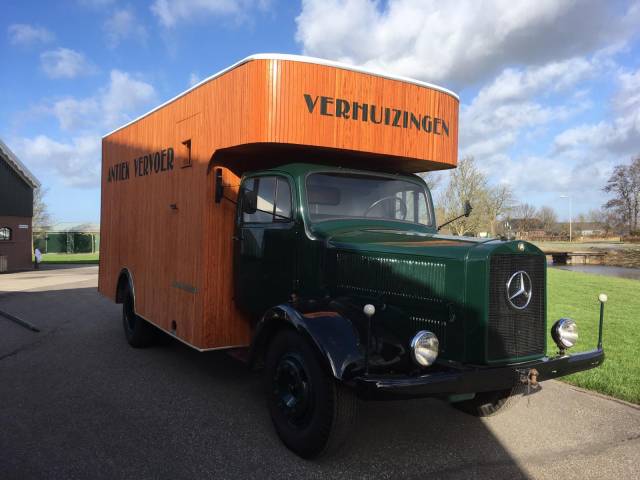
1951 | Mercedes-Benz L 5000
Mercedes-Benz L 5000 Oldtimer LKW L Serie 3500 4500
Create search alert
Let yourself be notified as soon as a listing is published that matches your search filters.
Create listing
Do you have a Mercedes-Benz L 5000 that you want to sell? Then create a listing now.
Create listingMercedes-Benz L 5000 Classic Cars: Prices & Market Values
History of the Mercedes-Benz L 5000
Introduced in the late 1930s, the Mercedes-Benz L 5000 was designed to meet the growing needs for powerful, reliable trucks capable of transporting substantial loads across long distances. Developed in a period marked by economic recovery and industrialisation, the L 5000 became a mainstay of German road haulage. The truck was an evolution of earlier heavy-duty Mercedes-Benz models, reflecting advancements in diesel engine technology and chassis design to improve both payload capacity and reliability. Production continued through the 1940s, with the model seeing extensive use in both civilian and military contexts due to its robustness and simplicity of maintenance.
Model History of the L 5000
The L 5000 succeeded Mercedes-Benz’s earlier L-series trucks, integrating more powerful engines and a reinforced frame to support heavier loads. The model laid the groundwork for subsequent Mercedes-Benz heavy-duty trucks, with its successor lines eventually incorporating more advanced transmission systems, enhanced driver comfort, and improved safety standards. Within the Mercedes truck range, the L 5000 is recognisable for its distinctive upright grille and rounded fenders, which became hallmarks of the brand’s utility vehicles.
Highlights and Statistics for the L 5000
A defining feature of the Mercedes-Benz L 5000 is its OM diesel engine, which delivered the reliability required for long-haul and high-impact usage scenarios. The truck’s ladder-frame chassis allowed for multiple body configurations, from flatbeds to box vans and tanker versions, reflecting the flexibility that defined this model. Its leaf-sprung suspension system and drum brakes contributed to both load stability and straightforward maintenance by period standards.
Technical Data
Special Editions and Collectible Models
No information provided about special editions; the L 5000’s rarity itself comes from its utilitarian origin and the few surviving specimens, some of which have been restored with period-correct livery or repurposed into show trucks.
Weak Spots and Common Issues
No data on specific weak spots has been found, but general points of attention for classic Mercedes-Benz trucks include corrosion on the frame and cab, wear on leaf springs, and checking for completeness of original mechanical components given their age and utility background.
Engine, Transmission and Handling
The L 5000’s performance is defined by the robust and slow-revving OM diesel engines, delivering torque suited for heavy loads rather than outright speed. The gearboxes require deliberate operation due to lack of synchronisation, typical of pre- and early post-war commercial vehicles. Handling prioritises cargo stability, with steering and braking that require a firm hand, especially when driving unladen. Its suspension and frame design deliver reliability over rough roads rather than comfort. Variants equipped with the OM 85 engine and original flatbed configuration are particularly valued, as they represent the most powerful and flexible setup offered during the L 5000’s production years.
Interior, Comfort, Exterior and Design
Design of the L 5000 reflects practicality: the upright cab, metal dashboard, and basic seating underline its workhorse status. Exteriors were often painted in fleet colours, with minimal chrome or decorative trim—a focus on function, not style. Interior comfort is rudimentary, typical for the era, while exterior elements like the round headlamps and vertical grille became visual signatures of Mercedes trucks from this period. Accessories usually included only a basic tool kit, spare wheel, and optional side mirrors or additional lamps, with few vehicles having unique colour schemes or custom interiors from the factory.
Other Relevant Features
Some L 5000s have been restored with attention to preserving original signage or operator-specific details, which can greatly enhance their historical authenticity. Given their age, attention to documentation and prior service history is recommended for buyers.
Summary
The Mercedes-Benz L 5000 is a classic example of German engineering dedicated to reliability and utility. Surviving examples offer a tangible link to the history of commercial transport and are increasingly rare due to their working heritage. Enthusiasts seeking a durable, highly original truck will find the L 5000 provides not just mechanical interest, but also historical context and authenticity within the landscape of classic utility vehicles.