McLaren M1C classic cars for sale
The McLaren M1C stands as a rare Group 7 sports prototype, built for the fierce North American Can-Am series of the late 1960s. With its focus on performance and pure racing engineering, the M1C offers a tangible link to the golden era of McLaren development and the uncompromising world of prototype competition.
Search results
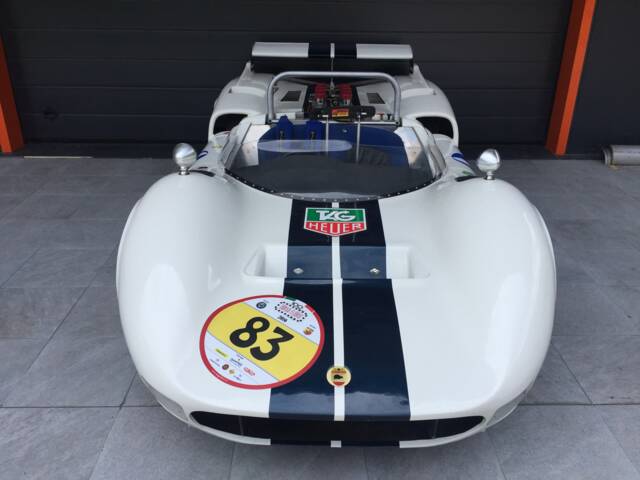
1967 | McLaren M1C
McLaren Elva M1C Can Am

McLaren M1C listing references from Classic Trader
Below you will find listings related to your search that are no longer available on Classic Trader. Use this information to gain insight into availability, value trends, and current pricing for a "McLaren M1C" to make a more informed purchasing decision.

1967 | McLaren M1C
1967 McLaren M4A F2 '67


1967 | McLaren M1C
1967 McLaren M4A F2 '67

1968 | McLaren M1C
McLaren M1C Recreation

McLaren M1C Classic Cars: Prices & Market Values
History of the McLaren M1C
The McLaren M1C, introduced in 1967, continued McLaren's early push into the burgeoning world of prototype sports car racing. As a further evolution of the M1A and M1B, the M1C was crafted to compete in the North American Can-Am challenge, a series renowned for its minimal restrictions and all-out pursuit of power and innovation. Designed under Bruce McLaren’s direction, the M1C featured notable refinements in aerodynamics and chassis technology over its predecessors. Many M1Cs were constructed by British specialist Trojan, a key partner for McLaren's customer car programme, ensuring consistent build quality for privateer racers. The M1C underpinned McLaren's growing influence not only on circuits in North America but also in Europe, often facing competition with contemporary Porsche and Lola machines. The M1C was, above all, a professional tool—a car pushed to its limits by both factory and private teams.
Model history
The M1C followed McLaren’s original M1A and M1B models which set important precedents in chassis and bodywork. Unlike the single-seaters from the same era, the M1C was a pure sports prototype, built for endurance and sprint races under Group 7 regulations. Its design was iterative: each chassis was often tweaked based on racing results and driver feedback. Many M1C chassis feature individual histories with multiple owners, engine swaps, and technical upgrades over time. While the M1C was succeeded on track by the dominant M6A and later Can-Am legends, it remains an influential chapter in McLaren’s racing heritage.
Highlights of the McLaren M1C
The McLaren M1C’s advanced spaceframe chassis, clad in lightweight fibreglass panels, facilitated outstanding power-to-weight ratios. It was commonly equipped with powerful Chevrolet V8 engines and Hewland gearboxes, though variations existed based on customer demand. The M1C’s engineering allowed for fierce acceleration and superior high-speed cornering. Its competitive lifespan was extended by adaptability: many cars underwent major updates, including new monocoque 'tubs' and aerodynamic tweaks. The historical significance and scarcity of the M1C ensure strong interest from historic motorsport collectors and Can-Am enthusiasts.
Technical data
Special Editions and Collectible Models
As was common with 1960s prototype sports cars, the McLaren M1C did not feature official factory limited editions. Instead, individual chassis histories make each example distinctive. Cars with continuous provenance, period race successes, or original drivetrains command particular notice among collectors. A handful of chassis have become especially prized due to their association with famous drivers, notable race results, or documented technical updates reflecting McLaren’s own development path.
Weak Spots and Common Issues
As with all prototype race cars of this era, the M1C’s non-standardised production and heavy race use mean that previous modifications, period repairs, and upgrades can present challenges. Chassis identity can be complex to verify due to subsequent rebuilds, period ‘tub’ replacements, or recreated chassis plates—requiring thorough historic documentation. Extensive restoration and technical expertise are essential for continued safe operation. Key wear points include suspension joints, fuel systems, and brake components, all of which must be inspected for fatigue or period-correctness. Many cars have spent decades in active historic racing, adding to their patina but also requiring diligent mechanical upkeep.
Engine and Performance, Transmission and Handling
Built for Group 7 Can-Am rules, the M1C was engineered solely for speed and race reliability. Power outputs commonly exceeded 500 hp depending on engine choice, delivering serious straight-line capability and competitive lap times. The lightweight chassis, paired with state-of-the-art (for its time) suspension, gave the M1C agile handling and impressive feedback for skilled drivers. Transmission was via robust Hewland gearboxes, supporting both torque and high-rev demands. Brake performance was advanced for the era, though modern safety standards necessitate regular and careful checks—especially for cars in historic motorsport. The adaptability of the platform allowed many cars to be modified to suit different regulations or engine preferences over their competition careers. Notable M1C chassis with documented international race participation or those upgraded with factory-developed tweaks are particularly sought after. Cars with period competition by drivers such as Piers Courage or maintained by renowned teams draw additional attention. The model’s appeal is amplified for those seeking an early McLaren prototype with authentic Can-Am experience.
Interior, Comfort, Exterior and Design
As a pure prototype, the McLaren M1C features a minimal cockpit focused entirely on function—single-seat, lightweight, and driver-centric. The spartan fibreglass bodywork reflects period aerodynamics, with large intakes and purposeful lines. Original examples retain period-correct switches, basic instrumentation, and riveted aluminium panels. Most M1Cs were finished in team colours or distinctive liveries reflecting sponsors; original paint schemes and period team accessories are valued by historic race entrants. No comfort features or optional luxuries were available, with all weight and space dedicated to performance and serviceability. Unique details such as period quick-release steering wheels or bespoke lightweight seats add to the authenticity of surviving cars.
Other relevant aspects
Thanks to its roots in the Can-Am series and its role in McLaren’s formative years, the M1C is also a significant reference point for collectors charting the evolution of prototype design. A number of individual chassis have also been displayed in major motorsport museums and appear in specialist historic race meetings, cementing their importance in the history of McLaren and international sports car racing.
Summary
The McLaren M1C delivers an unfiltered experience of 1960s sports prototype racing, merging raw power and lightweight design with deep links to McLaren’s early engineering ambitions. Every car carries a distinctive story through period modifications and racing usage. For collectors, the model’s demand and supply statistics indicate a narrowly focused but highly engaged market—reflecting the unique blend of technical rarity and authentic racing heritage that can only be found in a M1C.