Maybach Zeppelin classic cars for sale
The Maybach Zeppelin stands as one of the most prestigious and technically advanced representatives among pre-war luxury automobiles. With its remarkable V12 engines and choice of exclusive coachbuilt bodies, the Zeppelin series combined sheer scale, engineering prowess, and lavish personalisation. Indulge in the engineering heritage and rarity of a true German luxury masterpiece.
Search results
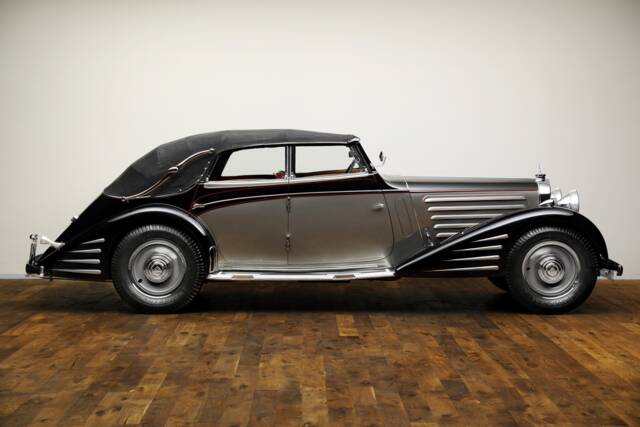
1934 | Maybach Zeppelin DS 8
Streamline Convertible, original One-off body

Maybach Zeppelin Classic Cars: Prices & Market Values
History of the Maybach Zeppelin
The Maybach Zeppelin was launched as a flagship model for the Maybach brand in 1928 and produced until 1938. Drawing its name from the company's renowned Zeppelin airship engines, the car was envisioned as a symbol of top-tier automotive prestige and technological excellence. The Zeppelin was engineered as a Repräsentationswagen, destined for Germany's most influential industrialists and dignitaries. Weighing around 3,000 kg, the Zeppelin demanded an additional goods vehicle licence to drive—an indicator of both its imposing presence and technological ambition for its time. Among European V12s of its era, only a handful, like the Voisin and Daimler Double Six, occupied such rarefied territory.
Model history of the Zeppelin series
The Zeppelin lineage began in the wake of the Maybach Typ 12 and was initially represented by the Maybach Zeppelin DS7, debuting in 1930. The DS7, available as both limousine and sporty cabriolet, featured a robust V12 7.0-litre engine, producing 150 horsepower. In 1931, the DS8 joined with an even larger 8.0-litre V12, delivering 200 horsepower and stretching performance boundaries further. Throughout its life, bodywork was provided by leading coachbuilders, offering clients bespoke luxury. The series concluded in 1940, a casualty of changing economic and political realities in pre-war Germany.
Highlights of the Maybach Zeppelin
The Zeppelin distinguished itself with unprecedented engineering sophistication for its time. The 7-litre and later 8-litre V12 engines offered exceptionally smooth power delivery and high output, paired with a solid steel chassis and advanced braking including servo assistance—decades ahead of common automotive practice. Owners could tailor the body and interior to their taste, ensuring no two Zeppelins were ever truly alike.
Technical data
Special editions and collectible models
Nearly every Zeppelin was delivered as a special commission, with bodies crafted by esteemed coachbuilders such as Spohn, Erdmann & Rossi, and others. Notably, long-wheelbase versions and unique cabriolets are coveted by collectors today due to their rarity and bespoke features. No official factory 'limited edition' was announced, but each car's customisation makes them inherently one-of-a-kind.
Weak spots and common issues
Originality is critical: many Zeppelins underwent extensive modifications and repairs, especially post-war. Engine overhauls are complex and costly, as the V12's precision engineering demands rare components and specialised knowledge. Chassis, braking, and electrical systems require frequent inspection due to the car's weight and age. Bodywork, primarily custom-made, complicates restoration due to the scarcity of original materials and construction techniques.
Engine, performance, transmission and handling
The Maybach Zeppelin, particularly in its DS8 specification, set new benchmarks for performance in its segment with its 8.0-litre V12 engine and 200 hp output, allowing rapid acceleration and a top speed of 170 km/h. Power was delivered through a sophisticated transmission, with later versions featuring Maybach's own variants of preselector gearboxes. Despite its bulk, steering and braking were made manageable by servo assistance, enabling a surprisingly agile ride for a car of its size. Suspension and ride comfort catered to chauffeured journeys, adding to its luxury credentials. - DS7 (7.0-litre V12, 150 hp): Limousine or cabriolet options, often notable for robust engineering and earlier chassis designs.
- DS8 (8.0-litre V12, 200 hp): Enhanced power and extended wheelbase, with some custom models stretching the limits of 1930s luxury.
Interior, comfort, exterior and design
Coachbuilt bodies defined the Zeppelin's aesthetic, with each example reflecting the patron's taste and coachbuilder's style—whether elegant limousines with opulent wood and leather interiors or open cabriolets with Art Deco flourishes. Special equipment included retractable roofs, partitioned cabins, and one-off dashboards. Exteriors might flaunt bespoke paintwork, chrome detailing, and artful grilles. Many Zeppelins featured custom luggage, covered spare wheels, and hand-finished trim. Down to the stitching of the upholstery or the arrangement of the instruments, uniqueness was guaranteed.
Other relevant features
Anecdotally, the Zeppelin's size, presence, and engineering innovation made it as much a technical statement as a luxury car. Due to its weight, period drivers often underwent special training to handle the machinery. Surviving Zeppelins are frequently exhibited in major automotive museums or international concours events, underlining their historical and collectible status.
Summary
The Maybach Zeppelin stands as a testament to 1930s German automotive ambition: technologically advanced, individually commissioned, and designed for the elite. Its V12 engines, custom-built bodies, and rarity ensure that each surviving Zeppelin retains a distinct identity. For connoisseurs of historical luxury motoring, the Zeppelin remains among the last words in bespoke engineering and grandeur.