Maserati 200 classic cars for sale
The Maserati 200 Series represents a high point of Italian motorsport engineering from the late 1950s, with exclusivity ensured by its extremely low production numbers and a racing pedigree proven by legends like Moss and Behra. Built mainly for competition, these two-seater machines are a rare sight even among classic Maseratis, making them highly prized for historic motorsport events and enthusiasts seeking a piece of racing history.
Search results
Currently, there are no matching listings for your search.
Create search alert
Let yourself be notified as soon as a listing is published that matches your search filters.
Create listing
Do you have a Maserati 200 that you want to sell? Then create a listing now.
Create listingMaserati 200 listing references from Classic Trader
Below you will find listings related to your search that are no longer available on Classic Trader. Use this information to gain insight into availability, value trends, and current pricing for a "Maserati 200" to make a more informed purchasing decision.
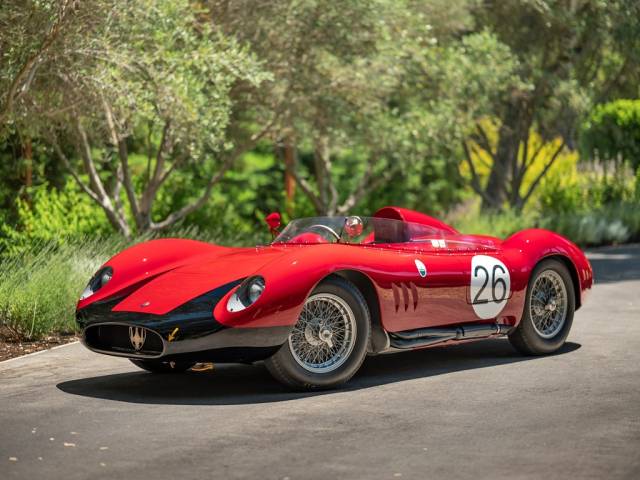
1957 | Maserati 200SI
1957 Maserati 200SI by Fantuzzi
Create search alert
Let yourself be notified as soon as a listing is published that matches your search filters.
Create listing
Do you have a Maserati 200 that you want to sell? Then create a listing now.
Create listingMaserati 200 Classic Cars: Prices & Market Values
History of the Maserati 200
Launched as a successor to the A6GCS, the Maserati 200S made its debut in 1956, developed in parallel with the smaller 150S. Carrying the internal designation Tipo 52, the 200S answered the need for a competitive two-litre sports racer for both European and American circuits. Its competition debut quickly drew attention due to performances by drivers such as Jean Behra and Stirling Moss. The 200S quickly established itself as a formidable competitor, not only for Maserati but for the broader sports car community, cementing a unique chapter in Modena's racing history.
Model History
In total, only 28 Maserati 200S/200SI chassis were produced between 1956 and 1958, the majority bodied by Fantuzzi. The 200SI variant appeared in 1957 to comply with new international regulations, notable for full-width windscreens, operational doors, the provision for a spare wheel, and a rudimentary soft top. Alongside its sibling, the 150S (Tipo 53, 1.5 litres), the 200S became synonymous with lightweight Italian design and innovative engineering, with the evolution from rigid rear axle to De Dion demonstrating Maserati’s rapid adaptation to the competition's demands.
Highlights and Key Features
Among the 200 Series, exclusivity is absolute—only 28 chassis ever left the Modena works. Most 200S and 200SI wore elegant aluminium coachwork by Fantuzzi, with the latter specification built to international sports car rules requiring road-style features. Underneath, the twin-plug four-cylinder was advanced for its day. Jaeger gauges, Borrani wire wheels, and Cibie headlights were factory mainstays, and contemporary optional motorisations up to 2.5 litres were available. The Maserati 200 cars remain eligible and highly regarded for prestigious historic racing such as Mille Miglia Storica, Le Mans Classic, and Goodwood Revival.
From a supply and demand perspective, Maserati’s 200 Series occupies a singular niche: with a 100% share among Maserati listings in this model range, all MASERATI 200 series supply and demand stems exclusively from this model series in our market, underlining its rarity and singular desirability.
Technical Data
Special Editions and Collectors’ Models
Of the 28 Maserati 200S and 200SI chassis produced, the 200SI models (just 20 examples) stand out due to their compliance with 'Appendix C' international regulations. The SI versions are particularly recognisable by their full-width windscreen and small doors, a departure from pure racing configuration towards sportscar rules of the era. Additionally, customers could request special liveries or accessory equipment at the factory, making each existing car a unique piece of history.
Weak Spots and Common Issues
Potential buyers should be aware of some weaknesses documented in the 200S's early service life, such as initial gearbox issues, especially noticeable in endurance events. As with any rare racing Maserati, documentation, originality of components, and the correct matching-numbers between chassis and engine are attributes that demand scrutiny. Most surviving examples have been restored, but originality and authenticity remain critical in valuation and usability for historic motorsport. Parts availability requires specialist sources, and restoration should only be trusted to marque experts.
Engine and Performance, Transmission and Handling
The four-cylinder engine delivers a unique mix of responsiveness and tractability, with a character distinct to Maserati’s competition powerplants of the era. Early versions could suffer from gearbox reliability issues, while later cars with De Dion rear axles showed a major leap in cornering ability, especially compared to other front-engined sports racers. Period records and historic drivers consistently note the 200's adeptness on tight racing circuits, as seen in its performance at Bari, Rome, and numerous North American venues. - 1956 Maserati 200S/TIPO 52: Notable for early experimentation with rear suspension setups.
- 1957 Maserati 200SI: Favoured for historic racing eligibility; features Appendix C upgrades and coachwork modifications.
- All Borrani-wheeled, Fantuzzi-bodied cars: Prized among collectors for specification and provenance.
Interior, Comfort, Exterior and Design
Fantuzzi’s design for the 200S featured purpose-built, streamlined aluminium bodywork, tailored for both aerodynamic efficiency and visual presence. Interiors were strictly functional, with Jaeger instruments, leather-trimmed racing seats, and a spartan dashboard setup. Unique colour schemes and individual accessory choices were possible ex-works, as was the replacement of standard components to meet buyer needs or event demands. The use of Borrani wire wheels, Cibie lighting, and period-appropriate trim underline the car's balance of technology and style.
Other Notable Features
Many Maserati 200S/200SI vehicles retain extensive historical documentation, including factory archives, FIVA identity cards, and detailed photographic records. The cars’ eligibility for the world’s foremost historic racing events considerably expands their appeal beyond simple static display, adding tangible motorsport value.
Summary
Every Maserati 200S or 200SI offered today represents a rare intersection of racing achievement, design ingenuity, and technical advancement. Its low-volume production, historic motorsport eligibility, and association with legendary drivers imbues each chassis with a story that connects Modena’s past to the present day collector and historic racer.