IFA F 9 classic cars for sale
The IFA F 9, produced from 1950 to 1956, embodies the spirit of post-war automotive engineering in the GDR, offering a distinctive combination of compact dimensions, robust steel bodywork, and innovative two-stroke technology. Its various body styles and unmistakable design make it a remarkable piece of East German motoring history.
Search results
Currently, there are no matching listings for your search.
Create search alert
Let yourself be notified as soon as a listing is published that matches your search filters.
IFA F 9 listing references from Classic Trader
Below you will find listings related to your search that are no longer available on Classic Trader. Use this information to gain insight into availability, value trends, and current pricing for a "IFA F 9" to make a more informed purchasing decision.
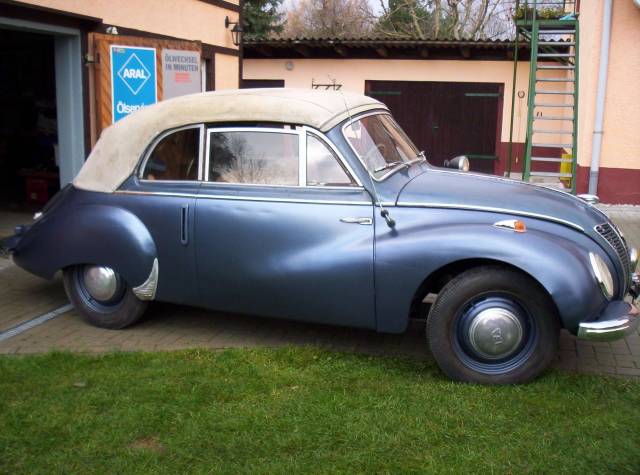
1956 | IFA F 9
Wartburg IFA F9 Cabrio Export

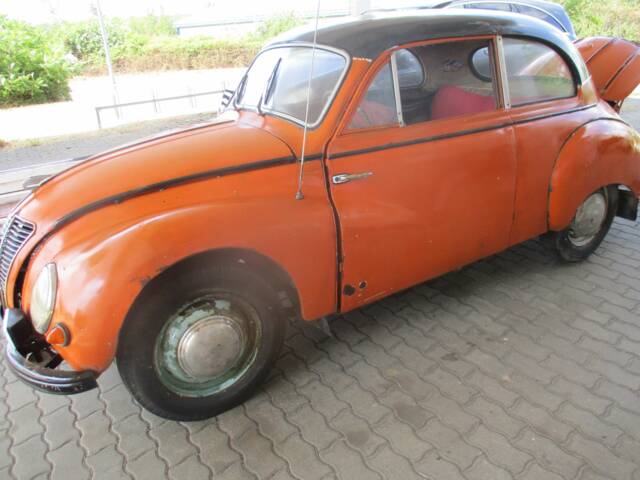
1955 | IFA F 9
Wartburg IFA F9
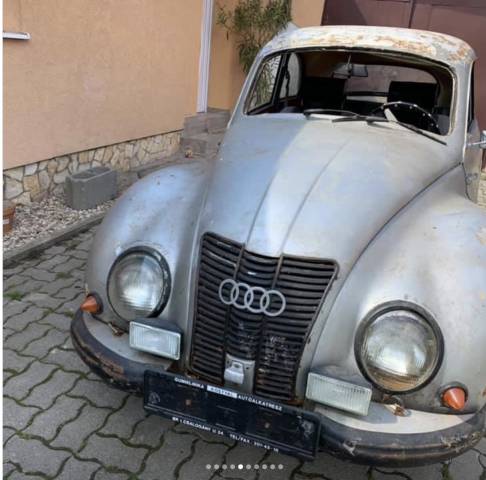
1955 | IFA F 9

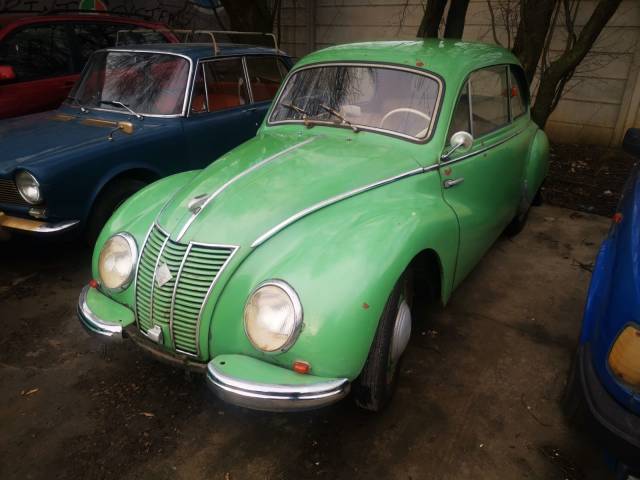
1954 | IFA F 9
1952 | IFA F 9
Wartburg IFA F9 DKW IFA F 9
1954 | IFA F 9
IFA F9 / EMW 309
Create search alert
Let yourself be notified as soon as a listing is published that matches your search filters.
IFA F 9 Classic Cars: Prices & Market Values
History of the IFA F 9
Development of the IFA F 9 began before the Second World War under Auto Union, but series production was delayed until after the war due to military events. The car was first officially presented in 1948 at the Leipzig Spring Fair. Built in the DDR under the Industrieverband Fahrzeugbau (IFA), the F 9 became well-known from 1950 to 1956. It was available in multiple body versions—saloon, estate (Kombi), cabriolet, and a rare cabriolet-saloon hybrid. Roughly ten one-off roadster and sports variants were also created for exhibition purposes. Notably, the F 9 was the last East German passenger car built with rear-hinged 'suicide' doors. Small batches of military variants, like a Kübelwagen for the National People’s Army, were developed, although few survive today.
Model History of the IFA F 9
The IFA F 9 followed the design philosophy of its prewar predecessor, with roots in the original Auto Union concept. Its production in the DDR represented a technological bridge from prewar Germany to postwar innovation. Offered initially as a saloon, lineup expansion soon included the Kombi, Cabriolet, and special short-run variants. The F 9 was replaced in 1955 by the Wartburg 311, which continued to push the limits of two-stroke engineering in Eisenach.
Highlights and Key Features
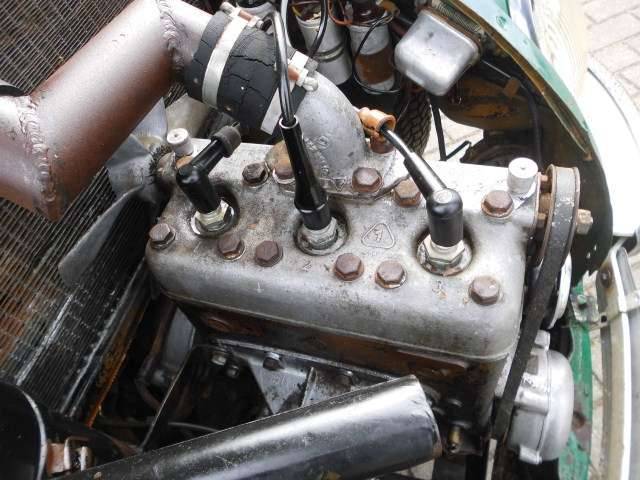
The IFA F 9 utilised a three-cylinder, two-stroke engine with reverse scavenging, a 900 cm³ displacement, and an initial output of 28 hp, rising to 30 hp in 1954. Water cooling was managed via a 10-litre tank, and drive was transmitted to the front axle via a four-speed manual gearbox. The steel body, a 2350 mm wheelbase, and all-wheel drum brakes underscored its engineering focus on utility and durability. Saloon and cabriolet versions achieved 0–100 km/h in about 39 seconds, with top speeds of 110 km/h; the Kombi was slightly slower at 90 km/h. Unique to its era, the model was available with suicide doors and proved adaptable enough for bespoke variants and military applications.
Technical Data
Special Editions and Rare Variants
Approximately ten unique IFA F 9 roadsters and sport models were produced, primarily for display at the Leipzig trade fair, making them especially rare. A Kübelwagen version for the National People’s Army was also built in limited numbers; very few examples have survived.
Weak Spots and Common Issues
No common weaknesses or typical problem zones are listed for the IFA F 9 in the available data. As with any car from the 1950s, potential buyers should pay attention to the condition of the two-stroke motor, corrosion in the steel bodywork, and brake system functionality.
Engine and Performance, Transmission and Handling
The IFA F 9’s three-cylinder two-stroke engine delivered either 28 or 30 hp, offering moderate acceleration for its time—with 0–100 km/h reached in 39 seconds on saloon and cabriolet models. The ride is characterised by straightforward handling, front-wheel drive dynamics, and a traditional four-speed manual gearbox. Robust drum brakes on all four wheels provide reliable stopping power, while the modest power output is suited to relaxed, period-correct driving. Saloon and cabriolet variants are technically similar, distinguished primarily by body style. The estate (Kombi) offers a practical choice, though it is slightly less powerful and slower. The rare roadster and Kübelwagen models are outliers, prized for their historical specificity and unique configurations.
Interior, Comfort, Exterior and Design
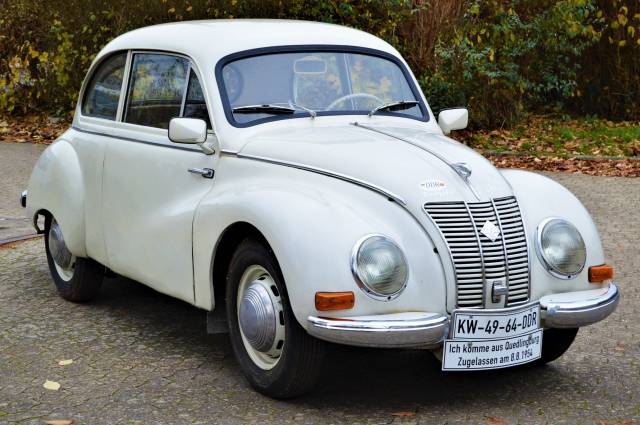
The IFA F 9’s exterior features the characteristic steel bodywork of 1950s East German engineering, including the distinctive rear-hinged doors unique to its production period. The interior is utilitarian, focusing on basic comfort and durability. Various body styles offered subtle differences in trim and equipment. Factory accessories and options were limited, reflecting the practical manufacturing context of the early DDR, but rare convertible and bespoke variants occasionally featured enhanced interiors or unique colours when built for show or export.
Other Notable Features
The F 9 holds significance as a transitional model in DDR automotive history, bridging prewar engineering with the state-controlled production methods of the postwar era. Its use by the military as a Kübelwagen and the exhibition of rare sports variants at trade fairs highlight its versatility and adaptability in the context of early East German industry.
Summary
The IFA F 9 stands as a singular representative of IFA’s automotive legacy, with a documented history, pragmatic engineering, and a variety of historically interesting special editions. Its combination of prewar design roots, two-stroke technology, and adaptation to multiple uses mark it as a unique and authentic example of GDR motoring history.