Goliath 700 classic cars for sale
The Goliath 700, produced in the 1950s, stands out with its innovative engineering like the transverse two-stroke engine and pioneering ponton body design. Its rarity and historical significance make it a notable presence among classic cars.
Search results
Currently, there are no matching listings for your search.
Create search alert
Let yourself be notified as soon as a listing is published that matches your search filters.
Create listing
Do you have a Goliath 700 that you want to sell? Then create a listing now.
Create listingGoliath 700 listing references from Classic Trader
Below you will find listings related to your search that are no longer available on Classic Trader. Use this information to gain insight into availability, value trends, and current pricing for a "Goliath 700" to make a more informed purchasing decision.
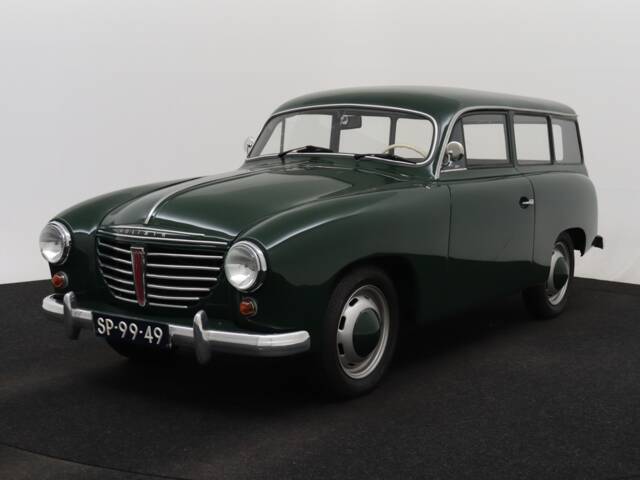
1955 | Goliath 700
Fully restored, documented. A rare icon. Excellent condition.

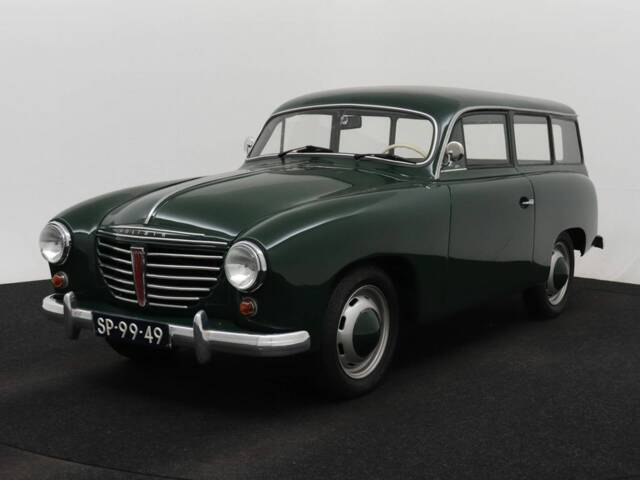
1955 | Goliath 700
Goliath GP700e | 1955 | Route 66 Auctions - For sale by auction. Estimate 13500 EUR
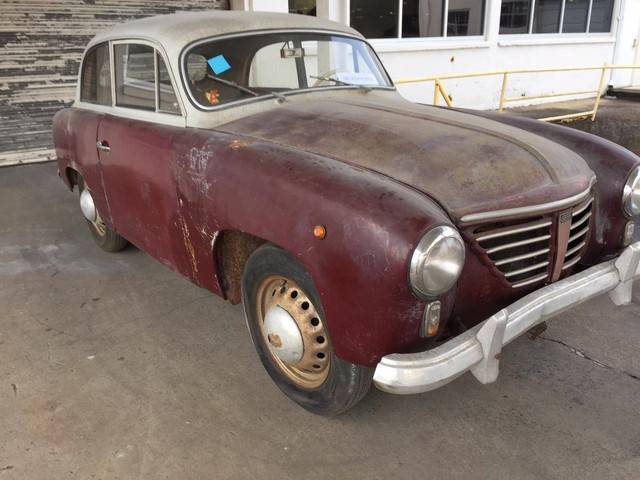
1952 | Goliath 700
Oldtimer Goliath
Create search alert
Let yourself be notified as soon as a listing is published that matches your search filters.
Create listing
Do you have a Goliath 700 that you want to sell? Then create a listing now.
Create listingGoliath 700 Classic Cars: Prices & Market Values
History of the Goliath 700
After World War II, the Goliath-Werk GmbH—revived as a subsidiary of the Borgward group—launched the two-door Goliath GP 700 V/E saloon in 1950. Goliath put its extensive pre-war experience to work by introducing modern features rarely seen in the segment. The car remained in production until 1957, when it and all Goliath two-stroke models gave way to the GP 1100 four-stroke series. The GP 700’s development showcased a shift towards innovative front-wheel-drive technology and a fully welded all-steel body.
Production included a small run of cabriolet and estate variants, with the latter being available from 1952 onwards. The combination of everyday utility, forward-thinking engineering, and a distinctly European design language cemented the Goliath 700's place in automotive history.
Model History of the Goliath 700
The Goliath 700 succeeded Goliath's prewar small car tradition, introducing the first modern, transverse-mounted, front-wheel-drive arrangement in this category. Its production spanned from 1950 to 1957, with continuous technical improvements introduced over the years. Particularly notable is the transition to a fully synchronized gearbox from the 1952 model year.
The end of Goliath 700 production also marked the end of all two-stroke cars from the marque, as the market transitioned to the four-stroke GP 1100.
Estate and cabriolet versions expanded the model range, with Kombi (estate) variants being particularly rare. The limited-production GP 700 Sport coupé, with striking bodywork by Rometsch, highlighted Goliath's brief foray into sporty vehicles, although its performance remained in line with the base saloon.
Highlights and Unique Features
The Goliath 700 distinguished itself as one of the earliest mass-produced vehicles with a ponton body and front-wheel-drive layout with transverse engine mounting. The two-cylinder, 688cc two-stroke unit—available as either a carburettor (700 V, 25.5 hp) or fuel-injected (700 E, 29 hp) version—sits transversely ahead of the front axle, paired with a four-speed gearbox. Its absence of a central driveshaft tunnel improved interior space, enabling seating for five.
Goliath also implemented hydraulically actuated brakes on all four wheels and a fully synchronized gearbox from 1952, setting benchmarks in user-friendly operation for its time.
Technical Data
Special Editions and Collectible Models
A standout among the range is the GP 700 Sport coupé, designed by Rometsch and based on the saloon’s drivetrain. Only about 25 units were built, making it highly sought-after among enthusiasts. The estate (Kombi) and convertible variants also represent rare body styles, each with limited production numbers and appealing to collectors interested in unusual postwar German vehicles.
Weak Spots and Common Issues
Because Goliath 700s are over sixty years old, most surviving examples show expected age- and use-related wear. Incomplete documentation, missing parts, and unknown service history are common, especially among unrestored or donor vehicles. Given the limited production and unique engineering, sourcing mechanical or body parts can be challenging. Technical documentation may be sparse, and corrosion in the all-steel body or failure in hydraulic brake components demands vigilance. Vehicles are mostly traded in as-is condition, and their roadworthiness must be carefully assessed. Prospective buyers should consider potential restoration efforts, which may be substantial.
Engine, Performance, Transmission and Handling
The Goliath 700's transverse two-cylinder two-stroke engine offers either 25.5 or 29 horsepower, depending on the carburetor or fuel-injected setup. Power delivery, though modest, is characteristically punchy for a two-stroke, sending drive through a front-wheel-drive layout via a four-speed gearbox. The full-synchronisation introduced in 1952 improved shifting quality significantly. The ponton body lowers the centre of gravity, aiding stability. Notably, hydraulic drum brakes on all four wheels provide even stopping power. The absence of a large transmission tunnel improves front passenger space, and the uniquely mounted gear lever—reminiscent of a walking stick—offers distinct operating feel. - Goliath 700 Limousine: Standard two-door saloon, the most common configuration.
- Goliath 700 Kombi: Rare estate version, offering practicality.
- Goliath GP 700 Sport: Limited coupé edition with Rometsch bodywork, combining distinctive looks with original powertrain.
Interior, Comfort, Exterior and Design
The Goliath 700 exemplifies early 1950s automotive styling, adopting one of the first mass-market ponton body shapes for maximised interior volume and improved aerodynamics. The all-steel construction was innovative among its contemporaries.
Inside, the car prioritises functionality: a column-mounted 'walking stick' gear lever and straightforward instrumentation become focal points. Five-passenger accommodation is rare for its class and era. The Kombi (estate) and cabriolet bodies bring further variety, their practicality and open-air driving experience expanding the car’s appeal. Contemporary options such as special fabrics or two-tone paint finishes would occasionally appear, reflecting post-war taste. Accessories were basic, reflecting the economic environment of the 1950s, but overall design leaned towards robust simplicity.
Other noteworthy features
GP 700 vehicles can occasionally still be found as restoration projects or display pieces and sometimes come with auction or independent valuation reports. The model was featured in classic car publications, underlining its role in motoring history. Vehicle completeness (papers, keys, trim, documentation) should always be verified, and Classic Trader assumes no liability for unseen defects or inaccuracies in vehicle descriptions.
Summary
The Goliath 700 remains a rare and fascinating example of postwar German ingenuity, boasting advanced features for its time and a solid place in automotive history. Both supply and demand for this model outpace other Goliath vehicles, underlining its significance. Potential owners should be prepared for restoration needs and possible part-sourcing challenges, but the unique engineering and scarcity provide a genuinely interesting ownership experience.