GAZ 67 classic cars for sale
The GAZ 67 stands out as a robust off-road vehicle with deep roots in wartime engineering. Known for its ruggedness and straightforward mechanics, this model attracts enthusiasts looking for a military classic that defined practical utility and reliability. Its legacy in the history of Soviet automotive design makes it a sought-after choice for collectors with an eye for authentic, mechanically honest vehicles.
Search results
Currently, there are no matching listings for your search.
Create search alert
Let yourself be notified as soon as a listing is published that matches your search filters.
GAZ 67 listing references from Classic Trader
Below you will find listings related to your search that are no longer available on Classic Trader. Use this information to gain insight into availability, value trends, and current pricing for a "GAZ 67" to make a more informed purchasing decision.
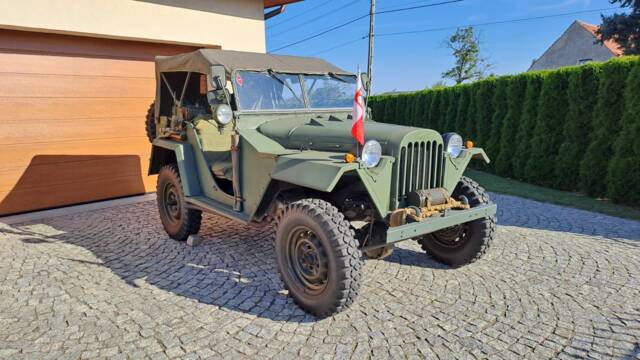
1955 | GAZ 67
Create search alert
Let yourself be notified as soon as a listing is published that matches your search filters.
GAZ 67 Classic Cars: Prices & Market Values
History of the GAZ 67
The GAZ 67 debuted in 1943 as the Soviet answer to the need for a capable, versatile light off-road vehicle during World War II. Produced by the Gorky Automobile Plant (GAZ), the 67 was developed to replace the GAZ 64, featuring upgrades that improved its off-road abilities and durability. Originally designed for military reconnaissance, transport, and command duties, it was characterised by its open-body construction, strong ladder frame, and exceptional resilience under extreme conditions. The vehicle continued to serve in the Soviet military and other allied states well into the early 1950s, marking an important chapter in the evolution of utility vehicles behind the Iron Curtain.
Model history of the GAZ 67
The GAZ 67 followed the GAZ 64 and brought significant enhancements, particularly in its chassis and suspension, making it more reliable and able to handle rough terrain. Its production stretched from 1943 to 1953. In 1944, the GAZ 67B was introduced, featuring subtle mechanical improvements and construction refinements for increased reliability and performance. After the production of the 67 series ceased, GAZ introduced the 69, which built upon the utilitarian philosophy with modernised features, forming the direct successor to the 67.
Highlights of the GAZ 67
Designed for function over form, the GAZ 67 is renowned for its simplicity—straight chassis, leaf-sprung solid axles, and easy-to-service four-cylinder engine. Its open cabin and basic layout made it ideal for military adaptation and field repairs. Off-road ability, mechanical endurance, and a design focused on ease of maintenance are its defining traits.
Technical data
Special Editions and Collectible Models
During its production run, the GAZ 67 saw few true special editions in the traditional sense; however, the GAZ 67B, with its improved technical robustness and minor advancements in build quality, can be seen as an evolutionary step and is often preferred by collectors for its enhanced reliability. Field modifications for specific military roles are commonly found, and vehicles with documented history from notable military campaigns or in particularly original unrestored condition attract the most attention among collectors.
Engine and Performance, Transmission and Handling
The GAZ 67’s engine produces modest horsepower, but its torque and durability are better suited for off-road work and carrying loads than for speed. Its four-speed manual transmission is rugged, designed to function with minimal maintenance under harsh conditions. Handling is utilitarian, with heavy steering and limited on-road comfort, but the suspension setup delivers excellent off-road mobility for its era. Brakes are basic drum units all around, requiring regular attention for optimal function. The GAZ 67B stands out for its technical improvements and is regarded as the most desirable variant for those seeking both originality and practical driveability in historical events or off-road applications.
Interior, Comfort, Exterior and design
Function dictated form throughout the GAZ 67’s design. The open, no-frills cockpit features only the essential controls and instruments, with metal seating and removable canvas weather protection. Externally, its purposeful stance—wider track, short overhangs, flat fenders—clearly signals its off-road intent. The paintwork was typically drab, matching military requirements, though postwar civilian adaptations occasionally brought other colours. Accessories, when fitted, centred on utility: shovel holders, towing eyes, and brackets for extra equipment. Collectors value original field additions or wartime markings for their authenticity.
Other relevant features
Many GAZ 67s saw service in Eastern European armed forces and were exported in small numbers; units with documented service history or period upgrades (radio mounts, armament supports) are considered especially interesting in the collector scene.
Summary
The GAZ 67 left its mark as the preeminent Soviet off-road vehicle of its era. With a straightforward mechanical package and a reputation for field reliability, it’s a model that appeals to enthusiasts of military history, off-road vehicles, and Soviet engineering. Its significance is best appreciated by those seeking a vehicle with authentic wartime character and enduring mechanical simplicity.