Ford Customline Classic Cars for Sale
The Ford Customline, produced between 1952 and 1956, stands for robust American craftsmanship, classic V8 or inline-six engines, and clear 50s styling with typical chrome highlights. Suited to both cruising and everyday driving, the Customline combines ease of maintenance with a steady supply of spare parts. Models often show careful restoration history, giving both enthusiasts and collectors plenty to discover about these classic vehicles.
Search results
Currently, there are no matching listings for your search.
Create search alert
Let yourself be notified as soon as a listing is published that matches your search filters.
Create listing
Do you have a Ford Customline that you want to sell? Then create a listing now.
Create listingFord Customline listing references from Classic Trader
Below you will find listings related to your search that are no longer available on Classic Trader. Use this information to gain insight into availability, value trends, and current pricing for a "Ford Customline" to make a more informed purchasing decision.
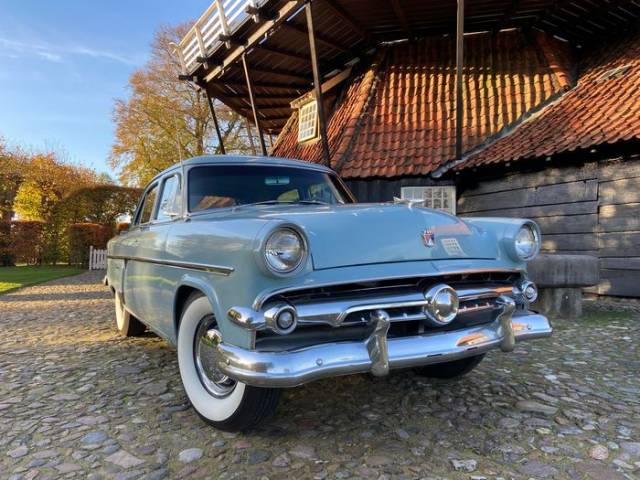
1954 | Ford Customline

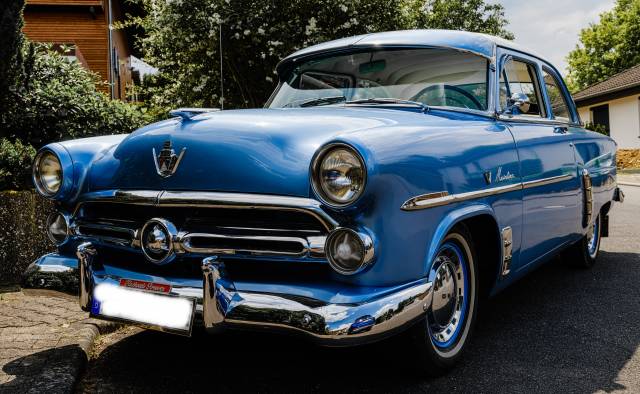
1952 | Ford Tudor V8
Top Zustand. Made in Sweden. Einziger in Europa

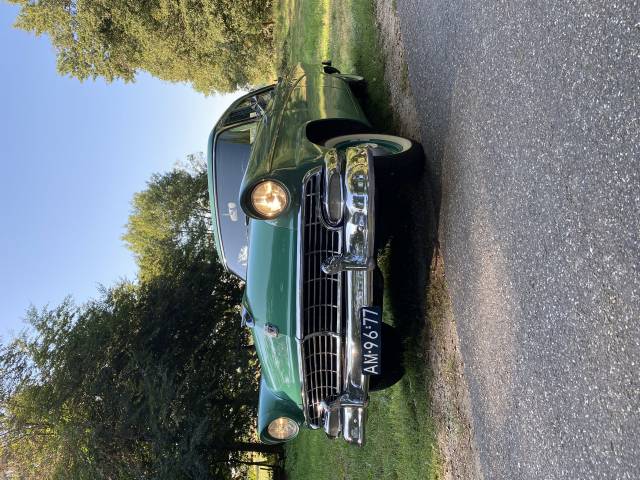
1956 | Ford Customline
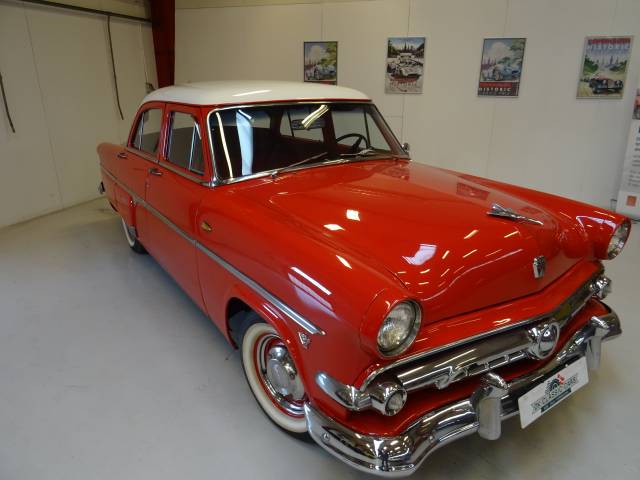
1954 | Ford Customline

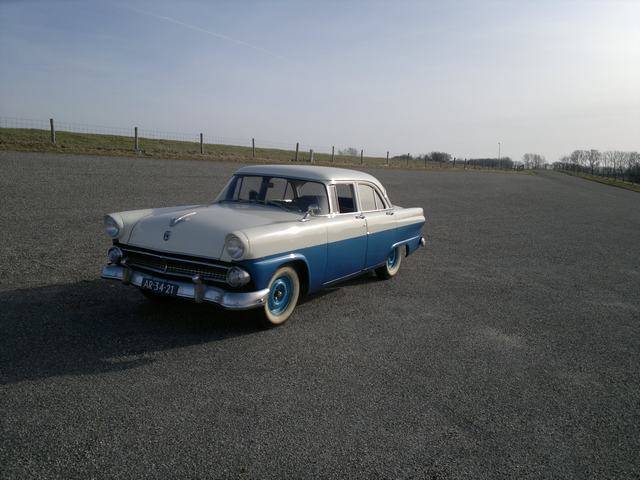
1955 | Ford Customline
Nice Ford 1955
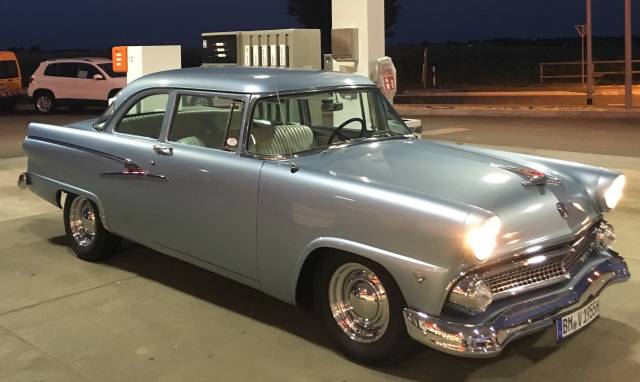
1955 | Ford Customline
Customline
Create search alert
Let yourself be notified as soon as a listing is published that matches your search filters.
Create listing
Do you have a Ford Customline that you want to sell? Then create a listing now.
Create listingFord Customline Classic Cars: Prices & Market Values
History of the Ford Customline
Introduced in 1952, the Ford Customline quickly became a central component of Ford's North American model range, slotting above the base Mainline and below the more upmarket Crestline and, later, the Fairlane. During its production run until 1956, the Customline was known for its practicality and flexibility, offered in two- and four-door configurations. Beyond the US, assembly from CKD (completely knocked down) kits allowed the Customline to find a home in markets like Sweden, adapting to local preferences while maintaining its characteristic design and specifications.
Model History of the Customline
The Customline replaced the earlier Ford entry-level offerings and shared its platform with the Mainline and later the Fairlane as Ford updated its range. Initially delivered with an inline-six engine, customers soon had the option of a V8, particularly the Y-Block V8 by the mid-1950s. Over the years of production, the Customline retained its straightforward mechanical setup: manual 3-speed gearbox (with some models featuring a column shift), robust drum brakes, and a traditional front independent suspension. As younger Fords like the Fairlane gained prominence, the Customline was gradually phased out after 1956, but it remains a distinctive representative of Ford’s 1950s design and engineering.
Highlights of the Ford Customline
A defining feature of the Customline is its blend of simplicity and classic 1950s American style. Typical configuration included a 3-speed column-shift manual gearbox paired with either an inline-six or an optional V8 engine—most notably, the 302 cubic inch displacement for V8 fans. Four-wheel drum brakes, lack of power steering, and the frequent use of whitewall tyres hark back to the mid-century driving experience. Chrome trim, distinctive two-tone paintwork, and the availability of heater and radio options enhanced comfort and street presence. Enthusiasts value how the Customline’s moderate trim level offered lasting durability without excessive luxury overheads.
According to our current statistics, the Ford Customline listings account for 100% of Ford models in this manufacturer code category on our platform. This reflects a unique standing among classic Fords available in the market, indicating dedicated interest within this specific model range.
Technical Data
Special Editions and Collectible Models
The Customline was offered mainly as a regular production model. However, market specifics such as two-tone paint options, chrome trim variations, or regional assembly variations (e.g. Swedish CKD builds) can affect collectibility. Some restorers and collectors target models fitted with the full Y-Block V8 setup or original interior fabrics, which are still available or can be retrofitted today. While there were no factory-limited editions in the strict sense, exceptionally well-preserved examples with original paints, matching serial numbers, or complete documentation are often regarded as particularly desirable within enthusiast circles.
Weak Spots and Common Issues
As vehicles over 60 years old, Customlines may show typical ageing signs: chrome or paint wear, potential corrosion in the underbody or sills (addressed in restorations), and possible play in manual transmissions. Some cars have been partially or fully restored; photo documentation is common. Whitewall tyres and chrome trim, while visually appealing, require regular care. Spare parts supply is excellent, especially in the USA but also for European owners. Technical manuals and documentation are easily accessible, and retrofits—such as 12V electrical upgrades or period-style radios—are possible with little compromise to originality.
Engine and Performance, Transmission and Handling
Depending on variant, the Customline can cruise comfortably at 110–120 km/h thanks to the robust inline-six or enthusiastic V8 powerplants. The 3-speed manual—often as a column shifter—gives direct driver interaction, though the absence of assisted steering and brake systems reflect its period mechanical character. Typical four-wheel drum brakes provide reliable, if not modern, stopping power. Road comfort benefits from independent front suspension, and many restored vehicles offer improved rust protection compared to factory originals. Popular variants include the Y-Block V8 Customlines, particularly those with preserved documentation and factory-correct interiors. Standard technical references: up to 302 cu in V8, 3-speed column shift, four-wheel drum brakes.
Interior, Comfort, Exterior and Design
1950s American car culture is evident in the Customline’s extensive chrome, two-tone paintwork, and generous bodywork proportions. Interiors were equipped with original cloth fabrics, often restored or replaced by period-correct materials. The dashboard design is classic mid-century Ford, and accessories such as heaters and radios were factory options. Most Customlines featured whitewall tyres, chrome bumpers, side trims, and occasional fender ornaments. Two-door (‘Tudor’) and four-door sedans dominated, with both practical and aesthetic preferences reflected in their layouts. Special equipment such as period CD-player retrofits is possible with minimal impact on interior appearance.
Other Relevant Features
Many Customline owners compile restoration photo albums or written chronologies, providing comprehensive insight into a car’s history, condition, and evolution. In Germany, a classic H-registration ('H-Kennzeichen') is possible, underscoring eligibility for vintage road use. The car’s robust engineering makes it suitable not only for shows but also for long-distance cruising, especially when fitted with the appropriate drivetrain and maintained regularly.
Summary
The Ford Customline (1952–1956) represents classic 1950s American motoring: dependable engineering, striking two-tone paint schemes, and the mechanical honesty of the era. Its straightforward construction, broad availability of spare parts, and accessible documentation suit both amateur restorers and seasoned collectors. Whether equipped with the inline-six or V8, the Customline offers unmistakable road presence and enduring appeal for those seeking a true slice of historic Ford engineering.