- Car
- Deutz (0 offers)
Buy Deutz Classic Tractor
Deutz's air-cooled diesel tractors found a natural home in Australia — no radiator to boil over in the outback heat, no coolant to freeze on frosty winter mornings in the tablelands. From the compact F1L514 to the powerful 06 Series, Deutz classics are a growing presence at Australian vintage machinery rallies and on the collector market.
Search results
Currently, there are no matching listings for your search.
Create search alert
Let yourself be notified as soon as a listing is published that matches your search filters.
Deutz listing references from Classic Trader
Below you will find listings related to your search that are no longer available on Classic Trader. Use this information to gain insight into availability, value trends, and current pricing for a "Deutz" to make a more informed purchasing decision.
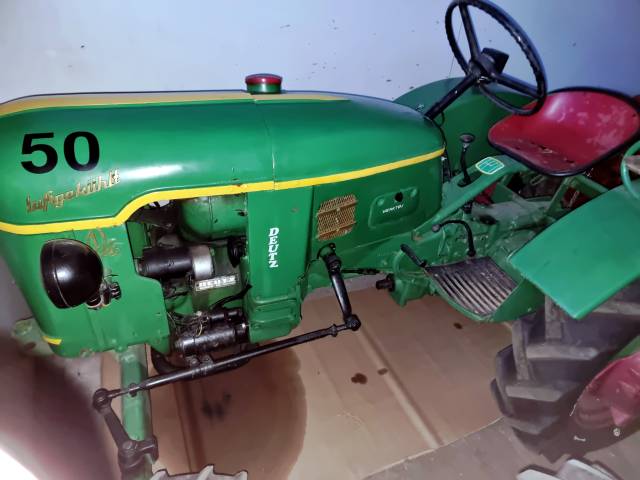
1959 | Deutz D 15
A lovely example, in very good condition.

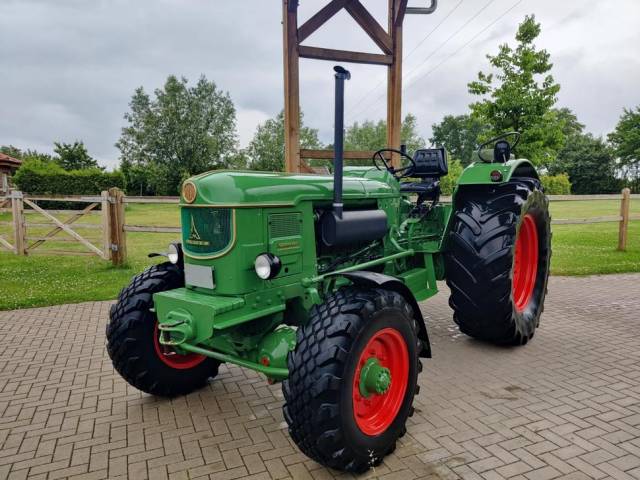
1967 | Deutz D 9005
Deutz D 9005

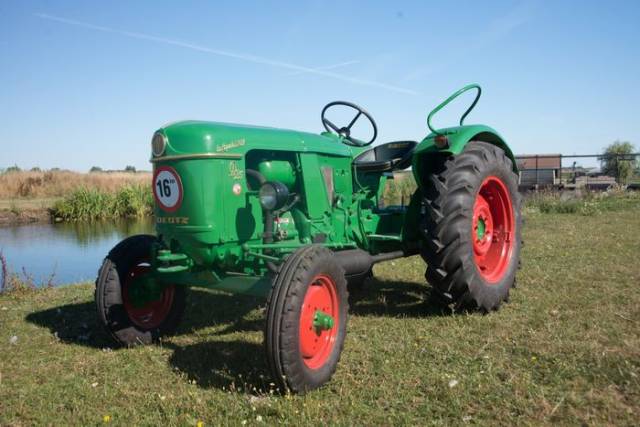
1964 | Deutz D25.2

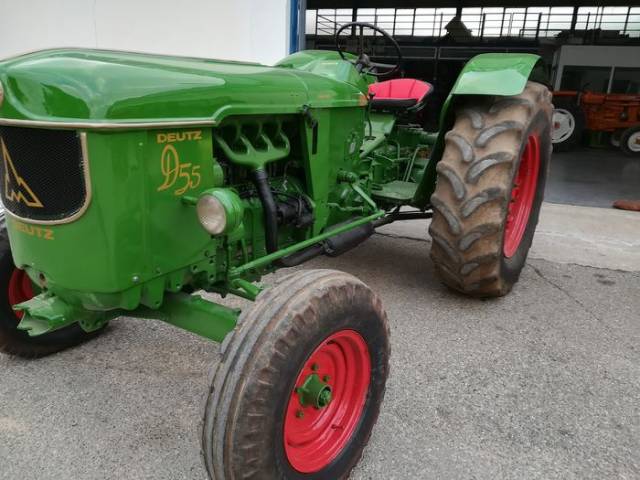
1961 | Deutz D 55 Export
Create search alert
Let yourself be notified as soon as a listing is published that matches your search filters.
History & Heritage
The Deutz story begins not in a paddock but in a Cologne engine factory. On 31 March 1864, Nicolaus August Otto and Eugen Langen founded "N.A. Otto & Cie." — the world's first engine manufacturing company. In 1876, Otto developed the first practical four-stroke internal combustion engine, which entered history as the Otto cycle engine. By 1872 the firm had been renamed "Gasmotorenfabrik Deutz AG".
The road to the tractor was long. Early attempts with a motor plough (1907) proved impractical. It was not until 1927 that Deutz presented the MTH 222, a production-ready tractor. The real breakthrough came in 1934 with the F2M 315 (28 hp), the first diesel tractor to propel Deutz into the top tier of German tractor manufacturers. In 1936 came the F1M 414 at 11 hp — the world's first small tractor produced in mass quantities, making mechanisation affordable for small farms.
In 1938, Deutz merged with the Klöckner works to form Klöckner-Humboldt-Deutz AG (KHD). During the Second World War, water-cooled engines were converted to air cooling — a wartime necessity that proved a lasting technical advantage. Air-cooled engines were more robust, required less maintenance, and were immune to frost and overheating — qualities that would prove particularly valuable in Australian conditions.
In April 1950, mass production began on the F1L 514 — Deutz's first air-cooled tractor. This single-cylinder diesel of 15 hp and 1,330 cc was built over 30,000 times by 1957. Deutz tractors began arriving in Australia from the late 1950s and early 1960s, distributed through Deutz Australia and various agricultural machinery importers. Australian farmers quickly appreciated the air-cooled engine's resilience in the harsh conditions of the wheat belt, the sheep stations of the Riverina, and the sugar cane farms of Queensland.
The 1950s and early 1960s were Deutz's golden era: the FL Series (514, 612, 712) and later the D Series (D15 to D80, from 1959) kept Deutz at the top of German registration statistics. In 1968, KHD acquired a majority stake in FAHR — and the Deutz-Fahr brand was born.
The 06 Series (from 1968, models D 2506 to D 16006) remains the most successful range in the brand's history. With clean lines, reliable air cooling, and a power range from 25 to 160 hp, it dominated the market for decades. In 1972 came the avant-garde INTRAC Series — a multi-purpose tractor with a front-mounted cab and loader concept, years ahead of its time.
In 1992, the one-millionth Deutz tractor rolled off the production line. Since 1995, Deutz-Fahr has been part of the SAME Deutz-Fahr Group, headquartered in Treviglio, Italy.
Highlights & Features
The defining characteristic of all classic Deutz tractors is the air-cooled diesel engine. No coolant, no antifreeze, no thermostat — the engine cools itself via a fan and cooling fins. This makes it low-maintenance, frost-proof, and exceptionally long-lived. In the Australian context, this was a significant advantage: no radiator to boil over during summer harvests, no coolant to freeze on cold winter mornings in the Southern Tablelands or the Victorian highlands.
Five series define the collector market:
FL Series (1950–1965): F1L514, F2L612, F3L514 — the pioneers of air cooling. Simplest technology, maximum robustness. The F1L514 is the entry point to the Deutz world.
D Series (1959–1967): D15 to D80 — the first generation with a modern appearance. Two- to four-cylinder engines, 15 to 80 hp. Particularly sought-after: the D 25 and D 40.
05 Series (1965–1968): D 2505 to D 9005 — transitional generation with improved hydraulics and PTO.
06 Series (1968–1990): D 2506 to D 16006 — the most-built and most-sought series. Clean design, broad power range, excellent parts availability. The D 6006 (60 hp) and D 8006 (80 hp) are the classics among classics.
INTRAC (1972–1979): 2002 to 2006 — a niche model with cult status. Front loader concept, panoramic cab, four-wheel drive. Rare and correspondingly sought-after.
Parts availability remains good for most series: specialist suppliers in Germany, the UK, and Australia stock engine components, gasket sets, mudguards, and bodywork parts. For the FL Series, new-manufacture parts are even available.
Technical Data
Market Overview & Buying Tips
The Deutz classic tractor market in Australia is smaller than in Europe, but growing steadily as the vintage machinery movement gains momentum. Australian-delivered examples are relatively rare; most tractors on the local market were imported from Germany or the UK. Platforms such as Gumtree, Machinery Trader Australia, and Grays Online occasionally list Deutz classics, while specialist vintage machinery auctions — including those run by Elders and Landmark — sometimes include European tractors.
Current price ranges (2024–2026, in AUD):
- FL Series (F1L514, F2L612): Project tractors from A$3,000–5,000; running and presentable A$6,000–10,000; fully restored up to A$16,000 and beyond.
- D Series (D25, D40): Running from A$4,500–8,000; restored A$9,000–15,000.
- 06 Series (D 4006–D 8006): Running from A$5,000–9,000; well-presented A$9,000–18,000; top examples up to A$25,000.
- INTRAC 2004/2006: Rare in Australia; prices from A$12,000 to over A$35,000 for restored examples.
- DX Series: Running from A$6,000; well-presented A$12,000–22,000.
Australian-specific buying considerations:
Historic vehicle registration: In Australia, historic vehicle registration varies by state. In most states, vehicles over 25–30 years old qualify for concessional historic registration, which significantly reduces registration costs and may allow limited road use. Check your state's specific requirements — Victoria, NSW, Queensland, and South Australia each have different schemes.
Importing from Europe: Many Australian buyers import Deutz tractors from Germany or the UK, where supply is far greater. Factor in shipping costs (typically A$3,000–6,000 for a tractor in a container), import duty (5% for agricultural machinery), GST (10%), and compliance costs. A German TÜV certificate or Fahrzeugbrief simplifies Australian registration. The total landed cost of a European tractor is typically 30–50% above the European purchase price.
Dust and heat: Australian conditions are demanding. Check cooling fins carefully for compacted dust and chaff — blocked fins are the primary cause of overheating in air-cooled engines. In dusty conditions, the air filter requires more frequent servicing than in European environments.
Engine inspection: The air-cooled engine is robust but vulnerable to overheating from blocked cooling fins or a failed cooling fan. Cylinder head gaskets on older engines can weep — look for oil traces around the head.
Valve clearances and compression: Deutz air-cooled engines are sensitive to incorrect valve clearances. A compression test is essential.
Injection pump and injectors: Older Bosch injection pumps are maintenance-intensive. Black smoke on cold start indicates worn injectors. Reconditioned injection pumps cost A$500–1,200.
Gearbox and PTO: The gearboxes on FL and D Series tractors are robust but synchromesh rings wear. PTO seals frequently leak — check for oil at the rear.
Paperwork: For imported tractors, ensure you have the original German Fahrzeugbrief (title document) or equivalent. Without it, Australian registration can be complicated. A RAWS (Registered Automotive Workshop Scheme) assessment may be required for some states.
Driving Feel
Climbing aboard a classic Deutz for the first time is an experience that engages all the senses. The starter motor turns, the single cylinder of the F1L514 fires with a deep, rhythmic beat — tuck-tuck-tuck — and the whole tractor vibrates gently in time. It is not noise; it is a pulse.
In the Australian context, the air-cooled Deutz has a particular appeal: on a hot summer day in the wheat belt, when the temperature gauge on a water-cooled tractor would be climbing towards the red, the Deutz just keeps going. The engine note changes slightly as it warms up, but there is no radiator to boil, no coolant to lose.
The seat is high, the view across the paddock is wide. No cab, no windscreen on the early models — just the wind and the smell of diesel and warm metal. The steering wheel is large and direct, the steering heavy but precise. You feel every rut in the paddock.
With the 06 Series, the picture changes: here there is an optional cab, a 16-speed gearbox, and a full rear hydraulic system. The four-cylinder of the D 6006 runs more smoothly than the single-cylinder, but the characteristic sound of the air-cooled Deutz remains unmistakable.
The INTRAC is in a class of its own: the forward-mounted cab gives the driver all-round visibility that modern tractors rarely match. For enthusiasts seeking something genuinely different, the INTRAC is unforgettable.
Design
Deutz tractor design has always followed the principle of form follows function — but with an unmistakable character. The early FL models (514, 612) have a rounded, almost organic form: curved mudguards, a rounded engine block that sits open and shows its cooling fins. The F1L514 looks compact and purposeful — a tool you want to touch.
With the D Series (1959), a more modern, angular design arrived. The characteristic Deutz green — in various shades depending on year — became a brand signature. Early models are finished in a light yellow-green; later ones in a richer, darker green.
The 06 Series (1968) represents the high point of classic Deutz design: a clean, rectangular bonnet, large headlamps, a wide grille, and the characteristic ventilation slots on the sides. The design was timeless and barely changed over 20 years.
The INTRAC (1972) was a radical departure: the cab moved forward, the engine to the rear. The result was a vehicle unlike anything else — and one that still divides opinion today.
Other
Deutz tractors are not racing machines — but they have their own cultural history. In Australia, the vintage tractor movement has grown strongly since the 1990s, with events such as the Henty Machinery Field Days in NSW and the Elmore Field Days in Victoria drawing large crowds of machinery enthusiasts.
At vintage tractor rallies across Australia — from the Mallee Machinery Field Days in Victoria to the Toowoomba Royal Show in Queensland — Deutz tractors are an increasingly common sight. The Vintage Tractor & Machinery Association of Australia and state-based clubs organise rallies, road runs, and restoration competitions.
The air-cooled Deutz has a particular resonance in remote and outback Australia: its independence from coolant made it a practical choice for stations far from service centres. Stories of Deutz tractors running for decades with minimal maintenance are common in the farming community.
The INTRAC has its own following: with its unusual construction and low production numbers (approximately 2,500 examples), it is particularly prized among engineering enthusiasts. Well-preserved INTRAC models rarely come to market in Australia and are priced accordingly.
Summary
Deutz classic tractors are more than nostalgic farm machinery — they are witnesses to the history of German engineering and the mechanisation of post-war agriculture. The air-cooled diesel engine, the brand's hallmark, was particularly well-suited to Australian conditions: robust, low-maintenance, and immune to the extremes of heat and cold that challenge water-cooled engines.
For newcomers to the Australian market, the 06 Series (D 4006 to D 8006) is the recommended starting point: good parts availability, manageable prices from around A$5,000, and a strong community of owners. Those seeking something special should look at the INTRAC or an early F1L514 — both have cult status and a loyal following.
Key buying advice: inspect the engine block and cooling fins carefully (dust is the enemy), verify paperwork for import compliance, assess originality. A Deutz in good condition is a machine you can drive for decades — and one that draws attention at every rally.
Find your Deutz classic tractor on Classic Trader — discover now!