- Car
- Dallara (1 offer)
Buy Dallara Classic Cars
Dallara is one of motorsport’s great engineering names: a constructor better known for building winners than badges. That is exactly why the marque now attracts Australian buyers who want something rarer, lighter and more technically serious than the usual European exotica.
Search results
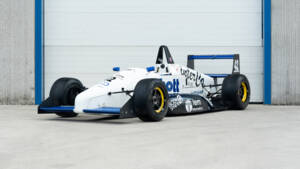
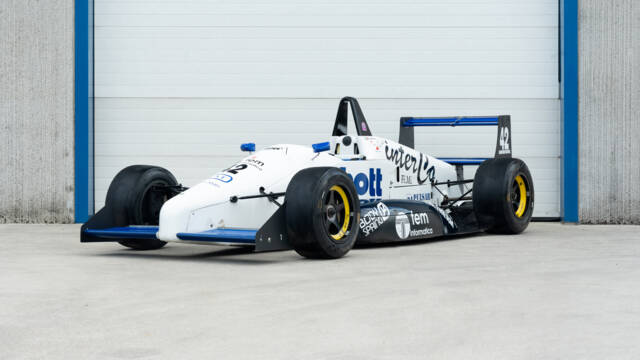
1992 | Dallara F392 Formula 3
Ex Giancarlo Fisichella

Dallara listing references from Classic Trader
Below you will find listings related to your search that are no longer available on Classic Trader. Use this information to gain insight into availability, value trends, and current pricing for a "Dallara" to make a more informed purchasing decision.
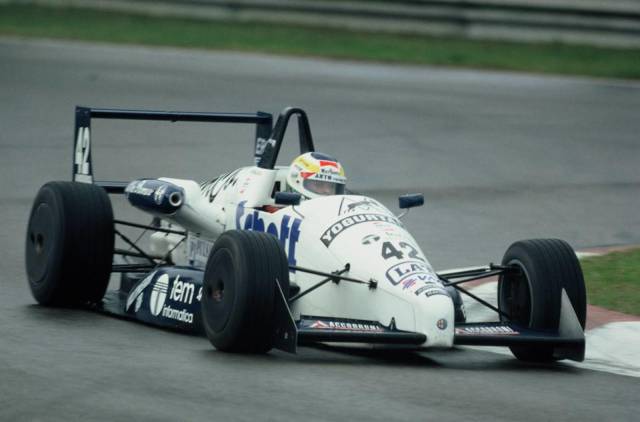
1992 | Dallara F392 Formula 3
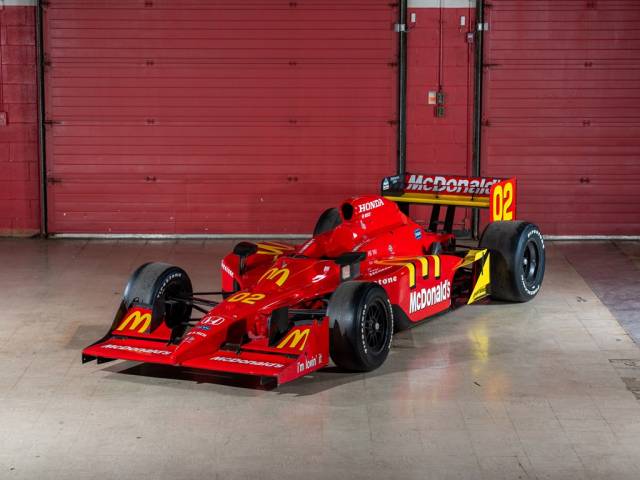
2007 | Dallara IR-05
2007 Dallara-Honda IR-05

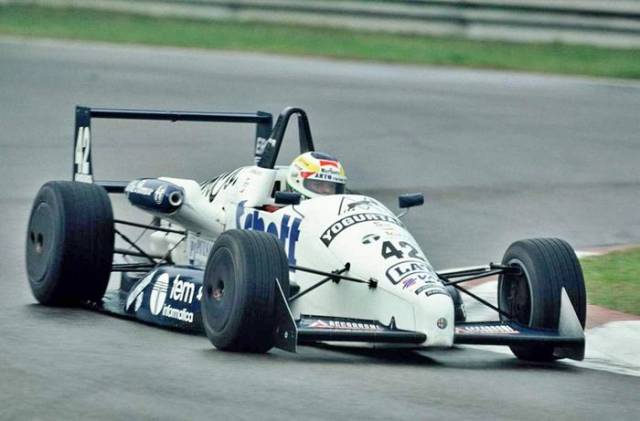
1992 | Dallara F392 Formula 3

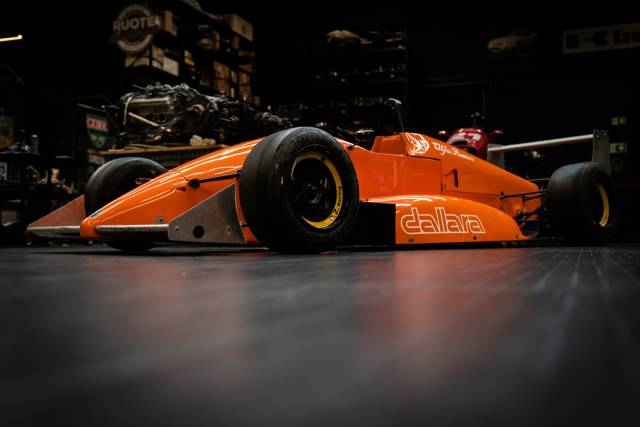
1991 | Dallara F391
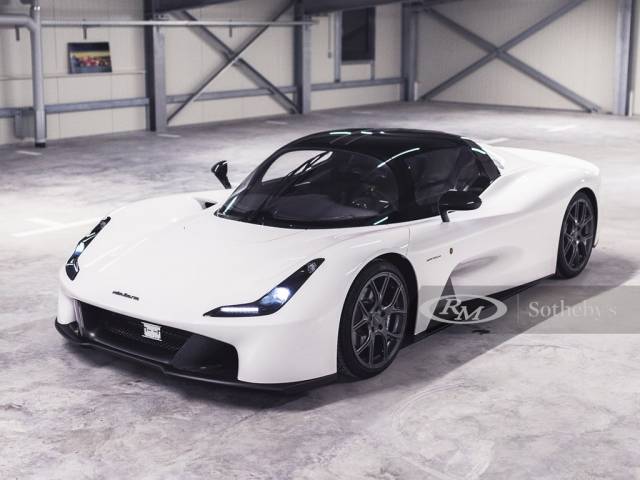
2019 | Dallara Stradale
2019 Dallara Stradale
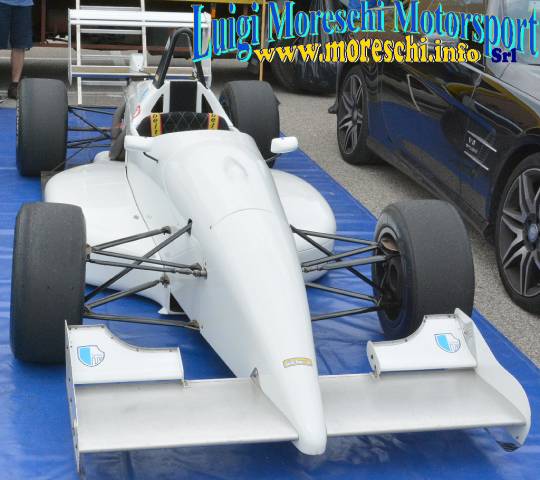
1993 | Dallara F393
Federale Renault
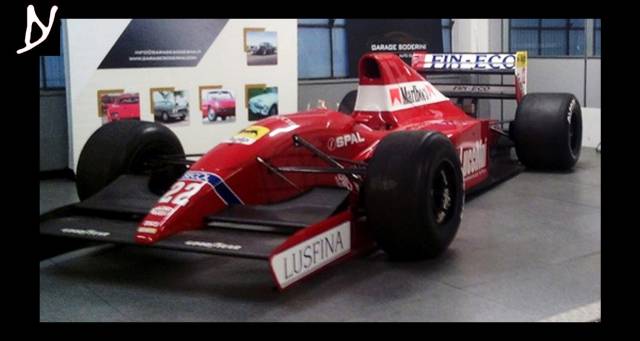
1992 | Dallara F192
ESTIMATE: 350.000/390.000 EURO - BIDS STARTING FROM EURO 50.000
History
The Dallara name starts with Giampaolo Dallara, one of the most consequential engineers in post-war Italian performance-car history. After graduating from the Politecnico di Milano in 1959, he worked for Ferrari, Maserati and then Lamborghini, where he became a central technical figure on the Miura project. Before he was 30, he had already helped shape the idea of the modern mid-engined supercar. He later moved through racing work with De Tomaso and projects linked to Frank Williams Racing Cars, then in 1972 founded his own company at Varano de’ Melegari in Emilia-Romagna.
Dallara’s first years were not about glossy road cars. They were about problem-solving, aerodynamics and learning how to build lighter, faster racing machines than larger rivals. One of the earliest in-house projects was the SP1000, a compact sports-racer from the early 1970s. It was built in tiny numbers, but it already showed several themes that would define the marque: centralised mass, obsessive weight saving and a layout dictated by lap time rather than fashion. Dallara then worked closely with Lancia, contributing to the competition development of the Stratos and later the Beta Montecarlo Turbo programme.
The company’s rise to dominance came through Formula 3. Dallara built a chassis for Walter Wolf Racing in the late 1970s; by 1981, the first proper Dallara-badged F3 car, the F381, had arrived. During the 1980s the firm became increasingly hard to beat in junior single-seaters, winning in Italy, Germany and France, and putting future Formula 1 stars into ever better carbon-and-steel tubs from Varano. By the mid-1990s Dallara had effectively captured the category. The F395 is still the headline example: in the main British, German, French, Italian and Japanese F3 championships, 137 of 140 point-scoring drivers used Dallara chassis. That is not just success; it is near-monopoly through engineering merit.
Formula 1 appeared at intervals. Dallara built the cars for Scuderia Italia at the end of the 1980s, and in 1999 designed an F1 car for a possible Honda factory return that ultimately never raced. But the broader motorsport footprint matters more than any one programme. Dallara built cars or core structures for IndyCar, GP2/Formula 2, modern FIA Formula 3, Formula E, Super Formula, Indy NXT, multiple endurance-racing projects, and high-performance road cars for other brands including Bugatti.
Its American breakthrough was especially important. After links formed through sports-car racing and the Ferrari 333 SP, Dallara entered the Indy Racing League chassis market in the 1990s and gradually took over. Since 2012, Dallara has been the sole IndyCar chassis supplier, making it one of the few automotive companies whose products are both globally known and visually anonymous to the general public. Enthusiasts know; casual observers often do not.
That gap between reputation and recognition is a large part of Dallara’s collector appeal today. For decades, the company shaped the machinery used by generations of racing drivers without building a Dallara-branded road car of its own. Only in 2017 did the firm finally launch the Dallara Stradale, a minimalist, carbon-tub road-and-track machine created to celebrate Giampaolo Dallara’s 81st birthday. The car was less a brand extension than a manifesto: what would happen if one of the world’s most experienced race-car constructors built a road-legal toy with almost no compromise to convention?
The answer was a barchetta with no doors, a carbon-fibre monocoque, a heavily reworked 2.3-litre Ford EcoBoost engine and enough aerodynamic efficiency to generate 855 kg of downforce at top speed. The follow-up EXP of 2021 went further into track-only territory, with over 500 hp, more aggressive aero and a six-speed sequential transmission. In 2024, Dallara revealed the extraordinary MPS Monoposto: a one-off, road-legal, single-seat special inspired by the original SP1000 and auctioned by RM Sotheby’s in Monaco in 2026.
For Australian buyers, that history matters because Dallara is not a conventional classic-car make with dozens of road models and a neat showroom timeline. It is a constructor’s constructor. Its classic and collector relevance comes from motorsport significance first, road-car rarity second. If you buy a Dallara, you are buying into one of the deepest engineering bloodlines in modern racing.
Highlights
Dallara’s biggest draw is simple: almost no other marque can offer this level of motorsport authority with this little road-car baggage. Ferrari, Porsche and Lotus all carry racing credibility, but they are also broad luxury or sports-car brands. Dallara is different. It built its name almost entirely through chassis design, composite structures, aero development and vehicle dynamics.
For collectors, four strands matter most. The first is the early sports-racer lineage, particularly the SP1000, because it shows how old Dallara’s independent thinking really is. The second is the Formula 3 dynasty, represented by models such as the F381, F392, F395, F396 and later F312. These are not obscure club racers: they are the cars that trained future F1 winners and, in period, often defined the category. The third strand is the Stradale, the first road car to wear the Dallara name. The fourth is the halo layer above it: EXP and the one-off MPS Monoposto.
The Stradale is the car most Australian road-focused buyers will search for. It is unusual even among low-volume European specials because it can be configured in several forms: bare barchetta, windscreen-equipped roadster, targa or more enclosed berlinetta with gullwing-style doors. Yet the underlying philosophy never changes. It is a very light, very stiff carbon-tub car that prioritises steering feel, aero balance and high-speed stability over cabin luxury. It feels closer in spirit to a race car with number plates than to a small supercar.
The EXP sharpens that idea into something closer to a track-day weapon. Dallara quotes more than 1,250 kg of downforce at maximum speed, dry-sump lubrication, Bosch motorsport electronics and a sequential gearbox. In Australian terms, that puts it in the same conversation as dedicated circuit toys rather than traditional exotics. It makes most sense for owners already thinking about private days at Phillip Island, Sydney Motorsport Park, Queensland Raceway or special events where a road registration plate matters less than data logging, tyre temperature and brake cooling.
Then there are the F3 chassis, still the most accessible way into Dallara ownership. A good F3 Dallara is attractive because it offers tangible period significance without the impossible budgets attached to front-line Formula 1 or Le Mans machinery. Buyers can target an early steel-and-alloy era car, a 1990s carbon-tub machine from the category’s peak, or a more modern F312 from the last classic naturally aspirated/early modern phase of F3 before later format changes.
Finally, the MPS Monoposto showed just how far collectors will go for a singular Dallara object. It is not a series-production model, but it matters because it established that the market will pay true blue-chip money for a Dallara when rarity, concept purity and provenance converge.
Technical Data
What stands out in the modern road cars is not peak power but power-to-weight and aerodynamic efficiency. The Stradale reaches 100 km/h in roughly 3.25 seconds, but the bigger story is the way Dallara uses aero to create huge usable grip without piling on mass. The car’s steering is unassisted, the tub is full carbon and the modular body system lets owners move between open and closed forms. The EXP pushes harder still with more power, a sequential transmission, higher downforce and track-biased systems intended for sustained circuit use rather than occasional fast-road enjoyment.
On the racing side, the key technical attraction is how clearly each F3 generation shows the evolution of junior-formula design: from lighter, simpler early cars into the carbon-tub, highly optimised packages that made Dallara effectively untouchable. For collectors who enjoy engineering history, Dallara is unusually easy to “read” through its hardware.
Market Overview & Buying Tips
The Dallara market splits into two very different worlds: road-going Stradales/EXP derivatives and historic racing chassis. Australian buyers need to understand that the first group is rare, expensive to land locally and complicated by registration rules, while the second is often easier to import as a pure competition car.
The headline public results from 2024-2026 confirm that the Stradale has held strong money. A 2021 Dallara Stradale sold at RM Sotheby’s in November 2024 for £173,466, while a 2022 Stradale sold in March 2026 for £191,274. Another recent public sale, a 2019 Stradale Signature Edition, changed hands at £156,023. At current broad exchange rates, that places the visible market around roughly A$315,000 to A$390,000 before freight, insurance, taxes and registration work.
For an Australian buyer, that is only the starting point. Imported road cars generally face 10% GST, possible customs duty depending on source and timing of trade arrangements, and Luxury Car Tax at 33% on the amount above the threshold. For the 2025-26 financial year, the standard LCT threshold is A$80,567. Because a Stradale sits far above that line, the final landed bill can move well beyond the hammer price. Once you add shipping, insurance, customs processing and compliance costs, a recent £173k-A£ equivalent car can easily become a roughly A$500,000 proposition by the time it is in your shed.
Registration is the second Australian complication. Dallara road cars are fundamentally left-hand-drive European specials, and state rules matter. In NSW, left-hand-drive vehicles generally need to be 25 years old to qualify for straightforward registration exemption; in Victoria, full registration for LHD cars typically requires the vehicle to be 30 years old, with some club-permit pathways available from 25 years. A modern Stradale is therefore not the same buy proposition here as it is in Britain or continental Europe. In practice, Australian owners need to think very carefully about whether the target use is road registration, conditional use, track use or static collection. Anyone shopping seriously should speak to an import broker and the relevant state registration authority before wiring a deposit.
That challenge does not necessarily hurt desirability. It simply narrows the buyer pool to informed enthusiasts. In Australia, that often means collectors who already own Porsche GT products, Lotus Exiges, Caterhams, Radical track cars or limited-run European specials. Dallara fits that circle neatly: technical, niche, expensive, and understood mainly by people who spend time around circuits.
The EXP is rarer still and, for Australian conditions, arguably easier to justify as a pure circuit purchase. It is not trying to be a Sunday-coast-road roadster; it is a data-driven aero car for serious track work. For buyers already active in premium track-day culture at Phillip Island, The Bend, Sydney Motorsport Park or one-off runs at Bathurst, that may actually make more sense than wrestling with modern LHD registration headaches.
Historic F3 Dallaras sit in a much broader value range. The most useful recent public data point is the 1996 Dallara F396 driven in period by Carlos Tavares, sold by Artcurial in 2025 for €42,140 — roughly A$70,000-A$75,000 depending on exchange rate. That is serious money, but nowhere near modern Stradale territory. Less famous cars can sit lower; freshly rebuilt, highly eligible examples with strong documentation and valuable spares packages can go higher. The appeal for Australians is obvious: if your use case is circuit running, hill climbs, demo events or long-term collection, a historic Dallara race car bypasses many of the road-use compromises that make the Stradale tricky locally.
At the very top, the 2024 Dallara MPS Monoposto made €1,000,000 at RM Sotheby’s Monaco sale in 2026. That is roughly A$1.7 million territory and tells you less about ordinary market value than about brand ceiling. Still, it matters. Collectors now know that the Dallara badge can command seven-figure euro money when rarity is absolute.
Buying advice depends on the model. On a Stradale, inspect the carbon structure carefully, but also think beyond the tub: check the exact body configuration included in the sale, optional aerodynamic parts, suspension specification, wheel package, software updates, service history and whether the car has been used heavily on track. The Ford-based engine is less frightening than the badge suggests, but the surrounding systems are bespoke. On an EXP, running hours, data traces, consumable history and accident inspection become even more important. On an F3 chassis, provenance is everything: confirm chassis number, competition history, engine builder, gearbox condition, current eligibility and the depth of included spares. A cheap formula car without papers, ratios, wheels and setup knowledge can become expensive fast.
Driving Feel
The reason people chase Dallaras is not image. It is sensation. Even the road-going Stradale feels as though it has skipped several layers of normal sports-car development and gone straight from concept sketch to pit lane. You sit low, climb over a carbon sill, look out over sharply defined front arches and feel every input arrive with almost no buffering.
The defining element is the steering. In an era of digitally filtered systems, the Stradale’s unassisted rack feels almost confrontational for the first few kilometres, then deeply satisfying once pace rises. As the aero starts to work, the front axle seems to key into the road more tightly, not less. Australian drivers used to a great Lotus or Porsche GT car will understand the appeal immediately: the car speaks in small, precise messages rather than broad gestures.
The engine is less romantic than the chassis, but still effective. Dallara’s Bosch-calibrated version of the Ford 2.3 turbo has a muscular mid-range and enough shove to make the car feel extremely serious on corner exit. In local terms, the Stradale would be intoxicating on a fast open circuit such as Phillip Island, where aero balance and commitment through long sweepers matter, and equally memorable on a mountain circuit environment such as Bathurst, where compression, crest management and confidence under braking separate real chassis from impostors. That does not mean every owner should take one there; it means the car’s underlying makeup was created for exactly that kind of challenge.
It is not effortless. With minimal weather protection in lighter configurations, little luggage room, a low seating position and scarce isolation from heat, noise and road grime, the Stradale is not designed for an easy country-weekend tour. Australian distances can make that clearer than they do in Europe. A long run in midsummer, especially on coarse-chip rural roads, asks tolerance from the owner. But that discomfort is part of the deal. You buy a Dallara because it feels alive, not because it makes errands elegant.
The EXP turns everything up. More power, more downforce, sequential shifts and motorsport electronics make it feel less like a stripped road car than a supervised escapee from a GT paddock. It belongs in an environment where tyre pressures, damper clicks and lap consistency matter. Serious Australian track-day drivers already understand that culture, whether at charity drive days on the Island, private sessions at SMSP, or selective opportunities linked to clubs and manufacturers at major circuits.
Historic F3 Dallaras are rawer again. They are lighter, narrower, simpler and often mechanically louder than modern track specials. They move around more, demand more from the driver and make sense only if you enjoy the discipline of warming fluids, checking geometry and working around a race car that was never meant to flatter casual use. But if your idea of fun is a perfectly timed downshift and a car that changes direction almost telepathically, a good Dallara F3 remains one of the purest ways to spend money on four wheels.
Design
Dallara design is usually best understood as aerodynamics made visible. Even when the company entered the road-car space, it did not suddenly start chasing glamour for its own sake. The Stradale, styled with input from Granstudio under Lowie Vermeersch, is compact, narrow-waisted and function-led. The missing doors are not a gimmick; they are a structural and conceptual statement. The car asks you to enter it like a machine, not a luxury object.
That philosophy suits Australian enthusiasts who like their exotica to look slightly alien. Park a Stradale beside a conventional supercar and it does not read as richer or louder. It reads as more technical. The modular bodywork — from open barchetta to closed berlinetta — reinforces that feeling. Owners are not merely choosing a trim level; they are choosing how much weather protection, drag and theatricality they want.
Across the marque, design evolution follows the same logic. Early sports-racers were pared-back tools. The F3 cars refined noses, sidepods, wings and tubs according to regulation and airflow, not fashion. The MPS Monoposto may be the clearest expression of the whole idea: a single-seat road-legal object whose central driving position and body shape exist because that is what the concept demanded. It looks dramatic because the packaging is dramatic.
For collectors, that makes Dallara unusually durable aesthetically. The cars are seldom “pretty” in the conventional Italian sense, but they age well because they were never dressed for fashion cycles. They look like what they are.
Motorsport Heritage
This is where Dallara becomes almost untouchable. The company’s résumé includes Formula 3 domination, modern Formula 2 and FIA Formula 3, IndyCar, Indy NXT, Formula E, major sports-prototype work and structural engineering for ultra-high-end road cars. Very few names in the automotive world can claim such range.
In collector terms, the F3 story is foundational. Dallara chassis formed the apprenticeship machines for waves of future stars. The 1990s cars fed drivers such as Giancarlo Fisichella, Jarno Trulli and Juan Pablo Montoya toward Formula 1; later cars continued that role for newer generations. Modern fans in Australia have also watched Dallara-built ladders shape careers closer to home: Oscar Piastri won both FIA F3 and Formula 2 titles in Dallara-based machinery, while Jack Doohan also climbed through Dallara single-seaters. That makes the brand more familiar to knowledgeable Australian motorsport followers than the lack of road cars might suggest.
Then there is IndyCar. Australians know that world well through Will Power, whose championship and Indianapolis 500 success came in Dallara chassis. Even if buyers never plan to own an Indy car, that connection reinforces the point: Dallara does not just participate in elite motorsport, it provides the hardware around which elite motorsport is organised.
The company’s endurance-racing contributions also run deep, from the Ferrari 333 SP era to modern LMDh and hypercar-adjacent structures. Add Bugatti carbon-fibre work and Dallara becomes one of those rare firms whose influence spreads far beyond the badge on the nose.
That is why the marque deserves space on a classic marketplace even though its branded road-car history is short. Dallara is already historically important. Its significance was earned on the circuit long before the first Stradale customer took delivery.
Summary
Dallara sits in a unique place for Australian buyers. It is not a nostalgic road-car brand with a broad catalogue of classics. It is a motorsport engineering powerhouse whose collector market spans tiny-run sports-racers, historically important Formula 3 cars, the rare and brilliant Stradale, the harder-core EXP, and now a seven-figure halo one-off in the MPS Monoposto.
Recent public sales show a firm market: roughly A$315,000-A$390,000 equivalent for recent Stradales before local costs, around A$70,000-plus for at least one notable F3 example, and about A$1.7 million for the Monoposto. In Australia, though, price is only half the equation. Left-hand-drive rules, import approvals, GST, possible duty, LCT and state registration requirements all matter. A Dallara is therefore best suited to buyers who do their homework and know exactly whether they want a road car, a track car or a collector’s object.
What you get in return is something genuinely rare: a car from the company that helped shape the Miura, conquered Formula 3, defines IndyCar and still builds some of the most sophisticated performance structures in the world. If that mix of rarity, credibility and driver focus appeals, browse current Dallara listings on Classic Trader and discover now what is available.