Cooper T45 classic car for sale
The Cooper T45 marked a radical breakthrough in motorsport with its rear-mounted engine and lightweight chassis, setting a new standard in Formula One and Formula Two in the late 1950s. Built by the Cooper Car Company under engineer Owen Maddock, the T45 gained notoriety for its major technical advances and its Grand Prix victory at Monaco 1958.
Search results
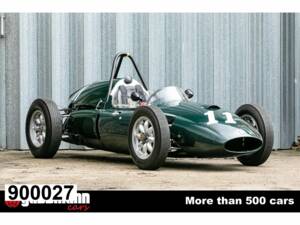
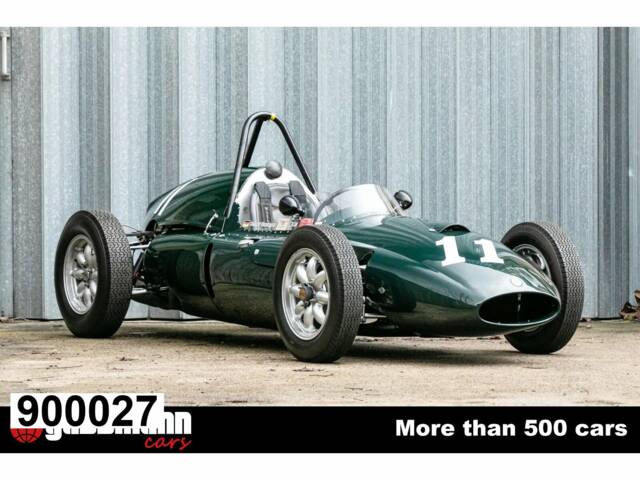
1959 | Cooper T45 Formula 2 Racing Car
Beart Cooper-Climax Type 45/51 Formula 2 Racing

Cooper T45 listing references from Classic Trader
Below you will find listings related to your search that are no longer available on Classic Trader. Use this information to gain insight into availability, value trends, and current pricing for a "Cooper T45" to make a more informed purchasing decision.
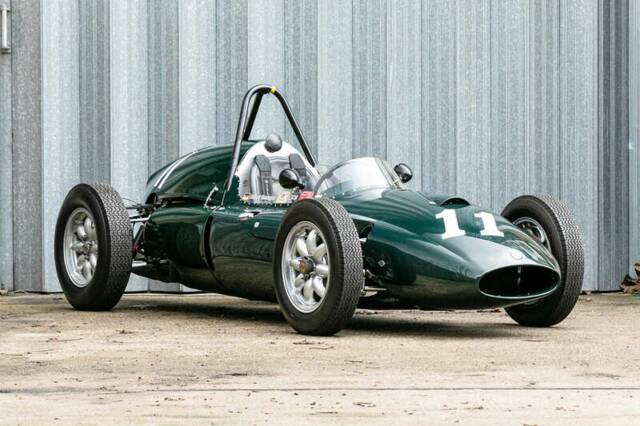
1959 | Cooper T45 Formula 2 Racing Car
1959 Beart Cooper-Climax Type 45/51 Formula 2 Racing Single-Seater FIA HTP

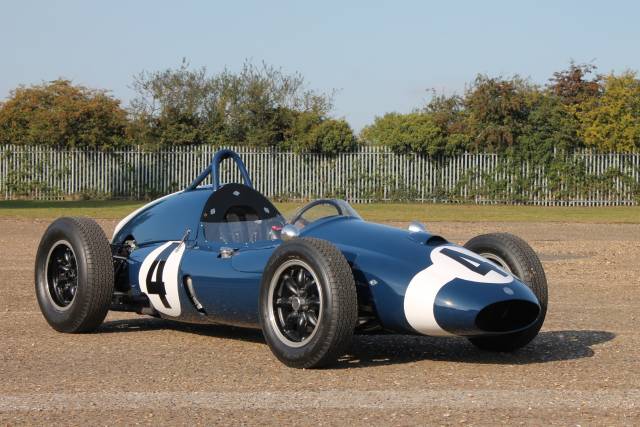
1958 | Cooper T45 Formula 2 Racing Car
Cooper T45 Classic Cars: Prices & Market Values
History of the Cooper T45
Developed and constructed in 1958 by the Cooper Car Company, the Cooper T45 stands as a milestone in racing history. The T45 represented the culmination of years of technical refinement at Cooper, notably led by designer Owen Maddock. While early Cooper chassis used double longitudinal frames up to 1947, the 1950s saw progressive innovation towards reinforced body structures and, finally, the adoption of curved tubular frames. This approach to frame design resulted in a lighter and more rigid chassis, perfectly adapting to new racing engine placement trends. On its debut, the T45 embodied these engineering leaps and immediately made an impact when Maurice Trintignant piloted it to victory at the 1958 Monaco Grand Prix, the first time a rear-engined car seized a Formula One World Championship race win.
Model History
The T45’s lineage can be traced back to the Cooper T41 and T43, both benefiting from Owen Maddock’s experimentation with curved tube chassis construction. Each generation was an answer to the limitations of previous models, constantly refined for rigidity, accessibility of the drivetrain, and optimal weight distribution. The T45 saw improvements such as a lowered front suspension with double wishbones and coil spring dampers, a more accessible gearbox, and the pivotal rear-mounted Coventry Climax engine. Its immediate successor, the T51, capitalised on the T45's breakthroughs and further honed Cooper’s rear-engine formula for even greater racing success.
Highlights of the Cooper T45
The Cooper T45's pioneering use of a curved tubular chassis allowed unprecedented freedom in mechanical packaging, lowering the car’s centre of gravity and sharply reducing overall weight. Its rear-mounted engine laid the groundwork for nearly all future Formula One designs. The T45’s reduced frontal area contributed to significantly improved aerodynamics and handling at high speeds. The pilot seat—now positioned even lower than in earlier Cooper models—further enhanced cornering, making the T45 exceptionally agile for its era.
Technical Data
Special Editions and Collectible Models
Although the T45 itself formed a focused production run with its own technical identity, certain cars that achieved major racing results—such as the 1958 Monaco-winning chassis—are regarded as historically significant. These individual cars stand out for their provenance in key races and their connections to famous drivers like Maurice Trintignant.
Engine and Performance, Transmission and Handling
The T45’s repositioned engine and improved gearbox arrangement allowed a much lower centre of gravity, which was instrumental in maximising cornering speeds on twisting circuits like Monaco. The compact dimensions and extraordinary handling, paired with immediate access to gearbox ratios, enabled the T45 to adapt quickly to different tracks. Even by contemporary standards, the T45's nimbleness in tight sections and rapid adjustments to transmission set it apart from front-engined competitors. Among historic Formula racing singleseaters, the Cooper T45 remains a technical reference point, especially in terms of handling and engineering philosophy. The exact engine specifications, rear suspension layout, and Paris' chassis weight are retained in several preserved race-winners.
Interior, Comfort, Exterior and Design
Designed for pure function, the T45’s exterior tightly hugs its mechanicals, offering barely any superfluous material. Its spaceframe chassis is constructed of individually shaped curved steel tubes, designed for mounting close to the bodywork. The low, minimal cockpit places the driver in a semi-reclined position far lower than in earlier models, improving both aerodynamics and driver control. Special features include distinctive front suspension geometry and exceptionally small frontal area, maximising the T45's speed through aerodynamic efficiency. No luxury accessories or decorative trim—everything serves the goal of speed, weight reduction, and balance.
Other Notable Features
The T45’s chassis layout allowed direct mounting of mechanical components, minimising service complexity between races and setting new standards for maintenance in Grand Prix racing. The engineering involved in its development made subsequent mid- and rear-engine designs central to race car progress after 1958.
Summary
The Cooper T45 stands as a pivotal milestone in racing engineering, thanks to its innovative frame, rear-engine placement, and agile handling. Success in both Formula One and Formula Two, highlighted by Trintignant's victory at Monaco, confirms the model’s enduring reputation. As the only Cooper model widely present and sought after today, the T45’s historical relevance remains unrivalled among classic Grand Prix machinery.