Chrysler Town & Country classic cars for sale
The Chrysler Town & Country stands out among American classics with its versatile model history, ranging from the famous 'Woody' estate cars of the 1940s to the luxurious station wagons and well-known minivans of later decades. This diversity, combined with technical innovation and distinct styling, reflects the evolving needs and tastes of post-war families and car enthusiasts alike.
Search results
Currently, there are no matching listings for your search.
Create search alert
Let yourself be notified as soon as a listing is published that matches your search filters.
Create listing
Do you have a Chrysler Town & Country that you want to sell? Then create a listing now.
Create listingChrysler Town & Country listing references from Classic Trader
Below you will find listings related to your search that are no longer available on Classic Trader. Use this information to gain insight into availability, value trends, and current pricing for a "Chrysler Town & Country" to make a more informed purchasing decision.
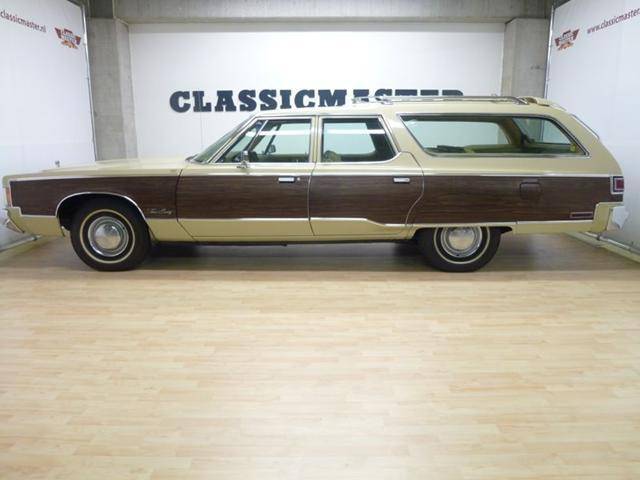
1975 | Chrysler Town & Country
Andere Town + Country

Create search alert
Let yourself be notified as soon as a listing is published that matches your search filters.
Create listing
Do you have a Chrysler Town & Country that you want to sell? Then create a listing now.
Create listingChrysler Town & Country Classic Cars: Prices & Market Values
The history of the Chrysler Town & Country
Introduced in 1941, the Chrysler Town & Country was initially launched as a 'Woody' estate, featuring real wood body panels and a steel roof. Production was limited during the war years, with only about 1,000 units made before 1945. After the war, Chrysler restarted production, offering not only estate cars but also saloons, convertibles, and coupes under the Town & Country name. The model quickly became a fixture in American automotive culture, especially for its unique blend of craftsmanship and utility. By 1950, Chrysler phased out genuine wood for cost and durability reasons, yet kept the nameplate alive. Through the decades, the Town & Country evolved with American family needs: from large V8-powered wagons in the post-war era, to lighter and more compact models through the late 1970s and 1980s. From 1990 onwards, the Town & Country designation shifted to Chrysler’s pioneering luxury minivans, separating it from its wagon roots yet keeping the spirit of practicality and comfort.
Model history
The Town & Country lineage is one of continuous innovation. The first generation ran from 1941 to 1950 and is especially remembered for its wooden bodywork. A second generation from 1951 swapped wood for all-steel construction and introduced the Firepower V8, later known as the Hemi. Throughout the 1950s and 1960s, Town & Country wagons adapted to changing demands—adding innovations like roll-down tailgate windows (1951), rearward-facing third-row seats (1957), and improved weather protection for the load area throughout the late ’60s. In 1978, a third generation emerged with striking weight reductions—up to 800 kg lighter than before—and a choice of V8 or slant-six engines. The final estate wagons were produced until 1988, now featuring wood-effect trim for classic flair. In 1990, Chrysler revived the Town & Country as a luxury variant of its popular minivan, a format that endured until 2016.
Highlights and unique features
The Chrysler Town & Country has always combined functionality with head-turning aesthetics. The earliest 'Woody' models are especially attractive to collectors for their hand-crafted wooden body elements and limited production numbers. Later iterations stood out with innovative features such as power-operated tailgate windows, rear-facing seats, and advanced V8 engines. In the modern era, the Town & Country minivan set standards for luxury family transport with practical sliding doors and refined interiors.
Technical data
Special Editions and Collectible Models
Notable special editions include the original 'Woody' estates from 1941–1950, valuable today for their craftsmanship and limited supply. The minivan generation also saw special trim lines and anniversary editions featuring luxurious interiors and unique exterior details, marking milestones for Chrysler in family-vehicle design.
Engine and performance, transmission and handling
Early Town & Country wagons were equipped with engines prioritising smooth, quiet operation—first straight-sixes, then the robust Firepower and Hemi V8s, delivering strong performance for their class. From the late 1970s, lighter bodies and a range of V8 and slant-six engines improved efficiency and responsiveness. The minivan era prioritised composure and ride comfort, especially valuable for family use, with reliable V6 engines and automatic gearboxes. • 1940s Chrysler Town & Country 'Woody' Estate: sought after for its craftsmanship, historic significance, and rarity. • 1978–1981 models: admired for significant weight-savings and more efficient engine range. • 1990+ Chrysler Town & Country Minivan: praised for its practical features and upscale comfort in a family transporter.
Interior, comfort, exterior and design
The design story of the Town & Country is marked by transitions in style and materials. The pre-1950 models are instantly recognisable for their real-wood body panels, a signature trait of the era. As American preferences shifted, Chrysler shifted to all-steel bodies, but preserved iconic styling cues and high-quality trim. Noteworthy are the 1970s models’ two-tone paintwork, wood-look cladding, and spacious, adaptable interiors. The minivan period introduced plush seating, configurable interiors, and sliding side doors—features that set standards in practicality. Certain trim levels stand out for leather upholstery, premium sound systems, and unique external accents. Accessories ranged from roof racks to third-row seating options, tailored for families and long-distance travel.
Other relevant features
The Town & Country’s long production run mirrors trends in American leisure, vacationing, and family transportation. With its wood-bodied wagons and later, versatile minivans, it reflects a focus on comfort and adaptability—characteristics valued by collectors for practicality as well as nostalgia.
Summary
From the handcrafted wooden estates of the 1940s to innovative minivans of the late 20th century, the Chrysler Town & Country offers a snapshot of American family car development and design. Its technical innovations, spacious comfort, and changing styles make it a fascinating option for classic car collectors and those seeking versatile vintage transport.