Buick Model 10 classic cars for sale
The Buick Model 10 was built between 1908 and 1910 and played a decisive role in establishing Buick as a serious force in early American automobile manufacturing. Produced during a time of financial uncertainty, the Model 10 paved the way for Buick’s continued development and remains significant for its mechanical innovations and its contribution to the company's survival.
Search results
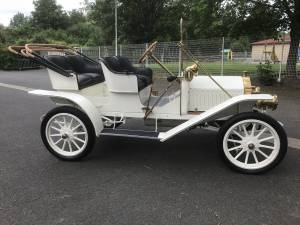
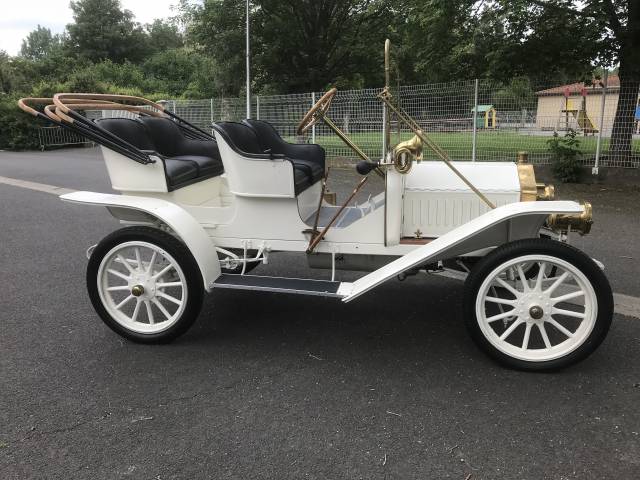
1909 | Buick Model 10
BUICK 1909 MODEL 10

Buick Model 10 Classic Cars: Prices & Market Values
History of the Buick Model 10
The Buick Model 10 made its debut at the 1907 New York Automobile Show, and production ran from 1908 to 1910. During these years, the company experienced financial difficulties, and the Model 10 was introduced as an affordable option within the Buick Model B series. It competed directly with the newly launched Ford Model T, pushing the boundaries of reliability and technology at the time. Production totals for the Model 10 reached 23,100 units in three years, placing Buick as the second largest car manufacturer in the United States during that period. The success of the Model 10 provided much-needed stability for Buick and helped shape the direction of the brand for years to come. The Model 10 ended production in 1910 as Buick turned to higher-powered, more luxurious models.
Model history – evolution and successors
The Buick Model 10 was the most affordable model in the Buick lineup and served as the company’s entry-level vehicle. After it was discontinued in 1910, Buick shifted its focus to larger, more powerful cars. The direct successor to the Model 10 was the Buick Special (Series 40), which launched in 1930 and introduced six-cylinder engines and new body styles. The Model 10’s legacy continued with various improvements and advancements in both technology and design, but no direct model line continued under the Model 10 name after 1910.
Highlights and supply/demand statistics
The Model 10 played a crucial role in Buick’s early success, not only as a commercial breakthrough but also as a successful racing car. Between 1908 and 1910, the Model 10, along with Models D and 17, won over 500 races—demonstrating its robust engineering and reliability. The Model 10 was also notable for its valve-in-head four-cylinder engine, which provided 22.5 horsepower, a strong output for its time.
Technical data
Special editions and collectible models
The Model 10 did not have officially designated special or limited editions. Its racing variants, however, are particularly sought after by collectors due to their documented success in early 20th-century motorsport events. Some cars may feature unique period coachwork, but these were not factory special editions.
Weak spots and common issues
As with many pre-war vehicles, the Model 10 requires regular and attentive maintenance. The valve-in-head engine, although advanced for its time, needs careful lubrication and adjustment of tappets and valves. Sourcing period-correct parts can be challenging. Brake systems are mechanical and need frequent inspection and set-up. Chassis lubrication, magneto ignition reliability and original wiring are points of concern—restorers often face challenges keeping the electronics both authentic and reliable.
Engine, performance, transmission and handling
The Model 10 was equipped with a 22.5 hp four-cylinder engine, paired with a manual transmission. Its valve-in-head design prioritised power and efficiency at a time when side-valve engines were common. The chassis design and lightweight construction made for lively acceleration and agility, which contributed to the model’s noted racing success between 1908 and 1910. - Buick Model 10 Roadster: Valued for its open top and lighter weight, favoured among period racers.
- Model 10 Touring: The most common variant, suited for comfortable travel with multiple passengers. All shared the same basic engine and mechanicals but differed in body configuration.
Interior, comfort, exterior and design
The Model 10 offered period-typical open bodywork, including roadster and touring variants. Interiors were utilitarian but featured quality materials for their time, with leather upholstery and simple, robust controls. The exterior was defined by early twentieth-century curves, elevated running boards and a tall, upright radiator. Accessories and paint colours depended on customer choice and coachbuilder, but all models maintained a functional, businesslike appearance. Brass fittings and lantern-style lighting typify the period character.
Other notable features
The Model 10 ushered in the use of Buick’s distinct valve-in-head engine across the range, influencing Buick’s engine philosophy for decades. A Model 10 with provenance in early motorsports or with original build documentation significantly enhances its collectability.
Summary
The Buick Model 10 was a pivotal product for its manufacturer, saving Buick during a challenging financial era and establishing a reputation for robust engineering. Offering a balance of simplicity, performance and early technology, the Model 10 remains an engaging entry point to pre-war American motoring history.