AC Sociable classic cars for sale
The AC Sociable stands out among early 20th-century motoring for its distinctive three-wheeled layout and innovative engineering. While supply and demand data highlight a focused interest within the classic AC market, the Sociable’s unique configuration and status as a pioneering vehicle from the dawn of motoring make it a subject of genuine curiosity among collectors and historians.
Suchergebnisse
Zur Zeit sind keine passenden Inserate zu Ihrer Suche veröffentlicht.
Create search alert
Let yourself be notified as soon as a listing is published that matches your search filters.
Create listing
Do you have a AC Sociable that you want to sell? Then create a listing now.
Create listingAC Sociable listing references from Classic Trader
Below you will find listings related to your search that are no longer available on Classic Trader. Use this information to gain insight into availability, value trends, and current pricing for a "AC Sociable" to make a more informed purchasing decision.
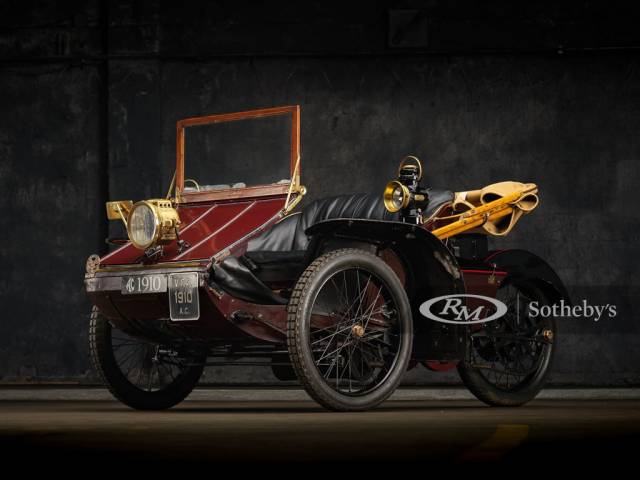
1910 | AC Sociable
1910 AC Sociable
Create search alert
Let yourself be notified as soon as a listing is published that matches your search filters.
Create listing
Do you have a AC Sociable that you want to sell? Then create a listing now.
Create listingAC Sociable Classic Cars: Prices & Market Values
Introduction and history of the AC Sociable
The AC Sociable was one of the earliest vehicles produced by AC Cars, debuting in the early 1900s. Unlike contemporary four-wheeled vehicles, the Sociable was engineered as a three-wheeler, intended to offer affordable and practical personal transportation in an era when private car ownership was not widespread. Its arrival in the market coincided with a period of rapid innovation in automotive design in Britain, and it exemplified the creativity and ambition of small manufacturers during this formative phase. The Sociable was named for its original body style, designed so that the driver and passenger would sit side by side, making travel a communal experience during a time when most vehicles were single-seaters. The vehicle immediately found favour with drivers looking for a versatile, reliable alternative to motorcycles and horse-drawn carts.
Model history of the AC Sociable
The AC Sociable follows a direct lineage from early motorised tricycles, embodying a transitional technology before AC Cars shifted focus towards four-wheeled, more conventional models. Educated by its experience with the Sociable, AC developed further innovations and gradually entered the sports and touring car segments. No direct successor carried the Sociable’s unique layout, as the company abandoned three-wheeled vehicles in favour of models that would eventually define the brand, such as the AC Ace and the later Cobra. The Sociable is therefore significant for being the origin point of AC's manufacturing story and illustrates their progression from utilitarian machines to performance-oriented cars.
Highlights of the AC Sociable
The AC Sociable is notable for several distinctive technical and cultural factors. Its three-wheel layout, with a single front wheel for steering, set it apart from most competing vehicles of its era, both in the UK and elsewhere. The Sociable’s compact design allowed it to perform economically in urban and rural settings, while its relatively simple mechanical construction made it approachable for early adopters of the motor car.
Both supply and demand for the AC Sociable make up 100% of the listings and viewing share among classic ACs currently for sale, according to our database. This reflects the exclusivity of the Sociable within the AC car inventory and suggests dedicated interest among buyers looking specifically for this model.
Technical data
Special Editions and Collectible Models
No official special editions of the AC Sociable are documented, as production volumes were low and manufacturing changes were typically introduced continuously rather than with formal limited series. However, survivor vehicles with original coachwork, period accessories, or unique documentation, such as factory records or connection to historic events, may be considered more collectible.
Weak Spots and Common Issues
While no detailed weak spot records are available, maintenance considerations typical of early 20th-century three-wheelers should be observed. Key factors include the mechanical wear of primitive engine and transmission components, wooden or aging metal components susceptible to rust or rot, and scarcity of genuine replacement parts. Restorations often require specialist expertise in vintage machinery. Checking for frame and chassis corrosion, engine condition, and proper operation of chain drive mechanisms is recommended. Prospective buyers should ensure vehicle documentation is complete to establish provenance, given the age and rarity of surviving Sociables.
Engine and Performance, Transmission and Handling
The engine of the AC Sociable, commonly a single-cylinder or V-twin, delivered only moderate power by today’s standards. Acceleration and top speed were suited to the modest expectations of the period, with top speeds around 35–40 km/h considered respectable for such vehicles. The transmission and controls were rudimentary, requiring manual operation of levers and frequent adjustment. The three-wheel layout, with its singular front steering wheel, necessitated careful handling, especially on rough or uneven surfaces, but provided good manoeuvrability in tight urban settings. Braking technology was basic, using manual cable-operated drum or band brakes. Popular models: All surviving AC Sociables are notable simply due to their survival; those with original condition or provenance stand out by virtue of their authenticity and completeness. - AC Sociable (standard configuration): Noted for its side-by-side seating and original three-wheel layout.
- Vehicles with surviving original engine or bodywork: Particularly valued for authenticity.
Interior, Comfort, Exterior and Design
The design language of the AC Sociable is unmistakably Edwardian. Its body featured a lightweight timber frame with hand-formed aluminium or steel panels. Most had open cockpits and a basic windscreen, with minimal weather protection. Seating was side-by-side—hence the name 'Sociable'—fostering a shared driving experience. Instrumentation was extremely sparse, often limited to essential dials or levers. Accessories were rarely factory-fitted but might include period lamps or horn, and, in rare cases, custom coachbuilder touches. Painted in understated hues typical of the era, details like brass fittings and wooden finishes contributed to its vintage charm. Optional accessories such as tonneau covers or bespoke upholstery are found on some individual examples.
Other relevant features
The AC Sociable occupies a unique niche in British motoring history as a bridge between the motorised tricycle and the conventional automobile. Its lightweight and economic nature meant it was sometimes adopted by early motor clubs and used in period competitions or for rural deliveries.
Summary
With its idiosyncratic design, unique position in motoring progression, and direct connection to the roots of the AC marque, the Sociable is a fascinating study in early automotive experimentation. Surviving vehicles present opportunities for both historical research and engaging vintage motoring. Its market exclusivity is reflected in supply and demand statistics, underlining focused but passionate collector interest.