Honda Jazz classic cars for sale
The Honda Jazz brings a distinctly Japanese take on the compact segment—with intelligent space utilisation, nimble handling, and a unique evolution on the European market from the early 1980s onward. Discover why this small hatchback still stands out among its peers, both technically and in terms of daily usability.
Search results
Currently, there are no matching listings for your search.
Create search alert
Let yourself be notified as soon as a listing is published that matches your search filters.
Create listing
Do you have a Honda Jazz that you want to sell? Then create a listing now.
Create listingHonda Jazz listing references from Classic Trader
Below you will find listings related to your search that are no longer available on Classic Trader. Use this information to gain insight into availability, value trends, and current pricing for a "Honda Jazz" to make a more informed purchasing decision.
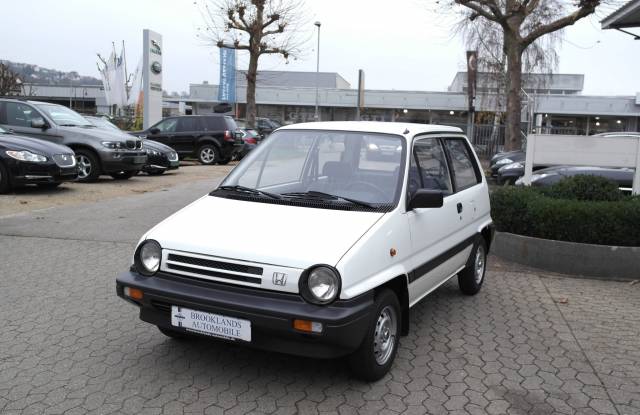
1986 | Honda Jazz
Create search alert
Let yourself be notified as soon as a listing is published that matches your search filters.
Create listing
Do you have a Honda Jazz that you want to sell? Then create a listing now.
Create listingHonda Jazz Classic Cars: Prices & Market Values
History of the Honda Jazz
The Honda Jazz represents Honda’s answer to urban vehicle demands in Europe and beyond. Launched for the European market in 1983, the Jazz emerged as a rebranded version of the Honda City due to legal restriction over the 'City' name in certain regions. Its debut featured only a two-door format locally, propelled by modest yet reliable 1.2-litre petrol engines, while other markets enjoyed broader body styles. Measuring just 3.38 metres in length and weighing roughly 703 kg, the Jazz prioritised manoeuvrability and urban practicality over sheer performance, attributes that continue to define its reputation.
Model history of the Honda Jazz
The first-generation Honda Jazz was in production in Europe until 1986. After the initial run, Honda did not officially import the subsequent Jazz/City generations to the German market, instead rolling out the Honda Logo in 1996 as a spiritual successor. The Jazz name would return globally from 2001 with what is also known as the Honda Fit (primarily in non-European markets). Notably, the Jazz badge has also appeared on various two-wheelers and badge-engineered SUVs, but its recognition in classic car circles remains linked to the original European hatchback from the 1980s.
Highlights and statistics of the Honda Jazz
The distinguishing features of early Honda Jazz models revolve around remarkable packaging efficiency, minimal weight, and ease of city driving. It packed a surprisingly large interior for its footprint and offered both 45 hp and 56 hp versions of the 1.2-litre engine. The Jazz commands attention for its simplicity, dependability, and ease of use—an honest urban companion for daily usage. Buyers seeking a practical, manoeuvrable classic with proven reliability find the Jazz in a segment of its own.
Technical Data
Special Editions and Collectible Models
In Europe, the first-generation Honda Jazz remained focused on function over exclusivity, with no official special or limited editions documented for the European market. Other regions saw broader model diversity, but on the European scene, the classic two-door hatch remains the definitive version among collectors.
Engine, Transmission, and Handling
The Jazz of the 1980s emphasised practicality and simplicity in its drivetrain. The 1.2-litre, 4-cylinder engine was renowned for longevity and low upkeep, paired with a light and accurate manual gearbox that made urban navigation effortless. With its minimal weight and tidy proportions, the Jazz excelled in city traffic, delivering agile handling and a predictable driving experience. While outright acceleration was modest, the car’s low mass meant every kilowatt was effectively utilised, making the most of the available power on narrow city streets. - 1.2 45PS: Efficient city use, notable for reliability.
- 1.2 56PS: Slightly sprightlier with additional output, same practical focus.
Interior, Comfort, Exterior and Design
The original Jazz had a straightforward, utilitarian interior—fabrics and plastics focused on durability and easy cleaning, while the exterior adopted clear and purposeful lines for maximising internal space. Unique for its unusually upright stance and tall roof, the Jazz looked unlike any other compact of the era. Accessories and special equipment were minimal, but buyers appreciated practical details: generous headroom, folding rear seats, and easy ingress/egress highlighted functional Japanese design philosophy. There are no reports of designer signatures or extravagant colour options from factory; Honda prioritised everyday usability over boutique appeal.
Other relevant features
The Jazz nameplate has seen diverse applications—from serving as Honda Fit’s branding in several regions, to a badge on mopeds and rebadged SUVs in the Japanese market. Yet, for European enthusiasts on Classic Trader, it is the original two-door hatch from the early 1980s that defines the model’s status today.
Summary
The Honda Jazz from the 1980s offers a focused, function-first approach to city driving, rooted in Japanese engineering ideals. With a simple but effective mechanical setup, shrewd use of space, and lasting reputation for reliability, the classic Jazz has become the primary focal point for Honda classic car fans in Europe. Its unique history, technical clarity, and singular market position ensure continued appeal for those valuing no-nonsense automotive solutions.