Wolf WR6 classic car for sale
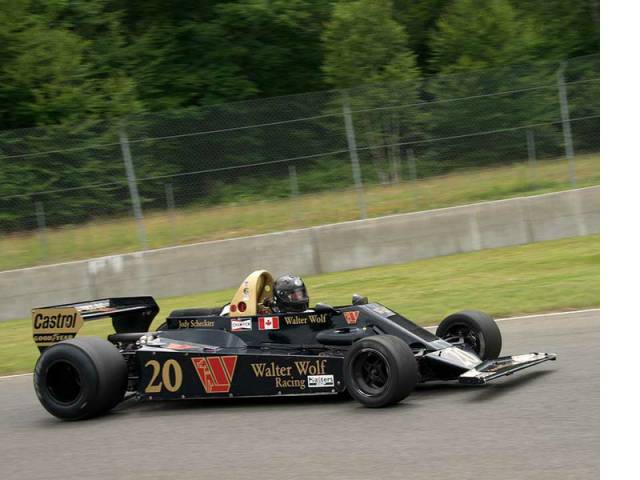
The Wolf WR6 represents one of the last Wolf Formula One cars, built for the 1978 season to take on innovative ground-effect competition. With an extremely limited production and direct F1 racing history, this model captures a unique chapter in motorsport engineering.
Search results
Currently, there are no matching listings for your search.
Create search alert
Let yourself be notified as soon as a listing is published that matches your search filters.
Create listing
Do you have a Wolf WR6 that you want to sell? Then create a listing now.
Create listingWolf WR6 listing references from Classic Trader
Below you will find listings related to your search that are no longer available on Classic Trader. Use this information to gain insight into availability, value trends, and current pricing for a "Wolf WR6" to make a more informed purchasing decision.
1978 | Wolf WR6
Wolf WR6

Create search alert
Let yourself be notified as soon as a listing is published that matches your search filters.
Create listing
Do you have a Wolf WR6 that you want to sell? Then create a listing now.
Create listingWolf WR6 Classic Cars: Prices & Market Values
History of the Wolf WR6
The Wolf WR6 was constructed as part of Walter Wolf Racing’s bid to remain competitive in Formula One during the 1978 season. Debuting as an evolution of the earlier WR5, the WR6 appeared at a time when ground effect technology, pioneered by Lotus, was revolutionising the sport. The WR6 was intended to improve upon the already successful WR1 but struggled to match the performance leap shown by rivals. Despite its limited on-track success, the WR6 remains a testament to independent innovation and the relentless technical experimentation typical of late 1970s F1.
Model Series Development
The WR6 shared much of its DNA with the WR5, but included further refinements in chassis construction to harness ground out aerodynamic benefit. Both were successors to the celebrated WR1, which had claimed several wins in its debut season. The WR6 was produced in a single example as an updated specification; following WR5, it saw competition in the latter half of 1978 before Wolf Racing withdrew from Formula One, making it the swansong of the marque’s F1 involvement.
Highlights and Special Features
Engineered specifically for Formula One at one of the sport’s most innovative eras, the WR6 earned three podiums during the 1978 season when counting its WR5/6 lineage. The chassis showcases period aerodynamics with an emphasis on ground effect principles, although Wolf’s limited resources could not match Lotus’ advancements. Each WR6 is documented as an original F1 car from an independent team notorious for punching above its weight.
Technical Data
Special Editions and Collectible Versions
Given the extremely low production and the WR6’s direct F1 history, every WR6 built is effectively a collectible. No further special variants or liveries are documented beyond the standard 1978 F1 configuration.
Weak Spots and Common Issues
No detailed weak spots have been documented for the WR6 in the available material. As with all 1970s F1 cars, scrutiny should be paid to chassis integrity, ageing suspension components, and engine overhauls should the car see historic competition use. Spares are highly specialised and typically custom-made or remanufactured.
Engine, Performance, Transmission and Handling
The WR6 utilised the dominant Cosworth DFV 3.0-litre V8, outputting over 480 hp, mated to a Hewland gearbox. Acceleration and speed were on par with late-1970s F1 machinery, though the car’s handling characteristics sometimes struggled compared to ground effect rivals. The WR6 excelled on circuits suiting mechanical grip over aerodynamic load, and its race record includes several podium appearances in its short career. Given only a single WR6 was built, every remaining example is historically important. The overarching Wolf WR5/6 line is notable for its engagement in the 1978 World Championship and experimentation with emerging F1 technologies.
Interior, Comfort, Exterior and Design
As a pure-bred F1 car, the WR6’s cockpit is a minimalist, driver-centric environment. Instrumentation is functional, with each control placed for maximum efficiency. Externally, the WR6 reflects late-70s aerodynamic thinking, with sculpted sidepods and modest wings aiming to exploit ground effect while retaining the classic lines of the period. No distinctive road car interior elements, luxury materials, or optional extras feature; every aspect is tailored for racing utility.
Other Features
Due to its racing provenance, each WR6’s history and mechanical specification may diverge slightly, depending on restoration or historic racing preparation over the years. Chassis number and continuous provenance are critical for collectors and racing enthusiasts alike.
Summary
The Wolf WR6 stands as a rare F1 machine with a design philosophy forged in one of motorsport's most innovative decades. Its combination of historical significance, proven race record, and genuine period engineering makes it a focal point for racing collectors and enthusiasts seeking a tangible link to late 1970s Formula One competition.