Williams FW14 classic cars for sale
The Williams FW14 stands as a benchmark of innovation in Formula One history. Engineered by Adrian Newey and campaigned by Nigel Mansell and Riccardo Patrese across the 1991 and 1992 seasons, the FW14 is prized for its advanced technology and impressive race heritage. Discover more about this purebred race car below.
Suchergebnisse
Zur Zeit sind keine passenden Inserate zu Ihrer Suche veröffentlicht.
Create search alert
Let yourself be notified as soon as a listing is published that matches your search filters.
Create listing
Do you have a Williams FW14 that you want to sell? Then create a listing now.
Create listingWilliams FW14 listing references from Classic Trader
Below you will find listings related to your search that are no longer available on Classic Trader. Use this information to gain insight into availability, value trends, and current pricing for a "Williams FW14" to make a more informed purchasing decision.
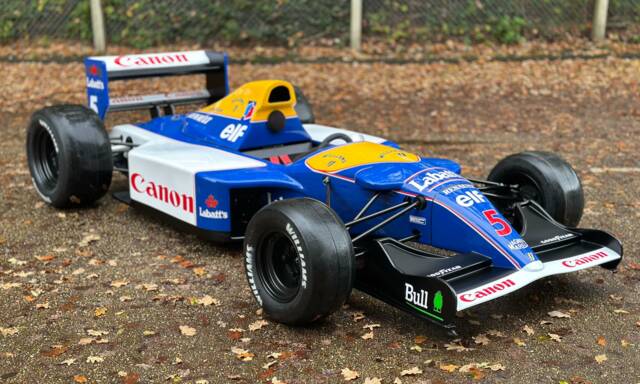
2025 | Williams FW14
2025 Williams FW14-B Junior

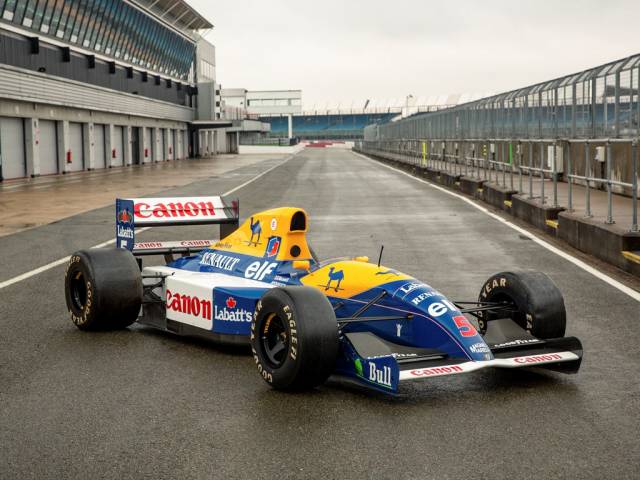
1991 | Williams FW14
1991 Williams FW14
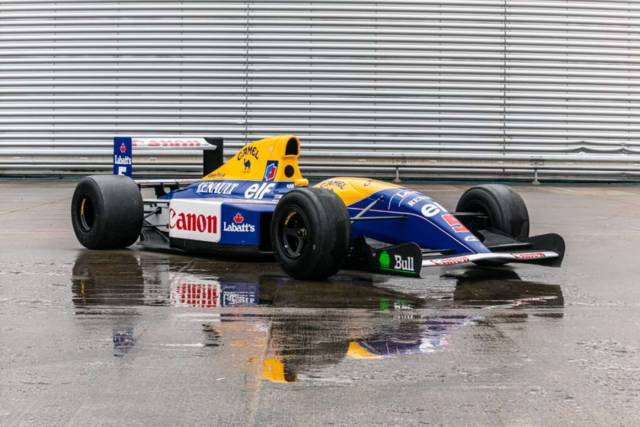
1991 | Williams FW14
Consigned by Williams F1 - ‘Red 5’ FW14 display car
Create search alert
Let yourself be notified as soon as a listing is published that matches your search filters.
Create listing
Do you have a Williams FW14 that you want to sell? Then create a listing now.
Create listingWilliams FW14 Classic Cars: Prices & Market Values
History of the Williams FW14
Launched for the 1991 Formula One season, the Williams FW14 marked a turning point for the British constructor. Adrian Newey’s design expertise brought aerodynamic efficiency and technical prowess, propelling Williams into the forefront of F1 competition. Piloted by stalwarts Nigel Mansell and Riccardo Patrese, the FW14 faced fierce rivalry but soon set new benchmarks, particularly with the FW14B iteration in 1992, which dominated the field and cemented Williams’ reputation as a technological pioneer.
Model History
The FW14’s predecessor, the Williams FW13, was already respected, but the FW14’s Newey-led evolution brought semi-automatic transmission and active suspension into the spotlight. This technical leap continued in the subsequent FW15C, making the FW14 an essential bridge between traditional designs and highly electronic 1990s F1 machinery.
Highlights and Noteworthy Features
The FW14 introduced refined aerodynamics, a semi-automatic gearbox, and, in the FW14B, active suspension—technologies that redefined Formula One engineering standards. Its computational design and mechanical sophistication gave Williams a clear advantage over the competition during its championship-winning campaign.
Technical Data
Special Editions and Collectible Models
While the FW14 was produced exclusively for Grand Prix racing, chassis variations such as FW14B equipped with active suspension stand out. The FW14B is reputed for underpinning Mansell’s 1992 championship run, making it the most desired variant for collectors and enthusiasts.
Weak Spots and Common Issues
Given its purebred racing nature, the FW14 requires specialized maintenance and restoration expertise. Authentic parts and service knowledge are paramount, particularly for electronics and hydraulic systems inherent to active suspension vehicles. Sourcing period-correct components can be challenging, making ongoing upkeep a serious undertaking for owners.
Engine and Performance, Transmission and Handling
The Renault V10-powered FW14 represented a quantum leap in performance, producing prodigious power and responsive throttle behaviour. The semi-automatic transmission offered rapid gear changes, while active suspension maximised grip regardless of circuit conditions. The FW14 remained highly competitive throughout its two-season run, excelling particularly at high-speed circuits thanks to its balanced chassis and innovative aero. Notable examples include chassis with racing provenance, particularly those driven by Mansell or Patrese during 1992, distinguished by their FW14B configuration.
Interior, Comfort, Exterior and Design
The FW14’s bodywork epitomised the early 1990s Formula One aesthetic: sleek, aerodynamic, low-drag, conceived by Adrian Newey. Its iconic livery, minimalist carbon cockpit, and functional surfaces focused entirely on competitive advantage. Driver comfort was secondary to faultless ergonomics and weight savings; custom-moulded seats and compact controls underlined the car’s racing priorities.
Other Features
Due to its exclusive race car status, the FW14 has no road-going accessories or trim, and is sold strictly as a collector or event vehicle. Its prominence is further marked by continued appearances at historic motorsport events, where enthusiasts celebrate its racing victories and engineering breakthroughs.
Summary
The Williams FW14 exemplifies the technological leap Formula One underwent in the early 1990s. Designed by Adrian Newey, campaigned by notable drivers, and still capturing enthusiasts’ attention, the FW14 is a standout among Williams classics, dominating both supply and demand in specialist circles. Its influence on F1 engineering remains undisputed.