Standard Pennant Classic Cars for Sale
The Standard Pennant, built from 1957 to 1959, stands out for its practical engineering and quintessentially British design, boasting a foldable rear seat and factory-supplied jack and crank. Its punchy performance and unmistakable two-tone paint make it a memorable chapter of post-war motoring.
Search results
Currently, there are no matching listings for your search.
Create search alert
Let yourself be notified as soon as a listing is published that matches your search filters.
Create listing
Do you have a Standard Pennant that you want to sell? Then create a listing now.
Create listingStandard Pennant listing references from Classic Trader
Below you will find listings related to your search that are no longer available on Classic Trader. Use this information to gain insight into availability, value trends, and current pricing for a "Standard Pennant" to make a more informed purchasing decision.
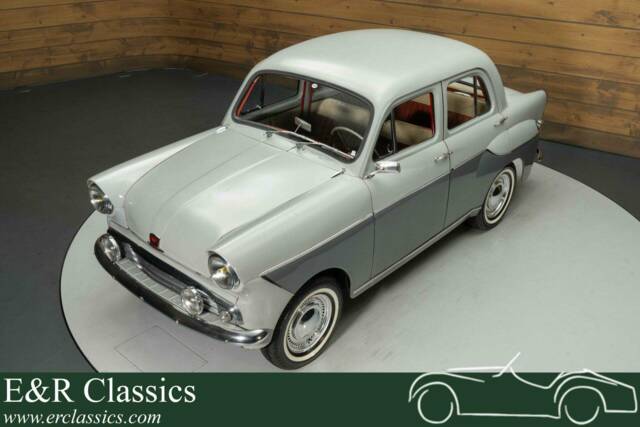
1958 | Standard Pennant
Oldtimer Standard Pennant Standrive | Zeldzaam | Semi-automaat | 195

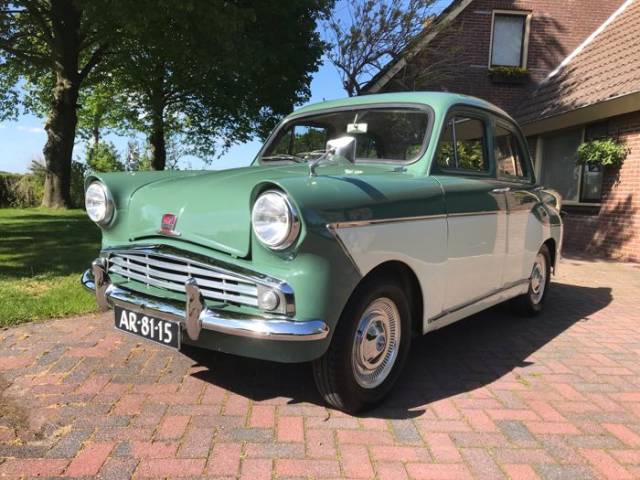
1958 | Standard Pennant
Create search alert
Let yourself be notified as soon as a listing is published that matches your search filters.
Create listing
Do you have a Standard Pennant that you want to sell? Then create a listing now.
Create listingStandard Pennant Classic Cars: Prices & Market Values
History of the Standard Pennant
With roots tracing back to the Standard Motor Company's tradition of producing pragmatic British vehicles, the Standard Pennant succeeded the long lineage of 'Standard Ten' models, a name originally tied to tax classification rather than engine output. Manufactured between 1957 and 1959, the Pennant brought forward modernised styling cues and practicality, at a time when personal transport in Britain was transforming rapidly. It remains a noteworthy entry in the history of British small cars, catering to a growing post-war middle class seeking affordable, versatile vehicles.
Model History
The Pennant is part of the Standard Ten family, which existed under various guises from 1906 to 1961. While the earlier Tens reflected the tax horsepower naming convention, later models such as the Pennant continued the lineage with practical enhancements rather than naming accuracy. The Pennant became the final evolution of the 'Ten' series, succeeded by newer British Leyland designs as the country's automotive landscape shifted in the 1960s.
Highlights of the Standard Pennant
Notable for its fold-down rear seat, the Pennant offered genuine versatility unusual for its class in the late 1950s, allowing owners to carry larger cargo. The car’s original two-tone paint of green and cream, with a vivid red interior, speaks to the era’s fondness for optimistic design choices. Factory-provided tools like the jack and hand crank were standard, underlining the car’s practicality. According to our database, all Standard listings for this series are Pennants, representing 100% of the make’s classic listings and matching share in listing views, which underlines its importance and recognition within the Standard brand’s classic car presence.
Technical Data
Special Editions and Collectible Models
No limited editions or highly differentiated collectible variants of the Pennant are noted within available records. All Pennants maintain the core specification with their distinctive colour scheme and equipment.
Engine and Performance, Transmission and Handling
The Pennant’s 900 kg kerb weight and practical four-cylinder engine delivered a top speed of 117 km/h—respectable by late-50s family car standards. Its straightforward rear-wheel drive layout provided a familiar driving feel, while the fold-down rear seat enhanced the utility for owners needing flexibility on the move. No specific performance variants were produced, and the mechanicals are representative of the era's reliable British small car engineering. All listed Standard classics on the portal are Pennants, distinguishing it as the most available and researched variant.
Interior, Comfort, Exterior and Design
The Standard Pennant leans into period British trends with its two-tone green and cream bodywork and a bold red interior, setting a distinctive ambience. The cabin’s standout feature is the fold-down rear seat, an uncommon practical touch at this price segment in the 1950s. Original accessories such as the jack and hand crank complete the car’s purposeful package. Special materials or rare accessories are not documented in surviving Pennant examples.
Summary
Built between 1957 and 1959, the Standard Pennant crystallises British post-war ambition through compact practicality, unique styling, and thoughtful features like a foldable rear seat. With every classic Standard listing attributed to this model, it remains inseparable from its marque’s historical identity in the classic car world.