Standard E1 classic cars for sale
The Standard E1 is a distinctive German freight tricycle, produced between 1939 and 1945 by Wilhelm Gutbrod’s Standard factory. Its chain-driven front wheel and utilitarian layout made it one of the main commercial workhorses of its time. The E1’s unique construction story sets it apart from other commercial vehicles of the pre- and post-war era.
Search results
Currently, there are no matching listings for your search.
Create search alert
Let yourself be notified as soon as a listing is published that matches your search filters.
Create listing
Do you have a Standard E1 that you want to sell? Then create a listing now.
Create listingStandard E1 listing references from Classic Trader
Below you will find listings related to your search that are no longer available on Classic Trader. Use this information to gain insight into availability, value trends, and current pricing for a "Standard E1" to make a more informed purchasing decision.
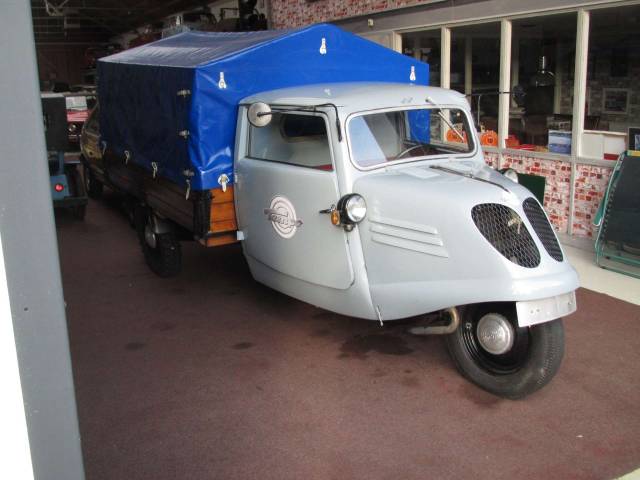
1941 | Standard E1

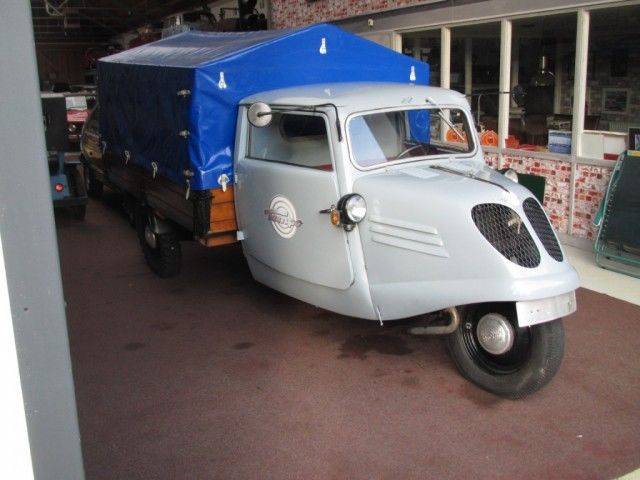
1941 | Standard E1
Andere Standard dreirad .
Create search alert
Let yourself be notified as soon as a listing is published that matches your search filters.
Create listing
Do you have a Standard E1 that you want to sell? Then create a listing now.
Create listingStandard E1 Classic Cars: Prices & Market Values
History of the Standard E1
The Standard E1 came to life in 1939, manufactured by the Standard Fahrzeugfabrik Wilhelm Gutbrod in Germany. It directly followed the design of the Tempo E 400, which originated a year earlier at Tempowerk Vidal & Sohn, and was officially designated by the German authorities as the 'Standard Three-wheeler Delivery Van' (Einheits-Dreirad-Lieferwagen). The E1 became integral to local commerce and logistics throughout WWII and into the immediate post-war period, recognised for its practical, no-frills engineering.
Model History
The E1 stands as a direct product of pre-war necessity and uniformity, mirroring the Tempo E 400 in both form and mechanicals. Previous Gutbrod vehicles distinguished themselves by mounting the powertrain behind the rear axle; the E1, however, shifted to a simpler, front-wheel-driven chassis. Its production ceased in 1945, as Germany’s automotive market evolved and requirements for civilian commercial vehicles changed. Subsequent Gutbrod utility models moved away from the tricycle approach.
Highlights of the Standard E1
The Standard E1's main features include its motorized tricycle layout, a unique chain drive from the gearbox and engine directly to the front wheel, and a basic but durable frame suitable for rough commercial use. Its lifted centre of gravity and minimalistic engineering underline its purpose-driven origins.
Technical Data
Special Editions and Collectible Models
No special or limited edition versions of the Standard E1 are recorded. Collectability is mostly driven by originality, completeness, and historical context rather than specific model variants.
Weak Spots and Common Issues
Due to its basic mechanical layout and high centre of gravity, Standard E1s are known for limited cornering stability, particularly when laden. The chain drive system and front wheel assembly require regular inspection for tension and wear. The utilitarian construction makes certain repairs straightforward, but sourcing genuine parts can present challenges given the vehicle’s age and rarity.
Engine, Performance, Transmission and Handling
The Standard E1, with its compact engine powering the front wheel via chain drive, was designed for reliable daily freight duties rather than speed or refined handling. The high centre of gravity means careful cornering is required, but its straightforward layout meant easy fixes on the road. The mechanical simplicity prioritised rugged function over refinement. The E1 is the focal point for Standard’s three-wheeled delivery vehicle line; its nearest counterparts from rival brands include the Tempo E 400, sharing most core mechanicals.
Interior, Comfort, Exterior and Design
The E1’s cab and load platform were utilitarian by nature, with design focusing on ease of use and durability. The cabin was sparsely equipped, using materials that were readily available during wartime. No special paints, materials, or accessories are documented—its appeal lies in the authenticity and unadorned engineering that reflects its era and purpose.
Further Details
Few E1s survived the postwar period due to their utilitarian role and limited production run. Models that remain today typically attract attention for their period-accurate restoration and the role they played in German commercial history.
Summary
The Standard E1 reflects the pragmatic, no-compromise approach of pre- and wartime automotive engineering in Germany. Its mechanical simplicity, commercial orientation, and unmistakable tricycle silhouette make it a vehicle with historical and technical significance for collectors and enthusiasts focused on the evolution of utility vehicles.