- Car
- Saporoshez
- Saporoshez 968 (0 offers)
Saporoshez 968 Classic Cars for Sale
The Saporoshez 968 is a distinctive Eastern European small car produced in Ukraine between 1971 and 1994. With its rear-mounted, air-cooled engine and unique body design reminiscent of the NSU Prinz, it stands out for ease of maintenance and its fascinating engineering, making it a sought-after entry in the world of classic Soviet automobiles.
Search results
Currently, there are no matching listings for your search.
Create search alert
Let yourself be notified as soon as a listing is published that matches your search filters.
Create listing
Do you have a Saporoshez 968 that you want to sell? Then create a listing now.
Create listingSaporoshez 968 listing references from Classic Trader
Below you will find listings related to your search that are no longer available on Classic Trader. Use this information to gain insight into availability, value trends, and current pricing for a "Saporoshez 968" to make a more informed purchasing decision.
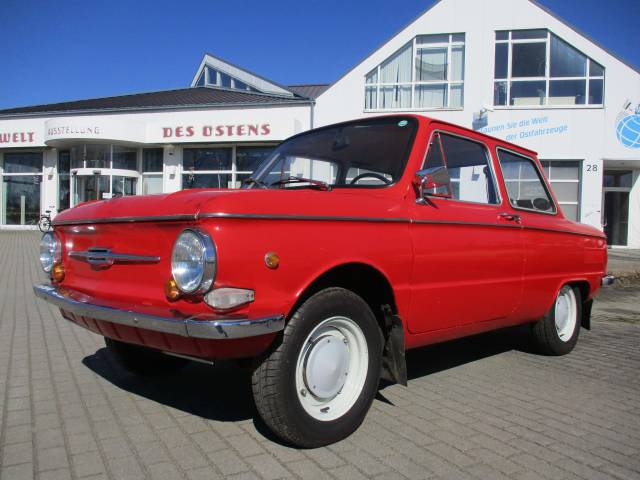
1973 | Saporoshez 968
ZAZ Saporoshez 968M

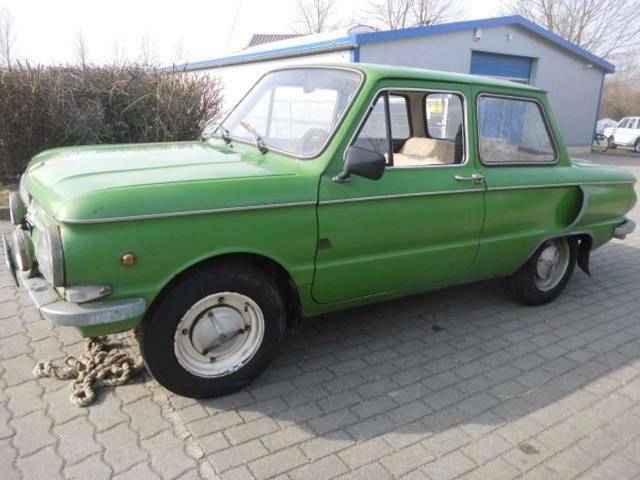
1977 | Saporoshez 968 A
ZAZ 968 A
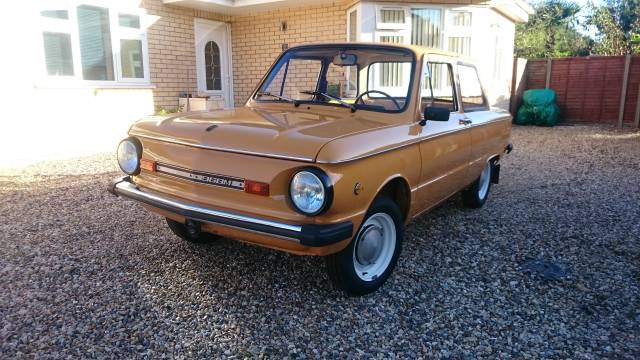
1988 | Saporoshez 968 M
One Owner from New

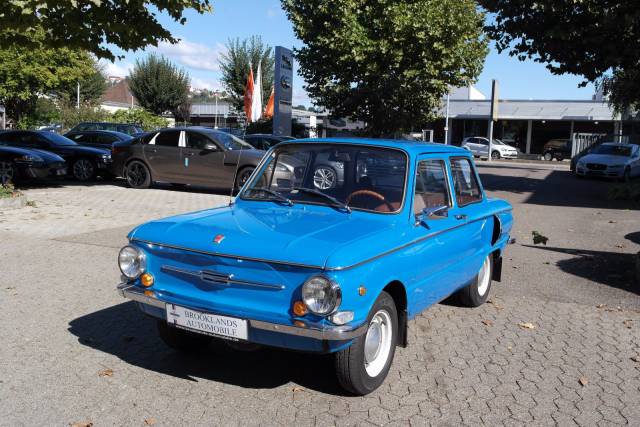
1978 | Saporoshez 968 A
Andere Saporoshez 968 A, Top Zustand, H-Zulassung
Create search alert
Let yourself be notified as soon as a listing is published that matches your search filters.
Create listing
Do you have a Saporoshez 968 that you want to sell? Then create a listing now.
Create listingSaporoshez 968 Classic Cars: Prices & Market Values
History of the Saporoshez 968
The Saporoshez 968 was manufactured by the Saporisky Avtomobilebudivny Zavod (SAS), a Ukrainian car builder during the Soviet era, with production beginning in 1971. The 968 is an evolution of the earlier 966 model, incorporating changes such as updated lighting and technical improvements. Its body structure closely follows the aesthetic of the NSU Prinz 4, with influences from the Chevrolet Corvair. The SAS 968 first appeared in 1970, with serial production starting in 1971 and continuing until 1979. From there, the 968A offered safety enhancements and better corrosion protection. The line culminated in the Saporoshez 968M, produced until 1994, offering reduced weight through plastic components and revised design.
Model History
The Saporoshez 968 series succeeded the Saporoshez 966. The progression began with the standard 968 (1971–1973), then the 968A (1973–1979) which included safety and technical upgrades. In 1979, the 968M replaced its predecessors, continuing production until 1994. The 968M, slightly larger yet lighter due to use of plastic panels, eliminated the rear air intakes and chrome trim for a modernised look. There were no direct successors after production ceased.
Highlights of the Saporoshez 968
The 968 stands out with its rear-mounted, aluminium four-cylinder engine, either with 40 or 45 hp, and low maintenance requirements. Key engineering milestones include the addition of a dual-circuit brake system, theft protection, collapsible steering column, improved corrosion resistance, and options for factory-installed safety belts. Later versions benefited from improved carburettors and exhaust systems. The model featured a self-supporting body construction, a rare trait among compact cars in Eastern Europe at the time. The Saporoshez 968 was widely exported, even appearing in East Germany where it compared favourably in power to local alternatives like the Trabant 601.
Technical Data
Special Editions and Collectible Models
The 968M model, introduced in the last production year and sold until 1994, stands out as a special variant within the series. Its adoption of plastic components, 40 kg reduced weight, and omitted rear air intakes and chrome details make it distinct both visually and mechanically. Cars equipped with original manuals, specific upholstery, and factory radios are considered particularly authentic examples.
Weak Spots and Common Issues
The Saporoshez 968 is known for a few notable weaknesses. The petrol-fired heater is considered unreliable, and the rear-mounted engine is prone to overheating, especially in demanding conditions. Despite its generally robust drivetrain and well-designed chassis, corrosion can be an issue, especially on earlier models without the improved rustproofing introduced later. Parts supply is good, mainly from Ukraine, allowing easy and faithful restoration. Swapping seat belts and interior fabrics is straightforward. Routine maintenance is simple, benefiting both daily drivers and enthusiasts working on period-correct restoration.
Engine, Performance, and Handling
The 968’s rear-mounted, air-cooled engine delivers either 40 or 45 hp, providing adequate propulsion for urban and rural conditions typical of the model’s original market. The four-speed manual gearbox complements the powertrain, with a top speed between 118 and 123 km/h, depending on engine trim. Its stiff chassis and suspension give it an advantage on rough roads compared to period competitors from Eastern Europe, such as the Trabant 601. Handling, while basic by modern standards, benefits from the relatively light rear end and robust body construction. Those interested in technical authenticity seek cars with original wheels, tyres, and interior appointments. - Saporoshez 968 M (lightweight, final evolution, plastic panels)
- Saporoshez 968A (added safety, improved corrosion protection) Both are equipped with either the 40 hp or 45 hp aluminium engine, 1196–1197 cc, rear-wheel drive.
Interior, Comfort, Exterior and Design
The Saporoshez 968’s design reflects both functional simplicity and Soviet industrial styling. Externally, the car often appears in factory ochre-gold, with original wheels painted to match, and period-correct Russian tyres. The body forgoes chrome in later M-models, with more plastic and simplified details. Inside, the 968 featured beige faux-leather upholstery, easily replaceable or restorable to original standards. The dashboard and steering wheel retain their classic forms, and radios, where present, are a popular accessory among enthusiasts. Safety equipment includes basic factory seat belts, which can be replaced with modern equivalents. Authentic cars are delivered with original documents and manuals.
Other Notable Features
Every well-preserved Saporoshez 968 includes its original handbook, a rare find for vehicles from the Eastern Bloc era. Vehicles can be easily registered for export, including supporting documentation for EU imports. The 968’s mechanical simplicity appeals to owners seeking hands-on restoration and straightforward upkeep. Replacement parts remain accessible, and restoration projects are supported by a lively network of suppliers, particularly in Ukraine.
Summary
The Saporoshez 968 holds a unique place among classic small cars thanks to its Soviet heritage, distinctive design inspired by Western models, and its practical, easy-to-maintain mechanical layout. Loyal support for the model and accessible spare parts make it an inviting choice for enthusiasts interested in Eastern European automotive history.