Sammio Spyder classic cars for sale
The Sammio Spyder combines British kit car tradition with retro-inspired design, delivering a distinctive driving experience reminiscent of postwar sports cars. Lightweight fibreglass construction paired with readily available donor mechanics creates a package appealing to enthusiasts drawn to style, individuality, and hands-on motoring.
Search results
Currently, there are no matching listings for your search.
Create search alert
Let yourself be notified as soon as a listing is published that matches your search filters.
Create listing
Do you have a Sammio Spyder that you want to sell? Then create a listing now.
Create listingSammio Spyder listing references from Classic Trader
Below you will find listings related to your search that are no longer available on Classic Trader. Use this information to gain insight into availability, value trends, and current pricing for a "Sammio Spyder" to make a more informed purchasing decision.
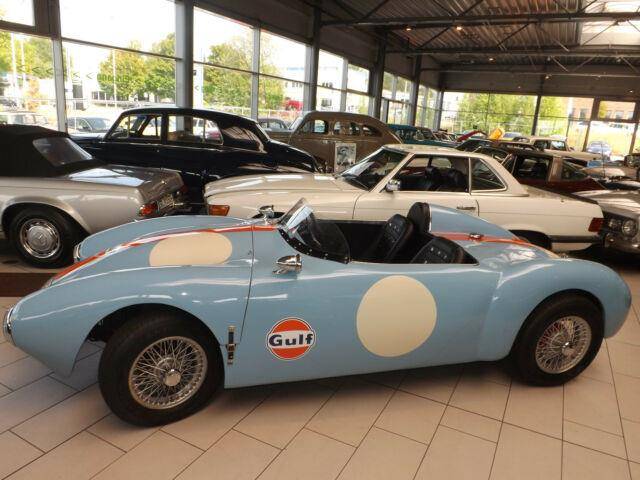
1964 | Sammio Spyder
Triumph Herald Sammio ,,"

Create search alert
Let yourself be notified as soon as a listing is published that matches your search filters.
Create listing
Do you have a Sammio Spyder that you want to sell? Then create a listing now.
Create listingSammio Spyder Classic Cars: Prices & Market Values
History of the Sammio Spyder
The Sammio Spyder draws its inspiration from the British special-builder scene, echoing the racing barchettas of the 1950s. Conceived as a garage-build project, the Spyder was primarily marketed in the UK, offering classic car enthusiasts the opportunity to create a sports car with vintage charisma without sourcing rare original components. Its design roots lie in the era of streamlined postwar racers where weight reduction and simplicity dominated. The Spyder was born from a desire to recreate this spirit in an accessible, kit-based format, allowing owners to revive the style and essence of period motoring on a pragmatic budget.
Model Evolution and Development
Sammio introduced the Spyder body kit to be fitted primarily on Triumph Herald or Vitesse chassis. Early models kept the engineering as basic as possible, relying on readily available components. Over time, variations emerged reflecting new chassis donors and subtle design tweaks, but the core offering—retro bodywork, open-top configuration, and mechanical simplicity—remained consistent. No factory-assembled version ever existed; every Spyder is unique in its details and finish, determined by the builder’s choices and abilities. The model’s continuation under new management after the original company changed hands further testifies to its enduring appeal among British kit car enthusiasts.
Distinctive Features and Market Statistics
The Sammio Spyder distinguishes itself by capturing the shape and minimalism of hand-built racers from motorsport’s golden age. Occupying a rare spot between replica and original classic, the Spyder’s appeal lies in its mix of customisability, low weight, and mechanical transparency. Its kit format also means a wide spectrum of build quality and specification.
Sammio Spyder accounts for 100% of Sammio listings on the market, reflecting its dominance as the manufacturer’s primary offering. In terms of interest, it also commands all of Sammio’s demand, standing as the make’s most sought-after model on the classic car market.
Technical Data
Special Editions and Collectible Variants
Although the Sammio Spyder was available solely as a kit and not as a factory-assembled car, some individual builds incorporate unique design choices such as custom paintwork, period-correct accessories, or alternative mechanical bases. However, no official limited editions or factory-special models are known.
Weak Spots and Common Issues
Typical kit car considerations apply: build quality varies by assembler. Attention should be given to chassis rust, especially if the original donor frame was not properly restored. Suspension bushings, electrical connectors, and body panel alignment should all be inspected. The Triumph-sourced running gear is robust, but age-related wear on mechanical parts is common. As all Spyders are home-assembled, verify all safety-relevant hardware and modifications.
Engine, Performance, and Handling Characteristics
The Sammio Spyder’s featherweight body delivers engaging dynamics, especially with the standard Triumph engines. Expect modest outright power but notably quick reactions and agile steering owing to the low mass and basic suspension setup. The driving experience is raw and communicative, with wind-in-the-hair motoring and a soundtrack defined by mid-century mechanicals. Gearbox and rear axle behaviour are period-authentic, demanding attention from the driver but rewarding smooth inputs. Most Spyders use the Triumph Herald’s 1147cc or Vitesse’s 1596cc straight-four, mated to a manual gearbox. Some builds feature upgrades, such as tuned engines or alternative brakes, but factory data always ties back to the Triumph donor base.
Interior, Comfort, Exterior and Design Highlights
The Sammio Spyder embraces minimalism both inside and out. Expect no frills: bare-bones interiors with basic, functional instrumentation directly transplanted from donor vehicles. Exterior design mimics 1950s barchettas, with pronounced wheelarches, a curvaceous nose, and a low-slung stance. Many owners opt for bespoke period racing accessories, leather straps, wire wheels, or painted number roundels. Seating is basic, usually low-fixed buckets, further elevating the raw roadster atmosphere. Every example reflects personal touches, making each Spyder visually distinct.
Further Noteworthy Details
Some Spyder builds incorporate creative customisations—one-off colour schemes, retrofitted period components from other British cars, or even alternative engine swaps. The straightforward kit format allows significant owner input beyond the norm for hand-built vehicles.
Summary
The Sammio Spyder is a unique proposition in the classic car scene: designed for enthusiasts who value mechanical purity and hands-on involvement, it delivers the sensation of vintage motoring without the cost and scarcity of true period cars. Fully dependent on the skill and vision of the builder, every Spyder offers a tailored experience linked to British kit car traditions and 1950s racing aesthetics.