- Car
- Radical (0 offers)
Buy Radical Classic Cars
Radical builds British sports racers for drivers who value lap time, feedback and proper race support over conventional road-car comforts. From an early 1100 Clubsport to an SR3, SR8, RXC or SR10, a well-documented example can be a remarkably direct route into UK track days and one-make racing.
Search results
Currently, there are no matching listings for your search.
Create search alert
Let yourself be notified as soon as a listing is published that matches your search filters.
Radical listing references from Classic Trader
Below you will find listings related to your search that are no longer available on Classic Trader. Use this information to gain insight into availability, value trends, and current pricing for a "Radical" to make a more informed purchasing decision.
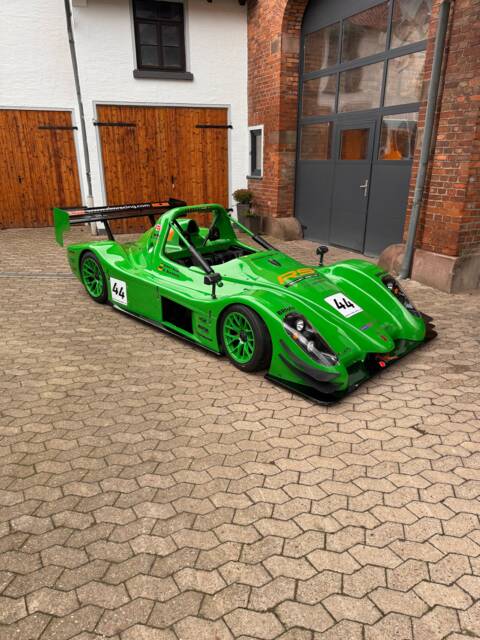
2014 | Radical SR3 RS 1500
Radical SR3

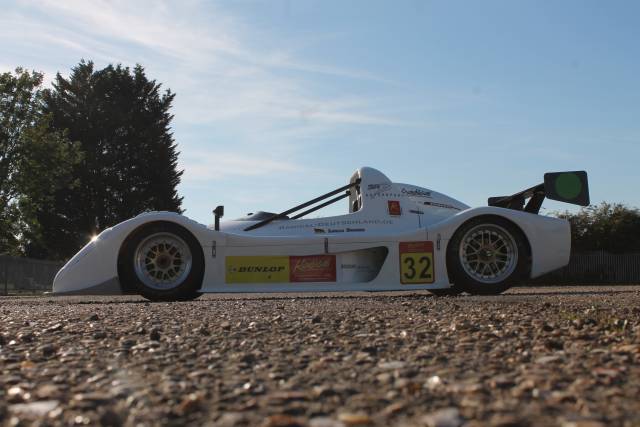
2005 | Radical SR3

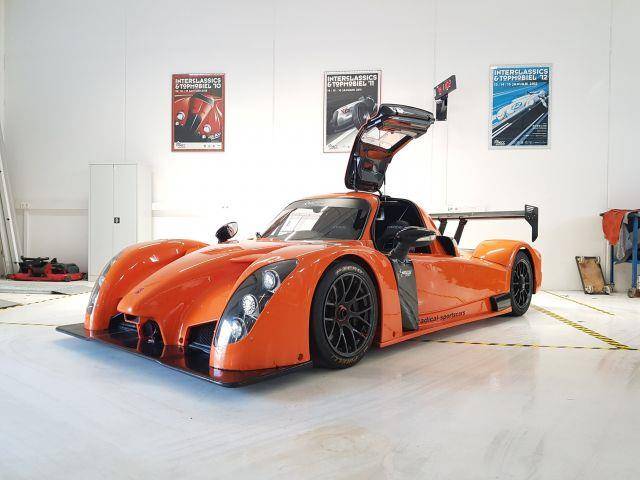
2016 | Radical RXC 500 Turbo
Sonstige Sonstige
Create search alert
Let yourself be notified as soon as a listing is published that matches your search filters.
Radical: British Sports Racers with a Racing-First Mindset
Radical is unusual even in the specialist British-performance world. It is not a conventional maker of sports cars that happens to race them; it has built purpose-designed sports racers since 1997 and has made circuit use, customer competition and factory support central to the product. Its Peterborough base remains an important practical advantage for a buyer in Great Britain: cars, race series, parts knowledge and specialist contacts are much closer than they are for an imported prototype.
The company was incorporated by Phil Abbott and Mick Hyde on 28 January 1997. Development had begun the preceding year, and the Kawasaki-powered 1100 Clubsport made its public appearance at Brands Hatch in April 1997. Its formula was clear: a light tubular spaceframe, a low open body, motorcycle-derived power and properly serious grip. The 1300 Prosport followed in 1999, but it was the two-seat SR3, introduced in 2001, that turned Radical from a promising niche concern into a major presence in British club racing. “SR” means Sports Racer, an honest description rather than marketing decoration.
The SR3 remains the make's reference point because it combined manageable running costs with performance that can embarrass much more expensive machinery. Radical subsequently developed the SR4 and, in 2005, the SR8, whose in-house RPE 2.6-litre V8 gave the line a startling flagship. The SR8 LM recorded a 6min 48sec Nürburgring Nordschleife lap in 2009, a production-car record that stood for 12 years. It was an attention-grabbing demonstration of what low mass, aero and race-bred mechanicals could achieve, rather than a change of direction away from the track.
Ambition also reached endurance racing. The SR9 appeared in LMP2 in 2006 and Radical made a run of Le Mans appearances, experience that informed the closed-cockpit RXC launched in 2013. The RXC made the marque more approachable for drivers wanting a roof, a more recognisable GT silhouette and, in appropriate specification, a road-legal route. Radical's SR3 SL, launched in 2011, was the first SR model to use a four-wheel-car engine, a Ford 2.0-litre direct-injection turbo unit; road approval was always an option for particular variants, not a universal feature of the badge.
More recent models preserve the same logic. The entry-level SR1 brings a gentler threshold to the paddock, while the SR10, introduced in 2020, combines a Radical Performance Engines-developed Ford 2.3-litre EcoBoost turbo engine with a Hewland six-speed transaxle. Radical announced that the SR10 became its fastest-selling model, reaching 50 cars within nine months of production. Today the SR3 XXR and SR10 XXR show that the company is still iterating rather than trading only on its history. For an enthusiast seeking a Radical in Britain, the lineage matters because it explains the market: every generation is tied to a particular engine, series eligibility, spares package and level of usable performance.
The Radical Formula and Its Standout Qualities
A Radical is compelling because it delivers racing-car responses without requiring a professional racing programme. The steel spaceframe is designed to be repairable, GRP or composite body panels are replaceable, and the cars place driver and passenger between the wheels in an open cockpit that gives unusually clear sight lines. The steering is quick, the seating position low, and the aerodynamic load means that confidence grows as a circuit starts to flow. It is a highly focused tool, but it is not an inaccessible one when bought with the right history and support.
Five representative cars show the breadth of the make without reducing Radical to any single model. The 1100 Clubsport is an appealingly simple founder-era car for a buyer who understands early motorcycle-engine race machinery. The SR3 is the versatile core: suitable for track days, instruction and established Radical competition depending on specification. The SR8 is the visceral V8 choice, scarce enough to reward careful provenance work. The RXC suits those who prefer a closed cockpit and the possibility of a more road-oriented specification. The SR10 is the modern high-downforce, turbocharged option for drivers who want serious pace and data capability.
Across them, power-to-weight ratio tells more than peak bhp. A light Radical accelerates hard, brakes with little drama when maintained correctly and asks its driver to work with downforce rather than against it. Contemporary SR10 figures of 0-60mph in 2.4 seconds, 180mph and a quoted 586bhp per tonne explain why a modest-capacity four-cylinder can feel more urgent than a large-engined road supercar. Conversely, an early Clubsport or SR3 can be the more rewarding ownership proposition if it fits the owner's budget, trailer, track-day ambitions and mechanical support.
Another attraction is the factory-supported racing ecosystem. Radical has long operated sprint, endurance and Challenge-style competition in the UK, with grids and technical support structured around its cars. A purchaser does not have to race, but a car with a credible Radical Cup, SR1 Cup, Club Sprint, Club Enduro or Challenge UK past has a useful paper trail: results, preparation invoices, known teams and, often, drivers who can describe it. The same ecosystem makes paddock advice and used spares more accessible than with an orphaned prototype.
That does not make every Radical cheap to run. Consumables are motorsport consumables, and a car that has met kerbs, barriers or a rough recovery demands professional assessment. Yet the marque's honest engineering and active UK network are genuine strengths. A buyer should choose a sound chassis and a complete record first, then decide whether an open SR3, V8 SR8, closed RXC or newer SR10 best suits the intended use.
Key Radical Technical Data
Figures vary with generation, engine option, gearing, aero package and whether a car is circuit-only or road-equipped. The table is therefore a guide to representative versions, not a substitute for a chassis-specific build sheet. In this market, the individual car's engine hours, gearbox hours and preparation standard matter more than a brochure figure.
The compact dimensions conceal a sophisticated layout. Radicals typically use double wishbones, adjustable dampers, high-specification brakes, a flat floor and prominent wings. Motorcycle-derived engines in earlier cars offer sharp response and low mass but have defined service lives; do not assess one by mileage as if it were a weekend Caterham. The SR8's bespoke V8 is a special engine that deserves a specialist familiar with its rebuild and spares position. In the SR10, turbo plumbing, dry-sump arrangement, ECU calibration and the Hewland/TMT drivetrain deserve equally close attention.
Market Overview & Buying Tips
The UK is Radical's natural used market. It has the widest pool of former race cars, track-day cars, factory relationships and operators who know how to inspect them. That does not mean a buyer can treat every low-priced example as a bargain. Hours, incidents, life schedules and eligibility govern value. A clean, recently maintained car with a logbook, set-up sheets, invoices, spare wheels and sensible race history can be the better purchase even when its odometer is irrelevant or its bodywork bears honest circuit scars.
Useful price anchors illustrate the spread. The Classic Valuer's 2026 SR3 recorded-sales dataset gives a £28,528 median, with £16,742 at the low end and £90,294 at the high end. These are historic sale indicators rather than a valuation of any individual SR3, but they show why one badge cannot define a price. An earlier car needing engine work, gearbox attention, a fuel cell and replacement panels may absorb the apparent saving very quickly. A newer RSX or XX/XXR with a current engine, competitive spares and documented preparation can sit at a completely different level. Hagerty UK reported 2023 list prices of £46,995 for an SR1 and £125,900 for an SR10, useful new-car reference points rather than present used values.
At the upper end, an SR8's scarcity, V8 condition and demonstrable provenance can make it more collectible than a regular SR3, but no buyer should pay a rarity premium before commissioning a specialist inspection. RXCs and road-equipped examples need particular care: the appeal of a roof and number plates may be real, yet road equipment, trim and registration paperwork must be complete. A road-legal Radical is not simply a race car with lights fitted.
Begin with identity. Match the chassis serial plate on the firewall with the V5C where applicable, Radical build information, logbook and race entries. Confirm build year and delivery year rather than relying on the registration mark. Ask the seller for engine and gearbox hours since new and since the last rebuild, ECU or data logs, dyno sheets where relevant, invoices from recognised Radical specialists, and the life schedule for critical components. A conscientious seller will understand why these questions matter.
Inspect the spaceframe and crash structure professionally. Look beneath panels for bent tubes, poor repairs, corrosion, disturbed powder coating and evidence of a substantial impact. Check suspension pick-ups, wishbones, rod ends, wheel bearings, dampers and alignment records. Uneven tyre wear can be set-up related, but it can also signal damage. Examine brake discs, pads, calipers and hoses; ask when seals were renewed. Verify the date and condition of the fuel cell, inspect dry-sump lines, cooling hoses and radiators, and look carefully at wiring, plugs, relays and the ECU installation. A tidy electrical installation and legible preparation sheets are reassuring, though neither replaces testing.
On sequential cars, establish that the gearshift system selects cleanly through the range, that reverse arrangement is understood and that any pneumatic or paddle-shift equipment is operating as specified. Ask about driveshaft servicing, clutch life, starter-motor condition and throttle-body work. Radical's own mechanics guidance includes circuit pre-session checks and workshop preparation sheets for SR1, SR3, SR8 and RXC: that is the level of routine care a prospective owner should expect, not an optional extra.
Buy the package, not only the car. A trailer, fitted cover, rain light, spare nose or corners, wheels, ratios, data hardware, setup equipment and current fire-system paperwork can materially change the first-season cost. Equally, ensure that old tyres, expired belts, an overdue extinguisher or a fuel cell approaching its date have been priced into the deal. For a car intended for UK competition, speak to the relevant organiser before purchase about class, current technical regulations, noise requirements and any mandatory safety equipment; regulations evolve and a past series record is not automatic future eligibility.
Road registration needs an entirely separate answer. Many Radicals are circuit-only and should be bought, insured, transported and stored on that basis. For a purported road-going car, inspect the V5C, registration history, MOT record where relevant, VIN/chassis identity, lighting and emissions equipment, and proof of the approval route. Individual Vehicle Approval, type approval and later modifications have different implications. Never assume that a registration plate, an advert saying “road legal”, or a foreign document guarantees straightforward UK use. A pre-purchase check with a marque specialist and, where necessary, DVLA/DVSA guidance is much less costly than discovering a documentation gap after money has changed hands.
What a Radical Feels Like on British Circuits
The defining sensation is exposure. With an open Radical, the wind, intake noise, gear whine and vibration are present before the pit exit. The first few laps can feel busy because the driving position is so low and every control has an immediate consequence. Once tyre temperature and confidence arrive, the car's logic becomes clear: brake firmly and late, carry speed, feed the steering smoothly, and let the wings work. A good car feels compact rather than nervous, with a front end that tells the driver precisely what the loaded tyre is doing.
An SR3 often represents the sweet spot for British track use. Its motorcycle-derived engine enjoys revs, its sequential change rewards commitment, and its modest mass gives the driver a chance to explore the chassis without the intimidation of a high-power GT car. An SR8 adds theatre and a different sort of urgency: the V8's voice and acceleration make it feel special even before its pace is considered. The SR10 feels more muscular, its turbocharged torque pulling hard between corners while the modern data and drivetrain give it a more contemporary race-car character. The RXC wraps the experience in a cockpit and changes the visual reference points, but it remains a Radical rather than a soft grand tourer.
British circuits suit the breed. At Brands Hatch, the founder car's debut venue, changes of camber and short, technical corners reward a precise front axle. Silverstone lets aero and confidence build, while Donington, Snetterton, Oulton Park and Cadwell Park each expose a different part of the setup. The joy is not just a headline lap time; it is arriving with a trailer, joining a knowledgeable paddock and leaving with clear data on what to improve next.
Design and Engineering Evolution
Radical design is governed by function. Early cars are almost skeletal in appearance, their cycle-style arches, open wheels and minimal screens openly announcing their club-racing purpose. The SR3 turned that purpose into a more cohesive two-seat sports-racer shape: low nose, cockpit canopy, sidepods and wing surfaces arranged around airflow and service access. It has aged well precisely because it does not pretend to be a conventional road car.
The SR8 sharpened the same language with a more dramatic rear body and the implication of V8 performance. The RXC was the substantial visual departure, using a closed, prototype-inspired body informed by the SR9 endurance racer. Its roof and doors make it the most recognisable Radical to buyers accustomed to supercar forms, but its proportions and adjustable aero still put circuit work first. Later SR and SR10 variants have become more developed in detail, with revised wings, cooling paths, cockpit information and data provision, while retaining the essential short-wheelbase, central-cockpit silhouette.
Under the body, the philosophy has remained admirably consistent: a serviceable racing structure, accessible mechanical components and parts designed to be used rather than polished behind ropes. That is why originality should be assessed intelligently. Correct chassis identity, proper repairs, relevant safety equipment and coherent preparation are more valuable than preserving a cracked original splitter or obsolete suspension setting. In the Radical world, a professionally refreshed car can be more authentic to its purpose than an untouched one.
UK Racing, Clubs and Ownership Support
Radical's cultural strength in Great Britain is the way it connects ownership to activity. The factory is in Peterborough, Cambridgeshire, and the brand has supported UK single-marque racing from its earliest years. Radical Challenge UK, sprint and endurance formats, and club-level track activity give an owner a route from familiarisation days to competitive racing. In a healthy paddock, competitors share practical knowledge about gearing, tyre pressures, setup and transport; that knowledge is often as valuable to a new owner as a glossy specification sheet.
The wider Radical Sportscar Registry is another useful source for historical context, especially for older chassis and SR8 production information. It should support, not replace, document checks. For a potential purchase, speak to previous preparers, race teams and drivers where possible, verify chassis history against records, and ask the factory or an authorised specialist about parts support before committing to an unusual engine or obsolete configuration.
Service should be planned as part of ownership. A Radical rewards regular inspection before and after each outing: fluids, fixings, brake condition, drivetrain, suspension, cooling and data faults do not wait for an annual service interval. Factory-trained specialists and established UK race preparers understand these routines, and the best purchase is often one whose previous owner has used them. Newcomers should budget for driver coaching and a proper first inspection as readily as they budget for a trailer and garage space.
Summary: Choosing the Right Radical
A Radical is a rare chance to own a British-built sports racer with a direct route to track days, club life and one-make competition. The 1100 Clubsport captures the founding minimalism; the SR3 remains the versatile core of the used market; the SR8 brings scarce V8 drama; the RXC offers a closed-cockpit alternative; and the SR10 delivers modern turbocharged pace.
Find the right Radical by prioritising chassis identity, service hours, accident inspection, records and support over cosmetic shine or an optimistic mileage reading. Establish whether the car is circuit-only or legitimately road-registered, price the next season's maintenance and safety work, and choose a model that suits the events you genuinely plan to attend. With those checks complete, a well-prepared Radical can offer one of the most involving ways to enjoy British motorsport.