Panhard CS classic cars for sale
The Panhard CS is a distinctive example of French automotive engineering from the 1930s: a rare six-cylinder luxury saloon, renowned for its unusual sleeve-valve engine, advanced low-slung chassis and near-complete originality among surviving examples. Explore a classic that represents both technical innovation and exclusivity from Panhard, with most cars retaining original parts and well-documented histories.
Suchergebnisse
Zur Zeit sind keine passenden Inserate zu Ihrer Suche veröffentlicht.
Create search alert
Let yourself be notified as soon as a listing is published that matches your search filters.
Create listing
Do you have a Panhard CS that you want to sell? Then create a listing now.
Create listingPanhard CS listing references from Classic Trader
Below you will find listings related to your search that are no longer available on Classic Trader. Use this information to gain insight into availability, value trends, and current pricing for a "Panhard CS" to make a more informed purchasing decision.
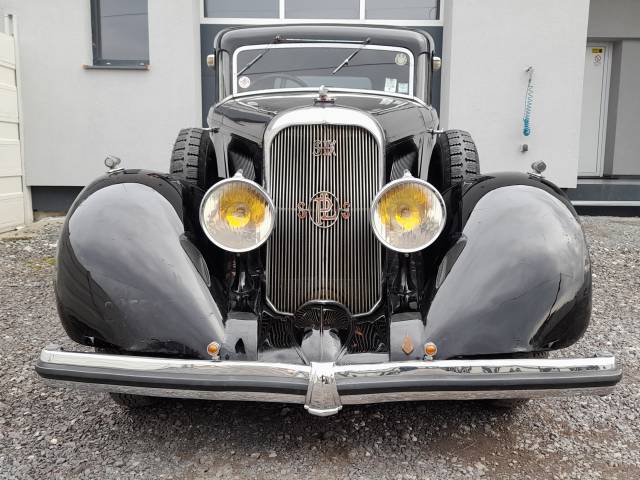
1936 | Panhard 6CS RL
Panhard Levassor X72 Panoramique
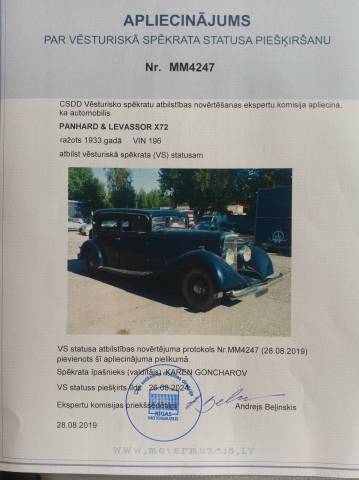
1933 | Panhard 6CS RL
Create search alert
Let yourself be notified as soon as a listing is published that matches your search filters.
Create listing
Do you have a Panhard CS that you want to sell? Then create a listing now.
Create listingPanhard CS Classic Cars: Prices & Market Values
Introduction and history of the Panhard CS
Panhard introduced the CS at the close of 1929, targeting the 1930 market as a luxury vehicle for discerning buyers. Designed as the more compact sibling of the eight-cylinder DS, the CS combined upscale expectations with refined mechanicals. The 'S' in CS stands for 'surbaissées,' denoting its notably lowered chassis, which marked a step forward in dynamic stance and comfort compared to previous models. The CS established itself as a hallmark of technical sophistication in Panhard’s lineup, arriving at a time when automotive engineering was experiencing rapid transformation.
Model history
The Panhard CS succeeded a line of earlier Panhard saloons, introducing modern features like a low-slung chassis and a state-of-the-art sleeve-valve six-cylinder engine. It remained in production through to the mid-1930s, coexisting with larger Panhard DS models and several body variants. Only about 2,500 units were produced across all body styles, making the CS a rare survivor today. The CS’s manufacturing code, X72, underlines its role within Panhard’s strategic approach to creating advanced passenger cars for the luxury segment.
Highlights of the Panhard CS
The Panhard CS stands out not only for its 2.5-litre sleeve-valve six-cylinder engine, a rarity even in the luxury class of its era, but also for its original Zamac carburettor and four-speed manual gearbox. A defining aspect for enthusiasts is its high degree of originality: many surviving vehicles possess up to 95 percent original parts and 'matching numbers'—including documented provenance with period photographs. This level of authenticity is almost unprecedented for this era of French luxury cars.
Technical data
Special Editions and Collectible Models
While there were no formally announced special editions, every Panhard CS is essentially collectible due to the extremely low production numbers—about 2,500 units total—and the exceptional authenticity (95% original parts) preserved in surviving examples. Provenance elements, like documented owner photos, further elevate certain cars' collector status.
Weak Spots and Common Issues
No specific weaknesses have been widely documented for the Panhard CS. However, being a rare prewar luxury vehicle with a sleeve-valve engine, potential buyers should anticipate challenges in sourcing engine internals, carburettor rebuild kits for the original Zamac units, and genuine body parts. Evaluating originality, mechanical integrity, and completeness of documentation is critical for any prospective owner.
Engine and Performance, Transmission and Handling
The CS’s 2.5-litre sleeve-valve six-cylinder engine, also called the Knight engine, provides a smooth, direct power delivery—a unique characteristic in cars from the early 1930s. The four-speed manual transmission enables flexible performance for its time, suiting both urban and open-road driving. The surbaissées (lowered) chassis not only defines the exterior stance, but also improves handling dynamics by lowering the centre of gravity. The combination of these features means that the driving experience is both technically interesting and reflective of Panhard’s ambition during the period. The four-door saloon remains the most commonly seen body style among surviving CS entries, all under manufacturing code X72 and fitted with the Knight sleeve-valve engine. Cars in original paint and 95% original parts are particularly noteworthy.
Interior, Comfort, Exterior and Design
The Panhard CS was developed during a period of expressive French automotive styling. Inside, the model typically offers six full-size seats. While individual design specifications could vary based on coachbuilder involvement, most CS models featured understated exterior lines in keeping with luxury sensibilities of the era, supported by the 'surbaissées' low chassis. Originality is a recurring strength: many cars are preserved in original paint and interiors, matching the car’s period-correct appearance. Special features such as original accessories, period smithing and genuine Panhard emblems are often retained.
Other relevant features
Many Panhard CS vehicles on the market maintain a nearly complete original specification, are supported by extensive documentation including photographs and ownership history, and carry the important 'matching numbers' attribute. These details increase the vehicle’s historical value and give additional context to its preservation.
Summary
The Panhard CS occupies a unique place in early-20th-century French automotive history, with less than 2,500 cars produced across all body styles. Its advanced sleeve-valve six-cylinder engine, surbaissées chassis design, and high degree of originality in surviving examples make it both a technical and historical rarity. For enthusiasts seeking a classic car with comprehensive provenance, virtually unchanged components, and a tangible link to prewar luxury engineering, the CS remains a compelling option.