March 761 classic cars for sale
The March 761 stands out as a purebred Formula One contender from the mid-1970s, distinguished by its direct evolution from previous models. This single-seater achieved notable competitive successes, marking its place in F1 history. Below, discover the engineering and racing pedigree that set the 761 apart.
Search results
Currently, there are no matching listings for your search.
Create search alert
Let yourself be notified as soon as a listing is published that matches your search filters.
Create listing
Do you have a March 761 that you want to sell? Then create a listing now.
Create listingMarch 761 listing references from Classic Trader
Below you will find listings related to your search that are no longer available on Classic Trader. Use this information to gain insight into availability, value trends, and current pricing for a "March 761" to make a more informed purchasing decision.
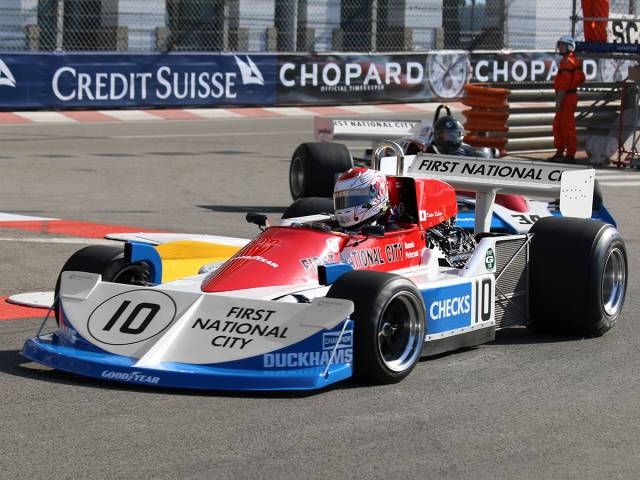
1976 | March 761
1976 March Formula 1 761

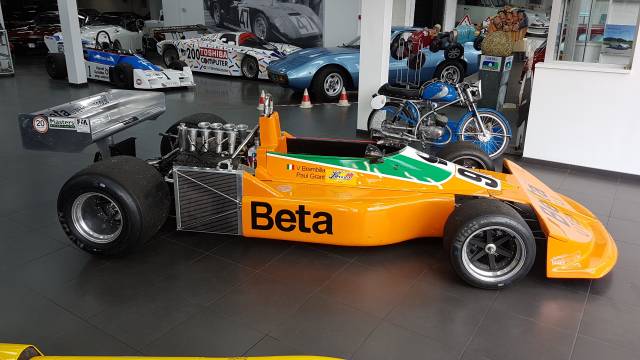
1976 | March 761

Create search alert
Let yourself be notified as soon as a listing is published that matches your search filters.
Create listing
Do you have a March 761 that you want to sell? Then create a listing now.
Create listingMarch 761 Classic Cars: Prices & Market Values
History of the March 761
The March 761 emerged as March Engineering’s main weapon for the 1976 Formula One season, with its design penned by Robin Herd. Rather than a ground-up creation, the earliest 761s were constructed from the chassis of the preceding 751s that survived the attrition of 1975. The car carried on into 1977, maintaining a presence on the grid thanks to its adaptable, reliable engineering. Featured in the hands of Ronnie Peterson, among others, the 761 had its moments of brilliance, notably when Peterson achieved pole at the Dutch Grand Prix and secured victory at Monza during the Italian Grand Prix.
Model history
The March 761 followed the 751 as a logical development rather than a radical new concept. Its evolutionary nature is encapsulated in the fact that early 761s were built on refurbished and reworked 751 chassis. After the 761, March continued to evolve its F1 cars with further models in subsequent years, but the 761 is remembered as a bridge between eras for the company, capturing both the spirit of late privateer entries and growing technical sophistication of the period.
Highlights of the March 761
The 761 is distinguished by its blend of proven design principles and on-track effectiveness. Its adaptability was clear as March Engineering fielded several cars simultaneously, often with variations in detail spec depending on customer teams’ requirements. Ronnie Peterson’s performance at Zandvoort and his memorable win at Monza underlined the chassis’ capability in the right hands. The sharing of many components with earlier March cars also made the 761 appealing to small teams and privateers looking for cost-effective access to front-running pace.
Technical data
Special Editions and Collectible Models
As a Formula One chassis, the March 761’s variations came primarily via the small differences between factory cars and those supplied to privateers. Ronnie Peterson’s Italian GP-winning car from 1976 stands out due to its race history. Further, any surviving examples with period-correct livery and provenance—including participation in Grand Prix races—are particularly prized among collectors.
Engine and Performance, Transmission and Handling
Fitted with the Cosworth DFV engine delivering around 485 bhp, and a Hewland FG-series gearbox, the 761 was known for its straightforward, robust mechanicals. The chassis offered communicative handling with a tendency for oversteer at the limit, especially as rear grip began to fade. Brake feel was direct but required frequent maintenance for optimal performance given the demands of Formula One. Reliability often came down to attention to detail in setup and assembly—a reflection of both March’s minimalistic design and the era’s privateer ethos. - March 761 driven by Ronnie Peterson: Notable for pole at the Dutch GP and victory at Monza in 1976.
- Customer 761s: Various entries by privateer teams, each with subtle specification tweaks as per customer needs.
Interior, Comfort, Exterior and Design
The March 761’s focus was purely on performance, with minimal concerns for driver comfort, in keeping with mid-1970s Formula One conventions. The aluminium monocoque structure was trimmed for weight, with controls and instrumentation strictly functional. Exterior highlights include its squat stance, crisp nose cone and wing packages that often varied depending on circuit requirements. Livery ranged from March’s traditional blue to vibrant sponsor designs. Accessories were limited to what each team required: additional cooling ducts, mirror arrangements, or altered bodywork per event regulations and tactical needs.
Summary
The March 761 holds a distinct place in 1970s Formula One, bridging the gap between small-team innovation and top-tier racing success. Its technical makeup and race results, especially Peterson’s Italian GP win, leave it an enduring reference for enthusiasts passionate about period F1 machinery. Interest in the 761 is concentrated, representing virtually all March F1 activity in the classic car market today.