Magda III classic car for sale
The Magda III stands out as an extremely rare pre-war racing car, developed to compete internationally with lightweight construction and a supercharged engine. With its BMW-inspired frame and authentic post-war Czech racing history, the Magda III offers a unique combination of period technology and competition heritage.
Suchergebnisse
Zur Zeit sind keine passenden Inserate zu Ihrer Suche veröffentlicht.
Create search alert
Let yourself be notified as soon as a listing is published that matches your search filters.
Create listing
Do you have a Magda III that you want to sell? Then create a listing now.
Create listingMagda III listing references from Classic Trader
Below you will find listings related to your search that are no longer available on Classic Trader. Use this information to gain insight into availability, value trends, and current pricing for a "Magda III" to make a more informed purchasing decision.
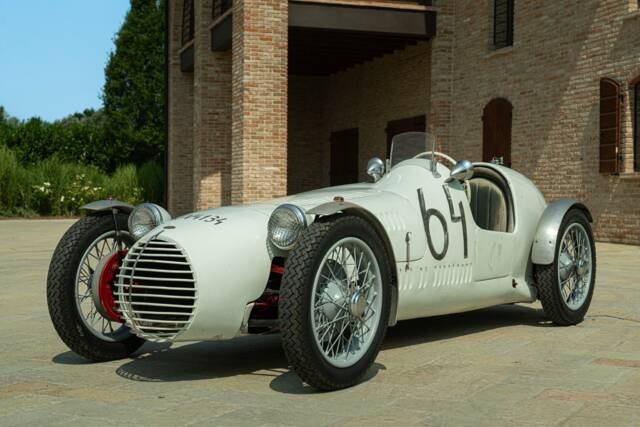
1947 | Magda Sport III
PRIVATE SALES
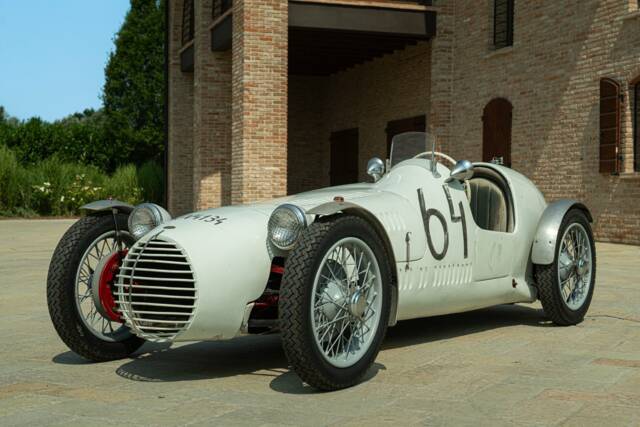
1947 | Magda Sport III
PRIVATE SALES
Create search alert
Let yourself be notified as soon as a listing is published that matches your search filters.
Create listing
Do you have a Magda III that you want to sell? Then create a listing now.
Create listingMagda III Classic Cars: Prices & Market Values
History of Magda III
Founded in 1936 by passionate Czech racer Jaroslav Vlcek, the Magda marque took its name from Vlcek’s wife. The brand’s first racing car, based on a Nash chassis, appeared in 1938. Post-WWII, racing engineering resumed: Vlcek developed the Magda II using a FIAT four-cylinder engine. The Magda III, aimed at international racing success, achieved only 400 kg weight and up to 200 km/h. This model, often finished with a distinctive red tube frame and white body, entered races across Germany and Czechoslovakia. Initially driven by Uher and, from 1949, by Pasch, the car switched hands in 1950 to Svoboda, who drove in notable contests like the Grand Prix of Brno.
Model history
The evolution of Magda racing cars shows Jaroslav Vlcek’s pursuit of lightweight, innovative engineering. The Magda II, using a FIAT engine, represented the immediate postwar chapter, while the Magda III embodied further development with a tube chassis inspired by the BMW 328 and the application of modern forced induction. There are no direct successors, as production remained extremely limited, cementing this series as a unique artefact of Eastern European racing history.
Highlights of the Magda III
Remarkably lightweight at 400 kg, the Magda III features a tube frame inspired by the BMW 328. Its 1089 cc FIAT-based engine, with period-correct Roots-type supercharger, delivers 90 hp at 6,000 rpm. Racing provenance includes multiple appearances in Germany and Czechoslovakia and successful competition under several prominent Czech drivers.
Technical data
Special Editions and Collectible Models
No known factory special editions exist for the Magda III, given its extremely limited, competition-focused production. Each surviving Magda III tends to feature racing-specific updates, such as competition-prepared electrics and chassis modifications, often tailored for motorsport events or based on period documentation.
Engine and Performance, Transmission and Handling
The combination of a supercharged FIAT engine and a 400 kg chassis gives the Magda III highly competitive performance for its era. Capable of 200 km/h, the car utilises period FIAT 1100 mechanicals—known for their simplicity and robustness—along with a thoroughly reworked chassis. Owners can expect lively handling suitable for historic racing, with upgraded electrical and running gear for reliability. - Magda III: FIAT 1089 cc engine, Roots supercharger, 90 hp @ 6,000 rpm, approx. 400 kg, ca. 200 km/h top speed.
Interior, Comfort, Exterior and design
Standout design elements include the BMW 328-inspired tube frame (rohrrahmen) chassis painted red and a period-correct white aluminium body. Interiors would be race-focussed but constructed according to contemporary style, often tailored to the requirements of each driver. Accessories and colour combinations—red chassis, white bodywork—are typical, with original components sourced or recreated based on historic documentation. Engine bay detailing remains faithful to 1940s competition style, complementing the unique hand-crafted appearance of post-war Eastern European specials.
Other relevant features
The Magda III remains suited to international historic racing events, as its specification meets period racing standards. Surviving cars have often received meticulous restoration based on original technical drawings and reports.
Summary
As the only model series representing Magda, the III offers rarity, authenticity, and genuine motorsport pedigree. Utilising classic FIAT mechanics enhanced by supercharging and a bespoke chassis, the Magda III resonates with collectors valuing competition history and technical ingenuity. Its market presence underscores its uniqueness and niche appeal among continental racing cars from the 1940s and 50s.