Hanomag 2/10 Classic Cars for Sale
The Hanomag 2/10, nicknamed 'Kommissbrot,' was Germany’s first mass-produced compact car. With its distinctive single-cylinder engine and unique right-hand drive design, it stands as a milestone in automotive engineering of the 1920s.
Search results
Currently, there are no matching listings for your search.
Create search alert
Let yourself be notified as soon as a listing is published that matches your search filters.
Create listing
Do you have a Hanomag 2/10 that you want to sell? Then create a listing now.
Create listingHanomag 2/10 listing references from Classic Trader
Below you will find listings related to your search that are no longer available on Classic Trader. Use this information to gain insight into availability, value trends, and current pricing for a "Hanomag 2/10" to make a more informed purchasing decision.
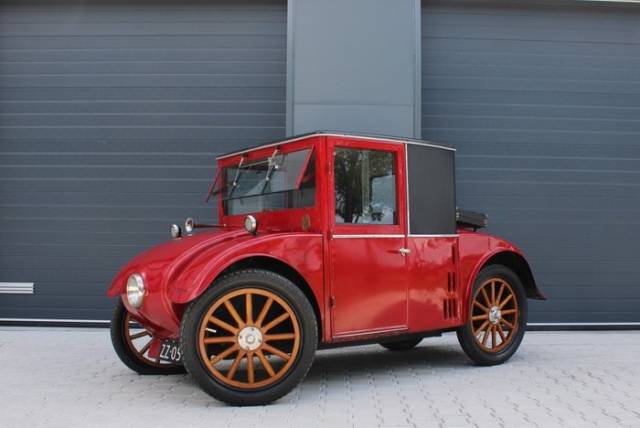
1924 | Hanomag 2/10
Hanomag - Kommissbrot 2/10 PS Coupe - 1924

Create search alert
Let yourself be notified as soon as a listing is published that matches your search filters.
Create listing
Do you have a Hanomag 2/10 that you want to sell? Then create a listing now.
Create listingHanomag 2/10 Classic Cars: Prices & Market Values
History of the Hanomag 2/10
The Hanomag 2/10, developed by the Hannoversche Maschinenbau AG, entered production in 1925. It was Germany’s first line-built small car, which earned it both admiration and ridicule, and the now-famous nickname 'Kommissbrot' due to its resemblance to a loaf of army bread. The 2/10 was engineered with a focus on efficiency, featuring a 502 cc single-cylinder four-stroke engine delivering 10 PS (7.35 kW), installed transversely in front of the rear axle. Its fuel consumption was remarkably low—just 4 litres per 100 km. Unique for its time, the 2/10 used a three-speed sliding gear transmission that powered only the right rear wheel. Suspension innovation came through layered transverse leaf springs up front and longitudinal trailing arms at the rear. Weighing only 370 kg, the car was exceptionally light and, uncommon for the era, featured only one headlight and lacked running boards and traditional fenders. The model was in production until 1928, with a total of 15,775 units built. Despite its innovations, the 2/10 faced tough competition from contemporaries like the Opel Laubfrosch and the Dixi, leading to its eventual replacement.
Model History
The 2/10 was Hanomag’s response to growing demand for affordable transport during the 1920s. Preceded largely by commercial vehicles from Hanomag, the 2/10 marked the company’s entry into passenger cars. It was succeeded by larger and more conventional models as the market evolved. Bodystyles included cabriolet, landaulet, and limousine, with prices ranging from 2000 to 2500 Reichsmarks. A total production run nearing 16,000 units speaks to its initial popularity, although it never eclipsed its main rivals in sales.
Highlights and Special Features
- First German compact car produced on an assembly line
- Unusually low fuel consumption: 4l/100km
- Extremely lightweight construction at 370 kg
- Single-cylinder engine with unique transverse mounting
- Right-hand drive with only one door
- Distinctive design without conventional fenders or running boards
- Participation in 1928 Nürburgring opening race
- Available in multiple body styles: cabriolet, landaulet, limousine
Technical Data
Special Editions and Collectible Models
The Hanomag 2/10 was available in distinct body variants: cabriolet, landaulet, and limousine. All carried the same mechanical specification but differed in styling details and features. No factory-built limited editions are noted, but early models with unique accessories or special-purpose configurations (e.g., motorsport entrants) attract additional collector interest.
Weak Spots and Common Issues
No specific weak spots documented. However, as with most vehicles of this age and simplicity, owners should inspect for age-related chassis fatigue, corrosion, and wear on the simple drive and braking systems. Rubber components and the rare right-hand drive controls may pose restoration challenges.
Engine, Performance, Transmission and Handling
The Hanomag 2/10’s 502 cc engine delivers 10 PS to the right rear wheel via a unique three-speed gearbox. Its lightweight frame (370 kg) enables a top speed of approximately 60 km/h. The minimalistic design results in simple, direct handling characteristics, though vibrations could lead to bouncing at idle due to the single-cylinder layout. Suspension used front transverse leaf springs and trailing arm rear arrangement with coil springs, providing basic but effective ride comfort. The car’s performance niche was demonstrated when it competed in the under-750 cc class at the opening Nürburgring race in 1928, covering 340.8 km in 5 hours and 36 minutes at an average speed of 60.8 km/h. - Hanomag 2/10 Cabiolet: Open-topped enjoyment, lightweight construction.
- Hanomag 2/10 Limousine: Enclosed comfort for everyday practicality.
- Motorsport entrant: Same mechanicals, rare period livery.
Interior, Comfort, Exterior and Design
Designed for simplicity and functionality, the Hanomag 2/10 dispensed with fenders, running boards, and excessive trim. Its boxy form led to the Kommissbrot nickname. The single headlight and unique right-hand drive with sole entry door provided a utilitarian approach. Interiors were basic, with minimal upholstery and instrumentation. Body colours and materials were spartan, reflecting its cost-conscious market positioning. Accessories and equipment were kept to an absolute minimum, although some versions could be fitted with additional seating or bespoke covers.
Other Notable Features
The Hanomag 2/10 was renowned for its parsimony and mechanical thriftiness in the interwar period. Its design and engineering pushed the boundaries of minimalism for mass-produced automobiles. Motorsport participation, though brief, illustrated the robust engineering beneath its unassuming exterior.
Summary
The Hanomag 2/10 stands out in automotive history as Germany’s first mass-produced compact car, setting standards in fuel efficiency, lightweight design, and engineering innovation. Its unique features and historical legacy ensure it remains a singular presence on the classic car market.