Bond Minicar classic cars for sale
The Bond Minicar stands as a uniquely British response to postwar motoring needs: an ultra-light, three-wheeled microcar produced between 1949 and 1966. Designed for absolute minimalism and efficiency, the Minicar became an affordable, quirky alternative to full-sized vehicles. Its innovative mix of aluminium, steel, and fibreglass construction, combined with practical features like a column shift and near-zero turning radius, made it a cult favourite among microcar enthusiasts. Discover more about the intriguing world of the Bond Minicar below.
Search results
Currently, there are no matching listings for your search.
Create search alert
Let yourself be notified as soon as a listing is published that matches your search filters.
Create listing
Do you have a Bond Minicar that you want to sell? Then create a listing now.
Create listingBond Minicar listing references from Classic Trader
Below you will find listings related to your search that are no longer available on Classic Trader. Use this information to gain insight into availability, value trends, and current pricing for a "Bond Minicar" to make a more informed purchasing decision.
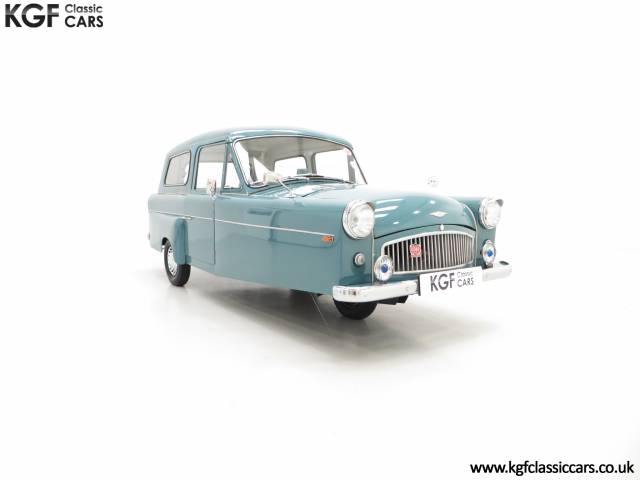
1966 | Bond Minicar 250 G Estate
A Professionally Restored and Owner’s Club Known Bond Minicar 250 G Estate
Create search alert
Let yourself be notified as soon as a listing is published that matches your search filters.
Create listing
Do you have a Bond Minicar that you want to sell? Then create a listing now.
Create listingBond Minicar Classic Cars: Prices & Market Values
History of the Bond Minicar
The Bond Minicar was conceived in a Britain still under the shadow of wartime austerity. Launched in 1949 by Sharp's Commercials Ltd in Preston, Lancashire, the Minicar targeted individuals seeking budget-friendly, lightweight transportation. Earning its niche not by performance but by offering cheap running costs and simplicity, it was eligible for cheaper taxation and insurance schemes—at times even driven on a motorcycle licence. The production ran until 1966, by which time Bond Minicars had become synonymous with an era where ingenuity triumphed over limitation.
Model History of the Bond Minicar
The Minicar range evolved rapidly. Early models prioritised absolute basic functionality, while later developments—like the Bond Minicar 250 G Estate, also known as the 'New Line'—pushed the concept further with features rarely seen in other microcars: curved glass, more comprehensive electrical systems, and genuinely usable estate capability. The 250 G Estate closed the range, incorporating lessons from earlier models and adding modernisations such as an electric starter, reclining rear seating, and truly flexible interiors. All were right-hand-drive, with original Sharps Commercials Ltd plates still present on well-kept examples.
Highlights of the Bond Minicar
Bond Minicars are immediately distinguishable by their three-wheeled configuration, light weight, and unusual use of materials. Aluminium bodywork and fibreglass panels minimised corrosion and kept the weight well under most conventional vehicles, sited on a steel frame. Features such as 90-degree steering lock—offering a fantastically small turning circle—specifically targeted urban driving. The column-mounted gear lever, curved dashboard with Bakelite switches, and comprehensive use of rubber sealing showed attention to practical usability and British climate-proofing.
Accessories available from dealers included items like dual wing mirrors and additional fog lamps. Many cars retain original badges, drilled radiator grilles, and model identifiers, echoing the car’s frank, utilitarian design ethos.
Technical Data
Special Editions and Collectible Models
The Bond Minicar 250 G Estate or 'New Line' stands out as the most developed and complete Minicar, offering full estate functionality and design innovations like a fully opening tailgate, foldable rear seating, and revised chrome details. No strictly limited numbered runs are documented, but variations depending on year and specification (such as the Ranger Van seat configuration) are prized by microcar aficionados for their rarity and usability.
Weak Spots and Common Issues
Due to the microcar’s light build, regular maintenance of the steel frame for corrosion, and inspection of suspension and steering components, is required. Aluminium and fibreglass panels tend to resist rust but can be damaged by neglect or incorrect repair. The Villiers two-stroke engine and gearbox are generally reliable with systematic upkeep but can suffer from carburettor or ignition issues if left unused for long periods. Spare parts, while not as abundant as for mainstream classics, are still sourced through specialist suppliers and the active Bond Owners Club.
Engine and Performance, Transmission and Handling
Performance is modest, suiting its role as a city or local runabout. The two-stroke Villiers engine delivers around 14.6 hp, moving the lightweight car briskly by microcar standards. Four manual gears (with column change) and the car's extraordinarily tight turning circle allow quick urban manoeuvres and easy parking. Hydraulic brakes are adequate for the low weight. The Minicar’s ride is particularly firm, with little insulation, but issues with ergonomics are offset by the concept’s ingenious practicality. - Bond Minicar 250 G Estate ('New Line'): Features practical estate layout, curved glass, improved seating, and all the hallmarks of the final generation design.
- Early Minicar versions: prized for their purity and minimalist engineering.
Interior, Comfort, Exterior and Design
Bond Minicars offer a distinct cabin experience: the dash is finished with curved Bakelite, and switches are deliberately minimal. The three-spoke steering wheel is spring-loaded, and details such as quarter lights, lockable doors, genuine leather bonnet straps, and extensive use of chrome (especially the radiator grille and hub caps) are standard marks of the later 250 G Estate. Rear seats fold down to convert the car into a compact van. Special dealer accessories—such as extra mirrors or spotlights—were available, tailoring the car for customer needs. No famous designer is associated, but the blend of British minimalism and clever detail mark every Bond Minicar.
Other Features
Bond Minicars remain MOT-exempt in the UK, reducing the bureaucracy for owners. Documentation and workshop manuals are frequently available. The model’s presence in the Bond Owners Club ensures continuing technical support and a shared culture among enthusiasts. Legally, these cars were classified as three-wheeled microcars, historically driven with a motorcycle licence, making them unique in the British tax and licensing landscape.
Summary
The Bond Minicar was a genuinely innovative response to postwar British motoring challenges. Lightweight, simple, and easy to own, it brought mobility to many who found full-sized cars out of reach. The series’ evolution—from basic bare-bones runabouts to the versatile, distinctive 250 G Estate—cemented its reputation for ingenuity and adaptability. Maintenance is straightforward, and thanks to the enthusiast community and owner clubs, the Minicar’s quirky charm and historical value remain alive today.