- Automobil
- Avions Voisin
- Avions Voisin C28 (0 Angebote)
Avions Voisin C28 Classic Cars for Sale
The Avions Voisin C28 is revered among connoisseurs of pre-war French motoring for its technical ingenuity and audacious design. Produced during the 1930s, the C28 stands out due to its advanced engineering and its striking Art Deco styling cues, making it a unique entry in the history of luxury automobiles.
Suchergebnisse
Zur Zeit sind keine passenden Inserate zu Ihrer Suche veröffentlicht.
Create search alert
Let yourself be notified as soon as a listing is published that matches your search filters.
Create listing
Do you have a Avions Voisin C28 that you want to sell? Then create a listing now.
Create listingAvions Voisin C28 listing references from Classic Trader
Below you will find listings related to your search that are no longer available on Classic Trader. Use this information to gain insight into availability, value trends, and current pricing for a "Avions Voisin C28" to make a more informed purchasing decision.
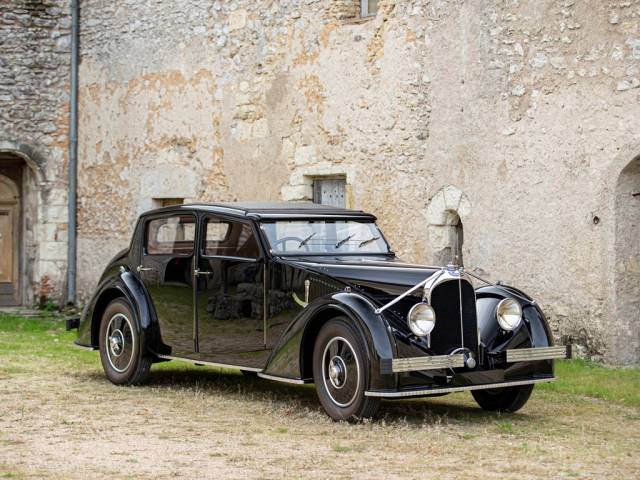
1935 | Avions Voisin C28 "Chancellerie"
1935 Avions Voisin C28 ‘Chancellerie’
Create search alert
Let yourself be notified as soon as a listing is published that matches your search filters.
Create listing
Do you have a Avions Voisin C28 that you want to sell? Then create a listing now.
Create listingAvions Voisin C28 Classic Cars: Prices & Market Values
History of the Avions Voisin C28
Gabriel Voisin, a pioneer in aviation, transferred his innovative mindset to the automotive arena with the foundation of Avions Voisin. The C28, introduced in the early 1930s, emerged as a culmination of Voisin’s experiments in creating vehicles that epitomised both technological progress and avant-garde aesthetics. The historical context of the C28 lies in the interwar period, when French luxury manufacturers competed fiercely in craftsmanship and ingenuity. Avions Voisin sculpted an image as a builder of ‘voitures de luxe’ for elite clientele, and the C28 became a reflection of this guiding principle.
Model History – Avions Voisin C28
The C28 succeeded the earlier C24 and incorporated improvements in both chassis refinement and engine reliability. The model range evolved with specialty bodies crafted by coachbuilders, highlighting the affinity between Avions Voisin and the leading carrosseries of Paris. Production numbers remained low, which was typical for luxury French marques of this era. Preceded by the C24 with largely similar mechanicals but less dramatic styling, and followed by attempts at even more advanced models before the outbreak of World War II interrupted Voisin’s automotive ambitions, the C28 marks a high point in the manufacturer’s history.
Highlights of the Avions Voisin C28
The C28 showcases novel engineering, featuring lightweight construction techniques and an early emphasis on aerodynamic design. Its interior layout and dashboard instrumentation reflect period-specific innovation, while the unmistakable Art Deco exterior lines epitomise the designer’s bold approach. Distinction comes not just from design, but from technical solutions seldom seen among contemporaries, such as the emphasis on weight reduction and airflow optimisation.
Technical Data
Special Editions and Collectible Models
Coachbuilt versions of the C28—such as streamlined saloons and elegant cabriolets—are particularly noteworthy, having been tailored by renowned French carrosseries. Each represents a bespoke take, intersecting mechanical excellence with artistic interpretation. Limited production runs further strengthen the collectability of certain variations.
Weak Spots and Common Issues
Due to the low production numbers and the advanced, sometimes idiosyncratic engineering, sourcing specific mechanical components can be challenging. Prospective owners should pay close attention to engine condition, the integrity of the aluminium body panels, and the operation of proprietary peripherals, as restoration expertise for Avions Voisin is less common compared to mass-produced contemporaries.
Engine and Performance, Transmission and Handling
The straight-six engine of the C28 provides an impressively smooth power delivery for its time, with the focus on long-distance comfort rather than outright speed. The manual transmission and sophisticated suspension deliver a refined driving experience, particularly suited to grand touring. The C28 favours an unhurried, dignified pace, and rewards careful handling on both urban boulevards and open roads. The C28 Aerodynamique variant is frequently highlighted for its especially sleek bodywork and distinctive aerodynamic enhancements. This model is sought after by collectors for its blend of technical ambition and visual drama.
Interior, Comfort, Exterior and Design
The C28 is renowned for its expressive interpretation of Art Deco principles, both inside and out. Exterior designs by Voisin embraced long, sweeping lines, dramatic angles, and signature grilles. Interiors were finished with luxury materials—polished wood, finely stitched leather, and elaborate gauges—integrating comfort with a visual language unique to 1930s France. Special accessories, such as custom luggage, folding tables, or unique dashboard details, underscore the bespoke character of each car. Paint schemes often drew from period tastes, further accentuating individuality.
Other Relevant Features
Many C28s feature pioneering amenities for their day, including advanced lighting setups, sunroofs, or integrated trunk solutions rarely seen on rival marques. Some even showcased experimental features at the behest of wealthy owners, reinforcing the forward-looking spirit of Gabriel Voisin’s creations.
Summary
Owning an Avions Voisin C28 offers an insight into the most progressive and artistic aspects of 1930s French luxury car manufacturing. With unmatched exclusivity—every current listing and buyer interest for the marque converges on this model—the C28 occupies a singular spot in the history of automotive engineering and design.