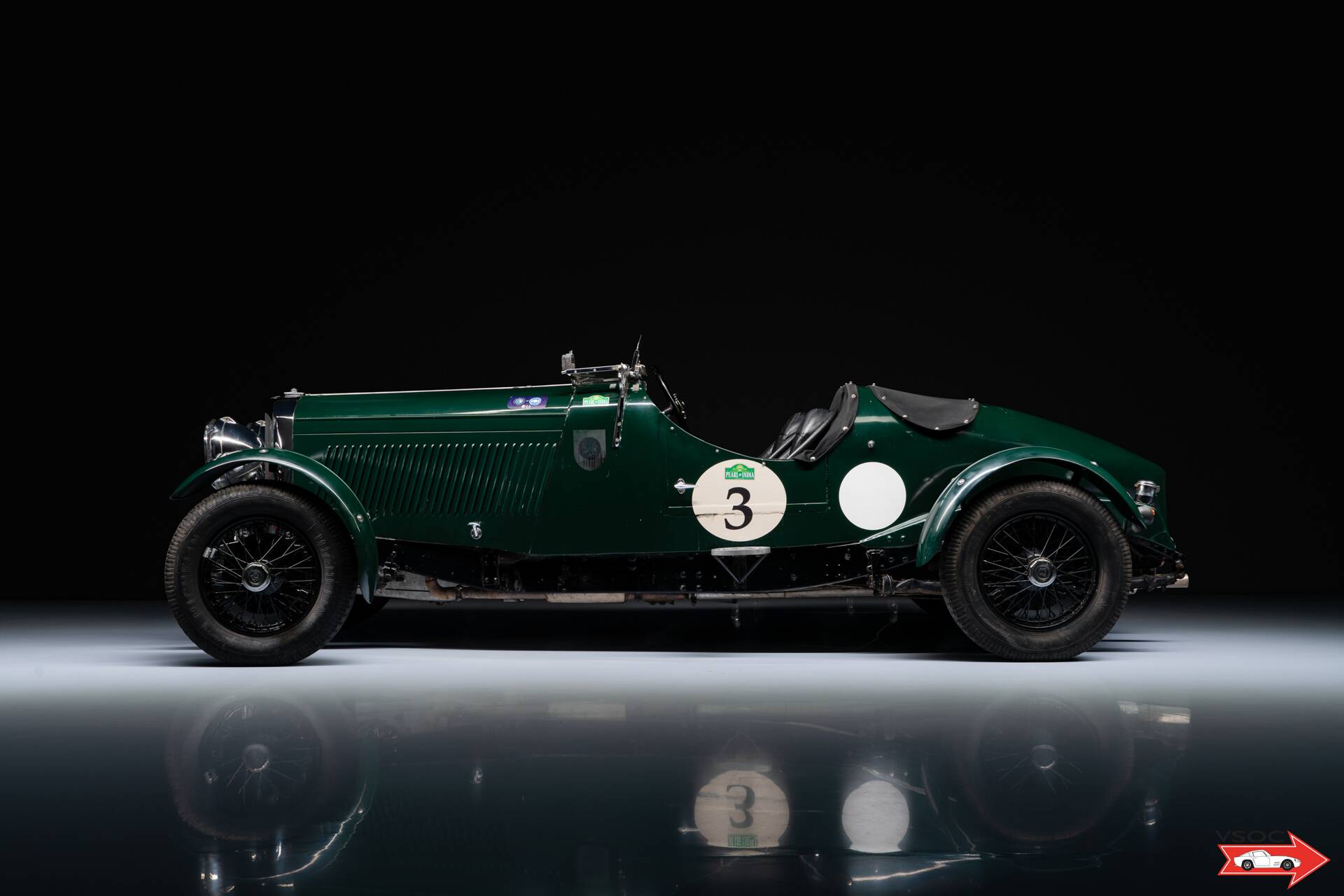
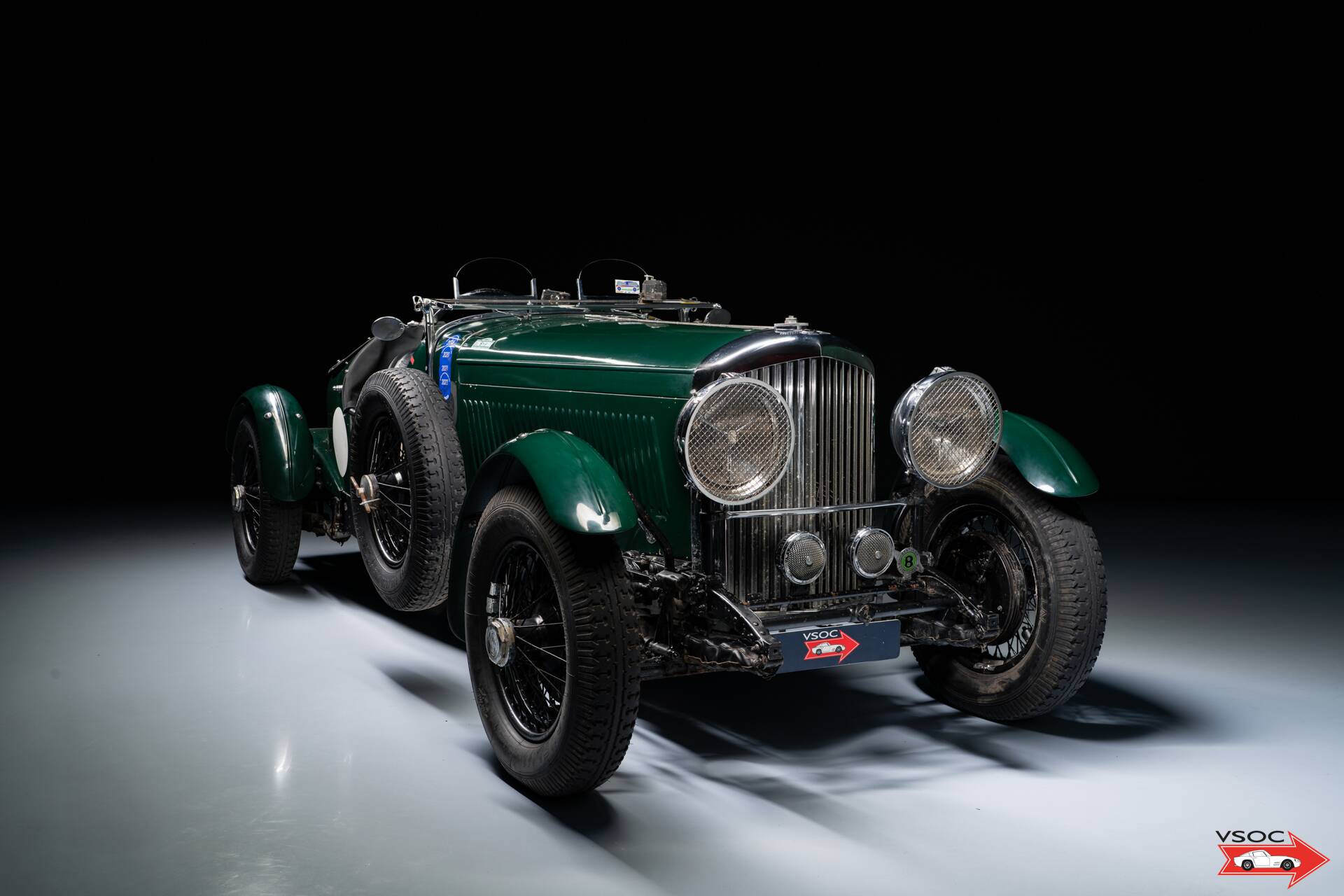
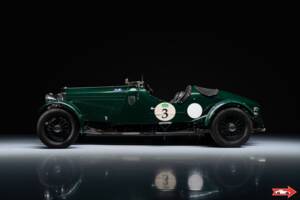
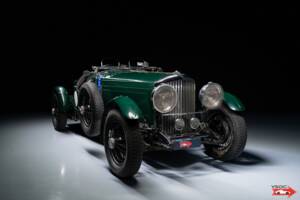
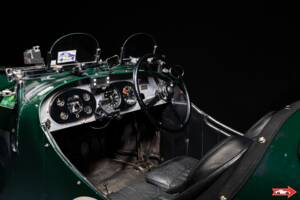
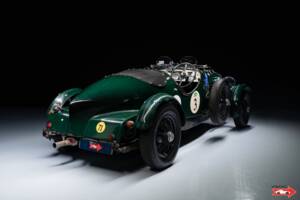
This particular chassis was delivered in August 1934 to coachbuilder Arthur Mulliner from Northampton, who constructed a sports saloon body. According to the Rolls Royce/Bentley Archives, the car was supplied new on the 29th of March 1935 to P.G. Evelyn from Farnham, Surrey. The car changed hands several times, all of which is documented in its original registration book. The car was never modified until the early 1990s.
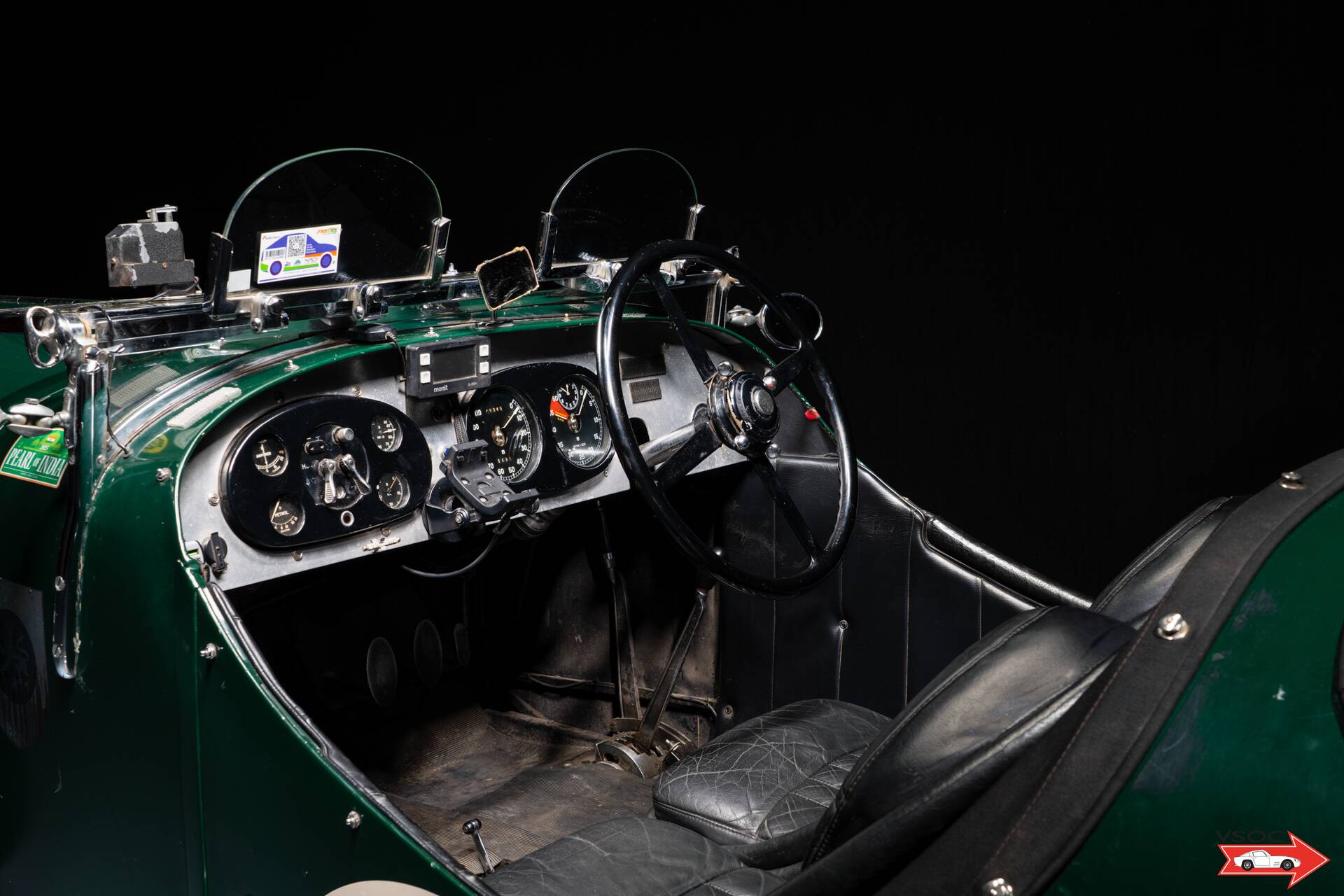
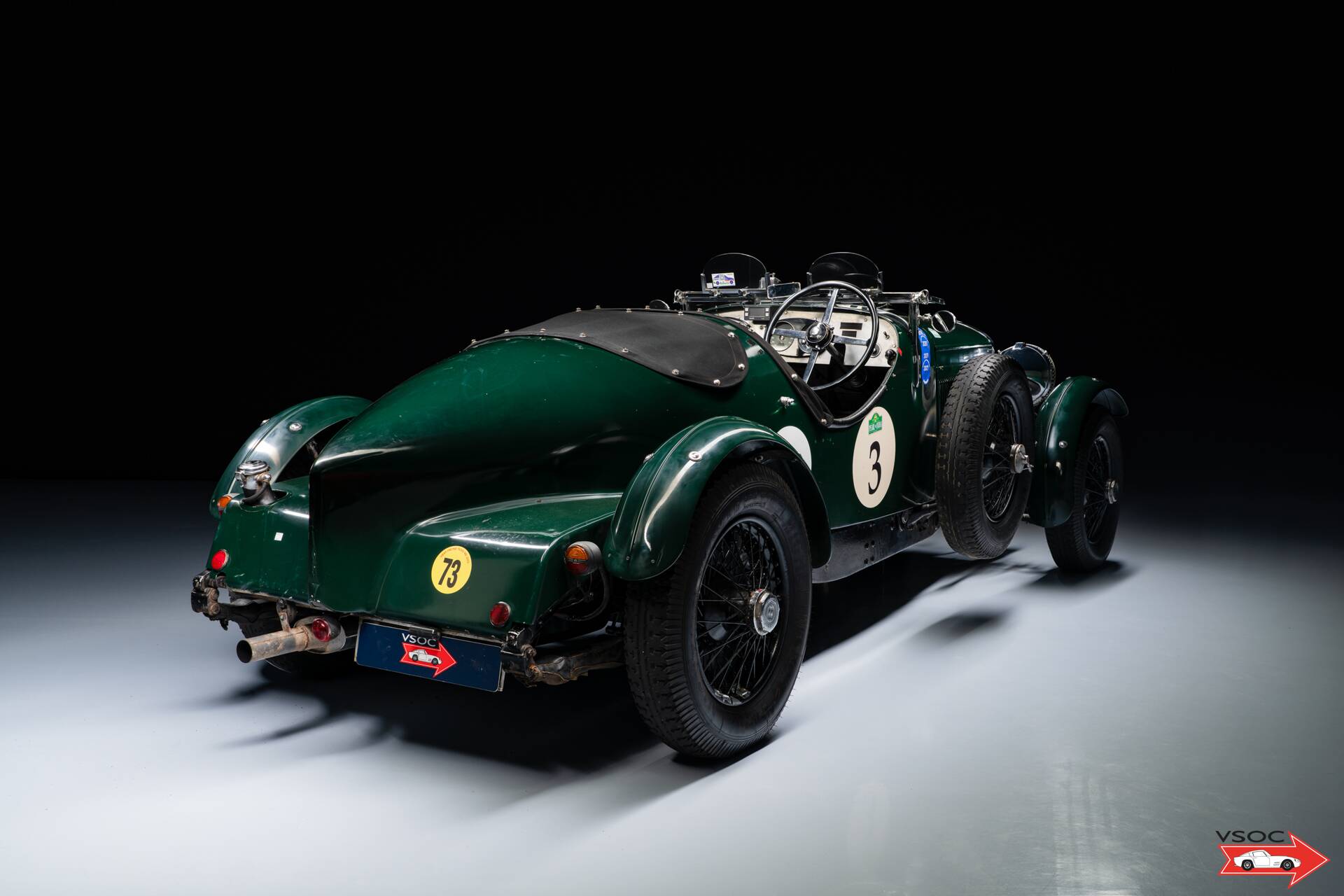
At that time, the owner started a complete restoration and opted to reconstruct the car with a different Derby Bentley bodywork, which was more suitable for sporting events than the original saloon body. The decision was made to fit a two-seater sports body in all aluminum alloy, in style of the famous ‘Eddie Hall’ Bentley 3½ Litre, which raced successfully in the 1934 and 1935 Tourist Trophy. This special was built by the Englishman Bob Burrell, who then took the car to Dunnet Head for a final test drive of 1.500 miles.
The history file includes its build sheet and original registration book, which provide an interesting insight and confirm that all numbers are matching. In addition, several period invoices and photographs accompany the car.
We have known this particular car for over 25 years when we competed in multiple Tulip rallies and it has been used in rallies all over the world. The car has participated in many Tulip Rallies and several Gran Premio Nuvolari events, and won the 100 Miles of Amsterdam. It carries a FIVA passport and is eligible for many historic motoring events.
For more relaxed touring, the car is equipped with overdrive, allowing comfortable motorway cruising.
In 2025, the Bentley successfully finished the 6.000km Pearl of India Rally, demonstrating its reliability.
The car has been serviced and is ready for its next caretaker. A light, very quick and enjoyable pre-war Bentley! This matching numbers 3½ Litre Bentley saloon was converted into the Eddie Hall Special in the early 1990s. It features a lightweight aluminium alloy body, giving the car an impressive power-to-weight ratio. Dutch registered.
Price 125.000,- Euro.
Very Superior Old Cars is a classic sportscar consultancy company founded in 1992. We work for our customers to assist with all aspects of their car interests. From acquisition consultancy with restoration advice and management to private sales in our boutique art gallery.
VSOC is centrally located between Amsterdam and The Hague, only 17 km (11 miles) from Schiphol Airport. There is a broad selection of classic sports cars on display, in very good or excellent condition, varying from beautiful yet affordable sports cars to rare and valuable collectors’ items. When you intend to visit us in The Netherlands, we would advise you to make an appointment so that we can give you some quality time. If you arrive by plane or train, we would be happy to pick you up at the airport or train station. Besides Dutch we speak English, German, French and Italian.
Eddie Hall
Edward ‘Eddie’ Hall was a British racing driver, born in 1900. He was a private owner who built several car for competition. He entered the 4½ Litre Bentley into the 24 Hours of Le Mans in 1936, but this race was cancelled. After the Second World War, Hall became the first and only man to drive the entire distance solo during the 1950 24 Hours of Le Mans. He completed 236 laps, which equals to nearly 3.200km. Denis Jenkinson asked him what the toilet arrangements were if he never left the cockpit for 24 hours: Hall replied ‘Green overalls, old boy’!
Model history
The 3½ Litre built a reputation as a fast, reliable grand tourer. Many owners tuned them for racing, creating Bentley ‘specials’ that still compete today in historic events worldwide.
The Bentley 3½ Litre was introduced in 1933 after Rolls-Royce acquired Bentley Motors in 1931. It was built at Rolls-Royce’s Derby factory and was intended to combine Bentley’s sporting reputation with Rolls-Royce refinement.
The car used a 3.5-litre inline-six engine, derived from the Rolls-Royce 20/25, but tuned for better performance. Thanks to its smooth engine, strong acceleration, and high cruising speed for the time (around 90 mph / 145 km/h), it became known as ‘the silent sports car’.