- Motorcycle
- Villiers (0 offers)
Buy Villiers motorbike
Villiers is one of those names that still matters to Australian classic-bike buyers because it sits at the centre of so many lightweight British machines. In Australia, though, the story is even bigger: Villiers engines were built locally in Ballarat, Victoria, and that history still shapes how collectors value them today.
Search results
Currently, there are no matching listings for your search.
Create search alert
Let yourself be notified as soon as a listing is published that matches your search filters.
Create listing
Do you have a Villiers that you want to sell? Then create a listing now.
Create listingVilliers listing references from Classic Trader
Below you will find listings related to your search that are no longer available on Classic Trader. Use this information to gain insight into availability, value trends, and current pricing for a "Villiers" to make a more informed purchasing decision.
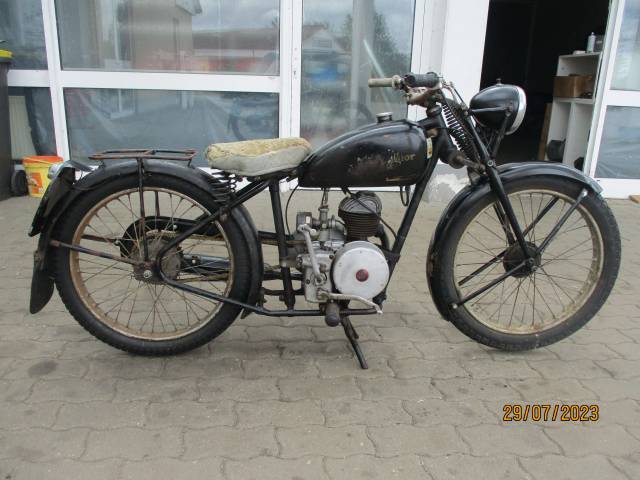
1955 | Villiers 125
Sonstige Marken Excelsior Superconsort F4

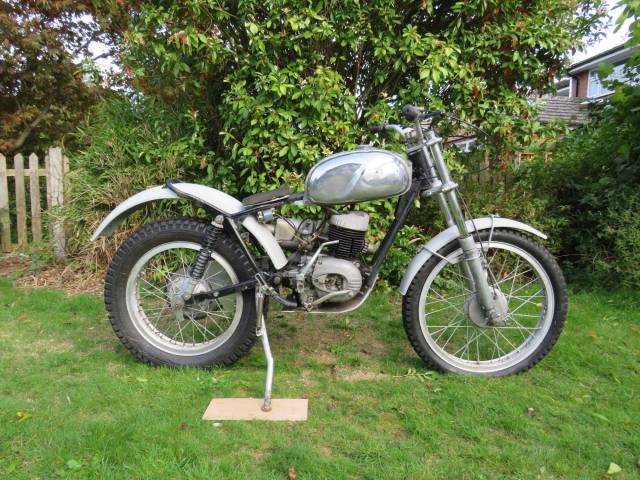
1970 | Villiers 98
c.1970 Villiers 9F Trials Bike 98cc

Create search alert
Let yourself be notified as soon as a listing is published that matches your search filters.
Create listing
Do you have a Villiers that you want to sell? Then create a listing now.
Create listingHistory
Villiers was never just a motorcycle brand in the narrow sense. It was an engine maker whose name became embedded in the DNA of countless British and Commonwealth lightweights, from simple commuter bikes to trials machines and competition specials. For Australian buyers, that matters because Villiers did not merely export into the local market: it became part of local manufacturing history.
The Villiers story starts in Wolverhampton, England, where the firm built a reputation on compact, dependable two-stroke engines. By the mid-20th century, Villiers power units were turning up in a wide range of machines from small-volume makers who needed a reliable, affordable engine supplier. That business model created the broad, slightly untidy, and very interesting Villiers world that collectors know today.
Australia gave Villiers a rare second home. When import restrictions tightened in the early 1950s, Villiers responded by setting up Villiers Australia Pty. Ltd. and building a factory at Ballarat, Victoria. Production began in 1954, the plant officially opened in 1957, and the site continued until 1979. That local factory is a major reason Villiers resonates so strongly with Australian enthusiasts: these engines were not just imported into Australia, they were made here for Australian needs.
The Ballarat plant also reflects a broader post-war reality. Australian industry was still trying to balance local production with limited access to imported components, and Villiers fit that environment perfectly. Simple two-strokes were easier to localise, easier to service, and easier to keep running in a market where distance, shipping delays and parts costs all mattered.
That Australian chapter adds emotional weight to the marque. A Villiers machine is British in design heritage, but in Australia it also belongs to Ballarat, to local engineering, and to a period when import rules pushed manufacturers to build rather than simply ship.
Highlights
Villiers is best understood as a family of engines rather than a single fixed model line. That is exactly what makes it appealing to collectors: there are many entry points, many price levels, and many different riding characters.
The classic Villiers appeal comes from a few defining strengths:
- Simple two-stroke engineering: easy to grasp, easy to service, and mechanically honest.
- Huge application range: Villiers engines powered dozens of British makes, so there is a wide collector scene.
- Australian production story: Ballarat-built engines give local buyers something genuinely special to talk about.
- Lightweight character: most Villiers-powered machines are not about outright speed; they are about usable, period-correct charm.
- Strong club support: classic-bike clubs, vintage meets and VMCC circles keep knowledge alive.
For many Australian collectors, the attraction is not just the badge on the tank. It is the whole package: a Villiers engine, a light frame, a simple gearbox and the smell, sound and pace of a proper post-war two-stroke. That is classic motorcycling without excess.
Villiers also has a broad spread across collecting styles. Some buyers want a humble road bike with a Villiers unit in it. Others chase a rarer trials or scrambles machine. Some are drawn to Australian-built or Australian-assembled examples because the Ballarat link adds provenance. In every case, the engine is the thread tying the market together.
For buyers entering the scene, Villiers offers a sensible path into classic ownership. It is old enough to feel historic, but not so exotic that everything becomes unobtainable. The key is choosing the right machine and understanding where value sits: originality, completeness, local provenance and engine correctness usually matter more than shiny paint.
Technical Data
Villiers produced many engine variants over the decades, but a few names recur most often in collector circles. The figures below are representative of the kind of Villiers-powered machines Australian buyers will encounter.
Common mechanical traits include air cooling, kick-starting, chain final drive and straightforward carburation, often by Amal. Most are compact, light and easy to remove from the frame compared with larger four-stroke classics.
For Australian buyers, the practical question is usually not whether the engine exists, but whether it is complete. Missing ignition parts, non-original carburettors, home-made exhausts and poorly executed repairs can cost more to sort than the purchase price difference between two listings.
The smartest inspection items are the usual two-stroke basics:
- crank seals and base gasket condition
- bore wear, scoring and piston slap
- magneto or ignition health
- gearbox oil contamination
- clutch drag and selector wear
- cooling fins, corrosion and storage damage
On a Villiers, a “simple” engine is still only simple if the right bits are there.
Market Overview
Villiers values in Australia are shaped by three things: completeness, provenance, and how local the story is. A machine with clear Ballarat links, good papers or known club history will usually attract more attention than a tired import with no paperwork and missing trim.
Typical Australian market ranges, in AUD, look roughly like this:
These are not hard rules, but they reflect the way the market behaves: rare does not always mean expensive, and shiny does not always mean correct. For Villiers, the most valuable machines are often those that tell a clean story and need less detective work.
Australian buyers should also factor in shipping from the UK if they are chasing parts or an overseas bike. That cost is not trivial. A cheap engine or missing component can quickly become expensive once freight, exchange rates, customs handling and delays are added. For that reason, many local buyers prefer machines with as much of the original Villiers equipment intact as possible.
This is where the Australian scene helps. Classic-bike clubs, swap meets and VMCC Australia-type chapters are often the fastest route to knowledge, contacts and parts leads. The community matters because Villiers ownership rewards people who ask the right questions before they buy.
Useful buying profiles include:
- First-time classic buyers: should focus on complete, running 197 cc machines.
- Collectors of Australian industrial history: should prioritise Ballarat-connected examples.
- Trials and competition enthusiasts: should look for lighter, more specialised builds.
- Restoration buyers: should budget extra for shipping, plating, ignition and engine machining.
The biggest cost trap is the bargain project. In Australia, freight and parts sourcing can turn a low entry price into an expensive rebuild very quickly.
Performance
Villiers performance is never about brute force. It is about rhythm, lightness and the satisfying sense that every mechanical action is doing just enough. That makes these bikes pleasant rather than thrilling, but in the right context that is exactly the point.
A healthy 197 cc Villiers single delivers modest power, but in a lightweight frame it feels lively enough for back roads, club runs and short touring. The throttle response is direct, the exhaust note is crisp, and the power delivery suits relaxed riding. There is no need to chase revs aggressively; the engine likes smooth inputs and regular maintenance.
The twin-cylinder Villiers units are more interesting dynamically. They bring a little more smoothness and a stronger top end, which makes them attractive to collectors who want something slightly more unusual than the common singles. They are still period pieces, though, so expectations should stay realistic. This is not about modern acceleration. It is about presence.
On Australian roads, Villiers machines suit:
- Sunday rides at sensible speeds
- VMCC events and heritage rallies
- short commutes where authenticity matters more than pace
- display use with occasional light riding
The riding experience is full of texture. You feel the kickstart, hear the induction, smell the oil, and sense the narrow window between a perfectly tuned two-stroke and a tired one. A good Villiers is surprisingly civilised for something so old. A poor one is lumpy, smoky and frustrating. That difference is why condition matters so much.
For buyers, test ride behaviour tells you plenty:
- Cold starting should be prompt with the correct routine.
- Idle should be stable enough once warm.
- Gear changes should be clean, not vague or crunchy.
- Acceleration should be even, without flat spots that hint at air leaks.
- Run-down should be tidy; overrun misbehaviour often points to tune issues.
In short, Villiers performance is modest but characterful. It is a classic ride for people who enjoy mechanics as much as motion.
Design
Because Villiers supplied engines rather than a full branded motorcycle range, the design story is really the story of the frames and manufacturers that used them. That gives the make a wonderfully varied visual identity.
Some Villiers-powered motorcycles are plain and practical, built for work and reliability. Others are sharply styled lightweight sports bikes or trials machines where the engine sits low and compact in the chassis. What unites them is the engine’s tidy packaging: Villiers units are small, neat and easy to integrate, which is part of why so many makers used them.
Australian significance adds another layer here. The Ballarat factory gives the marque a local industrial identity that collectors value far beyond styling. A machine with Australian-built Villiers components feels grounded in local manufacturing history, not just imported nostalgia.
Design details to look for include:
- original tanks and badges
- correct period paint and lining
- factory-style exhaust routing
- proper carburettor and airbox fitment
- matching engine numbers where applicable
- evidence of local-market or Australian-built specification
For restorers, restraint usually pays. Over-restored Villiers motorcycles can look clean but lose the honest, useful character that makes them appealing. Patina is not a defect if the bike is complete and mechanically sound. In fact, for many Australian buyers, lightly aged originality is more desirable than a gloss-heavy rebuild with modern-looking fittings.
Accessory support is decent if you know where to look. The classic-bike world still has specialists, clubs and swap-meet networks that keep these machines alive. But because many parts are old-stock or niche reproductions, buyers should always check cost and delivery time before committing to a project.
Other
Villiers has a deeper social life than many buyers expect. Its engines appear in club sheds, rally paddocks, private collections and family garages where the bike is as much a memory object as a vehicle. In Australia, that social life is strengthened by classic-bike clubs and VMCC-style groups that keep knowledge practical rather than theoretical.
That club network matters because Villiers ownership often depends on shared memory. A retired mechanic might know the right ignition setting. A club member may have the correct exhaust bracket. Someone else may know which Ballarat-built unit belongs in a specific frame. This is the kind of marque where community is part of the supply chain.
Villiers also suits buyers who want a classic machine without the constant drama of expensive, high-performance exotica. It rewards patience, not bravado. It is a good fit for riders who enjoy the process of keeping an old machine alive and who understand that every successful start is a small victory.
In the Australian context, that is a compelling proposition. Distances are long, freight is expensive, and good original parts matter. A well-bought Villiers motorcycle can be a rewarding ownership experience, but only if the buyer thinks ahead about sourcing, condition and the true cost of completion.
Summary
Villiers is a make with real substance for Australian collectors. It combines British two-stroke engineering with a genuinely important local chapter in Ballarat, Victoria, where Villiers Australia Pty. Ltd. built engines from 1954 to 1979. That history gives the marque extra relevance for local buyers and makes provenance especially valuable.
From a buying perspective, the formula is clear: choose completeness over cheapness, confirm engine correctness, and budget realistically for parts and freight. Shipping from the UK can bite hard, so Australian buyers are often better served by strong local examples with known history and good club support.
If you want a classic motorcycle that is compact, characterful and historically meaningful, Villiers is worth a close look. Find the best examples, buy with care, and you get a machine that is both easy to understand and rich in story.
Browse Villiers listings on Classic Trader and find the right example to buy in Australia.