- Motorcycle
- Victory (1 offer)
Buy Victory Motorcycle
Victory Motorcycles redefined the American V-twin landscape by merging modern engineering with bold cruiser aesthetics. From 1998 to 2017, the Polaris-owned brand challenged the status quo, creating machines that are now celebrated as reliable modern classics across Australia.
Search results
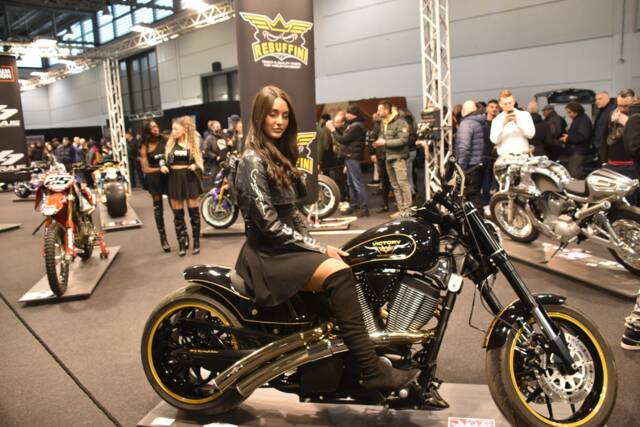
2009 | Victory Hammer 8-Ball
Custom Victory Hammer 8

History & Heritage
The story of Victory Motorcycles is a compelling chapter in American industrial history, beginning in the late 1990s in Spirit Lake, Iowa. Parent company Polaris Industries, already well-established in the snowmobile and ATV markets, identified a strategic opening in the motorcycle sector. At the time, Harley-Davidson dominated the heavyweight cruiser segment, but Polaris saw a growing demographic of riders who desired the character of an American V-twin but were frustrated by dated technology and long waiting lists.
In 1997, the first prototype was unveiled, and by 1998, the first V92C rolled off the assembly line. The name stood for "Victory 92 Cubic Inches," equivalent to approximately 1,507cc. This motorcycle was no mere imitation. Featuring a 50-degree V-twin, fuel injection, overhead cams, and a modern chassis, Victory set a high bar for technical superiority from the outset. While other manufacturers were still relying on carburettors and traditional designs, Victory offered a machine that was reliable and powerful straight out of the box.
The development of the V92C was a bold move. Polaris invested millions in developing an entirely new engine rather than relying on existing designs. The engine was integrated into the frame as a stressed member, increasing rigidity and reducing weight. Early reviews praised the power delivery and the unusually good handling for a cruiser. However, the start was not without hurdles. Early gearboxes were considered somewhat clunky, and the design was seen by some as too conservative.
By the early 2000s, Victory had solidified its reputation as a serious Harley alternative. The slogan "New American Motorcycles" was a statement of intent. The brand positioned itself as innovative, bold, and technically advanced. A major milestone was the introduction of the Freedom engine in 2002, which offered more power and even greater reliability. Victory became profitable from this point and began to consistently expand its model range. The Freedom engine was an evolution of the original 92ci unit but featured improved oil cooling, quieter valve gear, and a significantly smoother 6-speed transmission.
Collaboration with legendary custom builders like Arlen Ness and his son Cory Ness brought a series of special models that took Victory's design to a new level. These "Ness Signature" models were often radically styled, with striking paintwork and exclusive accessories, giving the brand additional credibility in the custom scene. Victory proved that a mass-production manufacturer could build motorcycles that looked like hand-crafted one-offs but offered the reliability of a large-scale series. Arlen Ness once remarked that Victory gave him the freedom to implement designs that would never have passed the legal department at other manufacturers.
Another important aspect of the brand's history was its commitment to racing. Victory competed in the legendary Pikes Peak International Hill Climb and proved with the "Project 156",a racing machine featuring the engine of the later Octane,that American V-twins could be extremely competitive in a sporting context. Victory also celebrated successes in the NHRA Drag Racing series, underlining the brand's performance credentials.
Despite technical success and a loyal fan base, the market environment changed in the 2010s. The market for heavyweight cruisers shrank globally, and Polaris had acquired the historic Indian Motorcycles brand in 2011. Indian possessed deeper historical roots and a stronger emotional connection with buyers. Polaris faced the decision of managing two brands in the same segment or pooling resources. While Victory stood for innovation and modernity, Indian served the desire for tradition and history.
On 9 January 2017, the surprising news broke: Polaris was ceasing production of Victory Motorcycles with immediate effect. There was no slow phase-out, but a sharp cut. The focus was to be on Indian and the development of electric drives. For owners and fans, this was a shock, but Polaris assured that spare parts supply would be guaranteed for at least ten years,until 2027. Today, years after the end of production, Victory motorcycles have found a firm place in the classic scene. They are valued for their longevity, independent design, and excellent riding characteristics. In Australia, there is a small but very active community of Victory riders who regularly meet for rides and events to keep the brand's heritage alive.
Highlights & Special Features
Victory motorcycles are characterised by a unique blend of progressive design and reliable technology. Unlike many competitors who often lost themselves in nostalgic details, Victory always looked forward. Here are the most important model lines that shaped the brand's character:
Victory Hammer (2005-2017)
The Hammer was the powerhouse of the range. With its massive 250mm rear tyre and muscular appearance, it redefined the power cruiser segment. The Hammer 8-Ball version, with its completely blacked-out look, became a cult object. Equipped with the 100 or later 106 cubic inch engine, the Hammer offered acceleration that few would have expected from a cruiser of this size. The suspension was firmly tuned, which, in combination with the wide tyres, provided very stable, if somewhat idiosyncratic, handling in tight corners. The Hammer was the answer to the growing demand for "muscle bikes" that not only looked good but also delivered serious low-end grunt.
Victory Cross Country (2010-2017)
Designed for the long haul, the Cross Country was the flagship of the touring range. It offered a generous fairing, spacious hard-shell panniers, and comfort that left nothing to be desired even on multi-day tours. Technically, it impressed with a cast aluminium chassis that provided high torsional rigidity and precise handling,an area where many classic tourers often showed weaknesses. The Cross Country Tour variant added even more storage space and wind protection. With a load volume of over 150 litres, it was the undisputed packhorse of the range and featured an air-adjustable rear suspension that could be perfectly adapted to different load conditions.
Victory Vegas (2003-2017)
The Vegas was the elegant urban cruiser. With its slim 21-inch front wheel and flowing lines, it appealed to riders who valued aesthetics and agility. It was lighter and more manageable than the Hammer and was excellent for daily commutes or relaxed weekend tours on twisty roads. The Vegas was often the basis for many custom conversions, as its basic shape was already very harmonious. Particularly popular was the Vegas High-Ball, a bobber-style model with ape-hanger handlebars and whitewall tyres that perfectly captured the zeitgeist.
Victory Vision (2008-2017)
The Vision was arguably the brand's most polarising model. Its futuristic, almost spaceship-like design split opinions, but technically it was a masterpiece. The wind protection was phenomenal, and the integration of comfort features like heated seats, an electrically adjustable windscreen, and a high-end audio system set standards. Anyone riding a Vision stands out,even today. Beneath the futuristic shell was a highly modern frame that made the Vision surprisingly manageable despite its size. It was the ultimate statement for riders seeking luxury and individuality.
Victory Octane (2016-2017)
Introduced as the last new model before the brand's end, the Octane was the sportiest representative. With a water-cooled 1,200cc V2 engine producing over 100hp, it targeted a younger, performance-oriented audience. It shared its technical basis with the Indian Scout but was significantly more aggressively tuned and purist in design. The Octane was a "hooligan bike" in cruiser clothing, ready for burnouts and quick sprints away from the lights.
Victory Judge (2012-2017)
The Judge was a tribute to American muscle cars of the 1960s. With its 16-inch wheels and characteristic five-spoke rims, it recalled the golden era of drag racing. The riding position was somewhat sportier than on the Vegas, with mid-mounted footpegs allowing for better control in corners. The Judge was an honest, masculine motorcycle without unnecessary frills.
Victory Gunner (2014-2017)
The Gunner was a purist bobber reduced to the essentials. With its two-tone paintwork in Suede Titanium and Black and distinctive cast wheels, it radiated timeless coolness. It was technically closely related to the Vegas but offered a completely different riding feel due to the wider tyres and lower seat height. The Gunner was the perfect motorcycle for riders wanting to combine a classic look with modern performance.
Technical Details of the Freedom Engine
The heart of every Victory was the Freedom V-twin. This engine was the result of years of development and was steadily improved. Here are some technical features that set it apart from the competition:
- 50-Degree Angle: While Harley-Davidson relies on the traditional 45-degree angle, Victory opted for 50 degrees. This allowed for better balance and reduced vibrations without losing the characteristic V-twin sound.
- Overhead Cams (SOHC): Unlike the pushrod-operated engines of many competitors, Victory used overhead cams with four valves per cylinder. This ensured more efficient combustion and higher revving capability.
- Oil Cooling: The Freedom engine featured a sophisticated oil cooling system. A large oil cooler at the front ensured that thermal stress remained within the green zone even at high ambient temperatures or in stop-and-go traffic.
- Hydraulic Valve Lash Adjusters: This made maintenance significantly easier and cheaper, as manual valve adjustment was eliminated.
- 6-Speed Transmission: From 2002, almost all models were equipped with a 6-speed transmission. The sixth gear was designed as an overdrive, massively reducing revs at highway speeds and lowering fuel consumption.
- Belt Drive: Final drive was via a carbon-fibre reinforced belt. This was extremely durable, quiet, and required no lubrication like a chain.
Technical Data
The technical data of Victory models underlines the claim to performance and longevity. Here is an overview of two of the most popular models:
Victory Hammer S (Typical Data)
Victory Cross Country (Typical Data)
Market Overview & Buying Tips
In Australia, the market for Victory motorcycles is niche but stable. Since the brand never achieved the mass distribution of Harley-Davidson, good examples are often sought after. Prices consolidated after a brief dip following the cessation of production and are even rising slightly for well-maintained models in original condition.
Price Range in Australia (As of 2024/2025)
- Entry-level models (V92C, early Vegas): A$8,000 , A$12,000. These models are ideal for those looking for a solid base vehicle.
- Well-maintained cruisers (Vegas, Gunner, High-Ball): A$14,000 , A$18,000. Here you often find machines with moderate mileage and sensible accessories.
- Power cruisers (Hammer S, Hammer 8-Ball): A$16,000 , A$22,000. The Hammer is very value-stable due to its design.
- Touring models (Cross Country, Vision): A$18,000 , A$28,000. These models offer extremely good value for money, especially compared to used Street Glides or Road Kings.
- Special models (Ness editions, Magnum X-1): A$22,000 , A$35,000. Collector's items that only rarely come onto the market.
What to Look for When Buying
Victory motorcycles are considered mechanically extremely reliable. Mileages of over 100,000 km are not uncommon with good care. Nevertheless, there are specific points you should check:
- Gearbox: On early models (pre-2002), there were occasional issues with the gearbox. During the test ride, look for clean gear changes and ensure that gears do not pop out under load. From the Freedom engine onwards, the gearboxes are very reliable. A loud "clunk" when engaging first gear is normal and no cause for concern.
- Drive Belt: The belt drive is low-maintenance but not maintenance-free. Check the belt for cracks or damage from stone chips. A replacement in a specialist workshop can cost around A$600 to A$900 including labour.
- Electrics: Check all functions, especially on touring models with a lot of electronics (radio, cruise control, electric windscreen). Corroded connectors can lead to error messages. A look under the seat at the fuse box often reveals a lot about the maintenance state.
- Accessories: Many Victorys were individualised. Ensure that modifications (exhaust, handlebars, footpegs) are road-legal and that you have the necessary paperwork for registration. In Australia, non-compliant exhausts can be an issue during roadworthy inspections.
- Spare Parts: While wear parts (brakes, filters, tyres) are easily available, specific body parts or electronic control units can be harder to obtain. Polaris guarantees supply until 2027, after which the used market and specialist dealers like "Victory Only" or "Witchdoctors" will become more important.
- Service History: A full service history is always a plus. Ensure that oil change intervals (every 8,000 km) have been met. Victory engines are sensitive to low-quality oil; Polaris recommends specific semi-synthetic oil.
- Shipping Costs: When buying interstate, factor in shipping costs, which can range from A$500 to A$1,500 depending on the distance. Also, consider the "Ride Away" price, which includes government charges like stamp duty and registration.
Riding Experience & Performance
The riding experience on a Victory differs significantly from that on a classic Harley. While a Harley is often characterised by its "thump" and strong vibrations, the Victory V-twin runs much more refined. Vibrations are present but feel less mechanically intrusive. It is a rhythmic pulsing that always gives the rider feedback without becoming annoying.
The Freedom engine is a torque monster. Even just above idle, the machine pulls massively. The 6-speed gearbox is long-geared, which makes for relaxed cruising at low revs, especially on the highway. The sixth gear is designed as a true overdrive. At 110 km/h, the engine often revs at just over 2,400 rpm, providing a very relaxed acoustic backdrop.
The handling is surprisingly precise for motorcycles in this weight class. Thanks to modern frame designs and high-quality suspension components (often upside-down forks on sportier models), Victorys can be moved surprisingly briskly through corners. Ground clearance is cruiser-typically limited but often above the level of direct competition. The Cross Country, in particular, surprises with its agility despite its massive appearance. The brakes, often supplied by Brembo or Nissin, offer a clear pressure point and decelerate the heavy machines reliably. ABS was introduced as standard or an option on many models from 2011 and works unobtrusively but effectively.
Design & Accessories
Design was always one of Victory's greatest strengths. The lines are often flowing and look as if cast from a single mould. A characteristic feature of many models is the "spine," a ridge that runs over the tank and fenders, providing a visual anchor for the motorcycles. This design element was created by Michael Song, who was largely responsible for the brand's look.
Victory was early to adopt trends like the "blacked-out" look or extremely wide rear tyres long before they reached the mainstream. The paint quality is at a very high level from the factory, with deep gloss and often elaborate graphics on special models. The chrome parts are thickly coated and maintain their shine for years with minimal care.
The range of accessories was extensive from the factory and was supplemented by an active aftermarket. Whether performance exhaust systems (like the popular Stage 1 kits), more comfortable seats, or ergonomic adjustments,a Victory can be perfectly tailored to the rider's needs. In Australia, popular brands for Victory accessories include Lloyd'z Motor Workz, known for their performance cams and ECU optimisations.
Victory vs. Harley-Davidson: The Modern Alternative
A comparison between Victory and Harley-Davidson is inevitable, as Victory was explicitly designed as a challenger. While Harley-Davidson looks back on over 120 years of tradition, Victory started with a clean sheet of paper. This had decisive advantages:
- Engineering: Victory engines were developed from the ground up for modern requirements. Overhead cams and four-valve technology offered efficiency that Harley only reached much later with the Milwaukee-Eight engine.
- Reliability: Victory owners often report higher reliability in everyday use. Issues with oil leaks or overheating engines, which could occur with older air-cooled Harleys, are rare with Victory due to effective oil cooling and precise manufacturing tolerances.
- Chassis: While many Harleys are based on classic steel tube frames, Victory often used innovative cast constructions that offered higher rigidity at a lower weight. This is reflected in more precise handling.
- Value for Money: On the used market, Victory often offers significantly more motorcycle for the same money. While you often pay a "brand premium" for a Harley, with Victory you get a technically superior machine at an often more attractive price.
Victory vs. Indian: The Polaris Legacy
After Polaris acquired Indian Motorcycles, competition within the company became noticeable. Indian served the nostalgia niche perfectly, while Victory occupied the modern niche. Many technical innovations that debuted with Victory later found their way into Indian models. The Indian Scout, for example, uses a development of the water-cooled engine originally developed for the Victory Octane. For buyers today, this means: if you love the classic look, go for Indian. However, if you are looking for a motorcycle that combines technical understatement with modern performance, you are better off with Victory.
Victory in Pop Culture
Although Victory never achieved the cinematic presence of Harley-Davidson, there were still some noteworthy appearances. In films and series, Victory motorcycles were often used to underline a modern, techno look. Prominent owners like former Formula 1 driver Michael Schumacher or actor Ewan McGregor have also been spotted on Victorys, solidifying the brand's image as the choice for connoisseurs and individualists.
Summary
If you are looking for an American V-twin motorcycle that is technically mature, reliable, and independent in design, you cannot ignore Victory. The brand may be history, but the motorcycles are more alive than ever. They offer excellent value for money on the used market and stand out pleasantly from the monotony of large mass-manufacturers.
Riding a Victory means owning a piece of engineering created with passion and the courage to innovate. Whether as a beefy Hammer for a grand entrance or a comfortable Cross Country for a trip across the Nullarbor,Victory delivers the right machine for individualists who do not want to compromise on quality. In Australia, you will find a growing scene carrying the spirit of Spirit Lake forward. On Classic Trader, you will find a selection of first-class Victory models ready for new adventures on the road. Victory is more than just a motorcycle,it is a statement of progress and character.