- Motorcycle
- Triumph (9 offers)
Buy Triumph Motorcycle
Since 1902, Triumph has defined British motorcycling with a blend of engineering precision and rebellious spirit. From the original Bonneville to the modern Speed Triple, these machines remain highly sought-after by Australian collectors and riders alike.
Search results
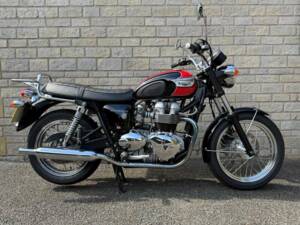
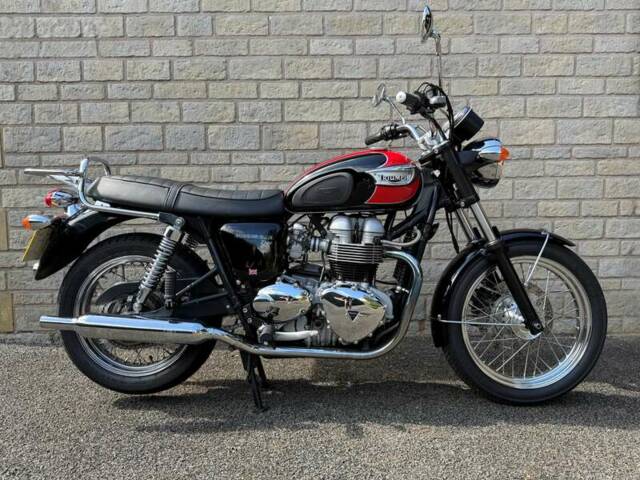
2005 | Triumph Bonneville T100
2005 Triumph T100 Bonneville 865cc

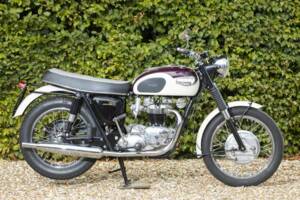
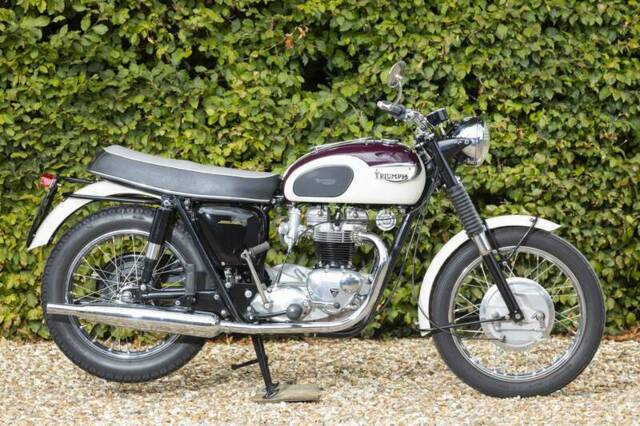
1967 | Triumph Bonneville T120TT
1967 Triumph Bonneville T120 650cc
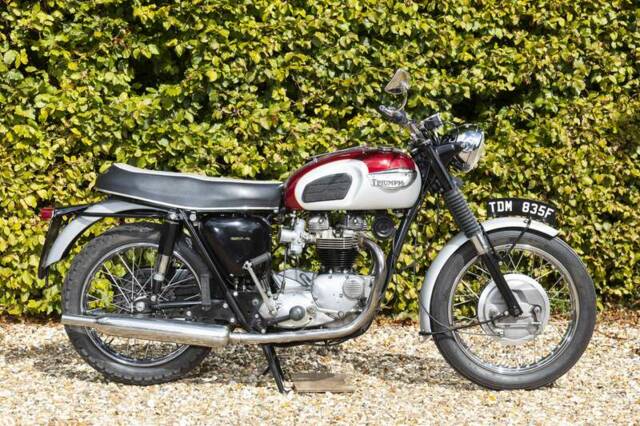
1968 | Triumph Bonneville T120
1968 Triumph Bonneville T120R 650cc
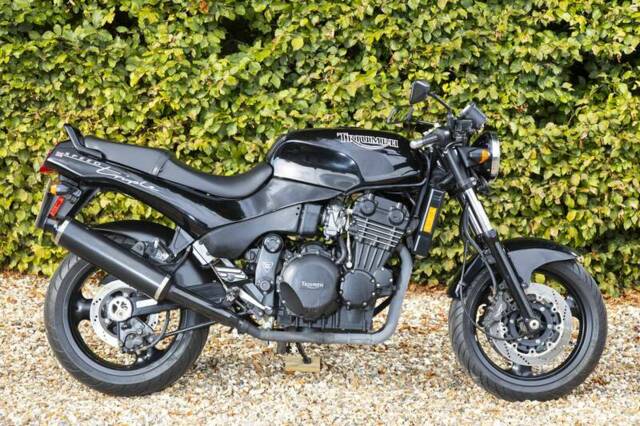
1999 | Triumph Speed Triple
1999 Triumph Speed Triple 885cc
Newsletter
The best Triumph listings, straight to your inbox
Get hand-picked Triumph listings, plus the best of cars, motorbikes, and auctions on Classic Trader — all in one place.
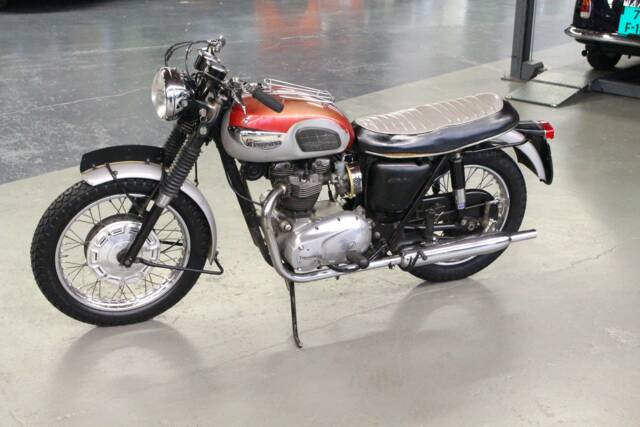
1968 | Triumph Bonneville T120
For sale: 1968 Triumph Bonneville T120

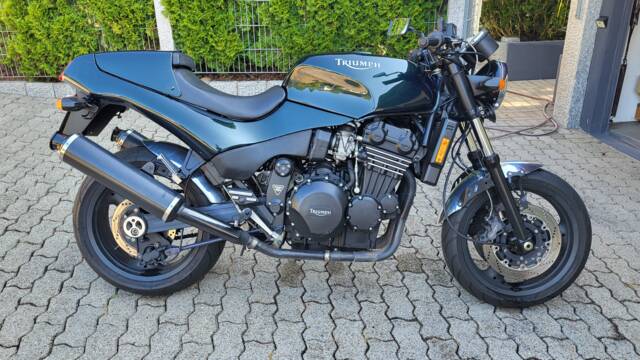
1995 | Triumph Speed Triple
(T300B) – First series 1995 – 2nd owner since 2011

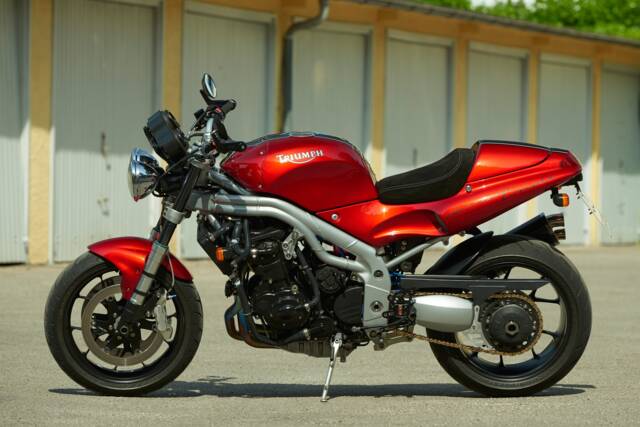
1998 | Triumph Speed Triple
Triumph Speed Triple T509 Mk2 Restomod – documented rebuild
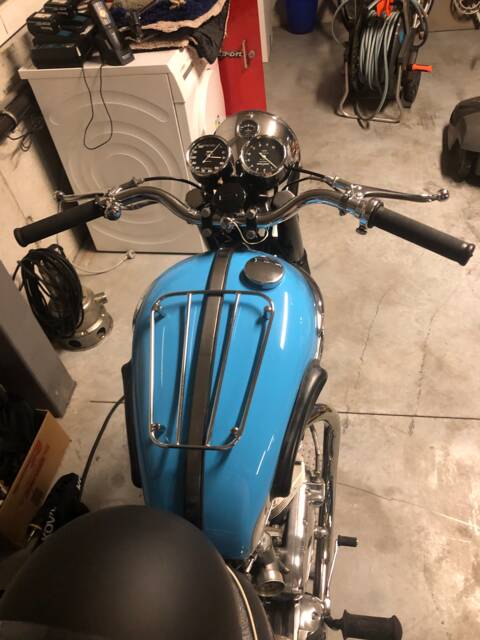
1961 | Triumph T 120 Bonneville
1961 Triumph Bonneville T120

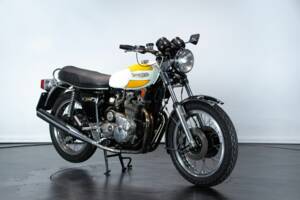
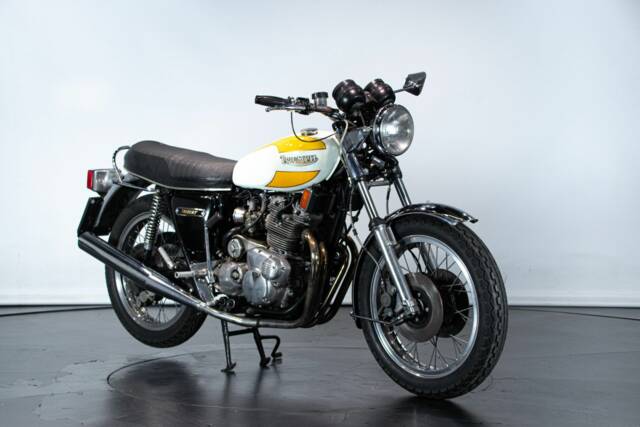
1975 | Triumph T 160 Trident
RARISSIMA !

Triumph listing references from Classic Trader
Below you will find listings related to your search that are no longer available on Classic Trader. Use this information to gain insight into availability, value trends, and current pricing for a "Triumph" to make a more informed purchasing decision.
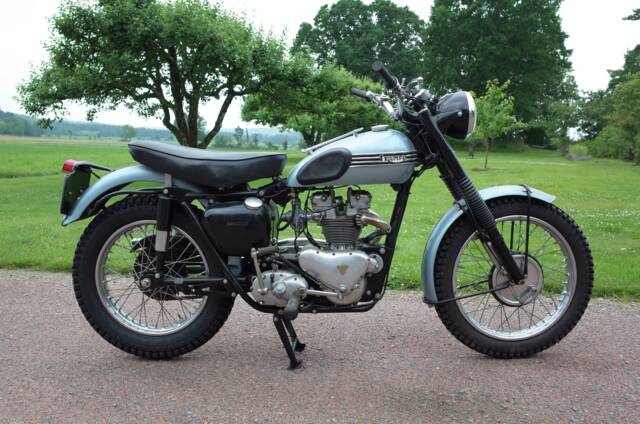
1955 | Triumph TR 5 Trophy
1955 Triumph Trophy TR5. Matching numbers. Original paint.

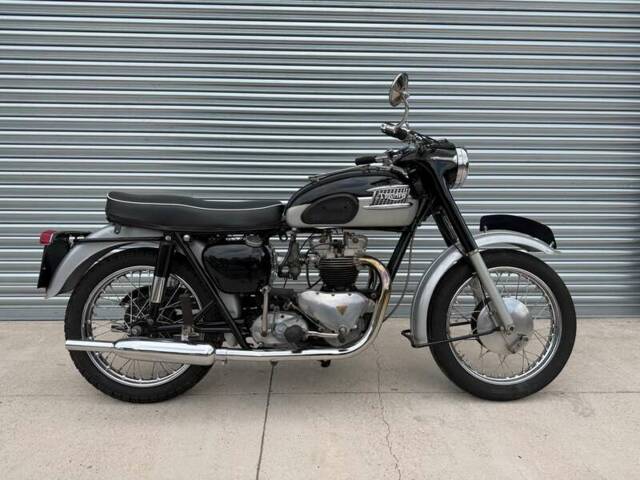
1961 | Triumph 6T Thunderbird
1961 Triumph 6T Thunderbird 649cc
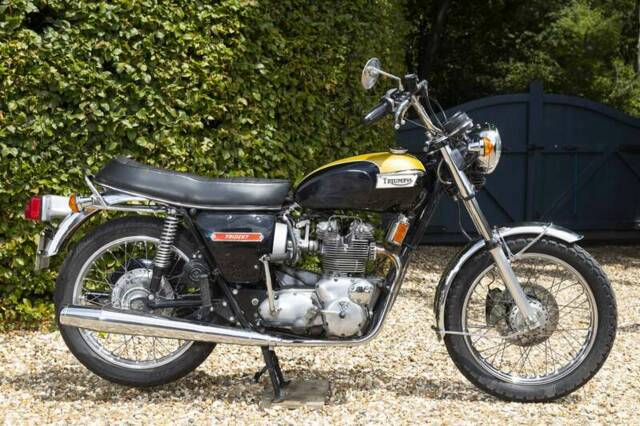
1973 | Triumph T 150 V Trident
1973 Triumph Trident T150V 741cc
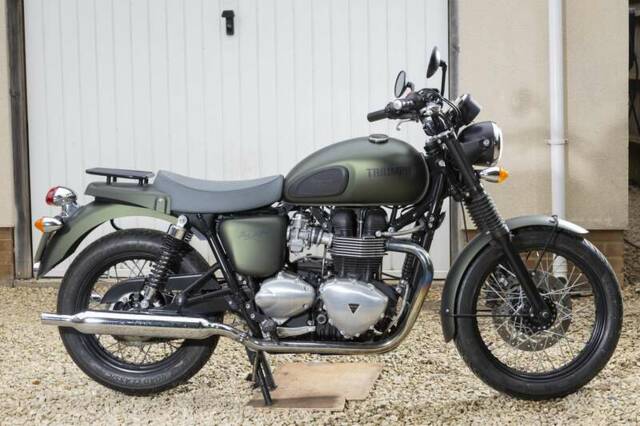
2012 | Triumph Bonneville T100 McQueen
2012 Triumph Bonneville T100 Steve McQueen 865cc - #414/1,100
History & Heritage
The Triumph story began in 1885 when Siegfried Bettmann, a native of Nuremberg, moved to Coventry and established the Triumph Cycle Company. By 1902, the firm produced its first motorised bicycle, the No. 1, featuring a Belgian Minerva engine. Production expanded rapidly, and by the early 1920s, the Coventry factory was churning out 30,000 motorcycles annually.
The First World War saw the Nuremberg branch split from the English parent company, eventually focusing on office machinery while continuing to produce models like the Triumph Knirps. In 1936, amidst financial pressure, the motorcycle division was sold to Jack Sangster. Under the leadership of legendary designer Edward Turner, the brand entered its most influential era.
The 1937 Speed Twin (T100) was a revelation. Its 500cc parallel-twin engine set a template for British motorcycles that would last for decades. In 1956, Johnny Allen rode a Triumph-powered streamliner to a world record of 214 mph (344 km/h) at the Bonneville Salt Flats in Utah. This feat inspired the 1959 Bonneville T120, a model that became a cultural phenomenon and a staple of the Australian classic scene.
The 1970s and 80s were turbulent. A merger with Norton-Villiers-Triumph (NVT) in 1973 failed to stem the tide of Japanese competition. Production at the Meriden factory eventually ceased in 1983. However, property developer John Bloor purchased the rights and rebuilt the brand from the ground up in Hinckley. The 1990 relaunch introduced the Trident, Trophy, and Daytona, followed by the game-changing Speed Triple in 1994. Today, Triumph Motorcycles Ltd. stands as the largest British-owned motorcycle manufacturer, with a strong presence across Australia.
Highlights & Features
Triumph represents British engineering with a rebellious edge. The brand has consistently delivered machines that balance performance with distinct character, from the early parallel-twins to the modern high-torque triples.
The Bonneville T120 (1959–1974) is the quintessential British twin. Its 650cc configuration, producing 46 hp with twin carburettors, became the benchmark for power and reliability in the 1960s. The 6T Thunderbird (1949–1966) offered a more touring-oriented 650cc experience, famously ridden by Marlon Brando in The Wild One. For those seeking sportier performance, the T100 Daytona provided higher compression and a more aggressive tune.
In the mid-1970s, the T160 Trident pushed boundaries with its 750cc three-cylinder engine. Delivering 58 hp, it offered a level of smoothness and high-speed stability that the twins couldn't match. It remains a prized collector's item in Australia for its unique mechanical layout and electric start—a luxury at the time.
The Hinckley era brought a new level of sophistication. The Speed Triple (from 1994) essentially created the factory streetfighter category. With its exposed 885cc (later 1050cc) triple engine and minimal bodywork, it became an instant classic. Since 2001, the modern Bonneville range (T100 and T120) has successfully blended 1960s aesthetics with modern fuel injection and liquid cooling, making them popular choices for Australian riders who want classic style without the maintenance headaches of vintage machinery.
Key Engineering Traits: Triumph is famous for its parallel-twins with a 270-degree crank (in modern versions) for a soulful exhaust note. The Hinckley triples are renowned for their linear power delivery and "triple howl." Vintage Meriden models are known for their dry-sump lubrication and separate gearboxes, requiring a hands-on approach to maintenance that many enthusiasts find rewarding.
Technical Data
Classic Models (Meriden Era 1949–1983)
Hinckley Era (Modern Classics & Roadsters)
Market Overview & Buying Tips
Price Ranges in Australia (AUD A$ 2024–2025)
Classic Meriden Era:
- Bonneville T120 (1959–1974): Restored examples typically fetch A$20,000–A$35,000. Concours-quality early models (pre-1963) can exceed A$45,000–A$60,000 at local auctions. Solid, rideable examples start around A$14,000.
- 6T Thunderbird: Generally more affordable than the Bonneville, ranging from A$12,000–A$25,000. They offer excellent value for those wanting the 650cc twin experience.
- T160 Trident: Rare in Australia, prices range from A$15,000–A$30,000. Be aware that triple-cylinder engine rebuilds are significantly more expensive than twins.
- T100 Daytona: Expect to pay A$16,000–A$32,000. Originality is key here, as many have been modified into café racers.
Hinckley Era (Modern Classics):
- Speed Triple 900 (1994–1996): An emerging classic, currently priced between A$6,000–A$11,000. Early "Series 1" models in original condition are starting to appreciate.
- Speed Triple 1050 (2005–2010): A lot of bike for the money at A$7,500–A$13,000. Look for models with service history, as high-mileage examples (50,000+ km) are common.
- Bonneville T100 865 (2001–2015): Prices sit between A$6,500–A$12,000. Carburetted models (pre-2008) are favoured by purists, while EFI models offer better daily reliability.
- Bonneville T120 1200 (2016+): Used prices range from A$13,000–A$22,000. Depreciation is relatively slow due to high demand for the "Icon" and "Gold Line" special editions.
Australian Buyer Considerations:
- Parts Availability & Shipping: While Australia has a dedicated network of Triumph specialists (e.g., JCS Motorcycles, Wemoto AU), many specific vintage parts must be sourced from the UK or USA. Expect to pay A$50–A$150 in shipping for small to medium orders, and factor in 2–3 weeks for delivery.
- Importing to Australia: If you find a dream Triumph overseas, remember the 25-year rule. Bikes older than 25 years can be imported with fewer compliance hurdles. However, shipping a bike from the UK to Australia typically costs A$2,500–A$4,500, plus 10% GST and potential luxury car tax if the value is exceptionally high.
- Asbestos Compliance: Australia has strict zero-tolerance laws for asbestos. Vintage Triumphs often had asbestos in gaskets and brake linings. Ensure any imported bike has been professionally cleared or has had these components replaced with modern equivalents before shipping to avoid heavy fines and seizure.
- Dealer Network: Triumph has a robust dealer network in major cities like Sydney, Melbourne, Brisbane, and Perth. This makes servicing modern classics straightforward, but for Meriden-era bikes, you will likely need a specialist independent mechanic.
Riding Experience
Riding a Triumph is an exercise in sensory engagement. The experience varies wildly between the mechanical rawness of the Meriden years and the polished performance of the Hinckley era.
Bonneville T120 (1959–1974): The vintage Bonnie is all about the "thump." At idle, the 650cc twin vibrates with a rhythmic pulse that smooths out as you climb past 3,000 rpm. The handling is surprisingly light thanks to the slim frame and narrow tyres, making it a joy on winding coastal roads. However, the drum brakes require a firm hand and plenty of foresight. The sound is the highlight—a crisp, metallic bark that is unmistakably British. On the highway, you'll feel the wind and the vibration, reminding you that this is a machine from a different time.
T160 Trident: The triple offers a completely different character. It feels more "European" in its delivery—smooth, rev-happy, and surprisingly fast. The 750cc engine has a linear pull that makes overtaking effortless. It’s a heavier bike than the twins, which provides better stability at high speeds but makes it a bit of a handful in tight city traffic. The electric start is a welcome feature for those who don't want to wrestle with a kickstarter on a hot Australian afternoon.
Speed Triple 1050 (2005–2015): This is the hooligan of the family. The 1050cc triple is a masterpiece of torque. You can leave it in third gear all day and it will pull from walking pace to highway speeds without a hiccup. The riding position is aggressive—forward-leaning and wide-barred—perfect for carving through the Adelaide Hills or the Old Pacific Highway. The "triple howl" under hard acceleration is one of the great soundtracks in motorcycling.
Modern Bonneville T120 (1200cc): This bike offers the best of both worlds. It looks like a 1960s icon but rides with the civility of a modern tourer. The liquid-cooled engine is incredibly smooth, and the ride-by-wire throttle provides instant, predictable response. It’s a relaxed cruiser that can still hustle when asked. For the Australian rider, the reliability and ABS provide peace of mind on long-distance trips across the state.
Design & Philosophy
Triumph design has always been guided by a single principle: the engine is the heart of the aesthetic. Edward Turner’s philosophy was to make the mechanical components as beautiful as the bodywork.
The Meriden Era was defined by the "Triumph Look"—the teardrop fuel tank, the parallel cylinders with prominent cooling fins, and the "peashooter" exhausts. Turner understood that a motorcycle should look fast even when standing still. The use of two-tone paint schemes, such as the famous "Tangerine Dream," added a level of flair that set Triumph apart from the more utilitarian British brands.
The Hinckley Era faced the challenge of modernising this legacy. Designers like John Mockett and later Rodark focused on "Modern Classic" authenticity. They went to great lengths to hide modern necessities—fuel injectors are disguised as carburettors, and the radiator is tucked neatly between the frame rails. The Speed Triple took a different path, embracing a "naked" aesthetic that celebrated the raw, industrial look of the triple engine and the twin "bug-eye" headlights that became its signature.
In Australia, the "Custom Culture" has heavily influenced how Triumphs are viewed. The Bonneville is the ultimate blank canvas for café racer and scrambler builds. Whether it’s a minimalist "brat style" seat or high-mounted "desert sled" exhausts, the inherent balance of the Triumph design allows for extensive modification without losing the brand's identity.
Racing & Culture
Triumph’s racing pedigree is etched into the history of the Isle of Man TT and the Bonneville Salt Flats. Jack Marshall’s victory in 1908 was just the beginning. In the 1960s and 70s, the Trident dominated production racing, proving that British triples could take on the world.
In Australia, Triumph has a long-standing association with the "Rocker" subculture. The 1960s saw a surge in café racing, with riders stripping down their T120s to race between transport cafes. This spirit lives on in events like the Distinguished Gentleman’s Ride, which actually started in Sydney in 2012 and has since become a global phenomenon, with Triumph as the primary sponsor.
The brand also has a massive presence in film. Beyond Marlon Brando, Steve McQueen’s famous jump in The Great Escape (on a disguised Triumph TR6 Trophy) cemented the brand’s "cool" factor. For Australian enthusiasts, owning a Triumph isn't just about the ride; it's about connecting to a century of rebellion, style, and cinematic history.
Summary
Triumph offers a unique proposition for the Australian motorcyclist: a deep connection to British heritage combined with machines that still feel relevant on today's roads. Whether you are drawn to the mechanical honesty of a Meriden Bonneville, the smooth power of a Trident, or the modern performance of a Speed Triple, you are buying into a brand that values character above all else.
Key Takeaways for Buyers:
- Bonneville T120 (Meriden): The ultimate classic investment, but requires mechanical sympathy and a budget for specialist parts.
- 6T Thunderbird: A fantastic entry point into vintage British twins with a more relaxed riding character.
- Speed Triple 1050: A modern classic that offers incredible performance and value for money in the current AU market.
- Modern Bonneville (Hinckley): The perfect choice for those who want the iconic look with daily-driver reliability and modern safety features.
With 8 offers currently available on Classic Trader, from meticulously restored icons to well-maintained modern classics, your next British masterpiece is closer than you think. Find your Triumph and join a legacy that has been "For the Ride" since 1902.