- Motorcycle
- Standard (0 offers)
Buy Standard Motorcycle
Between 1925 and 1955, Standard produced motorcycles in Ludwigsburg and Stuttgart that embodied technical excellence with licensed Brough Superior Castle forks and Swiss MAG engines. These rare German pre-war machines represent a pinnacle of interwar engineering, offering a unique alternative for Australian collectors seeking European sophistication.
Search results
Currently, there are no matching listings for your search.
Create search alert
Let yourself be notified as soon as a listing is published that matches your search filters.
Create listing
Do you have a Standard that you want to sell? Then create a listing now.
Create listingStandard listing references from Classic Trader
Below you will find listings related to your search that are no longer available on Classic Trader. Use this information to gain insight into availability, value trends, and current pricing for a "Standard" to make a more informed purchasing decision.
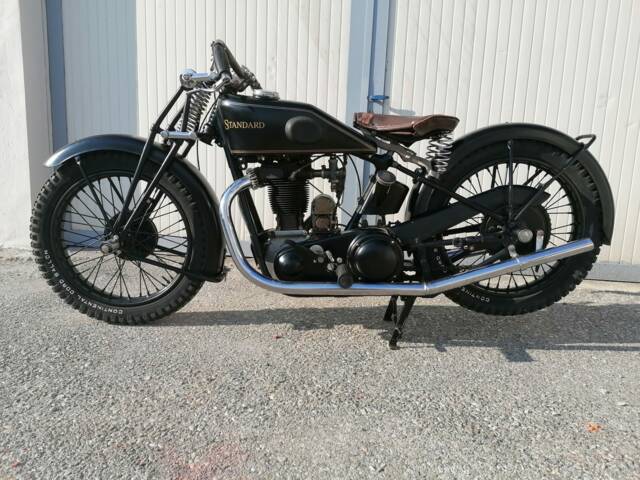
1929 | Standard BS 500
MAG

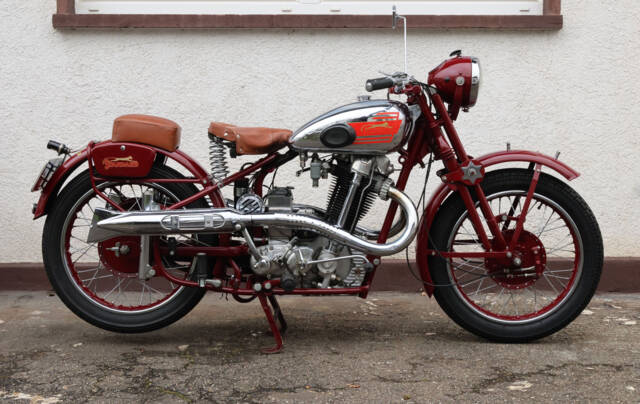
1939 | Standard Rex Sport 500
Standard Rex Sport 500 mit Hinterradfederung

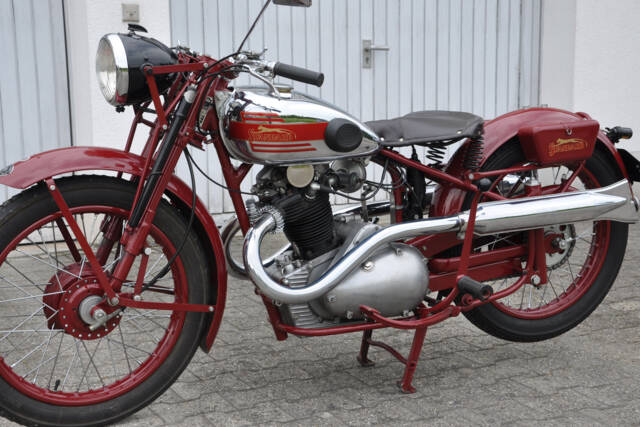
1949 | Standard Rex Sport 350
Eine von 30 Privataschinen
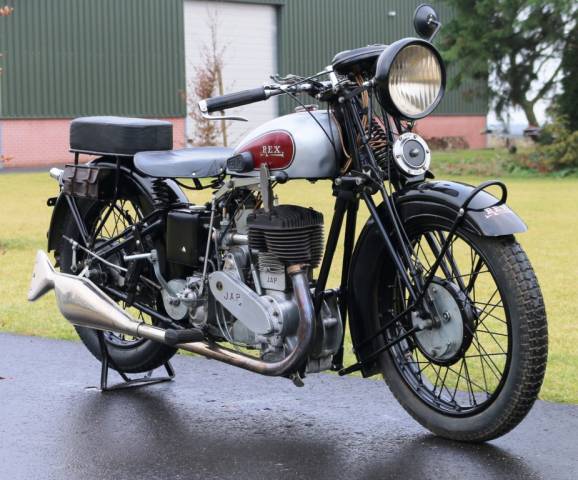
1930 | Standard Rex Sport 500
Rex 500cc sv Jap year 1930

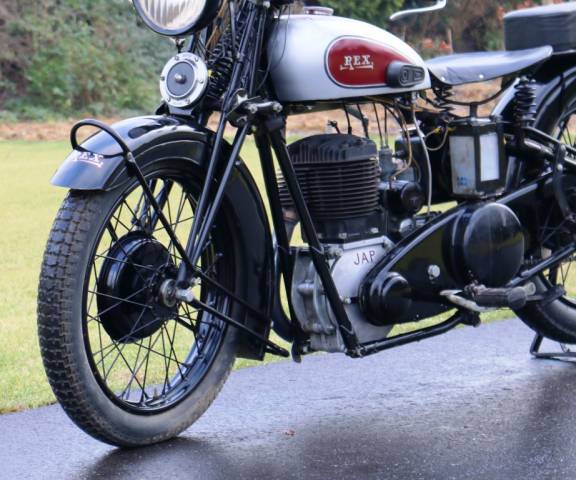
1934 | Standard Rex Sport 350
Rex 500cc Jap year 1934 with swedisch papers
Create search alert
Let yourself be notified as soon as a listing is published that matches your search filters.
Create listing
Do you have a Standard that you want to sell? Then create a listing now.
Create listingHistory & Heritage
The Standard Fahrzeugfabrik GmbH was founded in 1926 by Wilhelm Gutbrod in Ludwigsburg, Germany. Over nearly three decades, the company manufactured motorcycles across three primary locations: Ludwigsburg (1926–1933), Stuttgart-Feuerbach (1933–1937), and Plochingen am Neckar (1937–1955). Gutbrod, who also owned the Swiss Zehnder factory, positioned Standard as a premium brand, often pricing his machines well above the annual salary of a typical worker.
The BS500 OHV (1929–1933) is widely considered the brand's masterpiece. Featuring a 496cc MAG OHV single-cylinder engine producing 22 hp, it was equipped with Castle forks built under license from Brough Superior. With a dry weight of 155 kg and a top speed of 120 km/h, it was a formidable performer for its time. Simultaneously, the BT1000 (1930–1933) catered to the ultra-luxury segment with its 992cc MAG IOE V-twin engine and Hurth four-speed gearbox, making it more expensive than even the most prestigious DKW models of the era.
From 1934, Standard transitioned to in-house OHC designs. The Rex Sport series offered 350cc and 500cc models with overhead camshafts, showcasing the brand's engineering independence. For the more budget-conscious market, the Feuergeist models (1932–1940)—including the Kobold, Hexe, and Nixe—provided reliable 175cc to 200cc two-stroke options. Following Wilhelm's death in 1948, his son Walter managed the company until production ceased in the late 1950s. Notably, Josef Ganz, the visionary behind the original Volkswagen concept, was briefly associated with the firm, adding a layer of automotive historical significance to the brand.
Highlights & Features
Standard motorcycles were defined by their uncompromising use of high-quality components. The licensed Castle fork from Brough Superior—a leading-link design—was regarded as the most advanced suspension fork of the interwar period. The integration of MAG engines from Switzerland ensured exceptional reliability and performance, while Hurth gearboxes provided the precise shifting required for high-performance riding.
The BS500 OHV epitomised technical perfection with its 82 x 94 mm bore and stroke, delivering 22 hp at 3800–4100 rpm. The BT1000 stood as a luxury tourer for the wealthiest riders, while the Rex Sport OHC models demonstrated Standard's ambitions in the sporting arena. Even the Feuergeist series proved that the brand could deliver quality in a more accessible, everyday package.
The brand's racing pedigree was cemented by figures like Hermann Lang, who would later become a Formula 1 legend for Mercedes-Benz. In 1928, Lang campaigned a Standard sidecar outfit with great success. Ernst Burggaller also achieved national and international victories on Standard machinery. For the Australian collector, a Standard represents the golden age of German motorcycle manufacturing, where small, specialised factories could successfully compete with giants like BMW and DKW.
Technical Data
Standard BS500 OHV (1929–1933)
Standard BT1000 (1930–1933)
Standard Rex Sport H 354 (1936–1940)
Standard Feuergeist (1932–1940)
Market Overview & Buying Tips
Current Market Situation in Australia
Standard motorcycles are among the rarest German pre-war machines in the Australian market. Public auction results are virtually non-existent in the Southern Hemisphere, with most transactions occurring privately between high-end collectors. The market dynamic for Standard is similar to that of Brough Superior or Vincent: these bikes are rarely "for sale" in the traditional sense and are instead "placed" within significant collections.
For an Australian buyer, acquiring a Standard almost certainly involves importing from Europe, specifically Germany or Switzerland. This adds layers of complexity, including biosecurity (asbestos-free certification is mandatory for Australian Customs), shipping logistics, and the 10% GST on the landed value (Customs Value + Freight + Insurance).
Estimated Price Ranges (2024–2025 in AUD)
Value Drivers: Originality is paramount, particularly the presence of the correct Castle fork and MAG engine. Documentation such as original German "Kraftfahrzeugbrief" or factory records significantly enhances value. The BS500 OHV and BT1000 are the most sought-after models, while the OHC Rex Sport models appeal to those valuing technical innovation.
Buyer Profiles
Pre-War Specialists: Collectors focused on the "Golden Era" of European manufacturing (1920–1940). They appreciate the technical sophistication and the link to automotive history via Gutbrod and Josef Ganz. These buyers are typically prepared for long-term restoration projects.
MAG Engine Enthusiasts: Fans of Swiss precision engineering. Standard is one of the few German marques that remained loyal to MAG powerplants, creating a crossover interest with collectors of Motosacoche, Condor, and Moser.
Brough Superior Alternatives: Collectors who admire the Brough Superior aesthetic and the Castle fork but seek a more attainable entry point into high-end pre-war ownership. The Standard offers similar technical DNA at a fraction of the price of a Nottingham-built machine.
Brand-Wide Characteristics
Quality-First Approach: Standard relied heavily on premium third-party components from renowned suppliers like MAG and Hurth rather than experimenting with unproven in-house designs. This strategy ensures that mechanical parts are often shared with other high-end European bikes of the era, though "Standard-specific" cycle parts remain difficult to find.
Parts Availability in Australia: Extremely limited. Most parts must be sourced from specialists in Germany, such as Motorrad Stemler GmbH (exhausts, rubber parts, hardware) or MAG engine specialists. Shipping costs for heavy components like cylinder heads or gearboxes from Europe to Australia can be substantial, often ranging from $300 to $800 for air freight.
Restoration Costs: A mechanical overhaul can cost between $8,000 and $15,000 AUD, while a full concours-level restoration can easily exceed $60,000 AUD. Australian restorers should budget 12–24 months for parts procurement, as many items will require bespoke fabrication or international sourcing.
Inspection Points for Buyers
- Castle Fork: The leading-link design is prone to wear in the pivot points. Check for lateral play and inspect the bushings and bearings. Regular lubrication is critical for these forks.
- MAG Engine: While robust, parts are scarce. Listen for bottom-end noise and check for oil pressure. Big-end bearing failure is a known issue on neglected high-mileage units.
- Hurth Gearbox: The gear linkage can develop significant play over time. Ensure all gears engage cleanly and do not "jump" out under load.
- Electrical System: Most original 6V systems have been converted to 12V. Verify the quality of the wiring and the functionality of the generator and ignition timing.
- Carburettor: Original Amal, Bing, or Fischer carburettors often require professional refurbishment or replacement with modern equivalents for reliable running.
- Frame Integrity: Inspect the pre-war steel frame for cracks, previous accident damage, or poor-quality repairs. Structural integrity is vital for safe operation.
- Brakes: The small-diameter drum brakes require precise adjustment. Test for effectiveness, keeping in mind that pre-war braking distances are significantly longer than modern standards.
- Corrosion: Thoroughly check the fuel tank, mudguards, and frame for "rust-through," as these original sheet metal parts are nearly impossible to replace.
Questions for the Seller
- Is the ownership history and restoration work documented?
- Are original manuals, parts catalogues, or factory records included?
- Are there any known mechanical issues or recent major repairs?
- What is the provenance of replacement parts (Original, NOS, or reproduction)?
- Do the engine and frame numbers match factory specifications?
Specialist Resources
Joining the Veteran Motor Cycle Club of Australia (VMCCA) or the Antique Motorcycle Club of America (Australia Chapter) is highly recommended for networking and advice. For technical support, connecting with the Veteran Motor Cycle Club (VMCC) in the UK or Germany is essential for sourcing MAG engine expertise.
Performance & Riding Experience
Riding a Standard BS500 OHV is a journey back to an era where 120 km/h was a staggering speed. The 496cc MAG single-cylinder delivers its 22 hp with a refined, linear surge rather than explosive acceleration. It is a machine that rewards a deliberate riding style; the Hurth four-speed gearbox requires firm, rhythmic shifts and a sympathetic hand on the clutch.
The Castle fork provides a level of comfort that was revolutionary for the late 1920s. The leading-link system absorbs road imperfections far more effectively than contemporary girder forks, though it does impart a slightly "disconnected" feel to the steering. On the open road, the Standard is remarkably stable, preferring long, sweeping curves over tight, technical corners. The drum brakes require a proactive approach—braking must be planned well in advance, as the stopping power is progressive rather than immediate.
The BT1000 V-twin offers significantly more torque, making it a superior choice for sidecar use or long-distance touring. The IOE (Inlet Over Exhaust) engine configuration produces a characteristic mechanical symphony, with more vibration than modern OHV designs but a deeply satisfying exhaust note. It feels like a "gentleman's express," designed for the burgeoning highway networks of 1930s Europe.
The Rex Sport OHC models represent the brand's athletic side. With overhead camshafts allowing for higher revs, these engines are more responsive and eager. The riding position is more aggressive, and the suspension is tuned for firmer feedback. However, "sporting" in the 1930s context means maintaining a steady 110 km/h on winding B-roads, not chasing lap times.
The Feuergeist two-strokes (175–200cc) are charming everyday companions. Lightweight and mechanically simple, they offer a different kind of fun. They emit the classic two-stroke "ring-ding-ding" and require frequent gear changes to stay in the powerband. They are perfect for local club runs and vintage rallies where the focus is on participation rather than outright speed.
Overall Impression: A Standard motorcycle feels like a high-precision instrument. It demands an active, engaged rider who understands the mechanical nuances of the pre-war era. You don't just ride a Standard; you operate it, celebrating the tactile feedback and engineering integrity of a bygone age.
Design & Philosophy
Standard motorcycles embody the functional elegance of the late 1920s and early 1930s. Wilhelm Gutbrod eschewed avant-garde styling in favour of classic proportions: a long wheelbase, a low-slung engine, and an exposed, purposeful frame. The Castle fork is the visual centrepiece, its curved links and visible pivots serving as a hallmark of the brand's technical aspirations.
The BS500 OHV features the quintessential pre-war aesthetic: a black-painted frame, chrome-plated mudguards, and the exposed MAG engine with its prominent cooling fins. The teardrop fuel tank is adorned with subtle gold pinstriping and the Standard script—a look that conveys quality without ostentation. Every component, from the chain guard to the tool roll, feels over-engineered and built to last.
The BT1000 is more imposing. The massive V-twin engine fills the frame, while larger mudguards and a wider tank give it a "heavyweight" presence. Two-tone paint schemes, often in Black/Cream or Black/Maroon, were common for these flagship models, highlighting their status as luxury items.
The Rex Sport models introduced a leaner, more modern silhouette. With flatter handlebars, narrower mudguards, and the OHC engine's distinctive external oil lines, they looked fast even when standing still. Standard occasionally experimented with bolder colours like deep red or blue for these models, a departure from their usual conservative palette.
The Feuergeist series was more utilitarian but no less well-made. Simpler paint finishes and less chrome reflected their role as accessible transport, yet they retained the brand's reputation for reliability.
Philosophy: Standard targeted discerning buyers with technical knowledge—engineers, doctors, and entrepreneurs who valued substance over flash. While a Brough Superior was a status symbol, a Standard was an engineering statement. The use of licensed Brough forks and Swiss engines communicated a clear message: "We source the best components in the world to build the best motorcycle in Germany."
Other Considerations
The Automotive Connection
The history of Standard is inextricably linked to the development of the modern automobile. After World War II, the company produced the Standard Superior, a small car based on the revolutionary ideas of Josef Ganz. Ganz's concepts of a rear-mounted engine and a backbone chassis were fundamental to the eventual design of the Volkswagen Beetle. This connection makes Standard motorcycles a fascinating "missing link" for automotive historians and collectors of early German microcars.
Racing Heritage
While not a "factory" racing team in the vein of BMW or NSU, Standard's presence in competition was significant. Hermann Lang's early career on a Standard sidecar outfit is a point of pride for the brand. His transition from a motorcycle mechanic and racer to a Mercedes-Benz "Silver Arrows" legend adds a layer of glamour to the Standard story that few other small manufacturers can claim.
Global Rarity
Standard focused almost exclusively on the German and Swiss markets. Exports to the UK, USA, or Australia were negligible during the production years. This explains why the brand remains an "insider secret" among pre-war enthusiasts. For an Australian collector, owning a Standard means possessing a machine that is likely unique in the country, ensuring it will be the centre of attention at any vintage motorcycle gathering.
Cultural Impact
Unlike BMW or Zündapp, Standard has largely escaped the spotlight of popular culture. There are no famous movie appearances or celebrity endorsements to drive up prices. The brand's appeal is purely mechanical and historical. For many collectors, this lack of mainstream recognition is a major part of the attraction—it is a brand for those who know, not those who follow.
Summary
Standard motorcycles represent the purest expression of German interwar engineering: no compromises on components, no concessions to mass-market cheapness, and a steadfast commitment to quality. Wilhelm Gutbrod's decision to utilise licensed Brough Superior forks and Swiss MAG engines created machines that were technically superior to almost anything else on the road, even if it made the company economically vulnerable.
The BS500 OHV and BT1000 remain the high-water marks of the brand—luxury tourers that could go toe-to-toe with the BMW R 62 or Zündapp K 800 but are far rarer today. The Rex Sport OHC models show the brand's innovative spirit, while the Feuergeist series proves they could adapt to the economic realities of the Great Depression.
For the Australian collector, a Standard is a rewarding but challenging acquisition. Parts are difficult to find, specialised knowledge is required for the MAG engines, and the bikes almost always need to be imported. However, for those who value exclusivity, mechanical sophistication, and a direct link to the pioneers of the Volkswagen (Gutbrod and Ganz), a Standard is one of the last great "undiscovered" marques of the pre-war era.
Buying Recommendation: Best suited for experienced pre-war collectors. Beginners might find the lack of local parts and expertise daunting and should perhaps start with a more common marque like BMW or DKW. But for the connoisseur who wants a machine that is technically on par with a Brough Superior but with a uniquely German character, the Standard is an incomparable choice.
As Wilhelm Gutbrod intended, the Standard remains: Quality for the expert, not quantity for the masses.