- Motorcycle
- SIS Sachs (0 offers)
Buy SIS Sachs Motorbike
SIS Sachs stands apart as a rare Portuguese classic with German engineering at its core. From the sharp V5 Sport to the scarce V5 Lotus and GP1, this is a make for buyers who want character, history and something you almost never see in Australia.
Search results
Currently, there are no matching listings for your search.
Create search alert
Let yourself be notified as soon as a listing is published that matches your search filters.
Create listing
Do you have a SIS Sachs that you want to sell? Then create a listing now.
Create listingSIS Sachs listing references from Classic Trader
Below you will find listings related to your search that are no longer available on Classic Trader. Use this information to gain insight into availability, value trends, and current pricing for a "SIS Sachs" to make a more informed purchasing decision.

1954 | SIS Sachs 50
C.M.P. Sachs 50 Velocipede

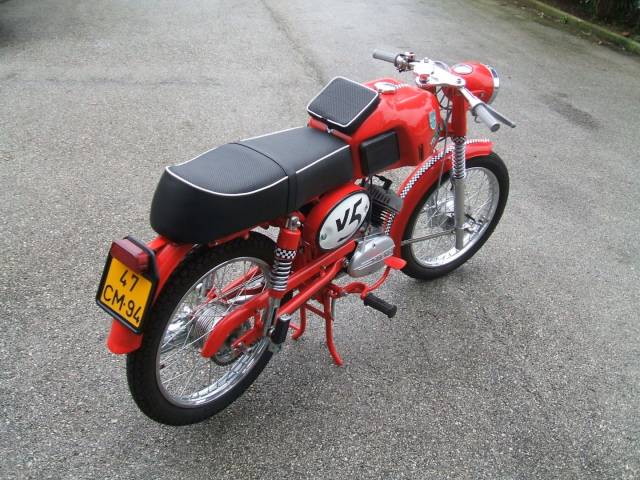
1975 | SIS Sachs V5 Sport
SIS SACHS V5 Racing Sport

Create search alert
Let yourself be notified as soon as a listing is published that matches your search filters.
Create listing
Do you have a SIS Sachs that you want to sell? Then create a listing now.
Create listingHistory
SIS Sachs began life in the early 1950s in Anadia, Portugal, when Joaquim Simões Costa founded Sociedade Irmãos Simões. What started as a modest local operation grew into one of the most distinctive names in Portuguese two-wheel history, thanks to a clear idea from the start: use proven engineering, build it with care, and give riders a machine that felt both practical and special. For collectors today, that mix is exactly what makes SIS Sachs so appealing.
The relationship with Fichtel & Sachs of Schweinfurt in Germany shaped the make from the outset. SIS initially relied on Sachs engines, then turned the partnership into something deeper as the company matured. In 1964, the business was acquired by Aulácio Almeida of OSP, and the SIS-Sachs name emerged as the brand identity that most enthusiasts now recognise. By 1971, production had moved into the factory at Malaposta, Anadia, bringing the work under one roof and giving the company a more modern industrial base.
That period matters because it marks the shift from a small assembler to a genuine manufacturer with a clearer model range and a stronger export profile. SIS was never a giant producer, but it was ambitious. It sold beyond Portugal and gained a reputation in several European markets for compact, well-engineered machines with German mechanical roots and Portuguese individuality.
The V5 Sport, launched in 1965 and produced until 1987, became the defining SIS Sachs model. It was the machine that gave the brand its strongest identity and the one most buyers will search for today. But the story is broader than one hit model. Earlier bikes such as the Lebre established the company’s local reputation in the 1960s. The Minor 505 added another chapter in the small-capacity segment. Later, the RE50 showed that SIS could adapt to the trail-bike trend, while the V5 Turismo, V5 Top Racing, and the rarer V5 Lotus kept the line fresh into the late 1980s and early 1990s.
The final stage of the story arrived with the GP1, built from 1991 to 1994. Fully faired and visually more modern than earlier SIS bikes, it represented the company’s attempt to stay relevant as tastes changed and the market became more competitive. Yet the pressure from Japanese mass production and a fast-moving European small-bike market was too strong. SIS Sachs closed in September 1995, ending a run that had begun in the post-war years and left behind a marque now prized by specialists and dedicated collectors.
For Australian buyers, that history has an extra layer of appeal. SIS Sachs is so uncommon in Australia that every example feels like a discovery. The rarity is real, and so is the challenge. If you want to Find one, you are not browsing a crowded local market. You are entering a niche international hunt, where provenance, completeness and parts support matter more than glossy paint alone.
Highlights
What makes SIS Sachs memorable is not just the badge, but the way the brand combined Portuguese character with German mechanical discipline. These were not generic minibikes with a local sticker on the tank. Even the smaller SIS machines had an engineering confidence that set them apart from many rivals of the same era.
The best-known example is the V5 Sport. It used the Sachs 50 S engine, a 49cc two-stroke single with a 5-speed gearbox, and that alone made it stand out in a class where many machines still felt basic or under-geared. SIS built the V5 Sport to be a serious small-capacity road bike rather than a toy. With a claimed 5.3 bhp, a relatively tall specification for its class, it had a lively feel that appealed to young riders and practical commuters alike.
Collectors also value the variety within the V5 family. The V5 Turismo is the more touring-minded sibling, while the V5 Top Racing brings a sportier late-era flavour. The V5 Lotus, introduced in the late 1980s, is especially desirable because it is rarer and visually sharper. It reflects the period when small motorcycles were adopting more aerodynamic styling and a stronger performance image.
Beyond the V5 line, SIS Sachs offered a surprisingly broad range for such a small manufacturer. The Lebre represents the early years and the company’s roots. The Minor 505 speaks to the practical side of the market, while the RE50 shows how SIS responded to the trail-bike trend with a lightweight, go-anywhere setup. The GP1 is the most modern-looking of the lot, and for some buyers it is the ultimate SIS curiosity: a compact, fully faired, late-production machine that marks the brand’s last push before closure.
For many enthusiasts, the highlight is simply how uncommon these bikes are outside Portugal. In Australia, that scarcity changes the whole ownership experience. A SIS Sachs is not just another collectible. It is a conversation piece, a parts detective story, and a serious niche purchase. If you want something that feels different from the usual European classics, discover now why these machines still attract attention.
Technical Data
The core technical identity of the best-known SIS Sachs bikes is the Sachs 50 S engine. On the V5 Sport, it used a 38 × 44 mm bore and stroke, a 5-speed transmission and a 16-litre tank. That combination gave the bike a useful touring range for its size and a surprisingly relaxed feel at speed, especially when compared with more basic 50cc machines.
The V5 Sport’s spec sheet is a good reminder of why collectors still pay attention to the model. It was not merely light and economical. It was carefully engineered for a class that often accepted compromise. At 68 kg, it was easy to manage, but the chassis and gearbox made it feel more substantial than the weight figure suggests. For riders and buyers, that balance is part of the charm.
The Sachs 50 S family is also well documented, which helps when you are evaluating a restoration or checking whether a bike is original. The engine layout, carburation and gearbox details are familiar to specialists, but buyers should still verify that the machine on offer matches the correct model year and specification. Over the decades, SIS Sachs bikes have often been repaired, updated or adapted, so originality is not something to assume.
If you are considering a purchase, focus on the details that are expensive or difficult to correct later: matching engine and frame presentation, correct bodywork, usable electrics, and the presence of hard-to-source trim. A tidy mechanical base is good; a complete bike with the right parts is better.
Market Overview & Buying Tips
SIS Sachs is an extremely rare classic in Australia. That rarity creates opportunity, but it also changes the economics of ownership. The local market is tiny, so most buyers will need to source from Europe, mainly Portugal and sometimes Germany. That means you should budget not only for the purchase price, but also for international freight, customs, and parts shipping costs. Those costs can add up quickly, especially if the bike needs model-specific trim, plastics or engine internals.
Current market prices in AUD (2025/2026)
- Project bike / parts machine: A$600–1,500
- Runner / usable unrestored bike: A$1,500–2,500
- Restored V5 Sport: A$4,000–6,000
- Rare V5 Lotus: up to A$8,000
These figures reflect the current international reality: decent SIS Sachs bikes are still affordable compared with some bigger-name European classics, but the best examples are no longer cheap. Rarity is now a value driver, especially for the V5 family and the scarcer late models.
The smartest buyers usually fall into one of three groups. First are collectors of Portuguese or Iberian motorcycles who want a genuine cornerstone model. Second are enthusiasts of small-capacity European machines who appreciate unusual engineering and a strong story. Third are practical restorers who enjoy working on bikes with a manageable mechanical package and a clear parts trail, even if some components require patient searching.
When you Buy a SIS Sachs, inspection should be methodical. The most important points are rarely cosmetic:
- Crankshaft bearings: a known wear item. Listen for rumbling, grinding or a dry, high-pitched noise at idle and under load.
- Bing carburettor needle: wear here can cause poor fuelling, hesitation and inconsistent running.
- Gearbox oil: use the correct fluid. ATF is preferred by many owners; do not use GL-5 where it can cause trouble.
- Frame-tank corrosion: particularly relevant on bikes with tank-in-frame design elements. Rust inside the tank can be costly to fix.
- Body parts: original panels, covers and plastics are scarce outside Portugal, so completeness matters.
Australia makes all of this more important. A bike that needs “just a few bits” can become expensive once those bits must be shipped from Portugal or Germany. Small parts are one thing; large panels, fuel tanks or fairing pieces are another. If a listing looks cheap, check whether the missing items are precisely the parts that are hardest to replace.
For restorers, the best-value buys are usually complete but tired runners. A project bike may be tempting, but an incomplete SIS Sachs can become a long, costly exercise. If the machine has good bones, original paperwork and mostly intact trim, it is often worth paying more upfront.
Performance
On the road, the SIS Sachs V5 Sport feels more serious than its numbers suggest. The 5-speed gearbox is central to the experience. It lets the engine stay in its working zone and makes the bike feel more flexible than many 50cc machines from the same era. The motor wants to be kept on the boil, but it does not feel frantic when ridden properly.
The claimed 5.3 bhp may sound modest today, yet in a lightweight 49cc classic it delivers a lively and rewarding ride. The V5 Sport can reach around 75 km/h, which is enough to make it useful in the right setting and entertaining almost anywhere. The power delivery is typical of a good two-stroke: smooth enough when tuned well, sharp when it comes on song, and always dependent on proper maintenance.
The V5 Turismo is a calmer companion, while the V5 Top Racing and V5 Lotus lean more towards the sporty end of the scale. The RE50 changes the mood entirely. With its trail-bike stance and more relaxed chassis character, it feels at home on rougher surfaces and unsealed roads. The GP1, meanwhile, offers the most enclosed, modern riding position. It is more focused and visually dramatic, and it suits riders who want the late-era SIS experience in a sharper package.
What all of these bikes share is a sense of engagement. They are not passive classics. You ride them with intent, listen to the engine, and work with the gearbox. That is part of the appeal. SIS Sachs machines reward riders who enjoy mechanical feedback and a visible connection between throttle, engine note and speed.
In Australian conditions, the small size can be an advantage in town, but collectors should still remember that these bikes were designed for a different era of road speeds and traffic. They are best enjoyed as classics, not as substitutes for modern daily transport. When used thoughtfully, though, they can still be wonderfully entertaining.
Design
SIS Sachs design evolved in a way that reflects the company’s long life. Early bikes carried a compact, practical look, with straightforward lines and little wasted space. They were built to work first, but they were not anonymous. Even the utilitarian models had a distinct identity, helped by the influence of Portuguese styling and the brand’s willingness to give its small bikes a clear personality.
The V5 Sport is the clearest expression of that philosophy. Its bodywork is clean and purposeful, with a slim tank profile and a neatly proportioned seat unit. The machine has a light visual footprint, but the styling still feels substantial enough to look like a proper motorcycle rather than a toy. That is one reason the model has aged well. It looks like a complete design, not a compromise.
Later versions pushed the style further. The V5 Lotus adds a more modern, streamlined feel, which makes it especially attractive to buyers who prefer late-1980s sports-bike cues. The GP1 goes further again, with full fairing and a compact, almost miniature-racer presence. It is an object of its time and a useful reminder that SIS was not stuck in the past.
The brand’s use of colour and trim also matters. Original paint, correct decals and intact chrome can transform a bike’s presence. On many SIS Sachs motorcycles, the value is not just in the engine or frame, but in the surviving details: badges, side covers, exhaust finish, lamps, switchgear and period-correct hardware. Since body parts are difficult to source outside Portugal, originality is worth protecting.
For buyers in Australia, this has a practical side too. Recreating a missing fairing or side panel can mean long waits and significant shipping costs from Europe. A visually complete bike may therefore be far better value than an apparently cheaper basket case. If you are looking to discover now a truly unusual classic, design completeness should be part of the decision.
Other
There is also a broader cultural story behind SIS Sachs. Portugal’s motorcycle scene has long been more than a footnote to bigger European markets, and SIS played a key role in proving that local production could produce something with real character and export value. The brand became part of the country’s industrial memory, and that matters when you look at the bikes today.
The export footprint was notable for a small company. SIS Sachs machines reached markets beyond Portugal, and that spread helped build the marque’s reputation among collectors who value obscure European makes. For many buyers, the appeal lies in precisely that lack of mainstream visibility. You are not buying a badge everyone recognises; you are buying a machine with a strong regional identity and a story that feels authentic.
Rarity is especially important in Australia. A SIS Sachs is unlikely to be the easiest classic to own here, but that is exactly why it stands out. The model can become a centrepiece in a collection of small-capacity Europeans, or a standalone conversation bike for someone who wants something genuinely different. Either way, it rewards patience.
The aftermarket is limited, so owners often rely on specialist communities, Portuguese suppliers and German Sachs contacts. That is manageable for an experienced buyer, but it is not a casual ownership proposition. If you are looking at a bike with missing parts, be honest about the time and cost involved before you commit.
Summary
SIS Sachs is one of those classic motorbike makes that feels more significant the longer you look at it. The combination of Portuguese manufacturing, Sachs engineering, and a genuinely distinctive model range gives the brand a place well beyond its production numbers. The V5 Sport remains the key attraction, but the V5 Lotus, RE50, Lebre and GP1 all help tell the full story.
For buyers, the message is simple: choose carefully, check completeness, and price in the reality of international parts sourcing. In Australia especially, the cost of shipping from Portugal or Germany can make or break a deal. A cheap SIS Sachs with missing trim may end up costing far more than a complete bike bought at a higher asking price.
If you want to Find a rare classic with real character, SIS Sachs deserves attention. Look for solid engines, correct details and honest presentation, then Buy the best example you can reach. On Classic Trader, you can explore current offers and discover now which SIS Sachs machines are available today.