- Motorcycle
- Sertum (0 offers)
Buy Sertum Motorcycle
Sertum motorcycles are among Italy’s rarest pre- and post-war classics, built in Milan with serious engineering intent and genuine competition pedigree. For Australian collectors, the hunt is part of the appeal: scarce machines, costly parts shipping from Europe, and the challenge of making a true survivor road-ready.
Search results
Currently, there are no matching listings for your search.
Create search alert
Let yourself be notified as soon as a listing is published that matches your search filters.
Sertum listing references from Classic Trader
Below you will find listings related to your search that are no longer available on Classic Trader. Use this information to gain insight into availability, value trends, and current pricing for a "Sertum" to make a more informed purchasing decision.
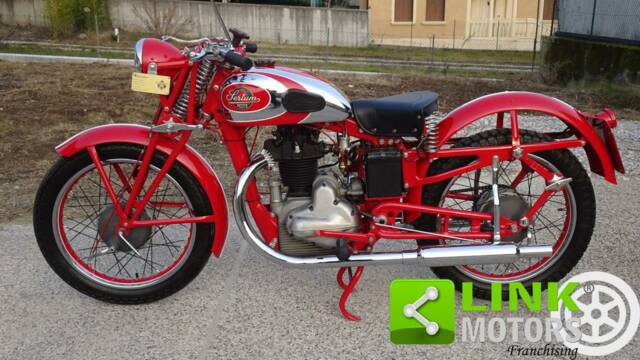
1946 | Sertum 250 VT4
ALTRE MOTO O TIPOLOGIE Sertum 250 CC VT4

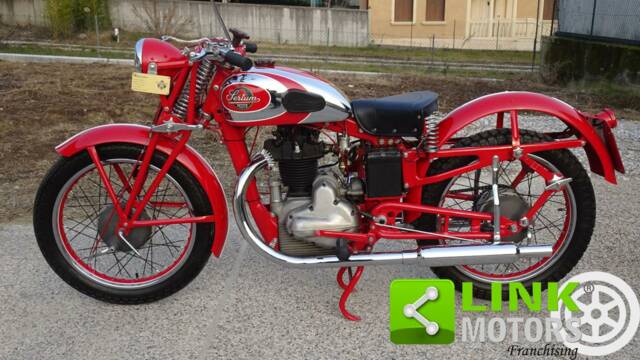
1946 | Sertum 250 VT4
ALTRE MOTO O TIPOLOGIE Sertum 250 CC VT4
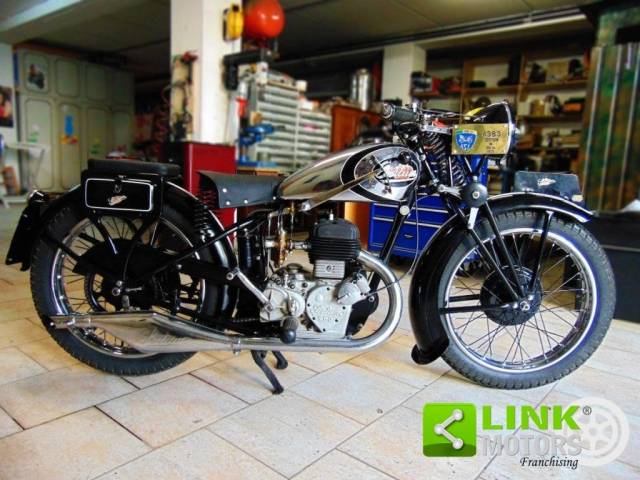
1935 | Sertum 250 VL
OTHERS-ANDERE SERTUM 250cc VL, matching number, targa oro ASI
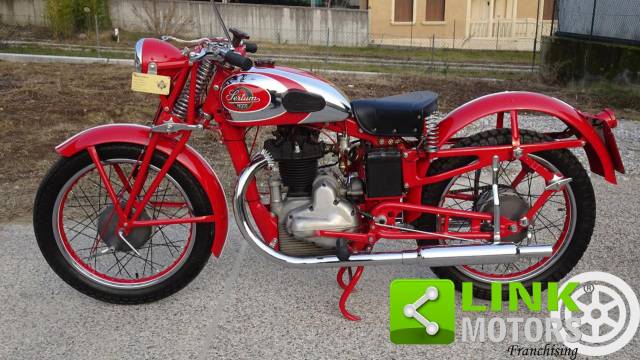
1946 | Sertum 250 VT4
ALTRE MOTO O TIPOLOGIE Sertum 250 CC VT4
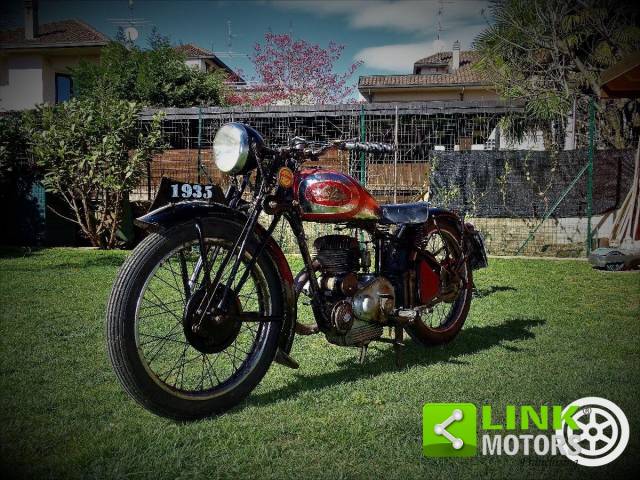
1935 | Sertum 250 VL
SERTUM 250 cc VL**CONSERVATA**
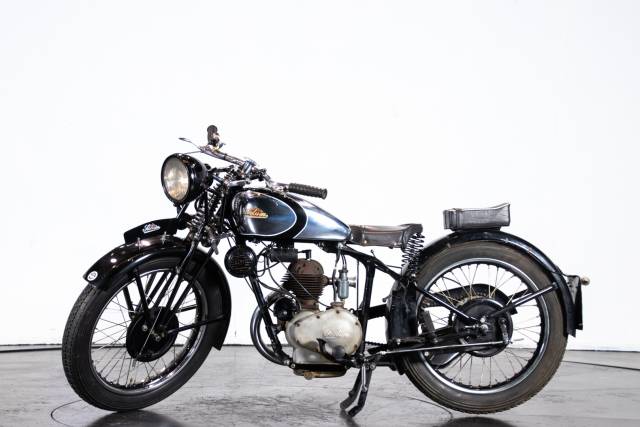
1948 | Sertum 175 Mirimin
-
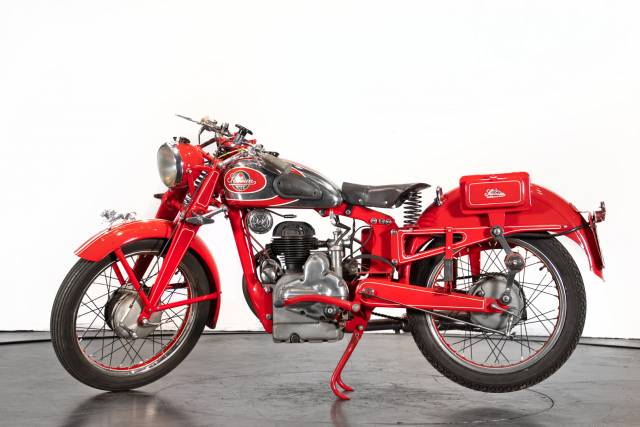
1950 | Sertum 250 VL
-
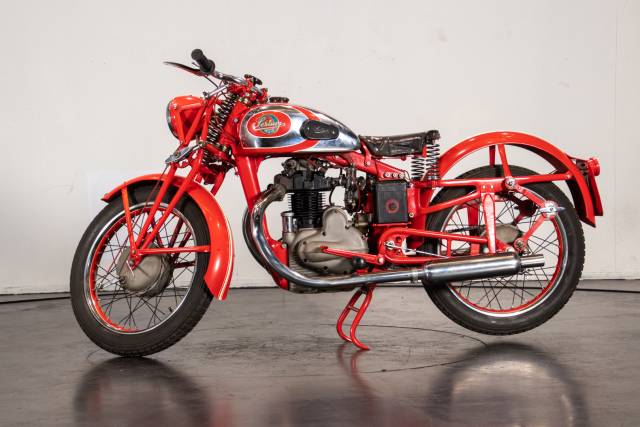
1947 | Sertum 250 VL
-
Create search alert
Let yourself be notified as soon as a listing is published that matches your search filters.
History
Sertum is one of those names that rewards the attentive collector. Founded in Milan in 1932 by Fausto Alberti, the marque lived a short but striking life until 1952, yet it managed to leave a deep mark on Italian motorcycling. In that brief span, Sertum built a reputation for robust construction, thoughtful engineering, and a level of finish that placed it in the upper tier of the Italian market. It was not a mass producer chasing volume. It was a serious workshop with ambition, and that ambition is exactly what makes Sertum so compelling today.
The brand belonged to the famous Italian “Pentarchy” of the era: Benelli, Bianchi, Gilera, Moto Guzzi, and Sertum. That grouping alone tells you the company mattered. Milan in the 1930s was a centre of industrial progress, and Sertum entered the scene with machines that were not merely functional but carefully judged for touring, sport, and endurance use. Early road bikes such as the 175 VL showed that the company could build motorcycles with refinement and useful everyday manners, while the larger 250 and 500 machines demonstrated real engineering maturity.
The Sertum story is also one of constant adaptation. The company moved from civilian road machines into military production during the war, then back into post-war motorcycles as Italy rebuilt. That transition produced some of the brand’s most interesting models, including the MCM 500 military machine, the VT-4 250, and the BT-4 500. Each reflects a different moment in Italian history: pre-war optimism, wartime utility, and post-war recovery. For collectors, that historical spread adds depth to the brand far beyond simple rarity.
Sertum’s downfall was not caused by a lack of quality. It was market timing. The company misread the post-war shift toward inexpensive transport and scooters, and by the early 1950s its lineup no longer matched demand. A further blow came when a shipment to Argentina was never paid for, straining the business at exactly the wrong moment. Bankruptcy followed in 1952. As a result, the entire motorcycle chapter lasted only about twenty years. That short production window is one reason surviving Sertums are so scarce now.
For Australian enthusiasts, the brand’s obscurity is part of its fascination. A Sertum is not the kind of classic you see at every Sunday meet. It is the sort of machine that prompts questions, stories, and sometimes a bit of disbelief. That rarity also affects ownership: every surviving bike is a project, a preservation case, or both. When a Sertum appears for sale, it deserves close attention.
Highlights
What makes Sertum special is the mix of elegance, seriousness, and technical individuality. The company never copied the easiest formula in the room. Instead, it produced motorcycles with character and genuine engineering identity. That includes side-valve singles, overhead-valve post-war machines, military derivatives, and larger twins that sit comfortably beside the better-known Italian classics of the same period.
The 175 VL is often the entry point into the marque. It was one of the first Sertums and established the basic brand language: a cleanly built single-cylinder machine with strong road manners and enough flexibility for touring. It is not a brute. It is a thoughtful, well-proportioned classic that rewards patience and mechanical sympathy. For many collectors, the 175 is the most approachable way into Sertum ownership, especially if originality matters more than outright performance.
The Batua 120 deserves a mention as well because it shows that Sertum was not only about larger touring bikes. This lighter model reflects a practical, everyday side of the brand. It is unusual, compact, and historically important because it broadened the company’s appeal beyond the premium end of the market. Machines like this matter because they show the range of a manufacturer’s thinking.
At the sporty end, the 250 VT and 250 VL models are especially attractive. They are compact enough to be usable, but they still carry the elegant technical language that made Sertum respected in period. In some versions, the performance and handling improvements made these bikes feel far more ambitious than their capacity might suggest. That is one reason the 250s have become such desirable collector pieces.
The 500 Monocilindrica is where Sertum starts to feel truly substantial. It is a big, dignified single with the sort of presence that appeals to seasoned collectors who want something less common than the usual British or German alternatives. The 500 Bicilindrica pushes the brand into a different class entirely. It is rare, technically fascinating, and visually impressive, with the sort of presence that turns a collection into a conversation piece.
Then there is the military MCM 500, a model that captures the practical wartime side of the story. Military Sertums are especially appealing because they combine scarcity with provenance. They are not just old motorcycles; they are historical objects with a clear role in a broader national context.
Finally, Sertum’s competition success gives the brand credibility beyond its road lineup. Five ISDT gold medals in 1939, two more in 1947, and three in 1949 show that these were not fragile boutique machines. They were proven in endurance competition, and that achievement still matters to collectors who value authenticity and mechanical resilience.
Technical Data
Below is a practical overview of the best-known Sertum motorcycles. Exact figures vary by year, trim, and market, but these specifications capture the core identity of the make.
Most Sertums share common period-correct characteristics: air cooling, chain drive, drum brakes, and carburettor-based fuel delivery. Earlier bikes may use magneto ignition, while later examples often rely on battery-and-coil systems. Sertum also became known for its rear suspension solutions on later models, which were advanced for the era and help explain why the bikes earned respect in both touring and endurance settings.
For Australian buyers, technical data is only part of the story. The real question is how complete the machine is, whether the engine numbers match, and how much restoration work is needed. Because replacement parts are so scarce, a rough-but-complete bike may be more valuable than a cosmetically shiny example with missing period hardware. On a make like Sertum, originality and completeness can matter more than a quick visual impression.
Market Overview & Buying Tips
Sertum motorcycles sit in a very narrow collector niche. They are rare in Europe, rarer still in Australia, and usually bought by people who already understand the realities of old Italian ownership. That scarcity supports values, but it also means the market is thin. Good bikes do not appear often, and the best examples may change hands privately before they are ever broadly advertised.
In Australian dollars, restored 175 and 250 models commonly sit around A$13,000 to A$22,000 depending on condition, correctness, and provenance. A restored 500 Monocilindrica often falls in the A$22,000 to A$38,000 range, while a 500 Bicilindrica can reach A$30,000 to A$55,000 or more when quality, originality, and documentation line up. Military machines and exceptional survivors may exceed those figures because they are so hard to replace.
For Australian collectors, import cost is a major factor. Buying a Sertum from Italy or elsewhere in Europe can mean high shipping charges, quarantine planning, insurance, customs paperwork, and possible duties or GST. That is before any restoration begins. Parts shipping can be just as painful: even a small order from Europe may become expensive once freight is added. This matters because Sertum parts are extremely rare, and many items will need custom fabrication anyway. If you are buying from abroad, the long-term ownership cost needs to be built into the purchase price from day one.
The smartest approach is to buy the most complete bike you can afford. Look for matching numbers, period-correct components, and solid evidence of past work. If the machine has paperwork, that is a major plus. If it has been restored, ask what was replaced, what was remade, and whether the work respected original factory detail. In Italy and across Europe, some bikes have been rebuilt over decades using mixed parts. That can still be acceptable, but only if the buyer knows exactly what they are getting.
You should also inspect for expensive hidden issues. Engines that have sat for years may need full internal work, including bearings, pistons, and machining. Castings can crack, fasteners can be worn or substituted, and any unusual bracket or control can become a hunt in itself. On a Sertum, the difference between “restorable” and “easy” is often the difference between a feasible project and a very expensive lesson.
For Australians, local fabrication can be a practical advantage. A good machinist, welder, or pattern-maker may solve problems faster than waiting months for an impossible European part. That said, fabrication must be done with respect for the machine’s original specification. Collectors value authenticity, and a bike that has lost too much of its period character may be less desirable even if it runs well.
Australian awareness of the brand is not zero. MCNews Australia covered the Sertum 250 VT4 in 2016, which means some local enthusiasts have already seen the name and perhaps filed it away as an interesting oddity. That awareness helps, because it proves there is an audience here for rare Italian bikes beyond the usual headline marques. Even so, Sertum remains a connoisseur’s choice.
If you are browsing Sertum motorcycles for sale, patience is essential. The right machine may be the first one you see, or you may wait months for another opportunity. In a thin market, condition, originality, and paperwork matter more than urgency. Buy the best example you can, and factor in the reality that every future part may be a problem to solve rather than a part to order.
Performance
Sertum performance should be judged in context. These are not modern-speed motorcycles, and they were never meant to be. Their value lies in usable period performance, mechanical honesty, and the confidence they inspired when ridden in their own time. A Sertum does not impress by chasing numbers. It impresses by feeling right.
The smaller 175 and 250 models are best understood as refined road bikes. They offer enough power for backroad riding and period touring, and they do so with a smoothness that rewards calm inputs. Throttle response is gentle, gearing is deliberate, and the whole experience feels mechanically connected. That makes them ideal for collectors who want to ride rather than simply display.
The 500 Monocilindrica adds torque and presence. It is the kind of bike that feels substantial even at modest speeds. For Australian roads, especially when used in club runs or relaxed country riding, that extra capacity helps the bike settle into a relaxed rhythm. It is not fast by contemporary standards, but it has enough pull to feel purposeful.
The 500 Bicilindrica is the standout performer in the range. With roughly 20 hp and the refinement of a twin-cylinder layout, it delivers the most cultured riding experience Sertum offered. In its day, it would have been a serious machine; today, it remains one of the most desirable Italian classics from the era because it combines rarity with genuine road presence.
The military MCM 500 and related post-war machines were built with practical endurance in mind. Their performance is measured in durability, tractability, and the ability to keep going rather than outright speed. That kind of character still appeals to collectors who appreciate machinery that was engineered to do a job, not just look romantic in photographs.
One important note for buyers: performance depends heavily on restoration quality. A tired Sertum can feel lethargic, noisy, or unpredictable. A correctly rebuilt example can feel remarkably composed for a bike of its age. That is why service history and careful mechanical work are so important. When everything is in order, a Sertum offers a remarkably engaging ride.
Design
Sertum design is understated, intelligent, and distinctly Italian. These motorcycles do not rely on dramatic styling tricks. Instead, they use proportion, finish, and mechanical clarity to make their case. That is exactly why they stand out today. They look purposeful because they were designed by people who understood that beauty can come from function.
The early models carry a classic 1930s silhouette: exposed engine architecture, neatly shaped fuel tanks, spoked wheels, and restrained detailing. There is a sense of balance in the frame geometry and bodywork that gives even the smaller models a serious presence. Nothing feels decorative for its own sake. The result is a machine that looks honest.
On the larger models, Sertum’s engineering solutions become part of the visual identity. The later rear suspension arrangements, the substantial engine castings, and the robust braking hardware all contribute to a look of confidence. These are motorcycles that seem assembled to last, not to be replaced. For collectors, that gives them a weight and dignity that survives long after the original showroom appeal has faded.
The logo and branding also matter. Sertum’s name carried a sense of prestige in period, and surviving motorcycles often wear badges, tank emblems, and paint schemes that reflect that ambition. Original finishes are especially attractive because they show how the factory balanced elegance and utility. Even a well-used Sertum can look handsome because its proportions are so strong.
There is a further appeal in the contrast between the civilian and military machines. The military bikes are more austere, but they remain beautifully made. The civilian road models are more graceful, but still purposeful. Together they show the range of the marque’s design language and explain why Sertum has such a loyal following among connoisseurs.
For Australian collectors, design also influences restoration choices. Because the bikes are so rare, it is easy to lose correct details during a rebuild. Paint shades, decals, fasteners, saddle shape, and control layout all matter. A Sertum should look like a Sertum, not like a generic vintage Italian motorcycle with the wrong bits fitted. Respecting the design is part of respecting the brand.
Other
Sertum’s competition legacy is a major part of its identity. The International Six Days Trials were among the toughest proving grounds in motorcycling, and Sertum’s results were outstanding. Five gold medals in 1939, two in 1947, and three in 1949 show that the marque had real endurance credibility. That matters because it proves the machines were more than stylish curiosities. They worked hard and succeeded under pressure.
The brand also has a strong export and collector-history angle. Like many Italian makes of the period, Sertum moved beyond domestic roads and into the wider European and overseas market, though never at large volume. The export story is uneven, and the failed Argentine payment became part of the company’s final decline. Even so, that international reach adds another layer to the narrative.
For today’s collectors, the cultural value is significant. Sertum sits in that sweet spot where enthusiasts recognise the name, but casual buyers often do not. That makes it ideal for collectors who like depth, not display-line conformity. It is a marque with enough pedigree to be taken seriously, yet enough obscurity to remain a private pleasure.
There is also a practical ownership community element. Because parts are so scarce, Sertum owners often rely on specialist machinists, club contacts, and cross-border networks. That creates a different style of ownership from mainstream classics. You are not just buying a motorcycle; you are entering a problem-solving culture where knowledge is shared and scarcity is normal.
For Australian buyers, the distance from Europe changes the equation again. It is not just about finding the right motorcycle; it is about planning how to sustain it. Importing one pristine machine can be wiser than buying a cheaper project that will need repeated overseas parts orders. The economics of freight, duty, and fabrication often make the best example the cheapest one in the long run.
Summary
Sertum is a rare Italian make with serious historical weight, strong engineering identity, and genuine collector appeal. Built in Milan from 1932 to 1952, it combined road bikes, sporting machines, military derivatives, and endurance-proven models into a compact but memorable legacy. Its place in the Italian “Pentarchy” and its ISDT success confirm that Sertum deserves to be mentioned alongside better-known classics.
For Australian collectors, the attraction is obvious: rare motorcycles, distinctive character, and a story that is not seen every day. The challenge is equally obvious: parts are extremely rare, shipping from Europe is expensive, and many repairs will require custom fabrication. That makes careful buying essential. Choose completeness, documentation, and originality where possible, and budget realistically for import and ownership costs.
If you are ready to Buy a Sertum motorcycle, Classic Trader is the place to Find current offers, discover now what is available, and review Offers & Prices before making your move. With patience and the right approach, a Sertum can become one of the most rewarding and individual classics in an Australian collection.