- Motorcycle
- Motobi (1 offer)
Buy Motobi Motorcycle
Giuseppe Benelli's unique legacy from Pesaro: the egg-shaped engines made Motobi a cult brand for sport-oriented riders between 1950 and 1974. Nine Italian championships in the 175cc class prove the performance of these unconventional machines.
Search results
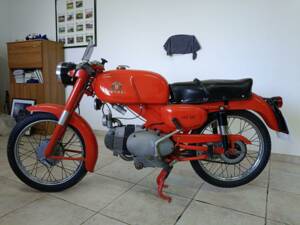
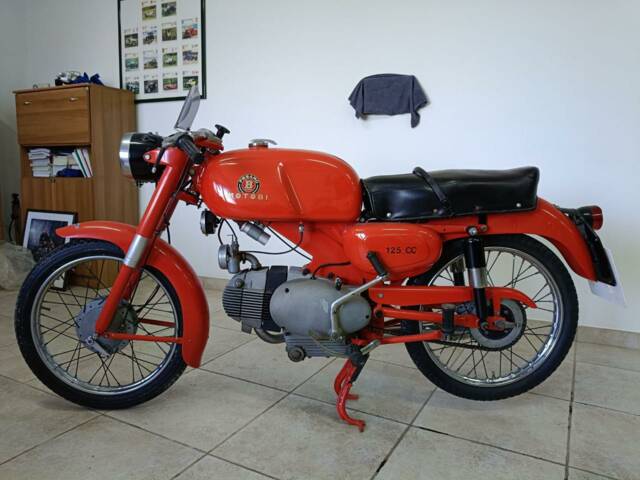
Motobi listing references from Classic Trader
Below you will find listings related to your search that are no longer available on Classic Trader. Use this information to gain insight into availability, value trends, and current pricing for a "Motobi" to make a more informed purchasing decision.
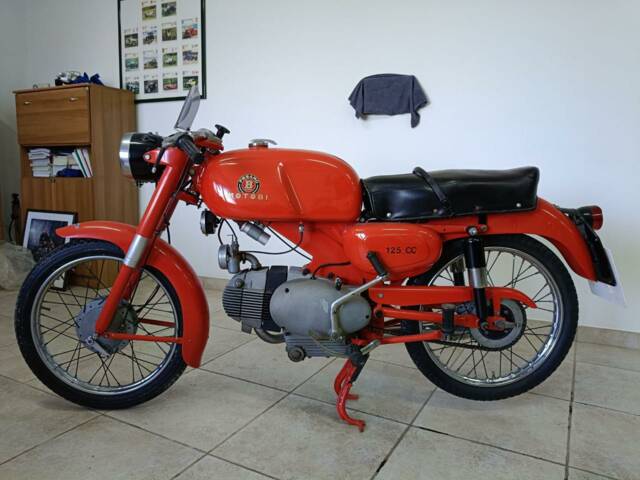
1956 | Motobi Imperiale Sport
-
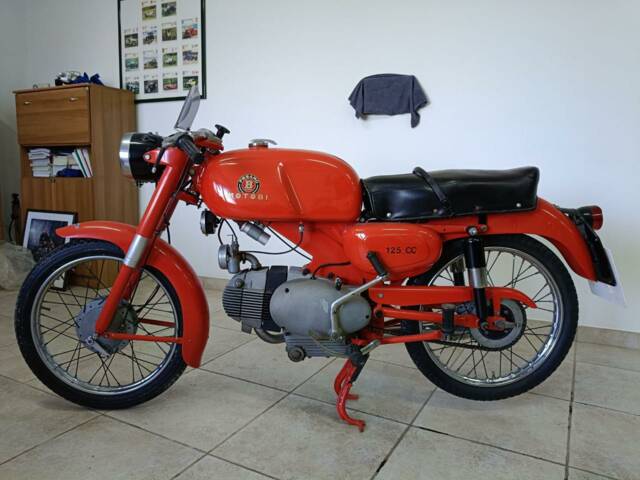
1956 | Motobi Ardizio 125
-
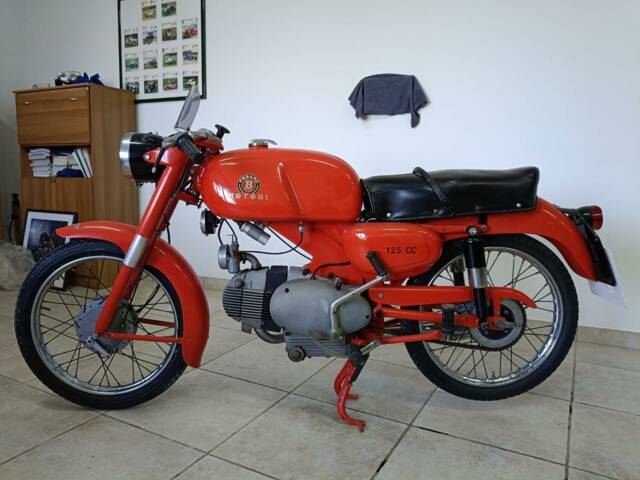
1956 | Motobi Ardizio 125
-
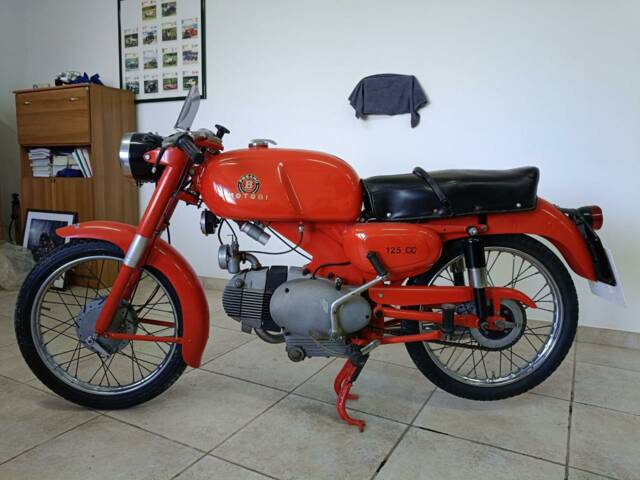
1956 | Motobi Ardizio 125
-
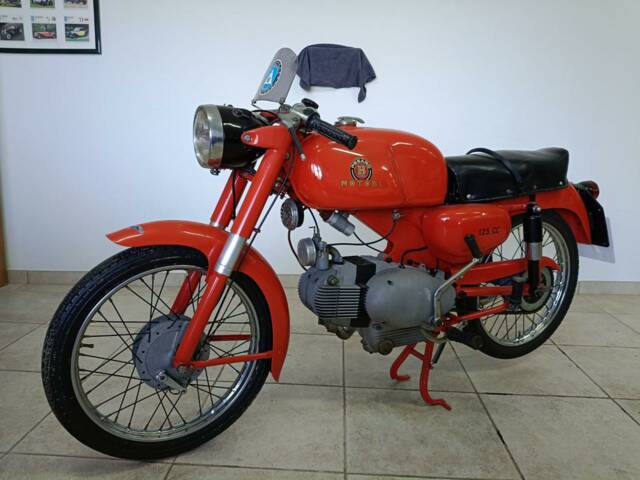
1956 | Motobi Imperiale Sport
-
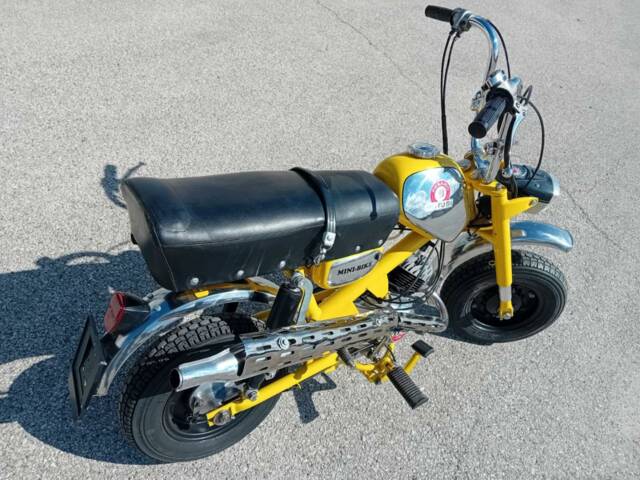
1970 | Motobi 50 Sport
-
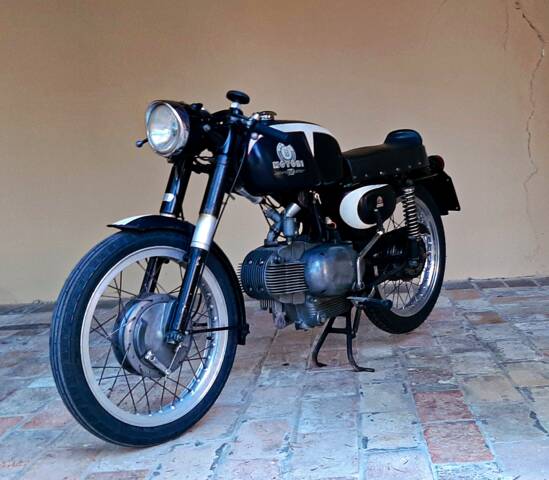
1965 | Motobi 200 Sprite
1965 Motobi SS200 Sprite, Conservata, original

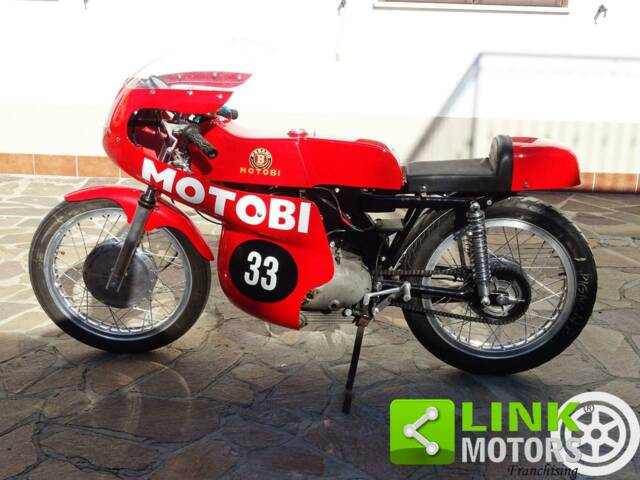
1968 | Motobi 125 Sport Special
MOTOBI BENELLI MOTOBI 125 DERIVATA CLASSICA
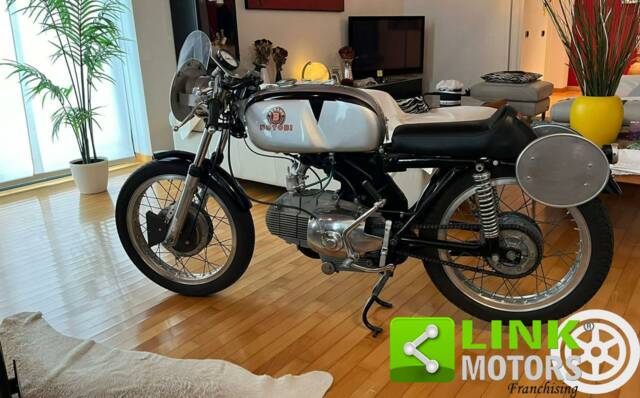
1957 | Motobi Catria 175
MOTOBI Catria Special
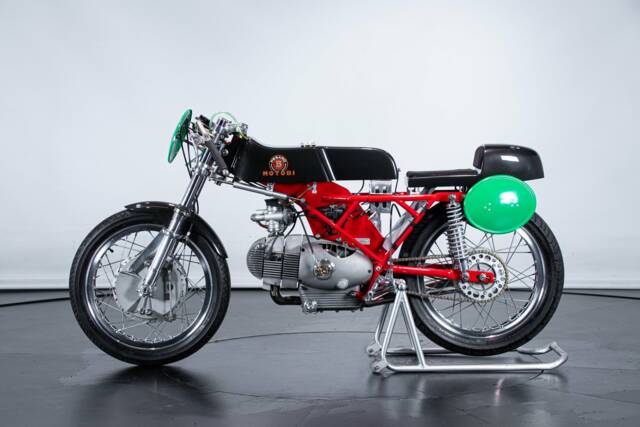
1968 | Motobi 250 Sport Special
-
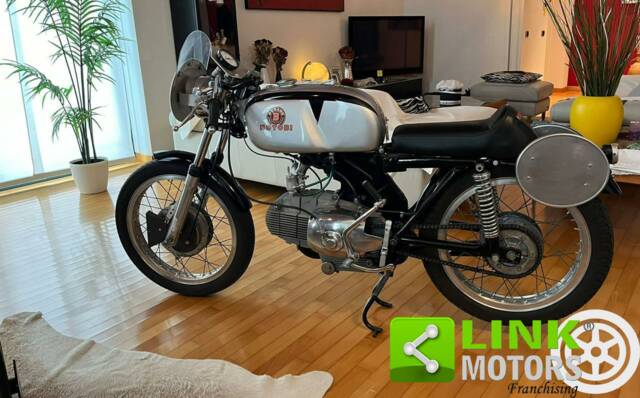
1957 | Motobi Catria 175
MOTOBI Catria 175 Sport
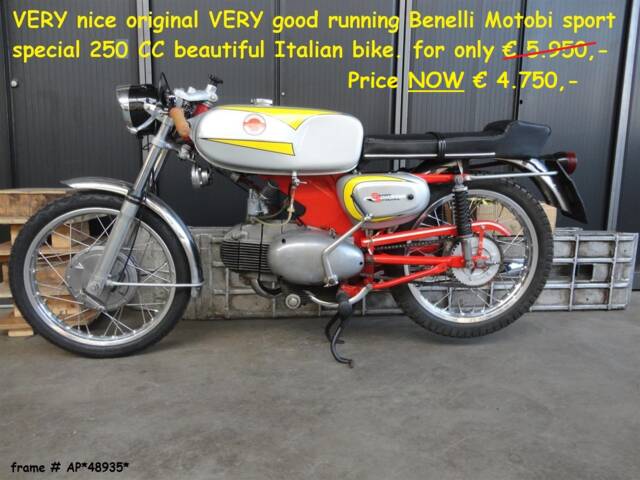
1972 | Motobi 125 Sport Special
Motobi Sport special

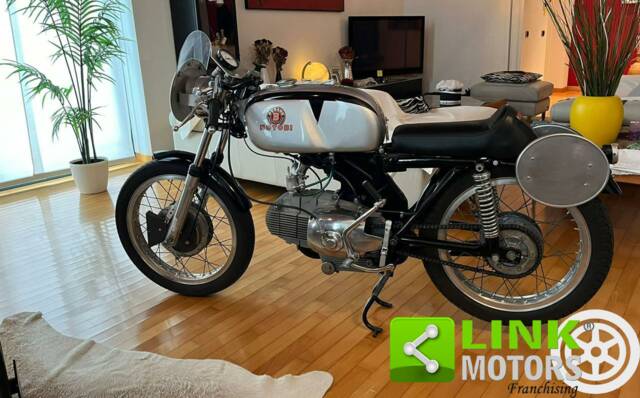
1957 | Motobi Catria 175
MOTOBI Catria 175 Sport
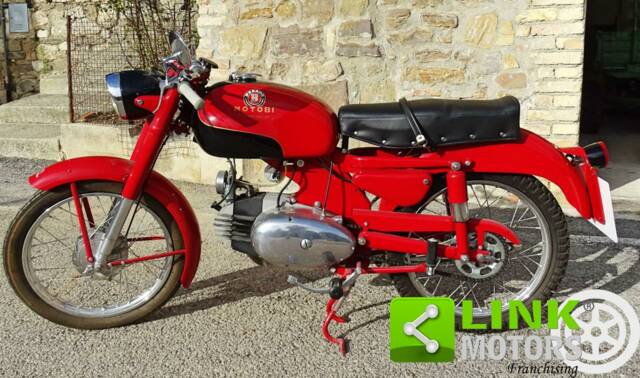
1958 | Motobi Ardizio 125
MOTOBI ARDIZIO 125
History and Legacy
The story of Motobi begins with a family disagreement. Giuseppe Benelli, the eldest of the six Benelli brothers and a trained engineer, left the family business in Pesaro in 1949. After differences of opinion with his siblings, he decided to forge his own path. He didn't retire. Instead, he founded FAMOSA (Fabbrica Auto Motocicli Officine Strada Adriatica) later that year. Under the brand name Moto B Pesaro, he started his own motorcycle production. This new venture was just a few streets away from the original Benelli factory.
His first model was the 98 B of 1950. It was a simple two-stroke machine with a 98cc horizontal single-cylinder engine. Even then, Giuseppe's talent for unconventional solutions was clear. The engine sat in an aerodynamically smoothed, egg-shaped casing. This design choice became the brand's signature. A 115cc version followed in 1951, then a 125cc variant in 1952. That same year, Giuseppe showed an ambitious prototype: the B200 Spring Lasting, a 200cc twin-cylinder two-stroke. It took the aerodynamic egg shape even further.
By 1954, the first production egg-shaped models appeared. These included the 125 TV, the 200 Spring Lasting, and the sportier 250 Spring Lasting Gran Sport. The latter quickly proved itself in racing. It brought the small brand attention far beyond Pesaro. In the same year, the name was officially shortened to Motobi.
The major turning point came in 1956. Giuseppe Benelli introduced his first four-stroke engines alongside the two-strokes. These were the 125 Imperiale and the 175 Catria. These engines used an overhead valve design. German journalists later dubbed them the "Krafteier" (power eggs). They combined the distinctive egg shape with a new level of performance. These OHV singles were smooth, mechanically quiet, and surprisingly sporty. The 175 Sport from 1959, in particular, gained a great reputation on Italian mountain roads.
Giuseppe Benelli didn't live to see the full success of his creation. He died in 1957. His sons, Luigi and Marco Benelli, took over the business. They gradually repaired the rift with the rest of the family. In 1962, Motobi moved back into the main Benelli factory. While production was now under one roof, many models kept the Motobi brand name until the mid-1970s. This was a tribute to Giuseppe's vision.
The late 1960s and early 1970s saw more modern models like the Motobi Sport Special and the Tipo S. These looked different from the original power eggs. When Argentinian industrialist Alejandro de Tomaso took over Benelli in 1971, the independent Motobi era ended. A few models carried the name until 1974, then the brand disappeared. Between 1959 and 1972, the brand won nine Italian road racing championships in the 175cc class. This record highlights the dominance of the small Pesaro firm.
In Australia, Motobi remains a rare and exotic choice. While they weren't imported in large numbers during their production years, they have found a dedicated following among collectors of Italian machinery. Magazines like Old Bike Australasia have featured well-preserved examples, such as the 1957 Imperiale Sport. These bikes represent a fascinating alternative to the more common Ducati or Moto Guzzi models from the same era.
Highlights and Features
The defining feature of any Motobi is the egg-shaped engine. Giuseppe Benelli took inspiration from the German Imme R100 of 1949. The Imme was one of the few motorcycles with a horizontal cylinder in an aerodynamic casing. While the Imme stayed a two-stroke, Motobi evolved the concept into a high-performance four-stroke.
The Imperiale (from 1956) offered 125cc with overhead valves in that iconic egg shape. Designed as an everyday bike, it was reliable and refined. It felt more like a larger machine than its displacement suggested. The Catria (175cc) was more ambitious. It targeted sportier riders and became the base for Motobi's racing triumphs.
The 175 Sport of 1959 is a standout. Its OHV single-cylinder engine produced between 14 and 18 horsepower depending on the tune. On winding back roads, it was hard to beat. The horizontal engine meant a very low centre of gravity. Combined with a weight of only 110 kg, it offered handling that surprised many riders of larger bikes. The nine Italian championships in the 175cc class between 1959 and 1972 prove how superior this design was.
For those interested in two-strokes, the B200 Spring Lasting (from 1952) was an innovative experiment. It used a 200cc parallel twin in a pressed steel frame. The Spring Lasting Gran Sport (250cc) was even more successful. It won in long-distance races like the famous Milano-Taranto rally.
In the 1960s, Motobi created export models for the US market. These had names like Fireball, Sprite, and Barracuda. They were imported by the Berliner Motor Corporation, which also handled Ducati and Norton. These models helped the brand reach an international audience. Today, these US-spec machines occasionally find their way to Australia through private collectors.
The horizontal cylinder layout is another highlight. Unlike many contemporaries with upright cylinders, Motobi's design improved cooling. The airflow hit the cylinder head directly. It also kept the bike very narrow. This makes a Motobi exceptionally nimble in tight corners. For Australian riders who enjoy the twisty sections of the Great Ocean Road or the Adelaide Hills, this handling is a revelation.
Technical Data
Market Overview and Buying Tips
The Motobi collector market is a niche within the specialized world of Italian classics. Low production numbers and limited international fame keep prices lower than those of Ducati or Moto Guzzi. This makes Motobi one of the best entry points for Australian enthusiasts into the world of Italian vintage motorcycles.
Rarity and Importing to Australia
In Australia, finding a Motobi is a challenge. Most bikes currently in the country are private imports. If you find one in Europe or the US, you can take advantage of Australia's 25-year import rule. This concessional scheme allows vintage bikes to bypass standard modern compliance if used for personal use. You will need a Vehicle Import Approval (VIA) from the Department of Infrastructure.
Shipping a motorcycle from Italy or elsewhere in Europe to Australia typically costs between A$1,500 and A$3,000. This depends on whether you use sea freight in a shared container or air freight for a faster delivery. Don't forget to factor in the 10% GST on the import value (which includes the purchase price, shipping, and insurance).
Another critical factor for Australian imports is asbestos compliance. Older Italian bikes often used asbestos in brake linings, clutch plates, and engine gaskets. You must provide an asbestos-free certificate or have the bike tested and remediated upon arrival. It is often cheaper to have an Italian specialist replace these parts before shipping.
Price Ranges in AUD
Prices have remained stable but show growth for high-quality racing models.
- Imperiale & Imperiale Sport 125: These are the most common. A project bike might start at A$1,500 to A$3,000. Fully restored examples typically range from A$5,000 to A$9,000.
- 175 Sport & Catria: These are highly sought after. A good original 175 Sport can fetch A$7,000 to A$14,000. Documented racing machines with history can exceed A$18,000.
- Spring Lasting & Gran Sport: The two-stroke twins are rare. Expect to pay at least A$8,000 for a project, while restored Gran Sport racers can reach A$16,000 or more.
Recent international auctions provide a benchmark. A 1957 Catria Lusso 175 sold for roughly A$5,100 in 2024. A rare 1957 Competizione racing machine brought nearly A$10,000. Factory racers have reached A$11,500 and higher.
Buyer Checklist
When inspecting a Motobi, pay close attention to the following:
Oil Leaks: The egg-shaped engine cases are famous for being stylish but can leak at the mating surfaces. Check the cylinder base gasket in particular.
Valve Train: The OHV engines should be relatively quiet. Excessive rattling from the top end might indicate worn camshaft lobes or rocker arm issues.
Two-Stroke Seals: On the early two-strokes, the crankshaft seals are vital. If they haven't been replaced in decades, they will likely be hard and prone to leaking, affecting the engine's ability to run.
Parts Availability: While major engine parts can be sourced from Italian specialists like Maltry International in Pesaro, many body parts are unique. Sheet metal, specific fuel tanks, and original carburetors are hard to find. Expect shipping costs for parts from Europe to Australia to range from A$50 to A$200 for small to medium parcels.
Originality: For a collector, the value lies in the "egg." If the engine cases or the distinctive fuel tank have been modified or replaced with non-original parts, the value drops significantly. Always verify frame and engine numbers.
Performance and Character
Riding a Motobi is a lesson in understated engineering. If you get on a 175 Sport for the first time, you might not be impressed by the numbers on paper. But once you hit a winding road, the bike's qualities shine. The horizontal single sits very low in the frame. This drops the centre of gravity much lower than an upright engine.
The handling is intuitive. With a weight of only 110 kg, the bike tips into corners with minimal effort. It feels stable and planted. This balance is what allowed Motobi to dominate Italian hillclimb races. You can carry more corner speed than on many larger, more powerful contemporaries.
The engine itself is remarkably refined. The overhead valve gear provides a smooth delivery of power. It doesn't have the harsh vibrations common in many vintage singles. The "power egg" doesn't explode with torque. Instead, it builds power progressively. This makes it a very friendly machine to ride at speed. You can keep the revs high without the bike feeling nervous or stressed.
Compared to a Ducati 175 or an Aermacchi Ala Verde, the Motobi feels more sophisticated. Where other singles might be loud and clattery, the egg engine hums. This mechanical silence, combined with a surprisingly strong mid-range pull, makes the Motobi a bike you want to keep riding.
The brakes are drum units at both ends. For a bike of this weight, they are adequate, but they require a firm hand and a bit of foresight. The suspension is typical for the era. It handles smooth asphalt well but can be challenged by Australia's rougher secondary roads. If you plan to ride your Motobi regularly, upgrading the shock absorbers is a common and sensible modification.
Design and Appearance
The design philosophy behind Motobi was radical yet simple. Giuseppe Benelli believed that function should determine form, and the form should be pleasing. He was an engineer, not a stylist. Yet his focus on aerodynamics created one of the most recognizable motorcycle designs of the post-war era.
The egg-shaped engine casing is the brand's business card. The smooth, rounded surfaces of the cylinder and crankcase weren't just for show. They were designed to improve cooling and reduce air resistance. The Germans called it the "power egg," and the Italians called it "uovo" (egg). In both cultures, it became a symbol of clever design.
The overall look of Motobi models captured the spirit of 1950s Italy. Slim lines, chrome accents, and elegant tank decals were standard. The colour palette usually stayed conservative. You will often see them in red, black, or silver. They lacked the eccentricity of some other Italian brands, preferring a more understated elegance. The Imperiale looks classy and reserved. The Sport models use lower handlebars and narrower seats to emphasize their racing pedigree.
The pressed steel frames of the Spring Lasting models represent a different design path. While most manufacturers used tubular steel, Motobi opted for stamped steel sheets. This technique is similar to how a Vespa is built. it reduced weight while increasing rigidity. This gave the two-stroke twins a unique visual presence that still looks modern today.
One of the most impressive aspects of Motobi design is its consistency. From the early 98 B to the final Tipo S, the egg engine remained the central element. Italian manufacturers often changed their designs every season. Motobi stuck with its vision for over two decades. This consistency makes the brand very recognizable to collectors.
In Australia, a Motobi always draws a crowd at events like All Italian Day. The unconventional engine layout is a great conversation starter. It stands out in a sea of more traditional engine designs. For the owner, it offers the pride of having something truly unique.
Summary
Motobi is one of the underrated gems of Italian motorcycle history. Giuseppe Benelli's egg-shaped engines are some of the most distinctive design elements of the post-war period. Their success in the 175cc class proves their technical excellence. For an Australian collector, the relatively low entry prices make the brand an attractive option for entering the world of Italian classics.
If you find an Imperiale Sport or a 175 Sport in good original condition, you are buying a piece of Italian engineering art. These bikes offer a level of refinement and handling that often surprises even experienced riders. While parts can take some time to arrive from Italy, the reward of owning such a unique machine is well worth the effort.
For those who want something different from the usual vintage choices, Motobi is a brilliant path to take. Whether you are looking for a nimble weekend rider or a showpiece for your collection, these "power eggs" from Pesaro deliver character, history, and performance in a very stylish package. With the growing interest in smaller displacement classics in Australia, now is a great time to find your own piece of the Motobi legacy.