- Motorcycle
- Mondial (3 offers)
Buy Mondial Motorcycles
FB Mondial stands among the most prestigious names in Italian motorcycling history. The Milanese marque dominated Grand Prix World Championships between 1949 and 1957 with 10 world titles, revolutionising motorcycle engineering with their DOHC Bialbero engines. Legendary models like the 125 Bialbero, the 250 GP Bialbero, and the 175 TV are now coveted collector's pieces embodying Italian engineering excellence at its finest.
Search results
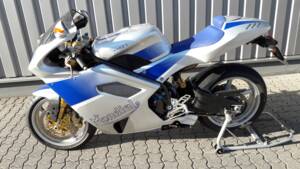
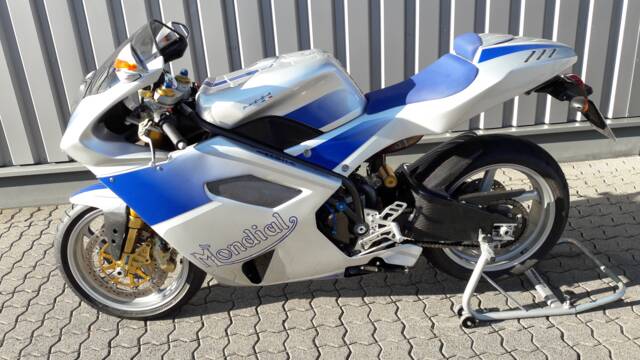
2003 | Mondial Piega SP1
Mondial Piega with Honda SP1 engine, collector's item

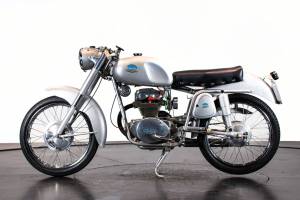
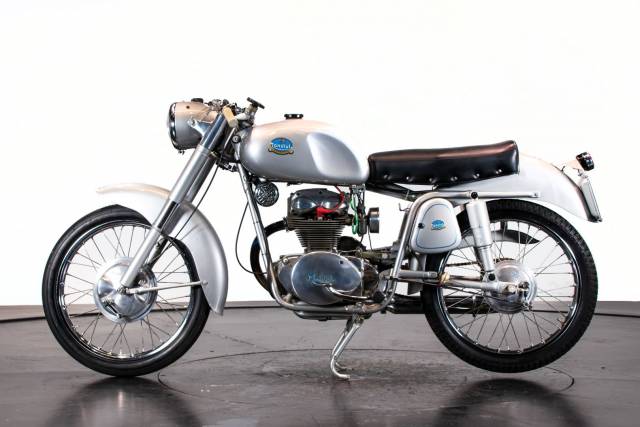
1953 | Mondial 200 Constellation
LUSSO SPORT !!! SUPER RARE !!!

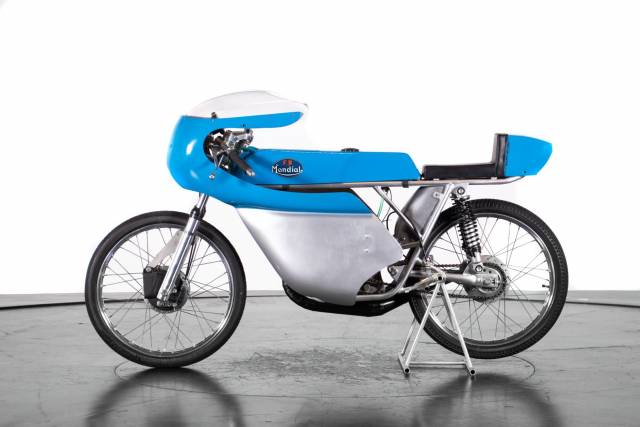
1968 | Mondial Record
Corsa UNICO ESEMPLARE !!! OMOLOGATA !!
Mondial listing references from Classic Trader
Below you will find listings related to your search that are no longer available on Classic Trader. Use this information to gain insight into availability, value trends, and current pricing for a "Mondial" to make a more informed purchasing decision.
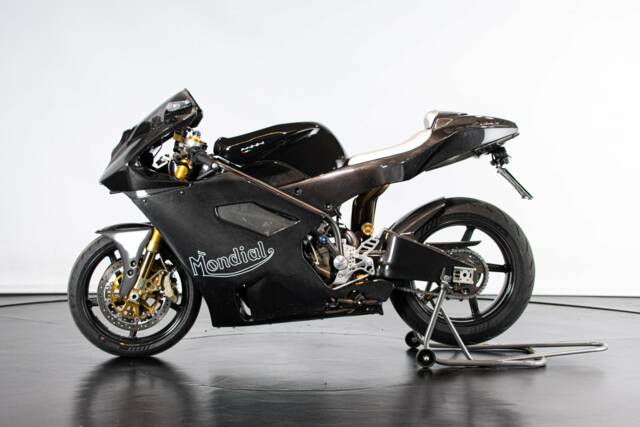
2005 | Mondial Piega SP1
SOLO 3 KM PERCORSI - IVA ESPOSTA
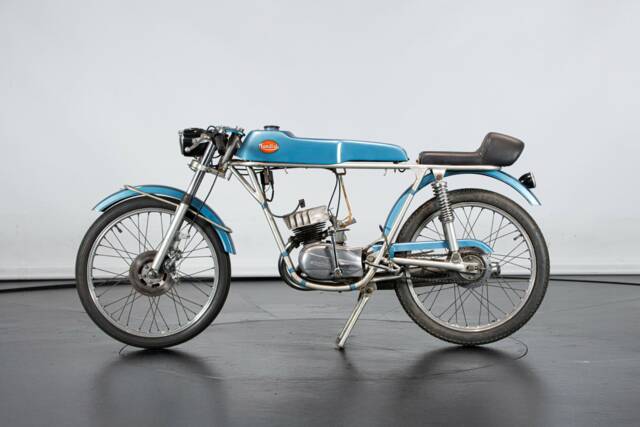
1965 | Mondial Record
-
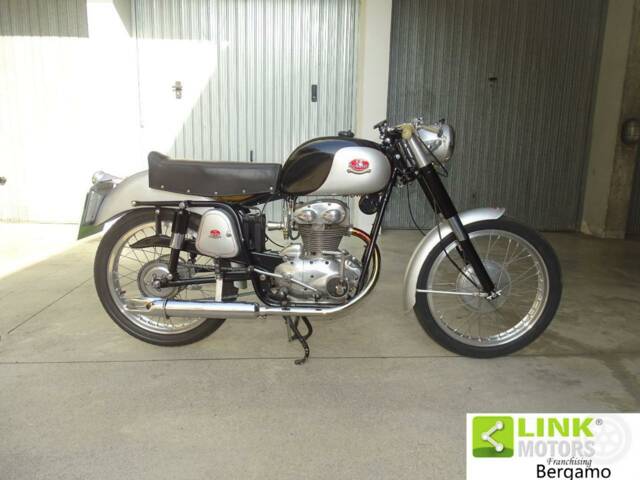
1954 | Mondial 200 Extra Lusso
F.B. MONDIAL 200 EXTRA LUSSO - Iscritta F.M.I
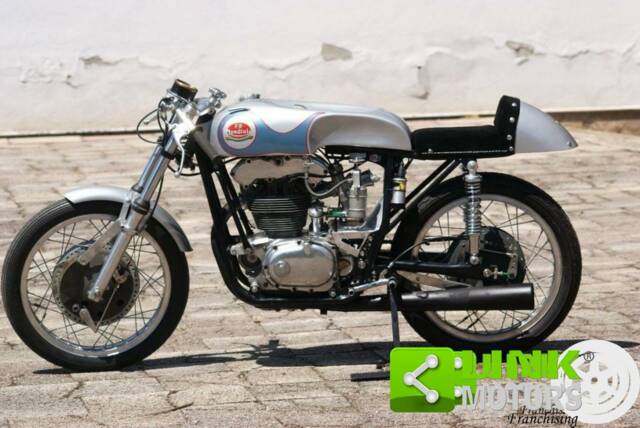
1957 | Mondial 250 Bialbero GP
F.B. MONDIAL FB-Mondial bialbero-250-competizione
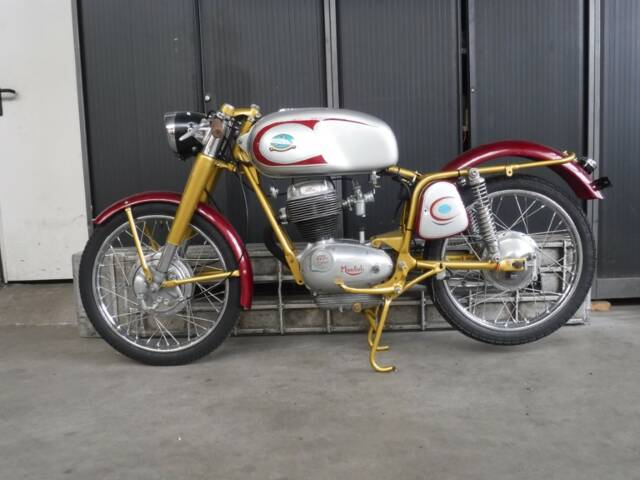
1958 | Mondial 175 Turismo Veloce
175CC Sprint

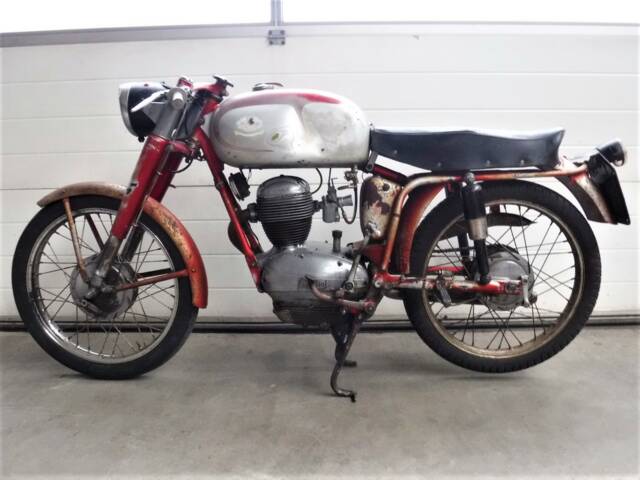
1956 | Mondial 125 Sport
Special Sport 125CC
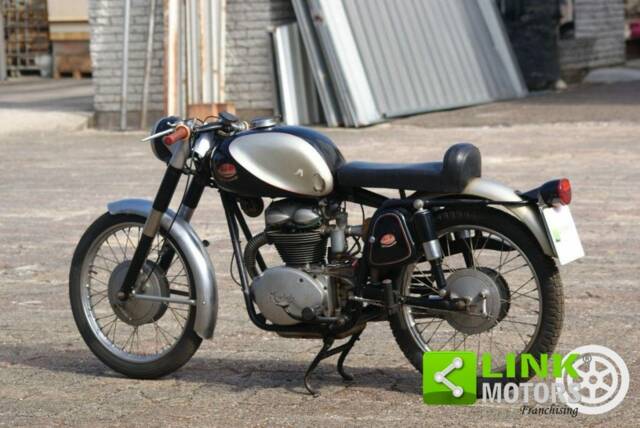
1955 | Mondial 200 Constellation
F.B. MONDIAL FB-Mondial 200 edizione limitata ben conservata
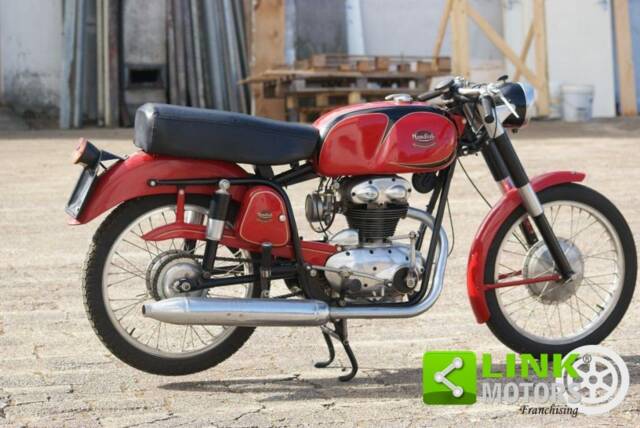
1978 | Mondial 200
F.B. MONDIAL FB-Mondial 200 ben conservata
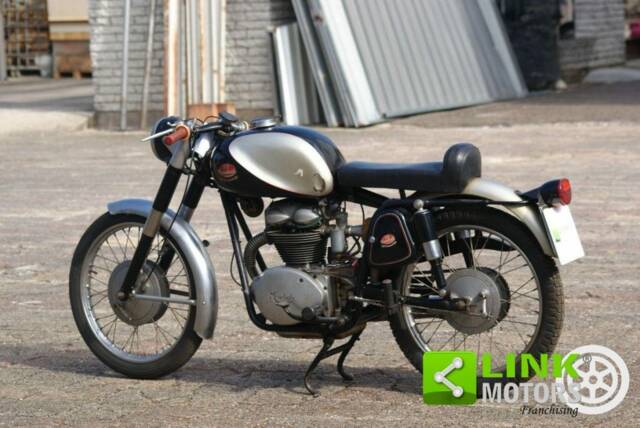
1955 | Mondial 200
F.B. MONDIAL FB-Mondial 200 edizione limitata ben conservata
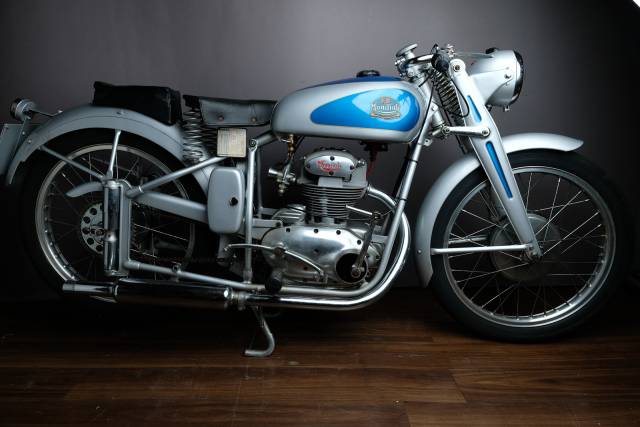
1951 | Mondial 125 Sport
MONDIAL 125 SPORT 1951

History
The FB Mondial story begins in 1929 in Milan, when the Boselli brothers (Luigi, Carlo, Ettore, and Giuseppe) founded the company. The "FB" stands for Fratelli Boselli – Boselli Brothers. The family hailed from Piacenza and belonged to the Italian landed gentry. Initially, the firm focused on producing three-wheeled delivery vans (motocarri) and cargo tricycles for commercial transport.
The Second World War brought a profound setback: the factory was destroyed in Allied bombing raids. However, 1948 marked the beginning of Mondial's true success story as a motorcycle manufacturer. Under the leadership of Count Giuseppe Boselli, himself a passionate racing driver, the decision was made to enter motorcycle racing – with spectacular results.
Mondial's golden era lasted from 1948 to 1979. During this period, the marque evolved into one of Italy's most innovative manufacturers. Chief engineer Alfonso Drusiani designed the first four-stroke engine with double overhead camshafts (DOHC) for the 125cc class in 1948 – the legendary 125 Bialbero. As early as 1949, Nello Pagani won the first-ever 125cc World Championship on this machine. Further titles followed in 1950 and 1951, forcing competitors MV Agusta and Moto Morini to switch to four-stroke technology as well.
In 1952, Mondial expanded its range to include road models. The 175 TV (Turismo Veloce) and the 200 Corsa brought racing technology to the street. These models won prestigious endurance races such as the Giro d'Italia and the Milano-Taranto. The legendary designer Lino Tonti and future Ducati chief engineer Fabio Taglioni shaped technical development during this phase. Taglioni conducted early experiments with desmodromic valve actuation at Mondial – a technology that later became Ducati's trademark.
The pinnacle came in 1957: Mondial returned to World Championship competition with the 250 GP Bialbero and won both the rider's title with Cecil Sandford and the constructor's title. Tarquinio Provini simultaneously secured the 125cc title. Yet at the height of success, Mondial withdrew from Grand Prix racing alongside Gilera and Moto Guzzi – exploding costs made the commitment uneconomical.
Road production continued into the late 1970s, albeit on a small scale. Mondial remained a boutique manufacturer with annual production of just 1,000 to 2,000 units. The classic era ended in 1979.
The marque experienced a brief renaissance from 1999 to 2004 with the Piega 1000, a carbon-fibre superbike powered by a Honda VTR1000 engine – a technical masterpiece of which only 250 examples were built. Since 2015, FB Mondial has been producing motorcycles again under Pierluigi Boselli, including neo-retro models like the HPS 125 and HPS 300, which reference the glorious past.
A special footnote to history: Soichiro Honda received a Mondial 125 as a gift from Count Boselli in 1957 and used it as a blueprint for his own racing programme. This machine still stands in the Honda Collection Hall in Japan today – testament to Mondial's worldwide influence.
Features and Highlights
What makes Mondial so special? It's the combination of uncompromising racing technology, Italian craftsmanship, and engineering innovation that transforms these motorcycles into rolling works of art.
Bialbero Engines – Pioneers of DOHC Technology
The term Bialbero (Italian for "two shafts") refers to the double overhead camshaft. Mondial was one of the first manufacturers to consistently employ this technology in small displacements. The 125 Bialbero achieved engine speeds of up to 12,000 rpm – a technical sensation for the late 1940s. Valve actuation was accomplished through a complex system of bevel gears, later adapted by Ducati.
Disc Brakes and Aerodynamics
Mondial experimented with disc brakes on Grand Prix machines as early as the mid-1950s – years before this technology became standard. The 1957 250 GP achieved over 210 km/h from just 250cc displacement with full "dustbin" aerodynamic fairing. These fairings were later banned by the FIM as they were deemed too dangerous.
Lightweight Construction and Material Selection
Many racing components were made from magnesium alloys to save weight. Crankcases were cast as monoblocs – an elaborate manufacturing technique requiring the highest precision. Even road models like the 175 TV weighed barely more than 120 kg, making them extremely agile.
Racing Success as Trademark
Between 1949 and 1957, Mondial won 10 World Championships (5 rider, 5 constructor titles). Riders like Nello Pagani, Bruno Ruffo, Carlo Ubbiali, Cecil Sandford, and Tarquinio Provini wrote motorcycling history on Mondial machines. These successes made the marque legendary and influenced an entire generation of designers.
Exclusivity and Handcraftsmanship
Mondial was never a mass manufacturer. Every motorcycle was hand-built with the utmost attention to detail. The engines are considered "jewellery" – delicate castings, chrome-plated components, and precise fits make them technical works of art. Even today, 70 years later, Mondial engines captivate collectors and enthusiasts.
Technical Data
Market Overview & Buying Tips
The market for classic Mondial motorcycles is a specialist field for discerning collectors. Price ranges vary considerably depending on model, originality, and condition.
Price Overview by Model
125/250 Bialbero (racing machines): £75,000 – £130,000+. Works motorcycles with documented racing history can achieve significantly higher prices at auctions (Bonhams, Mecum). The 1957 250 GP ridden by Tarquinio Provini sold for over £75,000 in 2018.
175 TV / 200 Corsa (road models): £15,000 – £30,000. These models are the "sweet spot" for collectors – affordable enough for serious enthusiasts, yet with genuine racing DNA. Fully restored examples with original parts sit at the upper end of the range.
125/175 Sport (1950s road models): £7,000 – £15,000. Entry-level models for Mondial collectors, but beware of "bitsa" bikes (machines assembled from various parts).
Piega 1000 (2002): £13,000 – £22,000. Extremely rare (only 250 built), but as a modern superbike less collectible than the classic models.
HPS 125/300 (modern, used): £2,200 – £4,000. Significant depreciation in the first year, so better to buy used.
Which Model for Which Buyer?
Beginners: Modern HPS 125 – reliable, affordable spare parts (Piaggio engine), stylish design. Ideal for urban mobility with retro flair.
Advanced Collectors: 175 TV or 200 Corsa – authentic 1950s technology, rideable, yet with racing pedigree. Value-stable and collectible.
Top Collectors: 125 or 250 Bialbero – the crown jewels of Mondial history. Only for connoisseurs with appropriate budget and access to specialised restorers.
General Buying Advice for Classic Mondial
All classic Mondial motorcycles have a tubular frame – check carefully for rust, especially at welds and in the footpeg mounting areas. The OHC and DOHC engines are masterpieces but complex: excessive noise in the valve train indicates worn camshafts or gear damage.
Originality is crucial: Non-original carburettors (Dell'Orto is standard) or modified frames significantly reduce value. Check engine and frame numbers against club registers to ensure a Turismo model isn't being passed off as a higher-specification Sport model.
Parts availability: Very difficult for vintage models. Most parts must be sourced at Italian swap meets (Mostra Scambio) or from specialists like Old Bike Australasia. Some engine components are compatible with other Italian marques of the era, but bodywork and trim are unique.
Restoration costs: A complete restoration of a 175 Sport can exceed £9,000 – £13,000 and often lies above market value – unless it's a rare GP model. Restoration is a labour of love, not an investment.
Value appreciation: High-end Bialbero models are considered "blue-chip" investments and have steadily appreciated over the past 20 years. Road models are value-stable but less dynamic.
Clubs and Specialists:
- F.B. Mondial Owners Club (UK): Best resource for technical manuals and parts contacts
- MotoManuali.it: Source for original spare parts catalogues and workshop manuals
- Specialists: Mike Russell de Clifford (UK), Vanoni Moto Officina (Italy), The Zen House (USA)
Engine, Performance, Transmission and Handling
Riding a classic Mondial is a journey back to the golden era of Italian motorcycle engineering – an experience that uniquely combines technology and emotion.
125 Bialbero – The Singing Single
The 125cc DOHC engine is a high-revving jewel. It loves to sing: at 9,000rpm the magic begins, and at 12,000rpm full power unfolds. The mechanical concert of whirring bevel gears and clattering valves is music to enthusiasts' ears. Power delivery is linear, but you must keep the engine in its rev range – below 6,000rpm it feels tame, above that it comes alive. The 5-speed gearbox shifts precisely but requires deliberate gear changes – no modern quick-shifter, but mechanical directness.
250 GP Bialbero – Pure Racing Machine
The 250 GP is not a motorcycle for Sunday rides. With 29bhp at 10,800rpm and weighing just 100kg, it's an uncompromising racing tool. The riding position is extreme: clip-on handlebars, high footpegs, long tank – everything designed for tucking into the fairing. The chassis is hard and direct, every bump transmitted unfiltered. But on a smooth racing circuit the true brilliance unfolds: lightning-fast direction changes, precise turn-in, and a top speed exceeding 210km/h from just 250cc. The 5-, 6-, or 7-speed gearbox (depending on circuit layout) enables perfect ratio adjustment.
175 TV – The Everyday Racer
The 175 TV is the most civilised classic Mondial, yet still a sporting machine. The OHC engine delivers about 15bhp – not much by modern standards, but at 120kg weight more than sufficient. The engine is rev-happy and "perky", loving mid to high engine speeds. The riding position is less extreme than the racing machines, yet still sporty-crouched. The chassis is surprisingly comfortable for a 1950s motorcycle, and the brakes – mechanical drums – require anticipation and firm pull. On twisty country roads the 175 TV shows its strengths: light-footed, nimble, and with handling that shames modern motorcycles.
Modern HPS 125/300 – Retro with Modern Heart
The modern HPS models offer a completely different experience. The Piaggio-derived engine of the HPS 125 is reliable and refined, but less characterful than the classic Bialbero units. With 15bhp and 140kg, the HPS 125 feels like a "big bike" thanks to wide tyres and aggressive styling, but the suspension can be harsh on bumpy city streets. The HPS 300 offers significantly more punch with 28bhp and is motorway-capable – ideal for longer tours with retro style.
The Mondial Feeling
What all classic Mondial share is a sensation of lightness and directness. There are no electronic aids, no traction control, no ABS. Just rider, machine, and road. The steering is razor-sharp, feedback immediate. You feel every bump, every weight transfer, every rev change. It's demanding, challenging – and absolutely intoxicating. Riding a Mondial means experiencing motorcycling in its purest form.
Design, Interior and Accessories
The design of Mondial motorcycles is characterised by form follows function – every line, every component serves a purpose. Yet this functionality was refined with Italian elegance and craftsmanship.
The Designers
Mondial's technical and aesthetic vision was shaped primarily by three men:
Alfonso Drusiani: Chief engineer and father of the 125 Bialbero. Drusiani was a perfectionist who regarded engines as works of art. His designs were distinguished by delicate castings and precise fits.
Lino Tonti: Later famous for his work at Moto Guzzi, Tonti shaped frame geometry and chassis design at Mondial. His tubular frames were light, stiff, and perfectly balanced.
Fabio Taglioni: Before becoming a legend at Ducati, Taglioni experimented with desmodromic valve actuation and engine architecture at Mondial. His influence is clearly visible in the late 250 models.
Design Philosophy
Mondial motorcycles were designed for wealthy enthusiasts and privateer racers who wanted the best Italian engineering had to offer. The design language was aggressive and functional: long, slim tanks for aerodynamic efficiency, low-mounted clip-on handlebars for a crouched riding position, and minimalist styling without superfluous embellishment.
Characteristic Design Elements
Bialbero Engines as Jewellery: The engines weren't hidden but proudly displayed. Polished aluminium casings, chrome-plated valve covers, and visible bevel gear drives made the engine the visual centrepiece.
Tubular Frames: The double-cradle tubular frames were delicate and elegant. Every weld was precisely placed, every tube optimised for minimum weight.
Colour Schemes: Classic Mondial racing machines often wore red or silver – the colours of Italian motorsport. Road models were available in more subdued tones like black, dark green, or blue, often with chrome accents.
Dustbin Fairings: The fully-faired GP machines of the 1950s with their "dustbin" cowlings were aerodynamic marvels – and visually spectacular. These fairings were banned by the FIM in 1958 but remain iconic today.
Minimalist Instruments: A single rev counter, perhaps a small speedometer – a racing rider needed no more. Even road models were spartanly equipped.
Target Audience
Mondial targeted an elite: racing drivers seeking works technology for private teams, and wealthy gentleman racers who competed at hill climbs or the Giro d'Italia at weekends. The road models were intended for enthusiasts who wanted to experience racing technology in everyday use – not touring motorcycles, but sporting machines with road registration.
Modern Interpretation
The modern HPS models reference this design language: round headlights, classic proportions, visible frame construction. Yet where the classic Mondial were minimalist from necessity, the modern design is deliberately retro – a homage to the golden era, but with contemporary technology and comfort.
Summary
FB Mondial is more than a motorcycle marque – it's a chapter of Italian engineering history. Between 1949 and 1957, Mondial dominated Grand Prix World Championships with 10 world titles and revolutionised motorcycle construction with DOHC Bialbero engines, disc brakes, and aerodynamic innovations. Legendary riders like Nello Pagani, Carlo Ubbiali, and Cecil Sandford wrote racing history on Mondial machines.
The 125 Bialbero, the 250 GP Bialbero, and the 175 TV are the most iconic models – masterpieces of engineering now regarded as rolling works of art. For collectors, these machines are blue-chip investments with prices ranging from £15,000 to over £130,000, depending on model and originality.
Mondial motorcycles aren't for casual riders: they require expertise, dedication, and access to specialised restorers. Spare parts are scarce, restorations costly. But whoever owns a classic Mondial owns a piece of motorcycling history – a machine that inspired Soichiro Honda and continues to fascinate enthusiasts worldwide.
Whether classic racing machine or modern HPS – Mondial stands for uncompromising technology, Italian elegance, and the pure joy of motorcycling. Buying a Mondial means acquiring not just a motorcycle, but a legacy.