- Motorcycle
- Beta (4 offers)
Buy Beta Motorcycle
Since 1948, trial and enduro machines have been leaving the Florence factory – each motorcycle bearing the hallmark of a brand proven in the dirt. From Jordi Tarrés to Dougie Lampkin: 26 world championship titles define Beta's reputation.
Search results
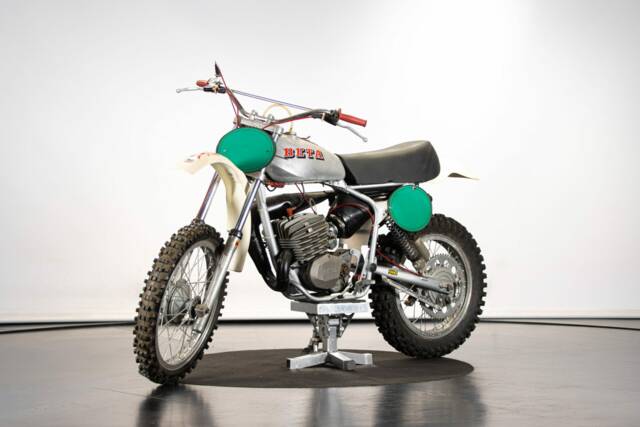
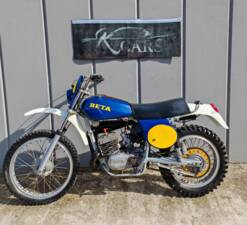
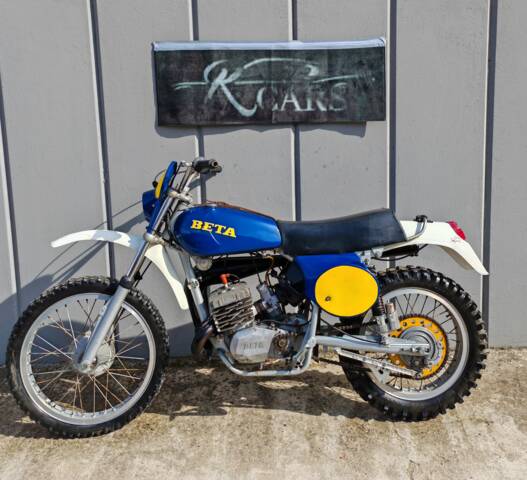
1975 | Beta RC 125
250 CC !!!

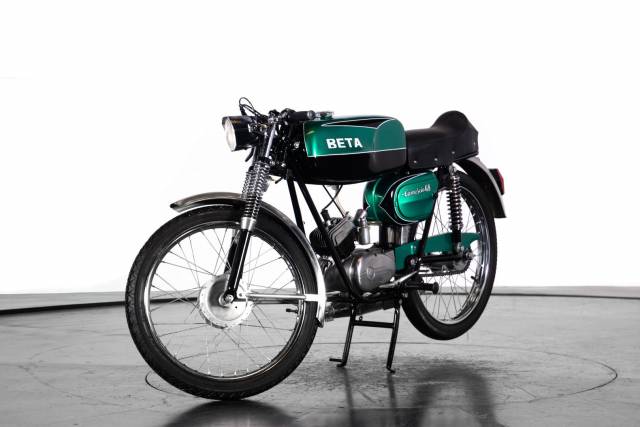
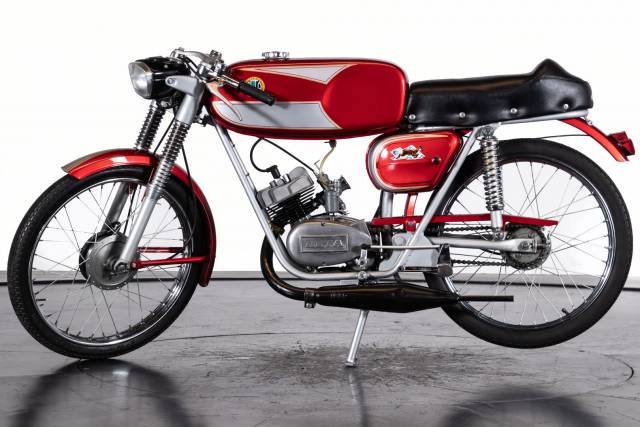
1964 | Beta Camoscio 48
Camoscio Sport
1965 | Beta Camoscio 48
Wonderfull Restoration !!
Newsletter
The best Beta listings, straight to your inbox
Get hand-picked Beta listings, plus the best of cars, motorbikes, and auctions on Classic Trader — all in one place.
Beta listing references from Classic Trader
Below you will find listings related to your search that are no longer available on Classic Trader. Use this information to gain insight into availability, value trends, and current pricing for a "Beta" to make a more informed purchasing decision.
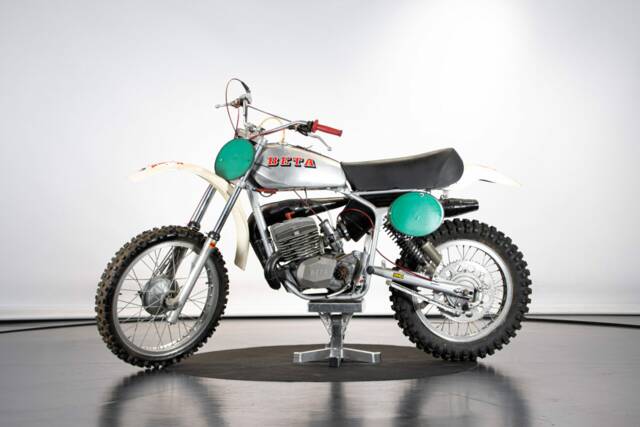
1975 | Beta CR 250
Beta 250 CR
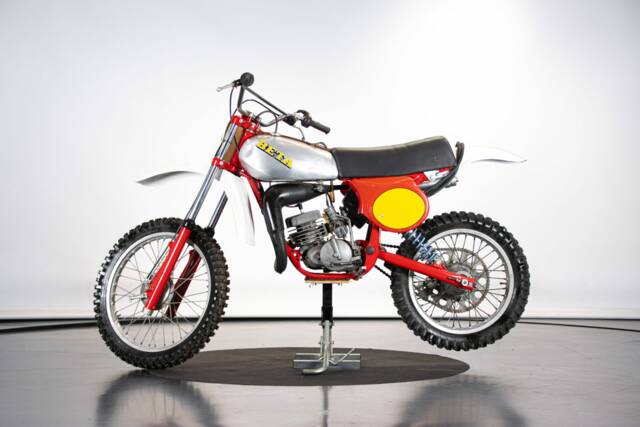
1978 | Beta RC 125
Beta 125 CR
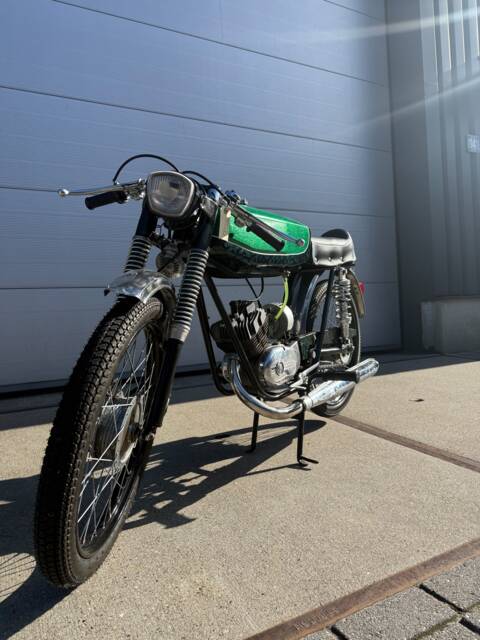
1965 | Beta Camoscio 48
Fully restored beta

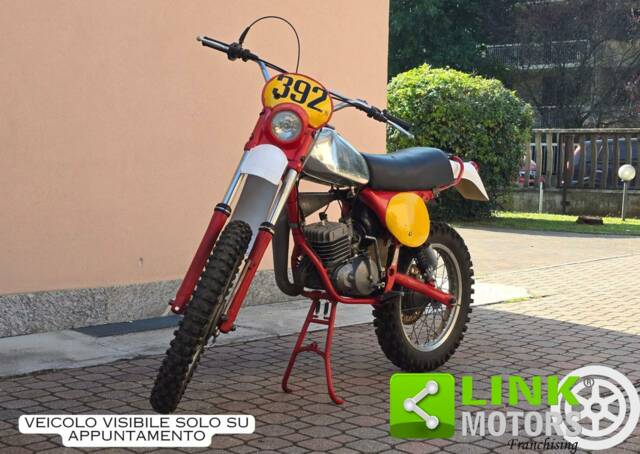
1978 | Beta RC 125
BETA RC 125 1978
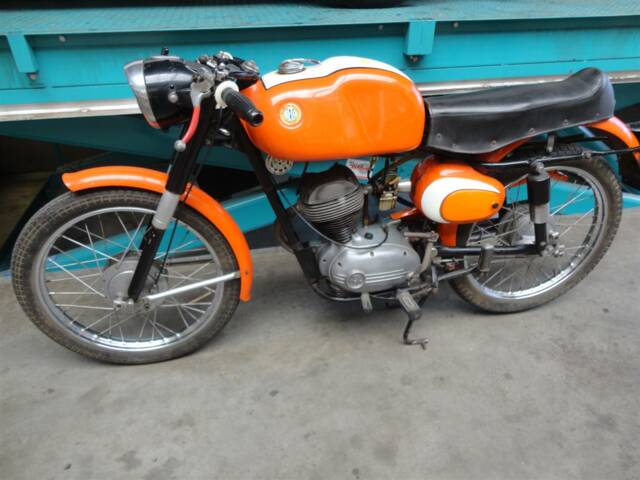
1962 | Beta 125 Sport
Sport 125CC 4stroke
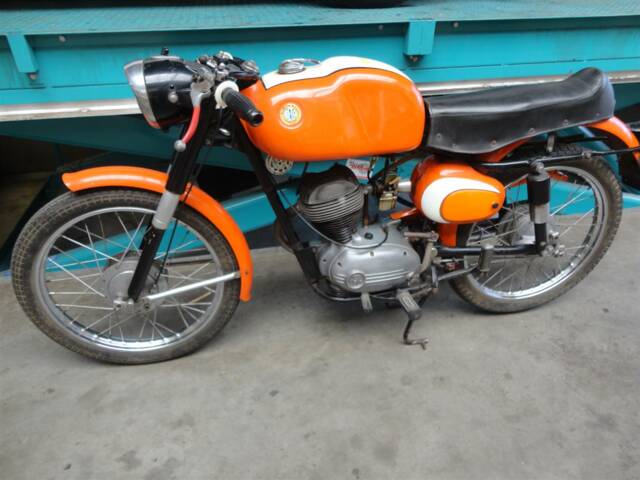
1962 | Beta 175 Mirimin
Sport 175CC 4stroke
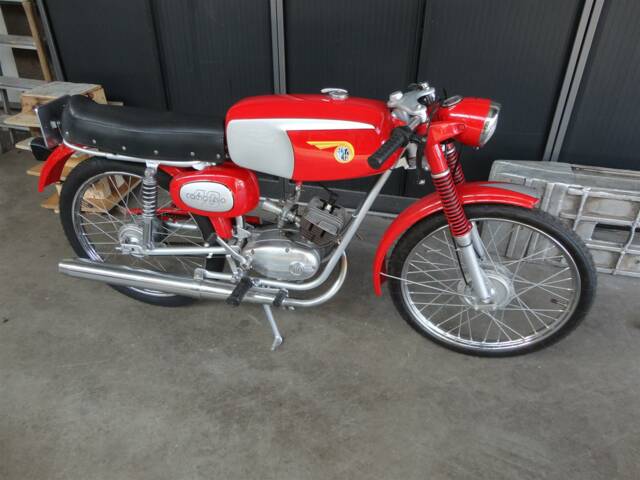
1964 | Beta Camoscio 48
Camoscio Sport
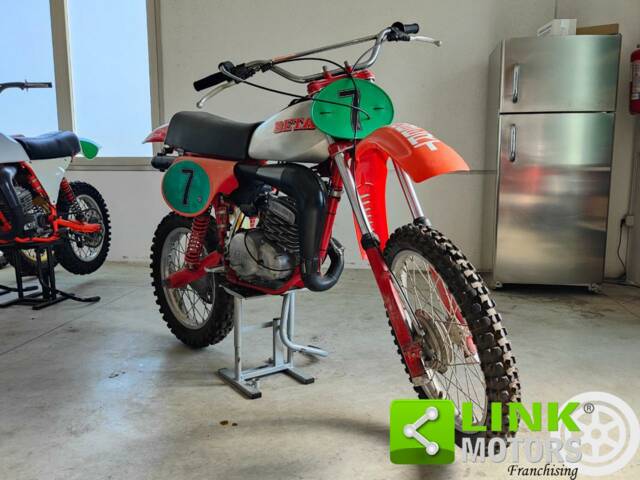
1977 | Beta CR 250
BETA 250
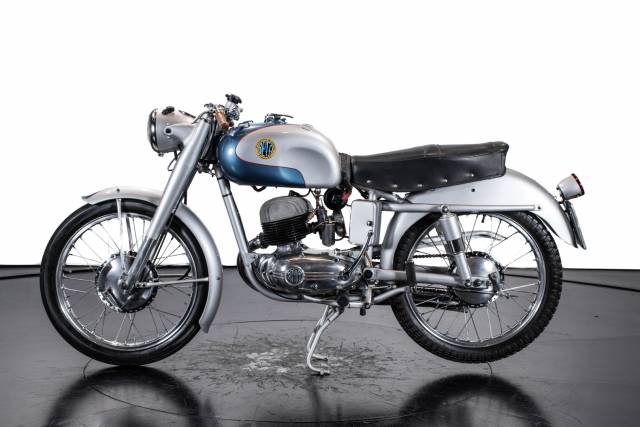
1953 | Beta 160 Sport
-
From bicycle workshop to trial legend
The history of Beta began in 1905 in Florence, when Giuseppe Bianchi founded a workshop for manufacturing hand-crafted bicycles. After the Second World War, his son Enzo Bianchi and son-in-law Arrigo Tosi took over the company – the name BETA was born from their initials (Bianchi Enzo, Tosi Arrigo). 1948 marked the entry into motorcycle production: a roller-drive engine was mounted to a bicycle. The first marketed model was the CERVO 48 with a 48 cc single-cylinder, followed by the CIGNO.
In the 1950s, Beta expanded the range to 125 cc and 175 cc models with double-cradle frames, telescopic forks, and shock absorbers. From the 1960s, Beta produced its own engines in-house. The M.T. 175 from this era reached 130 km/h – a touring motorcycle with sporting ambitions.
The decisive change of course occurred in the 1970s: Beta focused on off-road specialties – motocross, enduro, and trial. This focus paid off: between 1985 and 1999, Beta secured 36 national trial titles. The TR34 and TR35 model series from the late 1980s, ridden by Jordi Tarrés, are considered technical milestones – the finest mono-shock trials bikes before the transition to water cooling.
Dougie Lampkin wrote Beta history: on the Beta Techno, he won three consecutive world titles (1997, 1998, 1999). The successor model, the Rev 3, dominated the early 2000s with further world champions like Albert Cabestany and Toni Bou.
In 2005, Beta ventured into the enduro segment – initially with KTM engines, then from 2010 with in-house RR power units. The X-Trainer followed in 2017, a versatile enduro all-rounder with a lower seat height. To date, Beta has achieved 26 world titles and established itself as a permanent fixture in off-road sport.
What sets Beta apart
Beta's strength lies in its trial DNA: precise chassis tuning, lightweight construction, and uncompromising off-road capability. The Rev 3 is considered a benchmark among trials riders – three world champions on one model speak for themselves. The Techno from the Lampkin era is a highly sought-after collector's item today.
In the enduro sector, Beta scores with independent designs: the RR series (250, 300, 350, 480 cc) has used in-house engines since 2010 – no licensed production, no compromises. Particularly the 300 RR Race Edition with its 292.6 cc two-stroke single-cylinder and electronic oil injection combines classic two-stroke performance with modern technology. With a 103.5 kg dry weight and 36.6-inch seat height, it remains highly manoeuvrable.
The X-Trainer 300 is aimed at beginners and hard-enduro enthusiasts: lower seat height, mellower power delivery, but the same robust basis as the RR models. The 480 RR Race Edition with its 478 cc four-stroke appeals to riders seeking maximum power in heavy terrain.
Beta's recipe for success: focus. No road bikes, no adventure tourers in the classic sense – only trial, enduro, and hard enduro. This specialisation creates expertise that is reflected in world championship titles and customer loyalty.
Technical data of selected models
Special features:
- TR34/TR35: Air-cooled mono-shock trials bikes, the last generation before water cooling
- Techno/Rev 3: World champion trials bikes with compact geometry
- RR series: In-house Beta engines since 2010, KYB suspension, electronic oil injection on two-strokes
- X-Trainer: Oil injection without pre-mixing, lower seating position for better control
Market Overview & Buying Tips
Price ranges by model and condition
TR34/TR35 Trial (1980s, air-cooled)
- Usable: A$370–A$640
- Good: A$920–A$2,240
- Very good: A$1,600–A$2,590
- Excellent: from A$2,690
- Trend: +7.7% (Hagerty, June 2025)
Beta Techno (1997-2003, Lampkin era)
- Good: A$3,220–A$5,660
- Very good: A$5,660–A$8,090
- Excellent with documentation: A$8,090–A$12,090
Rev 3 Trial (1999-2012)
- Good: A$4,000–A$6,440
- Very good: A$6,440–A$9,750
- Excellent, low hours: A$9,750–A$14,630
Alp series (1970s-1990s, Enduro/Trial)
- Good: A$4,000–A$6,440
- Very good: A$5,660–A$8,870
- Excellent: A$8,090–A$12,090
- Example: Beta Alp 4.0 (2003, 349 cc) for approx. A$5,030 (Auction Feb 2023)
Early RR models (2005-2015, KTM engines)
- Good: A$5,660–A$8,870
- Very good: A$8,870–A$12,090
- Excellent: A$12,090–A$16,190
Market trends
The Beta collector market shows stable to rising tendencies. The TR34 trials bikes have recorded a 7.7% increase in value – a sign of growing interest in air-cooled trial classics. Beta USA reported a 180% increase in sales between 2018 and 2024, with an additional 10% growth for 2024-2025. This brand strength supports residual values.
Particularly sought after:
- TR34/TR35: Finest mono-shock trials bikes, technically mature, before water cooling
- Techno: Lampkin replica with world championship provenance
- Rev 3: Modern trial icon, three world champions
- Early CERVO/CIGNO: Rare founding pieces for brand collectors
Buyer profiles
- Trial enthusiasts: Seeking TR34, Techno, Rev 3 for historic competitions or collections
- Enduro riders: Interested in early RR models or the Alp series as robust off-road machines
- Brand collectors: CERVO, CIGNO, and early 1960s models as historical documents
- Beginners: X-Trainer as an accessible entry into classic two-stroke enduros
- Australian Buyers: Must consider the geographic distance from Europe; while local support is growing, shipping costs for specialized parts from Italy or the UK can be significant. Factor in potential lead times for components not held in local stock.
Parts and restoration costs
Parts supply:
- Wilson's Beta (USA): Major OEM parts supplier
- Beta USA: Online parts diagrams, official shop
- Beta UK: Parts finder with exploded views
- Availability: Good for models from 2015, usable for 2005–2015, more difficult for pre-war and 1960s models
- Regional Note: For Australian owners, sourcing parts often involves international freight. While major consumables are available locally, specialized restoration components may incur higher shipping fees and longer wait times due to the distance from the European manufacturing hub.
Restoration costs (guidelines):
- Complete engine overhaul (labour): from A$1,090
- Full restoration: A$10,530–A$16,190
- Painting and fairing (labour): A$4,000–A$5,660, materials A$570–A$1,050
- Disassembly/Assembly: from A$4,490
- Average parts budget: approx. A$4,000
Restoration tips:
- Best candidates: Models from 2015 due to parts availability
- Avoid: Very early models (pre-2010) without parts documentation
- Two-strokes: Easier to overhaul than four-strokes
- Chassis: KYB components serviceable by qualified workshops
Specific inspection points
Engine & Gearbox:
- Cold start behaviour (should start easily)
- Idle stability
- Smoke colour (excessive white/blue = oil issues)
- Clutch engagement (should be smooth)
- Gear changes through all gears
- No unusual noises from the crankcase
Cooling system (water-cooled):
- Coolant level and condition
- Check radiator for leaks/damage
- Fan function (critical on four-strokes)
- Temperature gauge accuracy
Chassis:
- Fork seals (no leaks)
- Shock absorber condition (no leaks, correct rebound)
- SAG settings checkable
- Bearing wear
Frame & Bodywork:
- Check straightness (look along frame tubes)
- Subframe condition
- Mounting points intact
- No crash damage
Electrical:
- Battery condition (voltage test)
- All lights/indicators functional
- Map switch function (if fitted)
- Starter motor function
Model-specific warning signs:
- 2023/2024 390/480: Check fan function, watch for overheating history
- Early RR models: Check for updated components
- High-hour machines: Request maintenance records
- X-Trainer: Test oil injection system function
How a Beta rides
Beta motorcycles are designed for precision off-road. Trial models like the TR34, Techno, and Rev 3 impress with minimal weight (under 70 kg), compact dimensions, and finely metered response. The low centre of gravity allows for extreme lean angles, while the firm chassis transmits every bump unfiltered – trial riding demands permanent body control. The two-stroke engines deliver spontaneous torque from low revs, ideal for overcoming obstacles in small steps.
The 300 RR Race Edition in enduro use combines this trial agility with enduro range. Electronic oil injection eliminates the need for pre-mixing, and the Keihin PWK 36 mm carburettor reacts directly to throttle inputs. At 103.5 kg dry, the machine remains playful to direct, while the KYB AOS closed-cartridge suspension soaks up even rough terrain. The 930 mm seat height requires long legs or staying power – Beta builds for off-road pros, not Sunday riders.
The X-Trainer lowers the entry barrier: lower seating position, mellower power characteristics, same robust basis. Those who want to experience trial agility at a more relaxed pace will find the ideal compromise here.
Four-stroke models like the 350 RR or 480 RR offer more linearly metered torque and higher top power, but also more weight and complexity. Fuel injection with a handlebar map switch (Full Power/Soft) and traction control makes modern Beta RR models versatile tools – from technical single-track to fast gravel paths.
The Gist: A Beta doesn't ride comfortably; it rides communicatively. Every steering movement, every weight shift has an immediate effect. The suspension is firmly tuned, and the engine delivers on command. For those who prioritise off-road competence over comfort, Beta is an honest partner.
Design and development philosophy
Beta's design follows function. No curved lines for their own sake, no retro gimmicks – trial and enduro demand minimalist efficiency. The colour scheme has remained recognisable for decades: white and red with the Italian tricolour as an accent. The logo – a dynamic "B" on a red background, underlined by green-white-red – refers to its Florentine origins.
Trial models show extreme reduction: narrow tank (often under 2.5 litres), high handlebars for a standing riding position, minimal fairing. Every gram counts. The seats are rudimentary – trial is ridden standing up. Pegs with rubber inserts provide grip for precise weight shifts.
Enduro models like the RR series show more substance: plastic tanks with 9-11 litre capacity, headlights for road legality, robust fairing parts. Yet here too, protection and function come before aesthetics. The molybdenum steel double-cradle frames are visible; no plastic hides the technology.
The target group consists of off-road specialists: trials riders who conquer sections in slow motion; enduro racers navigating riverbeds and boulders; hard-enduro enthusiasts who see mountainsides as a challenge. Beta doesn't build motorcycles for café visits – these machines are tools for demanding terrain.
Designer influence: Beta doesn't work with star designers but with engineers who ride themselves. Jordi Tarrés and Dougie Lampkin have shaped developments as factory riders. The result: machines created from practice for practice.
Motorsport and culture
Beta's reputation is based on 26 world championship titles – a figure few specialists achieve. Trial world titles from Jordi Tarrés, Dougie Lampkin's hat-trick from 1997-1999, and Albert Cabestany's successes on the Rev 3: these names are interwoven with Beta. James Dabill won the Junior World Championship title in 2005. Toni Bou, later a multiple world champion on Montesa, won opening rounds on the Rev 3.
Enduro successes came later: the RR series has not yet secured world titles, but in national championships and rallies like the Erzbergrodeo, Beta is establishing itself as a force to be reckoned with. In 2016, Beta became Italian champion in the E2 class of the Enduro World Championship.
Export and markets: Beta exports worldwide, with a strong presence in the USA (180% sales increase 2018-2024), the UK, and Australia. The UK market has a deep connection to trial culture, with Beta being a staple at events like the Scottish Six Days Trial (SSDT). While Beta's origins are Italian, its ruggedness resonated with the British off-road scene. In Australia, the brand has found a dedicated following among those tackling the diverse and often harsh terrain of the outback and coastal ranges, where the bikes' reliability and precise handling are highly valued.
Pop culture references are rare – Beta is not a brand for Hollywood stunts or music videos. The reference is the trial scene itself: YouTube videos of Adam Raga, Toni Bou, and other pros conquering impossible sections on Beta prototypes. The brand lives in specialist magazines, at trial ground events, and in the hard-enduro community.
Conclusion
Beta stands for uncompromising off-road competence with an Italian touch. From the first CERVO mopeds in 1948 to today's RR enduros, a single line runs through: a focus on trial and off-road, with no distraction from road touring bikes or adventure giants. This specialisation has earned Beta 26 world titles and a loyal fan base.
For collectors, the TR34/TR35, Techno, and Rev 3 are the crown jewels – trials machines with world championship provenance and rising values (+7.7% for the TR34). Those seeking early history should look for the CERVO 48 or CIGNO. Enduro enthusiasts will find robust classics with good parts supply in the RR series and Alp series.
Beta doesn't build motorcycles for the masses. It builds tools for off-road experts – light, precise, honest. For those seeking trial agility or enduro toughness, Beta is a partner without compromises.