- Motorcycle
- Agrati (0 offers)
Buy Agrati Motorcycles
Agrati built a short-lived but highly distinctive run of Italian scooters and mopeds from Como, with the Capri becoming the best-known name. For Australian buyers, surviving examples are rare, often grey imports, and worth a close look.
Search results
Currently, there are no matching listings for your search.
Create search alert
Let yourself be notified as soon as a listing is published that matches your search filters.
Agrati listing references from Classic Trader
Below you will find listings related to your search that are no longer available on Classic Trader. Use this information to gain insight into availability, value trends, and current pricing for a "Agrati" to make a more informed purchasing decision.
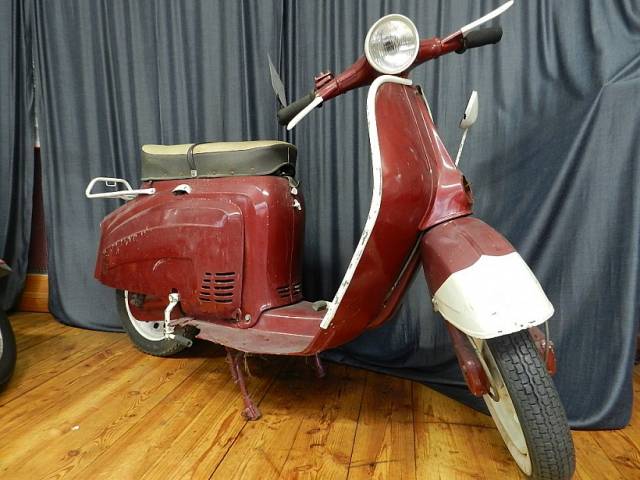
1968 | Agrati Capri 50

Create search alert
Let yourself be notified as soon as a listing is published that matches your search filters.
History
Agrati is one of those names that rewards the buyer who knows the back story. The company began life as Ditta A. Agrati & Figli in Monticello near Como, with roots going back to 1900 when the family business was involved in electric motors. That early industrial base mattered: Agrati was not a hobby workshop suddenly trying scooters, but a proper manufacturer with technical discipline, machining capacity, and a clear sense of how to build products at scale.
After the Second World War, the Agrati story took a decisive turn when the family acquired Garelli Motorcycles. Garelli itself had been founded in 1919 by Adalberto Garelli, a name already well known in Italian motorcycling thanks to the company’s engineering work and racing success. Garelli became famous for its 350cc split-single racing engine, a design that helped establish the brand’s sporting reputation. Riders such as Tazio Nuvolari and Achille Varzi were associated with Garelli machinery, which gave the marque a genuine pedigree long before the scooter era.
By the 1950s Italy was entering its post-war mobility boom, and Agrati found its strongest identity in light two-wheelers. In 1958, the company launched the Capri scooter, initially using a 70cc Garelli two-stroke engine. The Capri arrived at the right moment: the market wanted affordable, compact transport that was simple to own, easy to park, and stylish enough to stand apart from the crowd. Agrati answered with a family of small scooters and mopeds that included the Capri 50, Capri 50 S, Capri 70, Capri 80, Capri 100, Capri 125, and the larger Super Capri 150.
The corporate structure changed again in 1961, when Agrati and Garelli were officially merged into Agrati-Garelli. That transition reflected the realities of the era. Small Italian manufacturers often needed stronger group structures to survive changing demand, export requirements, and the fast-moving scooter market. By 1965, the Agrati name was dropped from the machines, and all products were sold simply under Garelli.
Even so, the Agrati chapter did not disappear from motorcycling history. The Capri line continued for some years after the name change, with the Capri 50 built roughly until 1970 depending on market and specification. Export versions could be fitted with Sachs three-speed engines or Minarelli engines, showing how flexible the company had to be in order to sell abroad. That export focus matters for Australian collectors today, because the few Agrati scooters seen here are typically grey imports that arrived through Britain or continental Europe rather than through a formal local distribution network.
The Agrati family remained active in the industry too. In 1968, Mario Agrati co-founded Fantic Motor, another Italian name that would later become well known for enduro and trial bikes. So although the pure Agrati scooter period was brief, the family’s influence on Italian two-wheeler culture stretched much further.
Highlights
What makes Agrati interesting to collectors is not simply rarity, but the mixture of mainstream usefulness and obscure charm. The Capri was not trying to be a prestige scooter like some of its better-known rivals; it was aimed at ordinary riders who wanted compact transport with a bit of Italian style. That makes surviving examples feel honest and mechanical rather than fashionable.
The most important models for buyers are the Capri 50, Capri 50 S, Capri 70, Capri 80, Capri 100, Capri 125, and Super Capri 150. Among these, the Capri 50 is the name most often encountered today, while the larger-capacity versions are much scarcer. Export-market scooters are especially interesting because they often carry different engines and trim, which can make them more usable but also more complicated to verify.
Key reasons enthusiasts seek Agrati:
- Short production window: pure Agrati bikes were only built from 1958 to 1965.
- Como-built Italian character: the company’s Lombardy roots are part of the appeal.
- Garelli connection: a respected engineering and racing background.
- Compact dimensions: ideal for city use and easy storage.
- Strong visual identity: small-wheeled, neat-bodied, very period-correct.
For Australian buyers, there is another layer of appeal: these scooters are uncommon enough to stand out at any club run or show. In cities such as Melbourne and Sydney, some examples may have been brought in by Italian immigrant families who favoured practical European scooters in the post-war decades. That heritage adds human history to the machine itself.
Technical Data
The Capri range varied by model and market, but the following figures describe the best-known Agrati Capri 50 specification.
The small-capacity Capri was built around a simple and durable formula. The 49cc two-stroke is easy to understand, easy to maintain, and mechanically sympathetic owners can keep one running for years. The 4-speed hand-shift gives the scooter a wonderfully period feel, though it also reminds you that this is not a modern automatic. The 12-inch wheels contribute to a light, responsive character, but they also demand respect on rough surfaces and in crosswinds.
Because export versions vary, buyers should never assume every Agrati Capri is identical. The Capri 50 S may differ in trim and market equipment, while the Capri 70, Capri 80, and larger models can use other engine suppliers or local-market specifications. For that reason, frame numbers, engine numbers, and any surviving registration documents are important.
Market Overview
Agrati is a small market, niche collector proposition. In Australia, that niche is even tighter because very few examples were sold new here. Most surviving bikes are likely to have arrived as private imports, either from the UK or directly from Europe. That means the local market is thin, documentation can be patchy, and restoration planning needs extra care.
Current market reality points to the following broad ranges in AUD, with Australian buyers needing to add the cost of freight, customs handling, and compliance where applicable:
Recent reference points from Europe and the UK help explain those numbers. A 1962 Agrati-Garelli Capri 80 was offered in the UK with an estimate of £1,500-2,500, while a 1969 Agrati Capri 50 appeared in Australia on Classic Trader with an estimate of €2,000-2,500. A separate UK listing showed a Capri 50 around the £900-1,300 range, while another Italian listing sat around €1,800 for a usable machine. These are not identical cars or scooters in condition or originality, but they show the market band is modest compared with mass-market Vespa or Lambretta models.
For Australia, the biggest cost issue is often not purchase price but parts shipping from Europe. Small mechanical parts may be cheap in themselves, but international freight, taxes, and the wait times can quickly turn a tidy project into a serious budget item. If you are buying an Agrati in Australia, treat overseas spares as a real line item, not an afterthought.
Buying tips
- Check whether the scooter is a pure Agrati build or an Agrati-Garelli machine.
- Verify whether the engine is original Garelli or an export-unit Sachs/Minarelli.
- Inspect for missing trim, badges, and period controls; these are harder to replace than mechanical parts.
- Confirm the paperwork trail, especially for grey imports.
- Budget for shipping and restoration delays; both are common with rare Italian scooters.
In Australia, registration also matters. Historic and club use pathways can be attractive, but the exact route varies by state and territory. Buyers should check state-based historic vehicle registration rules and speak to local clubs, including organisations linked to the Classic Vehicle Association of Australia, before committing to a purchase. A scooter with clear provenance and a workable compliance path is always easier to live with than a cheaper but undocumented project.
Auction houses such as Shannons and Lloyds Auctions are also worth watching, even if Agrati itself appears rarely. They provide useful market context for other Italian scooters and mopeds, and they sometimes surface imported oddballs that help set a realistic value benchmark.
Performance
An Agrati Capri is not bought for speed. It is bought for the feeling of moving through space on a machine that is compact, alert, and charmingly mechanical. The Capri 50 in domestic trim produces only 1.2 bhp, which limits top speed to around 35 km/h. That sounds modest, and it is, but the experience is still engaging because the scooter feels light and direct.
The 4-speed hand-shift is central to the riding experience. You are involved at every stage: selecting gear, balancing throttle, reading the road, and keeping the little two-stroke in its sweet spot. It is more demanding than an automatic scooter and more tactile than many later mopeds. For the rider who enjoys vintage machinery, that involvement is the reward.
Export models with 2 to 3.2 bhp are noticeably more lively, and larger-capacity Capris feel more relaxed in traffic. Still, none of these machines are fast by modern standards. They are best used on quiet suburban roads, club events, or short country runs where the pace suits the scooter’s personality.
What the Agrati does well is communicate. You hear the small engine working. You feel the frame respond. You notice the road surface. On a good example, the scooter has a pleasing lightness that makes even a simple ride feel special. That is why buyers who appreciate classic scooters often look beyond horsepower figures and into the overall sensory package.
Design
Agrati design is all about compact function with a neat Italian finish. The Capri line does not shout; it sits somewhere between utilitarian and stylish, which is part of its lasting appeal. The bodywork is tidy, the proportions are modest, and the scooter carries itself with a practical elegance that suits the 1950s and 1960s perfectly.
The Capri’s visual identity comes from several elements:
- the small-wheeled stance
- the smooth, enclosed bodywork
- simple but effective chrome accents
- the tidy front shield and leg protection
- the period CEV instrumentation on many examples
Early Agrati scooters are usually more restrained in finish, while later Agrati-Garelli examples can show more varied colour schemes and trim. That matters to collectors because original paint, badges, and fittings help separate genuine survivors from over-restored machines. A scooter that still carries its correct colour and period details is usually much more desirable than one that has been heavily customised.
The Capri also reflects the broader Italian scooter philosophy of the time: urban practicality with enough visual flair to make the owner feel good about the purchase. It was built for everyday use, yet it still had presence. For many buyers, that balance is exactly what makes a classic scooter worthwhile.
Other
Agrati’s story connects to wider Italian two-wheeler culture in several interesting ways. The company’s roots in industrial manufacturing, its post-war acquisition of Garelli, and its later merger all show how fluid the Italian scooter industry was in the 1950s and 1960s. Firms changed hands, absorbed rivals, and rebranded quickly as they chased growth in a crowded market.
The Garelli name deserves special mention. Although Agrati is the focus here, much of the technical reputation behind the Capri came from Garelli engineering. The later success of Garelli in racing — including six consecutive 125cc World Championships from 1982 to 1987 — underlines how deeply the brand understood lightweight performance, even if the Capri itself was aimed at affordability rather than competition.
There is also a useful Australian angle. Italian scooters were a natural fit for many post-war migrant families because they were compact, economical, and suited to urban life. That helps explain why a few Agratis may appear in local collections today despite the marque’s tiny production volume. If you are buying one in Australia, you are not just buying a scooter; you are buying a rare object that may have travelled through several countries and several ownership cultures before reaching you.
Parts support is mixed. Routine service items for the Capri 50 can sometimes be sourced through Italian scooter specialists, Garelli contacts, or compatible aftermarket suppliers. Body panels, badges, and exact trim pieces are much harder. Expect to search internationally, and expect freight to be meaningful. Australian restoration budgets must include the reality that one missing part can cost less to buy than to ship.
Summary
Agrati occupies a small but fascinating corner of classic scooter history. The brand’s pure production years were brief, yet the Capri range left behind enough variety to interest collectors: Capri 50, Capri 50 S, Capri 70, Capri 80, Capri 100, Capri 125, and Super Capri 150. For buyers, the appeal lies in rarity, Italian origin, and the strong connection to Garelli engineering.
If you are looking at Agrati motorcycles or scooters in Australia, focus on originality, paperwork, and a sensible parts strategy. The machines are uncommon here, many are grey imports, and restoration costs can rise quickly once European shipping is added. But a good example offers real charm, a distinctive back story, and a level of individuality that more common scooters simply cannot match.
If you want a classic Italian scooter that stands apart from the usual names, Agrati is worth your attention. Find current Agrati offers on Classic Trader and discover now which Capri suits your collection.