- Motorcycle
- Aermacchi Harley-Davidson (0 offers)
Buy Aermacchi Harley-Davidson Motorcycle
From Italian aircraft hangars to Grand Prix podiums, Aermacchi Harley-Davidson represents a unique era of transatlantic engineering. These agile horizontal singles combined Varese precision with Milwaukee distribution, creating a legacy that continues to roar at events like the Phillip Island Island Classic.
Search results
Currently, there are no matching listings for your search.
Create search alert
Let yourself be notified as soon as a listing is published that matches your search filters.
Create listing
Do you have a Aermacchi Harley-Davidson that you want to sell? Then create a listing now.
Create listingAermacchi Harley-Davidson listing references from Classic Trader
Below you will find listings related to your search that are no longer available on Classic Trader. Use this information to gain insight into availability, value trends, and current pricing for a "Aermacchi Harley-Davidson" to make a more informed purchasing decision.
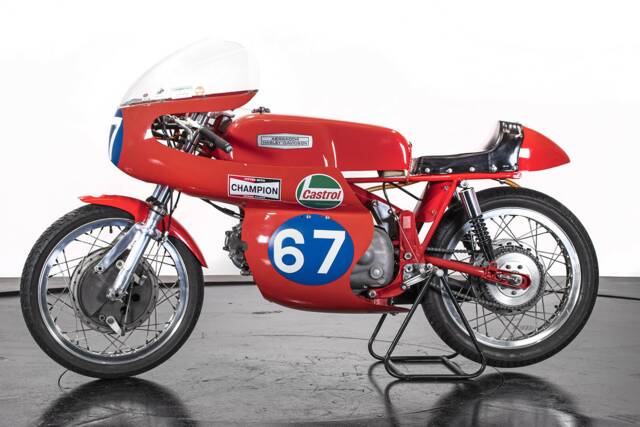
1969 | Aermacchi Harley-Davidson Ala d'oro 350
Aermacchi - Harley Davidson 350 Ala d'oro

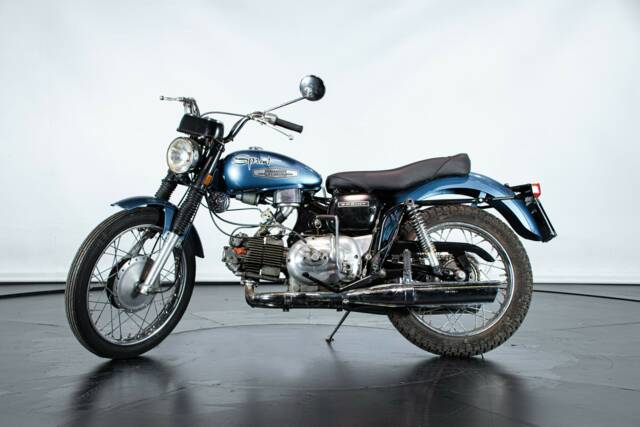
1971 | Aermacchi Harley-Davidson 350 GT Sprint
2025-05-13 14:42:20 | Aermacchi - Harley Davidson 350 SPRINT
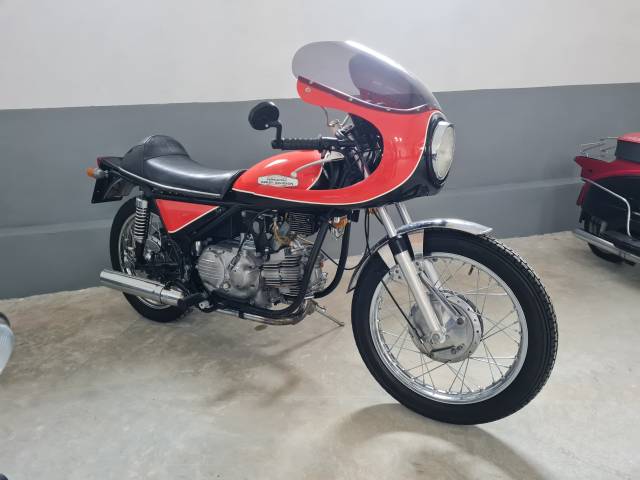
1973 | Aermacchi Harley-Davidson 350 GT Sprint
Harley-Davidson Aermacchi 350 SS NE

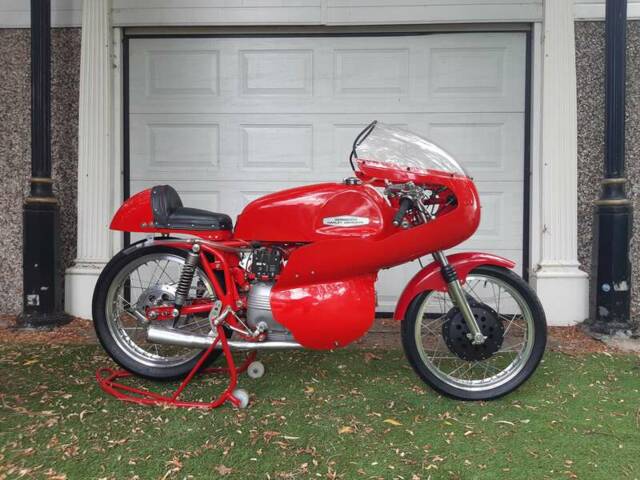
1965 | Aermacchi Harley-Davidson Ala d'oro 250
c.1963 Aermacchi Harley-Davidson Ala D'oro 250cc

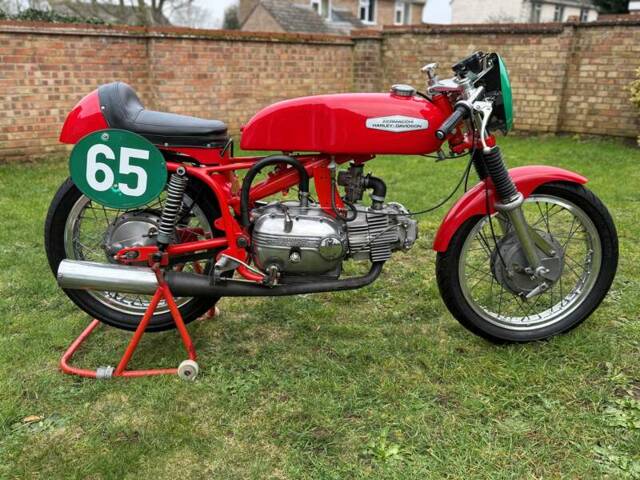
1962 | Aermacchi Harley-Davidson Ala d'oro 250
1962 Aermacchi Harley-Davidson Ala d'Oro 248cc
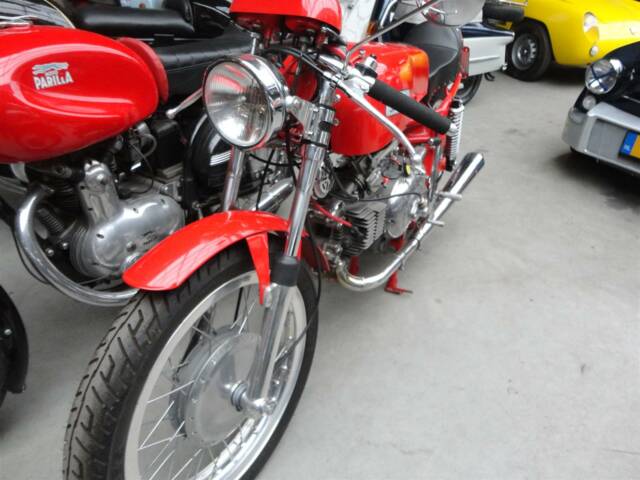
1971 | Aermacchi Harley-Davidson 350 GT Sprint
Aermacchi 350GTS

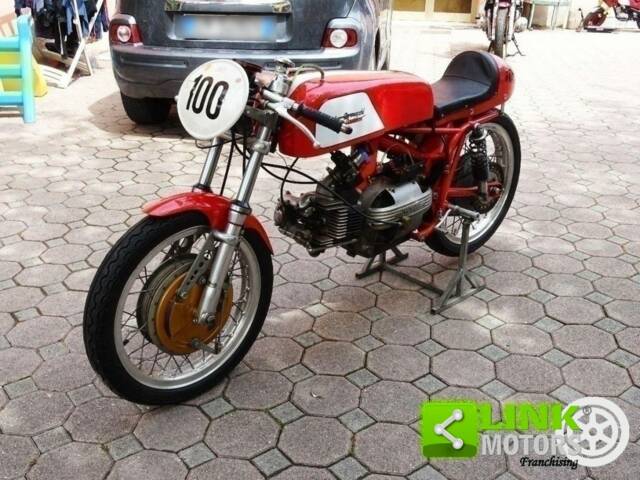
1965 | Aermacchi Harley-Davidson Ala d'oro 250
AERMACCHI Aermacchi-Harley-Davidson-ANNO-1965-5-MARCE
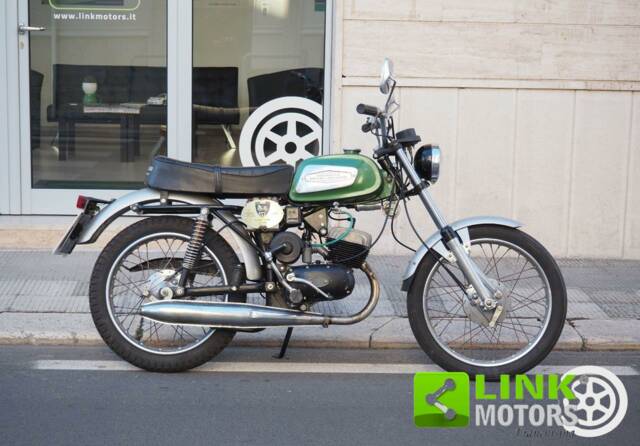
1974 | Aermacchi Harley-Davidson De Luxe 125
AERMACCHI -HARLEY DAVIDSON 125 DE LUXE
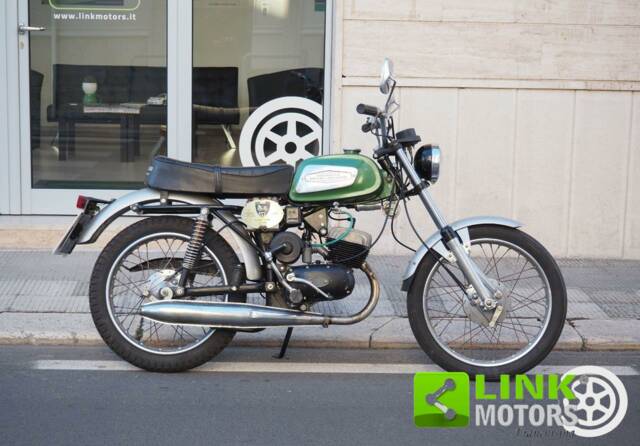
1974 | Aermacchi Harley-Davidson De Luxe 125
AERMACCHI -HARLEY DAVIDSON 125 DE LUXE
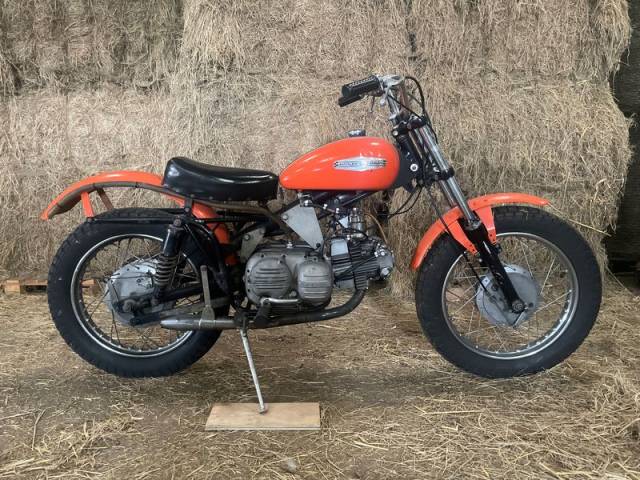
1968 | Aermacchi Harley-Davidson Ala d'oro 250
1968 Harley-Davidson Aermacchi Sprint ERS 350cc
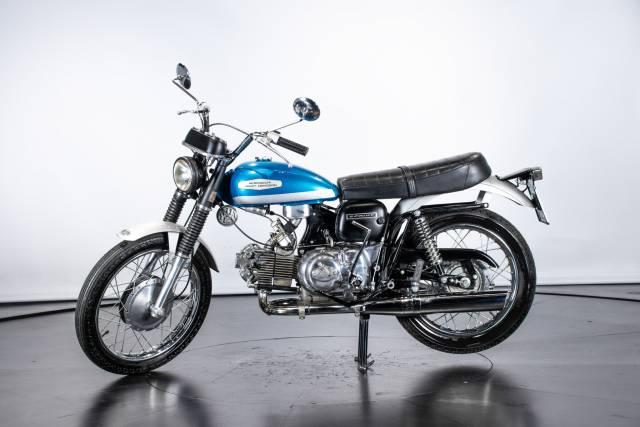
1972 | Aermacchi Harley-Davidson 350 GT Sprint
-
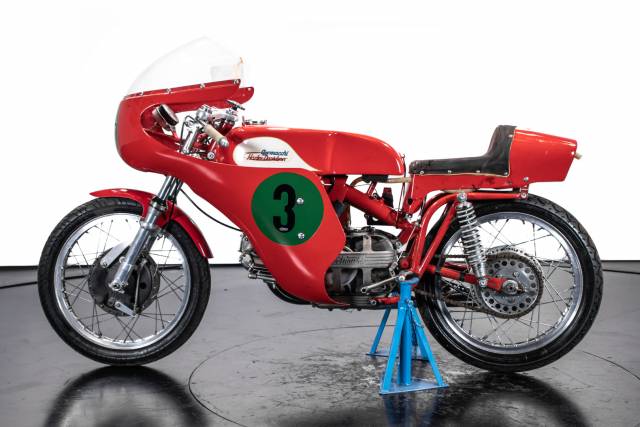
1963 | Aermacchi Harley-Davidson Ala d'oro 250
-
Create search alert
Let yourself be notified as soon as a listing is published that matches your search filters.
Create listing
Do you have a Aermacchi Harley-Davidson that you want to sell? Then create a listing now.
Create listingHistory & Heritage
The story of Aermacchi Harley-Davidson is one of the most improbable yet fascinating chapters in motorcycling history, bridging the gap between Italian aeronautical finesse and American marketing muscle. Long before the partnership with Milwaukee, the company began as Aeronautica Macchi in 1912, founded by Giulio Macchi on the shores of Lake Varese in northern Italy. For decades, they were masters of the sky, producing world-record-setting seaplanes like the MC.72, which clocked over 700 km/h in 1934 – a record for piston-powered seaplanes that remains unbeaten today.
Post-WWII restrictions forced many Italian industrial giants to pivot toward civilian transport. Much like Piaggio turned to the Vespa, Aermacchi turned to motorcycles in 1951. Their early efforts, like the Cigno (Swan) scooter, showed glimpses of their aircraft background, but the arrival of engineer Alfredo Bianchi in 1956 changed everything. Bianchi designed the Chimera 175, featuring a radical horizontal overhead-valve (OHV) single-cylinder engine. This "flat" engine layout – chosen for its low centre of gravity and superior cooling – became the technical signature of Aermacchi.
By the late 1950s, Harley-Davidson was facing a crisis. The Japanese "invasion" led by Honda and Yamaha was flooding the US market with lightweight, reliable machines, and Milwaukee had nothing to compete with. In 1960, Harley-Davidson purchased a 50% stake in Aermacchi’s motorcycle division to gain an immediate foothold in the small-displacement market. The first fruits of this union arrived in 1961 as the Harley-Davidson Sprint, which was essentially a rebadged Aermacchi machine.
For the Australian market, the connection is particularly deep. Kel Carruthers, the legendary Sydney-born racer, was instrumental in putting Aermacchi on the global map. While many associate him with Yamaha, Carruthers spent his formative international years campaigning Aermacchi singles in the 250cc and 350cc World Championships. His success on the agile Italian machines proved that handling and lightweight construction could challenge the brute power of multi-cylinder rivals. This heritage is celebrated annually at the Phillip Island Island Classic and the Barry Sheene Festival of Speed, where Aermacchi singles remain highly competitive in historic racing classes.
The partnership evolved through the 1960s with iconic models like the Ala Verde (Green Wing) and the racing Ala d'Oro (Gold Wing). In 1974, AMF (which then owned Harley-Davidson) took full control of the Varese plant. However, as the 1970s progressed, the focus shifted toward two-stroke technology, leading to the RR 250 and RR 350 GP racers which won four world titles. By 1978, Harley-Davidson decided to exit the small bike market, selling the Varese factory to the Castiglioni brothers, who used it as the foundation for Cagiva, eventually reviving brands like Ducati and MV Agusta.
Highlights & Features
Aermacchi Harley-Davidson motorcycles are defined by their uncompromising aeronautical engineering. Every component reflects a philosophy where weight is the enemy and structural integrity is paramount.
The defining feature is the horizontal OHV single-cylinder engine. Unlike the vertical or slanting engines of British or Japanese rivals, Aermacchi’s "flat" layout allowed the heavy engine mass to sit low in the frame. This gave the bikes a centre of gravity that felt almost telepathic, allowing for rapid direction changes that endeared them to racers and road riders alike. The cylinder head, protruding forward into the airflow, received consistent cooling across its entire surface, preventing the heat-soak issues often found in vertical designs.
The Ala Verde 250 (1959–1972) remains the most celebrated road model. It was a "giant killer" in its day, weighing just 115 kg dry but producing up to 25 hp in later trims. Its five-speed gearbox (standardised in the mid-60s) and crisp Dell'Orto carburettion made it a formidable weapon on twisty mountain passes. For Australian collectors, the Ala Verde is the ultimate expression of the Varese brand – elegant, fast, and technically sophisticated.
For those with racing in their blood, the Ala d'Oro was the factory-built competition version. Sold as an "over-the-counter" racer, it gave privateers access to Grand Prix-level performance. With its close-ratio gearbox, high-compression piston, and aluminium fuel tank, the Ala d'Oro was a staple of the European and Australian club racing scenes throughout the 1960s.
The Sprint 350 SS (1968–1974) represented the final evolution of the four-stroke single. Boring out the engine to 344cc provided the torque and "legs" needed for longer Australian road trips. While it adopted some Harley-Davidson styling cues, such as the famous "peanut" tank, the heart remained pure Italian.
The Chimera 175 (1956–1962) stands as a design masterpiece. Its futuristic, fully enclosed bodywork was years ahead of its time, aiming for aerodynamic efficiency and rider protection. Only 2,000 were built, making it one of the rarest and most sought-after Italian motorcycles for serious collectors.
Technical Data
Core Technical Features (4-stroke models):
- Engine: Air-cooled horizontal single-cylinder, OHV via pushrods.
- Carburettion: Dell'Orto (VHB series typically 26–30 mm).
- Clutch: Multi-plate oil bath.
- Transmission: 4-speed (early) or 5-speed (late).
- Final Drive: Chain.
- Braking: Drum brakes front and rear (SST 350 featured a front disc).
- Electrics: 6V (early), later 12V; Magneti Marelli components.
- Frame: Steel tube double cradle (Chimera: central spine).
- Suspension: Telescopic front forks (often Ceriani), twin shock swingarm rear.
Market Overview & Buying Tips
The market for Aermacchi Harley-Davidson in Australia is niche but passionate. Unlike the sky-high prices of equivalent Ducati singles, Aermacchi offers a more accessible entry point into high-end Italian classics. However, values have been steadily rising as collectors recognise their racing pedigree and unique engineering.
Ala Verde 250 (1959–1972)
This is the "Goldilocks" model for many collectors – classic looks, usable performance, and increasing value. In the Australian market, a good, rideable example typically fetches between A$8,000 and A$15,000. Immaculate, concours-standard restorations can exceed A$20,000. When buying in Australia, check for original Dell'Orto carburettors and the correct five-speed gearbox, as these significantly impact value.
Ala d'Oro 250/350 (1961–1970)
Authentic racing machines are rare in the Southern Hemisphere and command a premium. Expect to pay A$25,000 to A$45,000 for a genuine Ala d'Oro with documented history. Be cautious of "replicas" built from Sprint or Ala Verde frames. True racers have frame numbers starting with "AERDAO" and feature distinctive lightweight aluminium components.
Sprint 250/350 (1961–1974)
The Sprints were the most commonly imported models to Australia and the US. Project bikes can still be found for A$4,000 to A$7,000, while well-sorted, running 350 SS models sit in the A$10,000 to A$18,000 bracket. They are excellent "riders' classics" for Australian conditions.
Two-Stroke Models (SX, SST, SXT)
The later two-stroke models are the most affordable way into the brand, with prices ranging from A$3,000 to A$8,000. While they lack the "cool factor" of the four-stroke singles, they are rugged and fun for vintage enduro or casual commuting.
Chimera 175 (1956–1962)
Almost non-existent in Australia. If one does surface, expect to pay A$25,000+. The cost of restoring the complex bodywork is prohibitive, so buying the best possible condition is essential.
Critical Inspection Points
- Oil Leaks: The horizontal cylinder layout makes these engines prone to weeping at the base gasket and rocker covers. Check the underside of the cylinder after a test ride.
- Valvetrain: Listen for excessive "clacking." While OHV engines are naturally mechanical, loud knocking may indicate worn pushrods or rocker arms.
- Chassis: Inspect the engine mounts and swingarm pivot for stress cracks, especially on bikes used for historic racing.
- Electrics: The original 6V Magneti Marelli systems are notoriously weak. Many Australian owners have converted to 12V electronic ignition (such as Powerdynamo/VAPE). While this is a non-original modification, it drastically improves reliability for local conditions.
- Parts Availability in Australia: Buying parts locally is difficult. Specialist suppliers like Moto Italia (US) and Moro Motoricambi (Italy) are the main lifelines. Shipping a small box of gaskets or a piston to Australia will cost A$100–A$250 in freight, while larger items like fuel tanks or engines can exceed A$1,000. Join the Aermacchi Spirit Forum or the PCRA (Post Classic Racing Association) for local advice and community support.
Performance & Riding Experience
Riding an Aermacchi is a visceral, mechanical experience that modern bikes cannot replicate. It starts with the ritual: no electric start here. You find the compression stroke, kick through with intent, and the horizontal single barks into life with a deep, rhythmic thumping that sounds far larger than its displacement suggests.
On the road, the Ala Verde is a revelation. At 115 kg, it feels like a bicycle compared to heavy British twins. The low centre of gravity means you don't "force" it into corners; you simply think about the apex, and the bike is there. The power delivery is linear and honest. It doesn't have the peaky rush of a two-stroke, but it pulls cleanly from low revs, rewarding a smooth throttle hand and precise gear changes.
The Sprint 350 SS offers more muscle for Australian highways. With 30 hp on tap, it can comfortably keep pace with modern traffic, though the vibrations at high rpm will remind you of its single-cylinder soul. The drum brakes require a firm "two-finger" technique and plenty of foresight, but they are adequate given the bike's low mass.
For those lucky enough to track an Ala d'Oro, the experience is pure adrenaline. The riding position is aggressive – tucked behind the small screen, chin on the tank, listening to the metallic clatter of the valves as you chase the redline. On technical circuits like Broadford or Wakefield Park, an Aermacchi can humiliate much larger machines by carrying incredible corner speed.
One quirk to master: the right-side gear shift. Most models use a "one up, four down" pattern on the right. For riders used to modern left-side shifting, this requires mental recalibration, but once mastered, the mechanical "snick" of a well-adjusted Aermacchi gearbox is immensely satisfying.
Design & Aesthetics
The aesthetic of Aermacchi is best described as "Aeronautical Functionalism." Coming from a background in aircraft design, the engineers in Varese understood that every line had to serve a purpose, whether it was for cooling, aerodynamics, or weight distribution.
The Chimera is the ultimate expression of this. Its enclosed bodywork wasn't just a styling exercise; it was an attempt to streamline the motorcycle and protect the mechanical components. The sweeping lines and integrated headlight unit look like something out of a 1950s sci-fi film. While it was a commercial failure, it is now celebrated in design museums worldwide.
The Ala Verde brought a more conventional "naked" look, but the elegance remained. The teardrop tank, the slender seat, and the way the horizontal cylinder juts forward create a sense of motion even when parked. The high-quality castings and polished aluminium side covers give these bikes a premium feel that many contemporary machines lacked.
The Harley-Davidson influence introduced a fascinating cultural clash. American designers wanted "mini-Harleys," leading to the adoption of the peanut tank, chrome fenders, and high "buckhorn" handlebars on some Sprint models. In the US, this was a success, but Australian and European purists often preferred the leaner Italian styling. The Sprint 350 SS arguably balances these two worlds best, combining a Sportster silhouette with a thoroughbred Italian heart.
Key design details for connoisseurs include the winged logo (a nod to the aircraft heritage), the deep cooling fins on the cylinder head, and the simple, elegant "ash tray" rocker covers found on early models. These details aren't just decorative; they are the fingerprints of a company that built planes before it built bikes.
Racing & Competition
Racing is what truly cemented Aermacchi’s legendary status. Despite a fraction of the budget of Honda or MV Agusta, the Varese factory punched well above its weight on the international stage.
The face of the brand in the 1960s was Renzo Pasolini. "Paso" was a fearless rider who pushed the Aermacchi singles to their absolute limits, engaging in epic battles with Mike Hailwood and Giacomo Agostini. In 1972, Pasolini won three Grands Prix and missed out on the 250cc World Championship by just a single point. His tragic death at Monza in 1973 remains one of the darkest days in the sport, but his legacy is inextricably linked to the red-and-silver machines from Varese.
For Australians, the name Kel Carruthers is synonymous with Aermacchi success. Before his 250cc World Title with Yamaha in 1969, Carruthers was the top Aermacchi privateer. He famously finished 3rd in the 350cc World Championship in 1968 on a single-cylinder Aermacchi, beating out many multi-cylinder factory teams. His ability to maintain high corner speeds and manage the limits of the chassis made him the perfect pilot for the agile Italian singles.
In the 1970s, the racing program shifted to two-strokes, resulting in the RR 250 and RR 350. These water-cooled twins were world-beaters. Walter Villa dominated the mid-70s, winning four World Championships for Harley-Davidson. These remain the only Grand Prix world titles ever won by the American brand – a feat made possible entirely by Italian engineering.
Today, the Aermacchi racing tradition is alive and well in Australia. At the Phillip Island Island Classic, Aermacchi singles are a common sight in the Period 4 (1963–1972) classes. Specialists have learned to extract over 35 hp from the 350cc singles, making them serious contenders against Manx Nortons and G50 Matchlesses. The reliability and parts commonality of the Aermacchi make it the "thinking man's" classic racer.
Summary
Aermacchi Harley-Davidson represents one of the most intriguing alliances in motorcycling history – a blend of Italian aeronautical engineering and American commercial ambition. The result was a series of motorcycles that are technically unique, aesthetically beautiful, and historically significant.
For the Australian collector, these bikes offer a deep connection to local racing hero Kel Carruthers and a passport to some of the best historic racing events in the world. Whether you choose the elegant Ala Verde 250, the torque-rich Sprint 350 SS, or a rare Ala d'Oro racer, you are buying into a legacy of speed and precision.
While parts availability requires some international sourcing and shipping costs to Australia can be high, the rewards of ownership are immense. The sound, the handling, and the "flat" single's unique character ensure that every ride is an event. As prices for mainstream Italian classics continue to climb, the Aermacchi Harley-Davidson remains a savvy choice for the enthusiast who values engineering substance over corporate hype. Riding an Aermacchi isn't just about moving from A to B; it's about flying on two wheels, with a heart from Varese and a soul from the golden age of racing.