- Motorcycle
- Aermacchi (1 offer)
Buy Aermacchi Motorcycle
Since 1912, Aermacchi has blended Italian engineering precision with a fierce racing pedigree. Originally an aircraft manufacturer, the brand evolved into a motorcycle legend after 1951, famously partnering with Harley-Davidson to produce agile lightweights that challenged the Japanese giants.
Search results
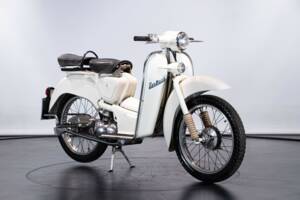
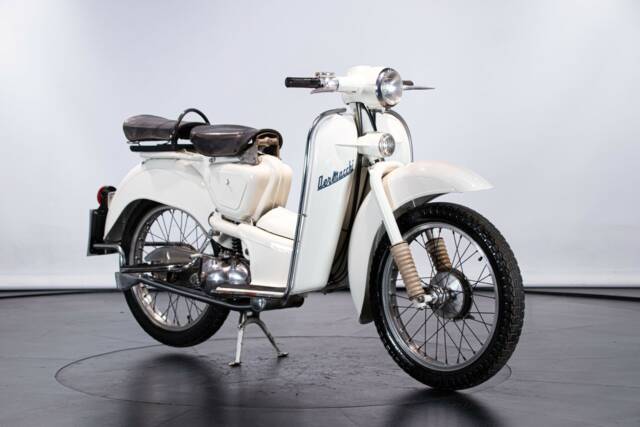

Aermacchi listing references from Classic Trader
Below you will find listings related to your search that are no longer available on Classic Trader. Use this information to gain insight into availability, value trends, and current pricing for a "Aermacchi" to make a more informed purchasing decision.
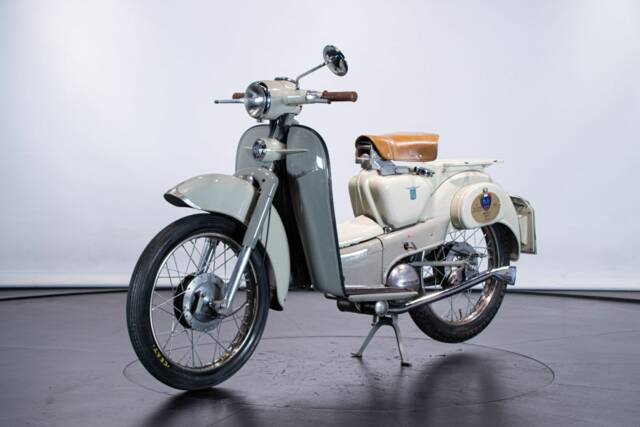
1959 | Aermacchi Zeffiro 125
ASI ORO PLATE !!
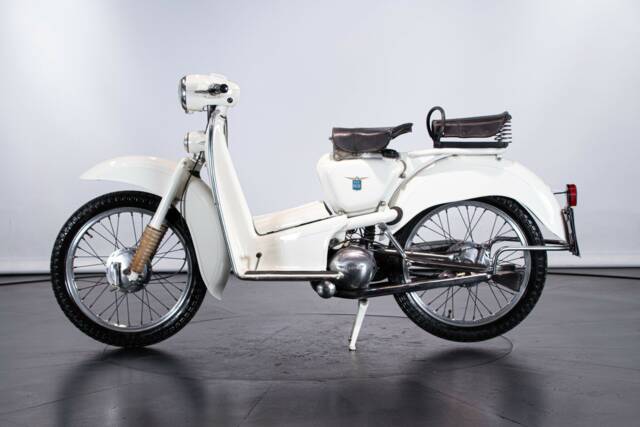
1956 | Aermacchi Zeffiro 125
Aermacchi - Harley Davidson ZEFFIRO 125 2T
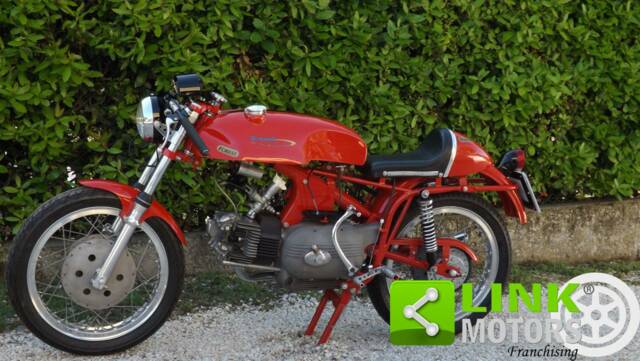
1960 | Aermacchi Ala d'Oro 250
AERMACCHI 250 N anno 1960 completamente restaurata
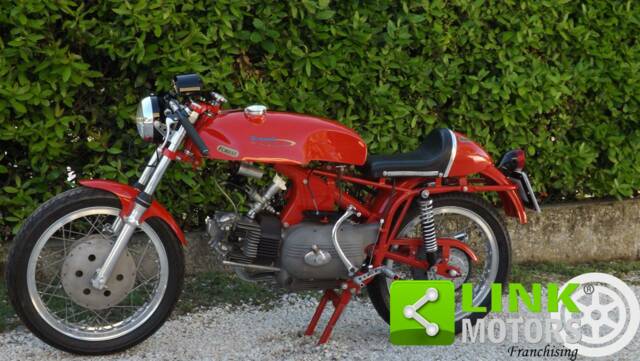
1960 | Aermacchi Ala d'Oro 250
AERMACCHI 250 N anno 1960 completamente restaurata
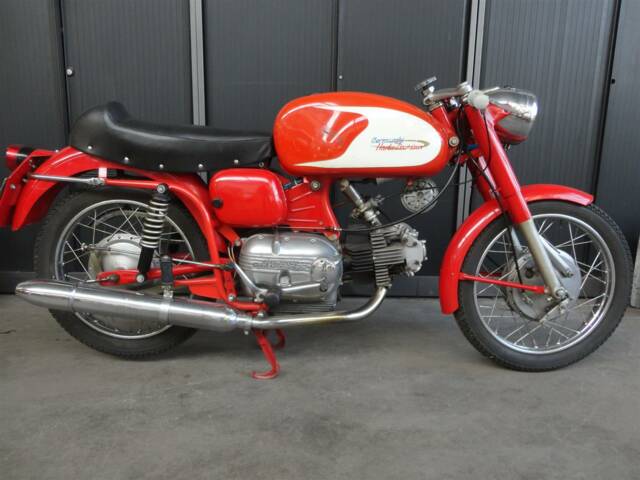
1964 | Aermacchi Ala Verde
Aermacchi Ala Verde

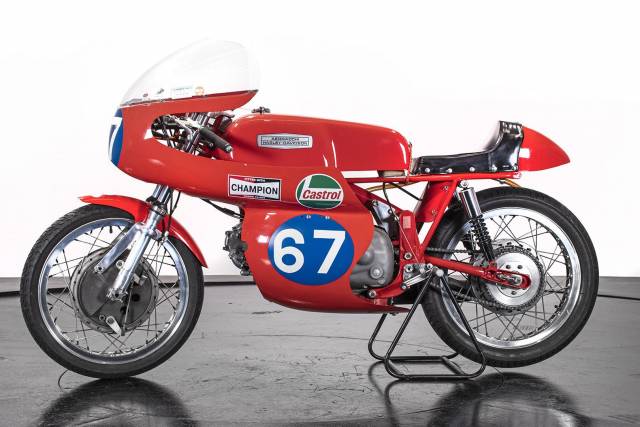
1969 | Aermacchi Ala d'Oro 350
7 of 30 !!! ORIGINAL ORO ASI !!
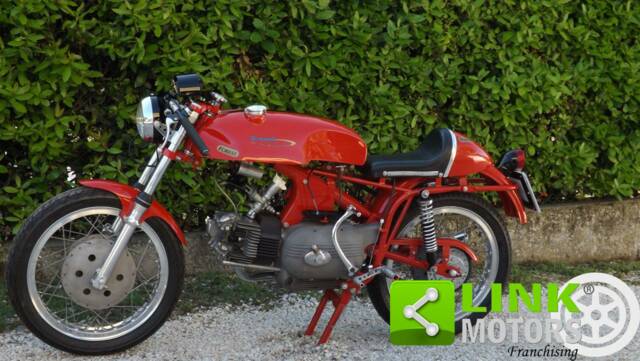
1960 | Aermacchi Chimera 250
AERMACCHI 250 N anno 1960 completamente restaurata
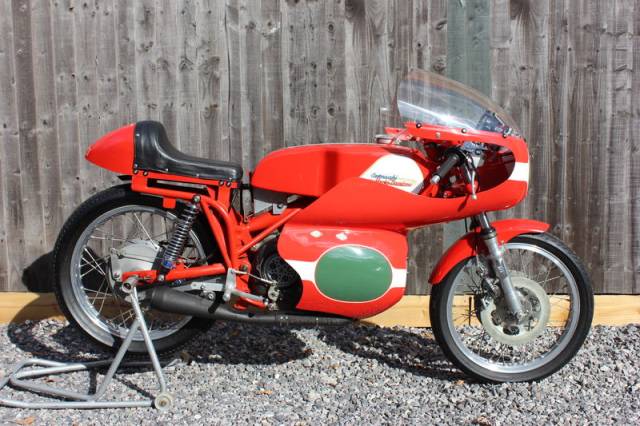
1963 | Aermacchi Ala d'Oro 250S
1963/1968 Aermacchi Race Bike 250cc

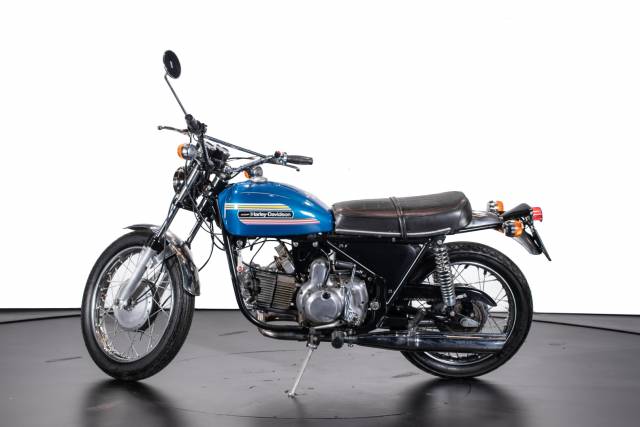
1976 | Aermacchi 350 SS
-
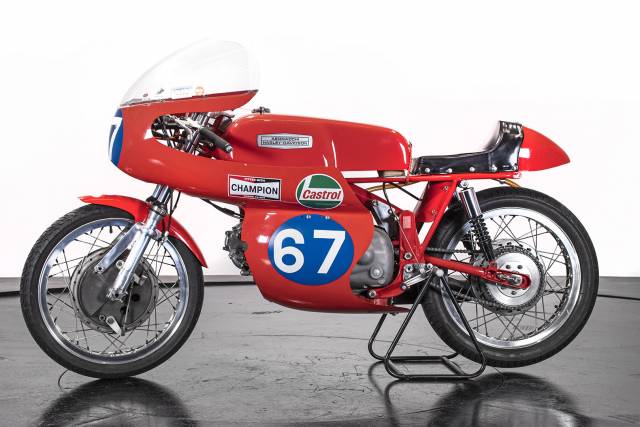
1969 | Aermacchi Ala d'Oro 350
-
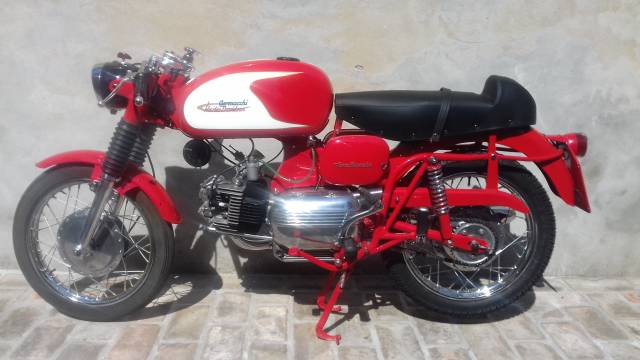
1963 | Aermacchi Ala Azzurra
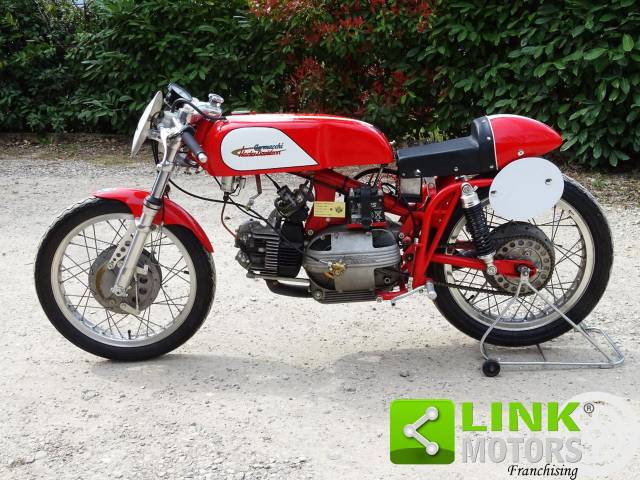
1962 | Aermacchi Ala Rossa 175
AERMACCHI ALA-ROSSA-175-ANNO-1962
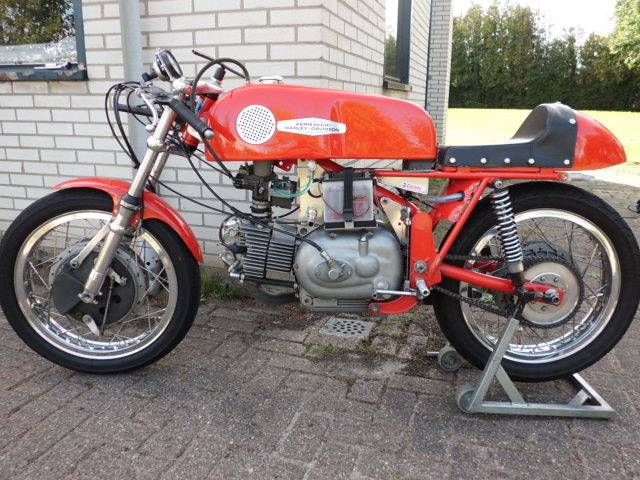
1966 | Aermacchi Ala d'Oro 350
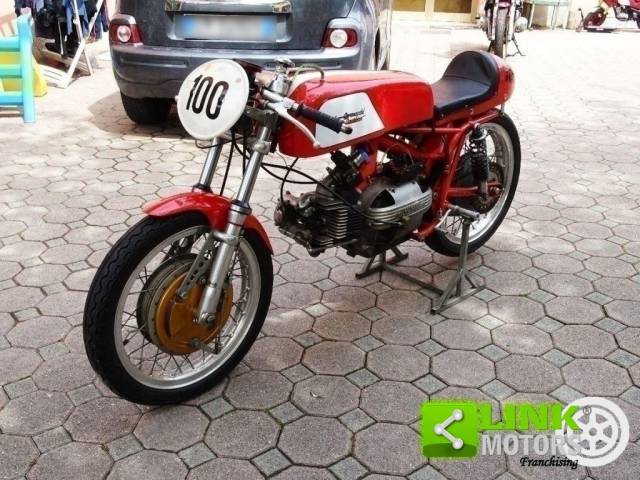
1965 | Aermacchi Ala Blu
AERMACCHI Aermacchi-Harley-Davidson-ANNO-1965-5-MARCE
History
The story of Aermacchi is one of the most fascinating transformations in industrial history, rooted in the high-stakes world of early 20th-century aviation. Founded in 1912 by Giulio Macchi in Milan as Aeronautica Macchi, the company’s name itself is a portmanteau of "Aer" (Air) and "Macchi" (the founder). For over three decades, the firm was a titan of Italian aerospace, designing and building aircraft for both civilian and military use. Their crowning achievement in this era was the MC72, a Schneider Trophy seaplane that set a world speed record of 709 km/h in 1934—a record for piston-powered seaplanes that remarkably stands to this day.
However, the end of World War II in 1945 brought the Italian aviation industry to a grinding halt. Under the terms of the peace treaty, aircraft production was severely restricted, and the market for military planes evaporated. Like many other Italian industrial giants—most notably Piaggio with the Vespa and Innocenti with the Lambretta—Aermacchi had to pivot to survive. The war-torn nation desperately needed cheap, reliable transportation to rebuild its economy.
Aermacchi’s first foray into the world of wheels was pragmatic: three-wheeled delivery vehicles powered by boxer engines, designed to navigate the narrow, rubble-strewn streets of post-war Italy. By 1951, the company fully committed to two wheels with the introduction of the 125cc two-stroke "Cigno" (Swan) and the "Monsone" (Monsoon). These early models were simple and functional, but they lacked the flair that would later define the brand.
The true turning point came in 1956 with the launch of the Chimera 175. Designed by the visionary Alfredo Bianchi, the Chimera was a radical departure from conventional motorcycle design. Its futuristic, fully enclosed bodywork reflected Aermacchi’s aeronautical heritage, but it was what lay beneath the sheet metal that mattered most: a horizontal 172cc OHV single-cylinder engine. This "lying" engine configuration would become the technical signature of Aermacchi for the next two decades, providing a low centre of gravity and excellent cooling.
In 1960, the brand’s trajectory changed forever when Harley-Davidson purchased a 50% stake in Aermacchi’s motorcycle division. The American giant was struggling to compete with the influx of lightweight, high-revving Japanese motorcycles from Honda and Yamaha. They needed a partner who could build small-displacement machines to fill the gap in their heavy-cruiser lineup. The partnership resulted in a unique hybrid: Italian engineering sold under the Harley-Davidson banner in the United States, while remaining Aermacchi in Europe.
The 1960s and early 70s were the golden years. Models like the Ala Verde 250 (Green Wing) and the Ala d'Oro (Gold Wing) racing version became icons of the 250cc and 350cc classes. The Ala Verde, in particular, was a commercial success, with over 20,000 units produced. These bikes were renowned for their handling and lightweight construction, often outperforming more powerful multi-cylinder machines on tight, technical circuits.
By 1974, Harley-Davidson took full control of the company, but the partnership eventually soured as the Japanese "Big Four" dominated the market with superior two-stroke technology and multi-cylinder four-strokes. In 1978, the Castiglioni brothers (Claudio and Gianfranco) purchased the Varese factory, using it as the foundation for Cagiva. While the Aermacchi name disappeared from new fuel tanks, its DNA lived on in the rise of Cagiva and the subsequent revival of Ducati and MV Agusta under the Castiglioni empire.
Highlights & Features
What sets an Aermacchi apart from its contemporaries is the unmistakable influence of aircraft engineering. Every component was designed with an eye toward weight reduction and structural integrity, resulting in motorcycles that felt significantly more "mechanical" and precise than the mass-produced Japanese bikes of the era.
The centrepiece of the Aermacchi legend is the horizontal single-cylinder four-stroke engine. While most manufacturers opted for vertical or slightly inclined cylinders, Aermacchi’s horizontal layout offered several distinct advantages:
- Low Centre of Gravity: By placing the heaviest part of the engine low in the frame, Aermacchi achieved exceptional stability and flickability.
- Superior Cooling: The cylinder head was positioned directly in the airstream, ensuring consistent operating temperatures even under racing conditions.
- Compactness: The layout allowed for a slim profile, reducing the frontal area and improving aerodynamics—a direct lesson from the wind tunnels of Varese.
The Ala Verde 250 (1959–1972) remains the quintessential collector’s Aermacchi. It was a "gentleman’s racer" for the road, offering between 17 and 25 horsepower in a package that weighed just 115 kg. Its agility made it a favourite on the winding mountain passes of Italy and the B-roads of the UK. For those seeking pure competition, the Ala d'Oro was the factory-built racer, capable of 165 km/h and featuring a close-ratio gearbox and high-compression internals.
The Chimera 175 (1956–1962) is a masterpiece of industrial design. Its enclosed bodywork was intended to protect the rider from oil and road grime, making it a sophisticated choice for the urban professional. However, the complexity of the bodywork made maintenance a nightmare, leading to low sales figures. Today, with only about 2,000 units ever built, the Chimera is one of the most sought-after prizes for serious Italian motorcycle collectors.
For the Australian and North American markets, the Sprint models (250 and 350cc) are the most common. These bikes were styled to mimic Harley-Davidson’s Sportster, featuring the famous "Peanut" fuel tank, low-slung handlebars, and plenty of chrome. Despite the American aesthetic, the heart remained pure Italian. The 350 SS (1968–1974) was the pinnacle of the street-legal singles, producing 30 hp and offering a top speed of 140 km/h—respectable performance that allowed it to hold its own against the British twins of the time.
Another highlight for enthusiasts is the **"Ashtray Head"**—a nickname given to the early cylinder heads with their wide, flat rocker covers. This design is a hallmark of the early, pure Aermacchi era before the Harley-Davidson influence began to standardise components.
Technical Data
Aermacchi’s technical specifications reflect a commitment to efficiency over brute force. Below is an overview of the key models that defined the brand:
Common Technical Characteristics:
- Engine: Air-cooled, horizontal single-cylinder four-stroke (OHV).
- Valvetrain: 2 valves per cylinder, pushrod-operated.
- Clutch: Multi-plate wet clutch (some racing models used dry clutches).
- Transmission: 4-speed (early) or 5-speed (post-mid-60s) manual.
- Braking: Drum brakes front and rear (disc brakes appeared only on late 70s transition models).
- Frame: Tubular steel cradle frame (Chimera used a central spine frame).
- Suspension: Telescopic front forks; rear swingarm with twin shock absorbers (Chimera featured a mono-shock).
The horizontal cylinder layout was a double-edged sword. While it provided excellent cooling and handling, the exposed oil sump was vulnerable to damage from high kerbs or road debris. Furthermore, the long pushrods required precise adjustment to maintain the engine’s high-revving characteristics.
Market Overview & Buying Tips
In the Australian market, Aermacchi motorcycles occupy a unique niche. While they are rarer than their Ducati or Moto Guzzi cousins, they have a dedicated following among enthusiasts who appreciate the Harley-Davidson connection and the brand’s giant-killing racing history.
Current Market Prices (2024–2025): Prices in Australia have seen a steady increase as collectors look beyond the usual suspects.
- Chimera 175: A$8,000 – A$18,000. These are exceptionally rare in Australia. Most are private imports from Italy. Prices depend heavily on the condition of the bodywork, which is difficult to repair or replace.
- Ala Verde 250: A$7,000 – A$14,000. A solid entry point for the serious collector. Australian examples are often well-maintained by long-term owners.
- Ala d'Oro 250: A$15,000 – A$30,000+. Genuine factory racers are "hen’s teeth" in the Southern Hemisphere. Be wary of "replicas" built from Ala Verde frames.
- Sprint 250/350 (Harley-Davidson): A$5,000 – A$12,000. These are the most common Aermacchis in Australia, often imported from the US in the 80s and 90s.
- 350 SS: A$8,000 – A$15,000. Highly desirable for H-D collectors who want a piece of the brand’s lightweight history.
Recent Auction & Sales Data:
- A fully restored 1963 Aermacchi H-D recently sold in Australia for A$15,100, highlighting the premium paid for turn-key examples.
- Project bikes (non-runners) typically start around A$3,500 – A$4,500, but restoration costs can quickly exceed the final market value.
What to Look for When Buying:
- Engine Health: The horizontal cylinder is prone to oil leaks at the base gasket and rocker covers. Check for "weeping" after a test ride. Listen for excessive top-end noise, which may indicate worn cam followers or pushrods.
- Gearbox & Clutch: The early 4-speed boxes are sturdy but can be "notchy." Ensure the bike doesn't jump out of gear under load. Clutch plates are a wear item; if the bike has been sitting for years, expect them to be stuck or slipping.
- Frame Integrity: Inspect the welds around the motor mounts and the swingarm pivot for cracks or rust. In Australia’s coastal regions, corrosion can be an issue if the bike wasn't stored in a dry garage.
- Electrics: Most Aermacchis used a 6-volt system, which is notoriously weak. Many owners in Australia have converted to 12-volt systems with electronic ignition. While this hurts "originality," it vastly improves reliability for modern road use.
- Parts Availability in Australia: This is the biggest concern for AU buyers. While Road & Race Motorcycle Engineering (Phil Hitchcock) is a legendary local resource, many specific parts must be sourced from Moro Motoricambi in Italy or specialists in the US.
- Shipping Context: Expect to pay A$100 – A$300 in shipping for medium-sized parts. Importing a complete engine or large body panels can cost upwards of A$1,000 in freight and customs duties.
- Authenticity: Because the Ala d'Oro is so valuable, many standard Sprints have been converted into racers. Check frame numbers (genuine racers usually start with "AERDAO") and look for the correct lightweight aluminium components.
Buyer Profiles:
- The Historian: Seeks a Chimera or an early Ala Verde to preserve a piece of Italian industrial art.
- The H-D Enthusiast: Wants a Sprint 350 to complete a collection of Milwaukee-branded machines.
- The Historic Racer: Looks for an Ala d'Oro or a well-built replica to compete in PCRA (Post Classic Racing Association) events at tracks like Eastern Creek or Phillip Island.
Performance
Riding an Aermacchi is a visceral, mechanical experience that demands your full attention. Unlike the smooth, sanitised feel of a modern bike, an Aermacchi communicates every explosion in the combustion chamber directly to the rider.
Starting the bike is the first ritual. Most models are kickstart only. You must find the compression stroke, ease it over the top, and then give a firm, committed swing. When the horizontal single fires, it settles into a rhythmic "thump-thump-thump" that is deeper and more resonant than a vertical single. As the revs rise, the sound transforms into a sharp, metallic bark—the signature of the OHV valvetrain.
On the road, the Ala Verde feels incredibly light. With a dry weight of just 115 kg, it tips into corners with almost no effort. The low centre of gravity means the bike feels planted and stable, even when pushed hard on uneven surfaces. The power delivery is linear; there is no sudden "hit" of power, just a steady surge that rewards smooth throttle inputs.
The Sprint 350 SS offers a more muscular experience. The extra displacement provides much-needed torque for overtaking and hill climbing. While it’s not a "fast" bike by modern standards, its ability to maintain 100–110 km/h on the highway makes it a viable choice for classic rallies and club runs. The drum brakes, however, require a "two-finger" approach and plenty of foresight. They are adequate for the bike’s weight but lack the initial bite and fade resistance of modern discs.
For the racer, the Ala d'Oro is a revelation. It is a bike stripped of all compromise. The riding position is aggressive—tucked in behind the small screen, chin on the tank. The feedback through the clip-on handlebars is telepathic. You feel every ripple in the tarmac. On a technical circuit, the Aermacchi’s ability to carry high corner speed allows it to harass much larger machines, proving that in the world of classic racing, balance often beats horsepower.
The gear change on many models is on the right-hand side (one up, three or four down), which can be a challenge for riders used to modern left-side shifts. It requires a mental recalibration, but once mastered, the mechanical "click" of a well-adjusted Aermacchi gearbox is immensely satisfying.
Design
Aermacchi’s design philosophy can be summarised as "Aeronautical Functionalism." Coming from a background where every gram of weight and every millimetre of drag mattered, the engineers in Varese approached motorcycle design with a unique perspective.
The Chimera remains the most daring example of this. Its bodywork wasn't just for show; it was an attempt to improve the aerodynamics of the motorcycle and protect the mechanical components from the elements. The sweeping lines and integrated headlight gave it a "Space Age" look that was years ahead of its time. While it failed commercially, it is now recognised as a landmark in industrial design, often compared to the work of Corradino D'Ascanio (Vespa).
With the Ala Verde, the design shifted toward a more traditional, "naked" look, but the elegance remained. The fuel tank’s teardrop shape, the slim seat, and the way the horizontal cylinder juts forward create a sense of motion even when the bike is stationary. The use of high-quality castings and polished aluminium side covers gave the bikes a premium feel that justified their higher price tag compared to mass-market alternatives.
The Harley-Davidson era introduced a fascinating clash of cultures. The American designers wanted the bikes to look like "Little Harleys," leading to the adoption of the Peanut tank, chrome fenders, and high-rise handlebars on some models. This "Americanisation" was a hit in the US but was often viewed with skepticism by European purists. In Australia, both styles can be found, reflecting the diverse import history of the country.
Key design details to appreciate:
- The Logo: The stylized eagle or wing, a nod to the company’s flying roots.
- The Cooling Fins: Deep, sharp fins on the cylinder and head, designed for maximum heat dissipation.
- The "Ashtray" Rocker Cover: A beautifully simple piece of casting that has become a symbol of the brand’s early independence.
Aermacchi didn't follow trends; they set them through engineering excellence. Their bikes were built for people who understood mechanics—riders who appreciated a well-cast engine case as much as a beautiful paint job.
Racing
Aermacchi’s reputation was built on the podiums of Europe. Throughout the 1960s, the brand was a constant threat in the 250cc and 350cc World Championships.
The legendary Renzo Pasolini is the name most closely associated with the brand. "Paso" was a hero to the Italian public, known for his fearless riding style and his loyalty to Aermacchi. Between 1965 and 1971, he took the fight to the dominant Japanese factory teams, often finishing on the podium against bikes with twice the cylinders and significantly more funding. His battles with Mike Hailwood and Giacomo Agostini are the stuff of legend.
In the UK, Aermacchi became the weapon of choice for the "Privateer." Because the bikes were relatively simple to maintain and incredibly reliable, they were perfect for the club racer. Riders like Chris Conn and Alan Barnett used Aermacchis to dominate national championships, proving that a well-tuned Italian single could beat the best that the British industry had to offer.
In the United States, the Aermacchi-built Harleys were successful in Flat Track racing. The lightweight frames and torquey engines were ideal for the dirt ovals. The Baja 100 off-road racer also used Aermacchi engines, further cementing the brand’s reputation for toughness.
The Australian Connection: In Australia, Aermacchi has a long history in Historic Racing. The bikes are a common sight at events like the Island Classic at Phillip Island or the Barry Sheene Festival of Speed. Because of their reliability and the availability of performance parts from overseas, they remain competitive in the "Period 3" and "Period 4" racing classes. Local tuners have mastered the art of extracting over 35 hp from the 350cc singles, making them formidable opponents for the Honda CB350s and Yamaha two-strokes.
The transition to two-stroke twins in the early 70s (the RR 250 and RR 350) saw Aermacchi briefly reach the top of the mountain. Walter Villa won the 250cc World Championship in 1974, 1975, and 1976 on these machines, though by then they were branded as Harley-Davidsons. It was a bittersweet victory, marking the end of the four-stroke era that had defined the brand for so long.
Summary
Aermacchi motorcycles are more than just vintage machines; they are a bridge between the worlds of aviation and motorsport. They represent a time when engineering ingenuity could still triumph over corporate might. Whether you are drawn to the futuristic lines of the Chimera, the classic elegance of the Ala Verde, or the rugged charm of the Harley-Davidson Sprint, owning an Aermacchi is an entry into an exclusive club of enthusiasts.
Key Takeaways for the Australian Buyer:
- Character Over Convenience: An Aermacchi requires more maintenance and mechanical sympathy than a modern bike, but it rewards the rider with an incomparable sense of connection.
- Investment Potential: While they haven't reached the astronomical prices of some other Italian brands, well-documented and original Aermacchis are seeing steady appreciation in Australia.
- The Community is Key: Joining local classic motorcycle clubs and connecting with experts like Phil Hitchcock is essential for navigating the challenges of parts sourcing and maintenance.
- A Piece of History: Every time you start an Aermacchi, you are echoing the legacy of Giulio Macchi’s aircraft and Renzo Pasolini’s racing spirit.
In a world of increasingly digital and disconnected motorcycles, the Aermacchi stands as a testament to the power of the mechanical single. It is a bike for the rider who wants to feel the road, hear the engine, and be part of a story that spans over a century of Italian excellence. Find your Aermacchi today and discover why the "Green Wing" still flies high in the hearts of collectors worldwide.