- Car
- ZENOS (0 offers)
Buy Zenos Classic Cars
Zenos built one of Britain’s sharpest lightweight sports cars, and the tiny E10 range still stands out for its low mass, race-bred chassis and rare-breed appeal. In Australia, it is the sort of specialist import that turns heads at track days and in enthusiast circles alike.
Search results
Currently, there are no matching listings for your search.
Create search alert
Let yourself be notified as soon as a listing is published that matches your search filters.
ZENOS listing references from Classic Trader
Below you will find listings related to your search that are no longer available on Classic Trader. Use this information to gain insight into availability, value trends, and current pricing for a "ZENOS" to make a more informed purchasing decision.
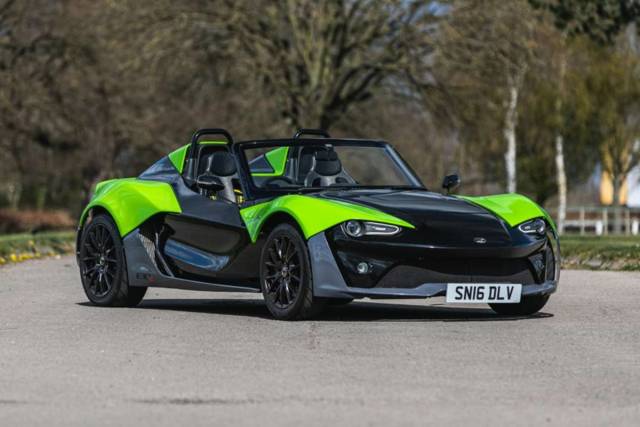
2016 | ZENOS E10 S
2016 Zenos E10S

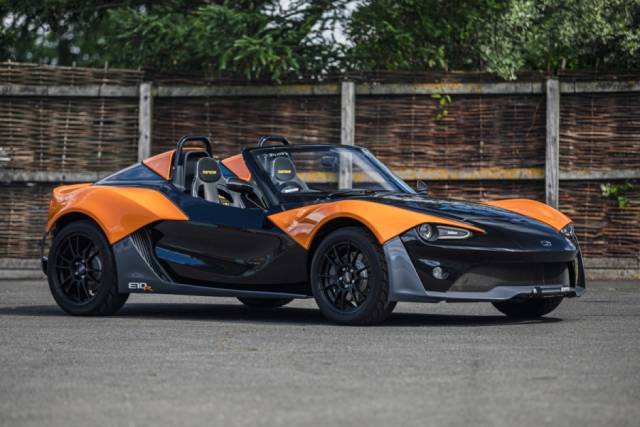
2016 | ZENOS E10 R
Silverstone Classic Live Online Auction 2020; 31st July-1st August
Create search alert
Let yourself be notified as soon as a listing is published that matches your search filters.
History
Zenos is a short-lived British marque, but it arrived with real pedigree. The brand was founded in 2012 in Wymondham, Norfolk by Ansar Ali and Mark Edwards, two engineers who had already spent time at Lotus and Caterham. That background matters, because Zenos did not set out to build another soft-edged weekend sports car. It aimed straight at the market for minimalist driver’s cars: light, responsive, mechanically honest, and quick enough to embarrass much more expensive machinery.
The first and only production model family was the E10, a compact mid-engined roadster with open-air track-day intent. The E10 reached production in January 2015, and the line-up quickly expanded from the entry car to the faster E10 S and then the more extreme E10 R. Zenos had a simple formula: keep weight low, use proven Ford hardware, make the body easy to repair, and give the driver a proper analogue experience rather than hiding everything behind electronics.
That approach earned the E10 immediate attention from buyers who liked the idea of a Caterham or Ariel Atom, but wanted something a little more modern in structure and a little less awkward to live with. Zenos kept the package compact, RHD from the outset, and unusually practical for this sort of machine. The company’s thinking was clear: the car had to work as a road car, but it also had to thrive on track.
Production was always going to be tiny. By the end of 2016, only around 100 cars had been built in total. That scarcity is a big part of the appeal today. In a world full of “limited” specials that are not very limited at all, the Zenos really is rare.
The story took a sharp turn in January 2017, when Zenos Cars entered administration after export orders were cancelled. In March 2017, the assets were acquired by an AC Cars consortium, linking the brand’s brief life to one of Britain’s oldest sports-car names. Then, in September 2025, AC Cars announced a new E10 Rz: a modern continuation with a Volvo-based 2.0-litre turbo engine, 380 bhp, a quoted price of £140,000, and first deliveries planned from Q2 2026. That rebirth only underlines how original the first-generation cars were. The 2015–2016 E10 remains the raw, affordable, and authentic Zenos.
For Australian buyers, the backstory matters for another reason too: the E10 has exactly the sort of specification that suits local enthusiast use. It is rare, right-hand drive, compact, and built around the kind of driving culture that values track days as much as coffee runs.
That appeal is strongest because Zenos occupied a very specific niche. It was never trying to be a grand tourer, a luxury badge play, or a mass-market sports car. It was a driver’s tool with enough road sense to be usable. In collector terms, that often ages well. The cars that are honest about their purpose tend to survive the passage of time better than cars that chase every trend at once.
The short production run also gives the E10 a neat place in British specialist-car history. It sits in the same broad conversation as other lightweight names, but it is distinct enough to stand on its own. That matters for buyers who want something uncommon without buying into a one-model imitation of a better-known formula.
Highlights
The Zenos E10 is all about the sum of its parts. No single feature explains the car. It is the way the chassis, body, mass, and powertrain all work together that makes it interesting.
The core is an extruded aluminium backbone chassis paired with a recycled carbon fibre tub. That is not just marketing fluff. It gives the E10 the structural seriousness you want in a performance car, while keeping weight astonishingly low. The panels are easy to replace, too: Zenos used 18 separate body panels, which is a very sensible solution for track-day ownership. Graze a corner, damage a section, and you are not necessarily facing a complete body rebuild.
The suspension is equally purposeful. The E10 uses double wishbones all round, with inboard pushrod Bilstein dampers at the front. That layout keeps the masses tidy, improves control over rough surfaces, and helps the car feel much more expensive than it was. On the road, it gives the Zenos a beautifully tied-down stance; on a circuit, it keeps the chassis calm when you start leaning on it hard.
The powertrain choices also make sense. Zenos used Ford-based engines, which is good news for maintenance and parts access. The entry E10 used a 2.0-litre Ford Duratec naturally aspirated four-cylinder with 200 bhp. The E10 S stepped up to a 2.0-litre Ford EcoBoost turbo with 250 bhp. The E10 R added a 2.3-litre Ford EcoBoost turbo and 350 bhp. In a car weighing little more than a motorcycle with bodywork, those numbers are serious.
For Australians, there is immediate charm in the fact that the Zenos is already right-hand drive. No steering conversion headache. No awkward compliance workaround on that front. That is a major advantage over many imported performance cars from Europe or North America.
The E10 also has the kind of honest visual language that enthusiasts appreciate. It looks like what it is: a compact, lightweight, mid-engined weapon with little excess and no fake heritage styling. The design is functional, but not bland. The exposed structure, clean surfaces, and compact proportions give it a purposeful, almost engineering-model look.
There is also a clever economy to the way Zenos packaged the car. The panels are not there to impress with visual complexity; they are there to protect, separate, and simplify. That makes the car feel very modern in one sense and very old-school in another. It has the stripped-back clarity of a race car, but without pretending to be a replica of one.
Technical Data
Chassis: extruded aluminium backbone with recycled carbon fibre tub
Layout: mid-engined, rear-wheel drive
Suspension: double wishbone all round, front pushrod Bilstein dampers
Body: 18 replaceable panels
Wheelbase: 2,300 mm
Weight range: 650–725 kg for original cars
Tyres: Avon ZZR, track-biased fitment
For reference in Australia, the original E10 range tends to translate to roughly A$28,000–A$46,000 at the old UK auction levels quoted before shipping, duty, GST and compliance. The newer E10 Rz is far above that, so the original cars remain the realistic buy for most collectors.
If you are trying to budget properly, it helps to split the process into parts. A buyer might win an E10 in the UK at a fair price, then spend materially more getting it to Australia, through customs, and into road-compliant form. On a low-volume car, the compliance number can matter as much as the hammer price. That is especially true if the car needs seatbelt, lighting, child restraint, tyre, or emissions-related work as part of the approval path.
That said, the Zenos has one major advantage over many imported specials: it is already a relatively simple mechanical package. Less complexity means less to inspect, less to fail, and usually less to become impossible later.
Market Overview
Zenos is a rare market in every sense. There are not many cars, the buyer pool is small, and the cars that do come up tend to attract people who already know what they want. That makes the category interesting for Classic Trader because the listings are not just transport; they are opportunities to buy a very specific kind of driver’s machine.
Recent auction results from 2021 to 2024 give a useful price picture. The E10 has sold around £14,600–18,500, the E10 S around £15,300–21,700, and the E10 R around £21,100–24,200. A near-new E10 R with very low mileage achieved £24,188 in late 2024, while US sales in 2024 reached about US$33,850–34,000 for imported cars. In other words, the market has been firm, but not irrational.
In Australia, pricing has to be read through the lens of import reality. A specialist UK sports car will not land at auction price alone. Buyers need to think in layers: purchase price, shipping, marine insurance, customs duty if applicable, GST at 10%, compliance, registration, and whatever work is needed to make the car road-ready under local rules. Even on a relatively efficient import, the landed number can move quickly.
The good news is that the Zenos is a strong fit for Australia’s SEVS / Specialist and Enthusiast Vehicle Scheme mindset. It is a niche performance car, rare enough to be interesting, and already built in RHD, which removes one of the most annoying conversion costs. Buyers still need to verify the exact pathway, but the car has the basic character that Australian import enthusiasts look for.
For a UK-sourced E10 bought in the low- to mid-£20,000s, a sensible rough planning figure is often around A$55,000–A$75,000 landed and complied, depending on exchange rate, shipping route, condition, and the level of compliance work required. That is not cheap, but it still positions the Zenos against much heavier, more complex sports cars.
The target audience in Australia is fairly obvious: track-day drivers, club racers, collectors of British specials, and buyers who already know the difference between headline power and usable chassis feel. This is the sort of car that suits Phillip Island, Bathurst, Winton, and the revived Wakefield Park style of weekend culture. It also fits neatly into the club environment that thrives across the country, where lightweight machinery and driver skill matter more than badge size.
When looking at individual listings, pay close attention to these points:
- History and documentation: verify chassis number, service invoices, and whether the car has been tracked heavily.
- Condition of panels: the 18-piece body is repair-friendly, but badly repaired panels or mismatched colours can hide circuit damage.
- Water exposure: the electrical equipment is known to be vulnerable to moisture.
- Brake specification: original brakes can feel soft for heavy track use.
- Tyres: Avon ZZR tyres are strong in the dry, but not ideal in the wet.
The market is small enough that a good car is worth waiting for. If a Zenos appears with honest history, sensible modifications, and the right specification, it is the kind of listing that buyers remember.
Because the production run was so short, colour and specification can also have an outsized effect on desirability. A car with a strong factory presentation, original panels, and complete paperwork will usually stand out more than one that has been heavily altered. That is not to say tasteful upgrades are bad; rather, the best Zenos cars tend to be the ones that still read as Zenos cars at a glance.
For buyers in Australia, that can be especially important if the car is intended for mixed use rather than full-time track duty. A well-kept example with sensible road manners and clean compliance paperwork will often be the easiest car to own, insure, and enjoy.
There is a subtle buying hierarchy here. For road use and occasional track days, a clean E10 can be the smartest buy because it is lighter, simpler, and easier to live with. For buyers who want the biggest grin factor, the E10 S often looks like the best middle ground. For collectors who want the sharpest and most desirable original variant, the E10 R is usually the halo car. The right choice depends less on badge hierarchy than on how you plan to use the car.
Australian buyers should also think about club eligibility, event rules, and insurance requirements. Some track-day organisers and clubs are more forgiving of modified lightweight specials than others, but all of them will care about roadworthiness, tyre condition, noise, and the general state of preparation. The Zenos’s low mass can be an advantage in this world, because it reduces wear and makes consumables last better than they do on heavier machinery.
Driving Feel
The Zenos E10 is a car that reminds you very quickly what modern performance cars often filter out. It feels immediate, physical, and lightly dramatic even at normal road speeds. Because the car is so light, everything happens with less delay: steering response, pitch, brake feel, throttle pick-up, and the way the chassis settles over a crest or kerb.
The 200 bhp E10 is the sweetest surprise in the range. On paper it looks modest next to the turbo cars, but in such a featherweight chassis it still feels keen and alive. It is the sort of car that rewards momentum rather than brute force. For road use and mixed club events, that can make it the most satisfying version.
The E10 S brings the extra shove many buyers expect from a modern performance car. The turbocharged Ford EcoBoost engine gives the car stronger mid-range punch, which makes it easier to drive fast on road or circuit. It feels like the grown-up choice, especially if you want the torque to exit corners hard without needing to work the gearbox constantly.
The E10 R is the full-fat answer. It turns the Zenos into a seriously fast piece of kit, with acceleration that gets silly very quickly because there is so little mass to move. It is not a car that overwhelms with size or sound. Instead, it attacks with urgency. The steering, the engine, and the chassis all speak in the same language: go lighter, go sooner, trust the grip.
This is also where Australian buyers tend to connect with the car. On a proper track day, a Zenos would be right at home among club sportscars, Radicals, Lotuses, and other lightweight specials. At places like Phillip Island, where speed and flow matter, it should feel superb. At Winton or Wakefield Park, the compact footprint and agile chassis would make it feel eager and accessible. Even at Bathurst, the car’s combination of straight-line punch and low mass would make the Mountain feel more alive than many heavier exotics.
The lack of excess is part of the joy. There is no unnecessary insulation here. You feel the road, the weather, and the mechanical load. That makes the Zenos tiring in the wrong mood, but addictive in the right one. It is a car for drivers who like to be involved.
On a good road, that involvement becomes the entire point. A Zenos does not ask to be admired from a distance; it asks to be driven with commitment. The steering load, the front-end bite, the way the rear rotates under throttle, and the low-slung driving position all create a sense of intimacy that many modern sports cars have lost. For buyers moving from heavier turbo coupes or electronically assisted supercars, the Zenos can feel almost shocking in how direct it is.
That is why the car works so well in the Australian context. Our roads vary from smooth to ugly, our distances are big, and our track culture values a car that can be trailered, used hard, and then tucked away. The Zenos fits that rhythm neatly.
Design
Zenos design is a case study in function-led sports car thinking. The E10 does not pretend to be a classic in the retro sense. It does not borrow a heroic shape from the past. Instead, it wears its engineering on the outside and lets the structure do the talking.
The exposed backbone, compact cabin, and rearward massing give the car a very clean silhouette. It looks technical because it is technical. Even the fact that the body panels are split into obvious sections is part of the visual identity. Those seams are not hidden. They tell you the car is built to be serviced, repaired, and used hard.
That approach is especially appealing to buyers who value honesty over theatrical styling. There is a strong Lotus-like logic to the Zenos, but it never feels like a copy. It is more like a fresh reading of the lightweight British sports-car formula for the 2010s.
Inside, the car is similarly focused. Everything is geared around the driving position, the controls, and the experience of being low in the chassis. The cabin is not luxurious. It is intentional. That is exactly why it appeals to a certain type of Australian enthusiast: the sort who would rather spend on track time, tyres, and mechanical setup than on stitched leather and ambient lighting.
The right-hand-drive layout also suits the Australian market beautifully. Imported UK sports cars can often feel compromised once they are converted or adapted. The Zenos does not carry that problem. It arrives in the correct format already, which preserves both value and integrity.
Visually, the Zenos also avoids one of the common traps of boutique sports cars: trying too hard. It is not overstyled. It is not overbadged. It has a kind of industrial beauty that comes from choosing function first and letting proportion do the work. That can age very well in the collector market, because the car still looks contemporary without needing nostalgia to justify it.
Other
There are a few practical points that matter a lot more on a Zenos than they would on a normal road car.
One more point on SEVS and Australian import planning: buyers should verify eligibility and compliance requirements before money changes hands. The scheme can make specialist imports possible, but it is not a magic wand. Paperwork, approvals, and final compliance still matter, and the car still needs to be presented properly. Because the Zenos is so low-volume and so niche, it is worth using a specialist importer or compliance workshop that has handled enthusiast vehicles before.
On the cost side, it is wise to assume the numbers will move. Shipping rates change, exchange rates move, and compliance bills can grow if a car needs unexpected work. The E10’s simplicity helps, but a serious buyer should still leave margin in the budget. That is how you avoid turning a dream purchase into a stressful one.
Mechanically, the Ford-sourced running gear is a major plus because it keeps ownership from becoming exotic in the wrong way. The engine family, gearbox hardware, and service parts are generally better understood than the car itself. In practice, that means the car can be maintained by competent specialists without needing a one-off parts miracle every time something wears out.
First, the electronics. The car has a known reputation for switches and starter-button arrangements that are not especially happy about water ingress. That does not make the Zenos fragile in a broad sense, but it does mean you should treat wet-weather exposure carefully and inspect all electrical functions before buying. If a car has spent its life on track and in trailers, that risk may be lower; if it has lived outdoors, be stricter.
Second, the brakes. Original cars can feel underdone if the owner has been using the car hard on circuit. There is a well-known upgrade path from specialists such as 24-7 Motorsport in Norfolk, and that is worth considering if track days are part of the plan. Brake condition, pad choice, and fluid history are all important.
Third, the tyres. The Avon ZZR is very much a dry-biased performance tyre. In warm, dry conditions, that is fine. In the wet, it can be another story. Australian buyers should think carefully about how and where the car will be used, because a track-focused tyre on a light, short-wheelbase car needs respect when the road turns damp.
Fourth, parts support. Zenos as a brand may be effectively dormant in its original form, but many mechanical components are Ford-derived, which helps. Body panels, carbon elements, and Zenos-specific trim are the harder items. That means the best buy is one with a strong history file and no major crash repairs.
Finally, the community. For rare cars like this, owner knowledge matters. British track-day and specialist-car communities are a good source of practical advice, and Australian sports-car clubs often welcome unusual machinery with real driver focus. If you are buying one here, you are not just buying a car; you are joining a very small circle of people who understand it.
For many buyers, that community is part of the fun. Small-production cars tend to attract owners who document every change, share what works, and know where the weak points are. That kind of knowledge can be more valuable than a generic workshop handbook, especially when a car is this uncommon.
It also means that good cars tend to stay known. A Zenos with a strong history, sensible upgrades, and a tidy presentation is the type of car that becomes easier to sell later. In a thin market, reputation matters.
Summary
The Zenos E10 is one of the most interesting lightweight British sports cars of the last decade: rare, honest, fast, and built with a clear purpose. With only around 100 originals produced, it already has the scarcity that collector buyers like, but it also has something more useful than rarity alone: genuine driving talent.
For Australian buyers, the case is even stronger. It is right-hand drive, it fits SEVS-style import thinking, and it suits the local obsession with track days, club events, and cars that reward skill over size. A good Zenos will not be the cheapest way into a specialist sports car, but it may be one of the most rewarding.
If you are looking for a car that feels light, focused, and genuinely special, the Zenos deserves a place near the top of the shortlist. Find current Zenos offers on Classic Trader and buy the one that matches your road and track ambitions.