Willys 77 classic cars for sale
The Willys 77, produced from 1933 to 1942, established a reputation in pre-war America as a robust and affordable vehicle from Willys-Overland. Today, its mechanical straightforwardness and solid engineering make it a noteworthy model for classic enthusiasts seeking reliable American automotive history.
Search results
Currently, there are no matching listings for your search.
Create search alert
Let yourself be notified as soon as a listing is published that matches your search filters.
Create listing
Do you have a Willys 77 that you want to sell? Then create a listing now.
Create listingWillys 77 listing references from Classic Trader
Below you will find listings related to your search that are no longer available on Classic Trader. Use this information to gain insight into availability, value trends, and current pricing for a "Willys 77" to make a more informed purchasing decision.
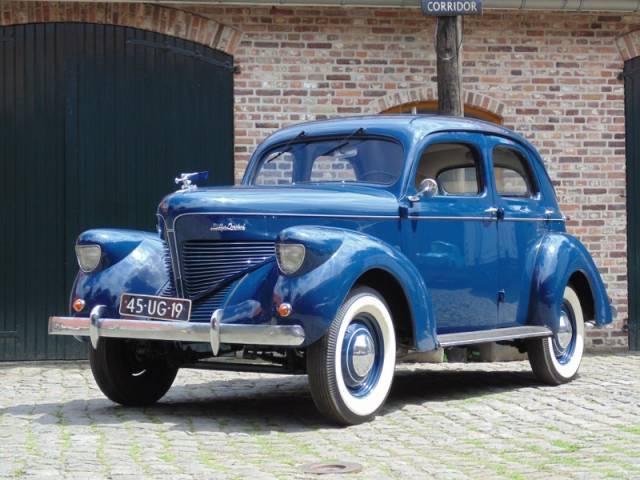
1939 | Willys 48
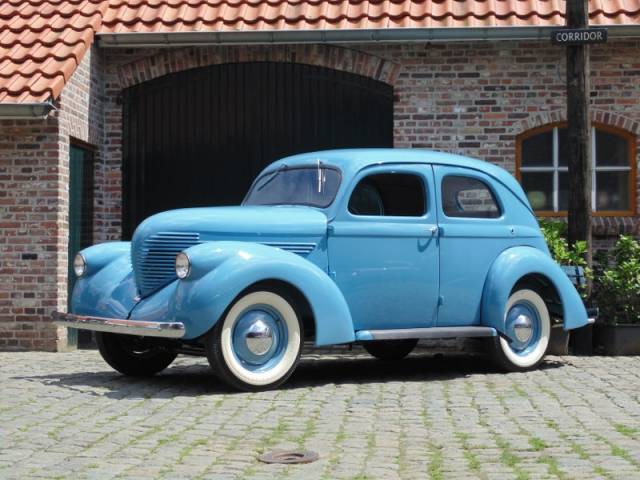
1938 | Willys 38
Create search alert
Let yourself be notified as soon as a listing is published that matches your search filters.
Create listing
Do you have a Willys 77 that you want to sell? Then create a listing now.
Create listingWillys 77 Classic Cars: Prices & Market Values
History of the Willys 77
The Willys 77 emerged onto the American market in 1933, as Willys-Overland's answer to increasingly demanding times. It succeeded the Willys Whippet and served as the cornerstone of Willys' efforts to recover from the Great Depression. Manufactured in Toledo, Ohio, the Willys 77 distinguished itself by focusing on simplicity, affordability, and mechanical durability—features which resonated with American drivers throughout the pre-war years. The car remained in production until 1942, just before Willys pivoted its efforts toward military vehicles during World War II.
Model Series History
The Willys 77 represents a pivotal model for Willys-Overland. As the direct successor to the Whippet, it modernised Willys’ product line and positioned the brand as a survivor through the economic turmoil of the 1930s. The 77 was produced across nearly a decade with gradual evolutions rather than drastic redesigns, reflecting the conservative but reliable approach of the period.
Highlights of the Willys 77
Key traits of the Willys 77 include its straightforward mechanics, making it comparatively accessible for repairs and maintenance even today. Its compact dimensions and lightweight construction contributed to its popularity among budget-conscious drivers in its era. The limited production numbers today further enhance its status among classic car circles—cars from this model series don't frequently appear on the market, making each find significant for collectors.
Technical data
Special Editions and Collectible Models
Information on special editions of the Willys 77 is limited. Due to its production span through the 1930s and early 1940s, much of the model's appeal lies in its historical context, affordability, and the occasionally encountered variants that were used as platforms for postwar hot rod and drag build-ups.
Weak Spots and Common Issues
No specific weak spots are recorded for the Willys 77 from the available data. However, as with all vehicles from this production period, potential buyers should be particularly attentive to corrosion in the chassis and bodywork and check the integrity of mechanical components subject to age-related wear.
Engine and Performance, Transmission and Handling
The Willys 77 was recognised for its simplicity. Its compact engine and straightforward transmission provided reliable, if modest, driving performance by 1930s standards. Handling reflected its budget-oriented engineering, focusing on stability and ease of maintenance rather than high-speed capability. Within the Willys model lineup, the 77 stands out due to its significance as a pre-war model and its connection to Willys' survival during challenging economic times.
Interior, Comfort, Exterior and Design
The Willys 77's exterior showed the transition from late 1920s to 1930s American automotive design, with simple lines and minimal ornamentation. The interiors were practical, with utilitarian materials and layouts prioritising cost savings. Options were limited, keeping with the vehicle's economical positioning. Period-correct examples occasionally feature aftermarket or period accessories added either at the factory or later by owners, from extra trim to upgraded bench seats.
Other Features
While best known as a civilian car, in later years several Willys 77 chassis found new life as cost-effective platforms for custom builds, especially after World War II.
Summary
The Willys 77 represents a unique piece of pre-war American motoring—a survivor of the Depression era, appreciated today for its simplicity and period engineering. Its rarity and historical value stand out especially for collectors focused on affordable and robust classic American cars.