Williams FW06 classic car for sale
The Williams FW06 represents the very start of Williams Grand Prix Engineering’s legacy, combining the talents of Frank Williams and Patrick Head into a lean, effective Formula One machine powered by the Cosworth DFV V8. Explore the FW06 – a pure racing chassis that set the direction for the Williams team for decades.
Search results
Currently, there are no matching listings for your search.
Create search alert
Let yourself be notified as soon as a listing is published that matches your search filters.
Create listing
Do you have a Williams FW06 that you want to sell? Then create a listing now.
Create listingWilliams FW06 listing references from Classic Trader
Below you will find listings related to your search that are no longer available on Classic Trader. Use this information to gain insight into availability, value trends, and current pricing for a "Williams FW06" to make a more informed purchasing decision.
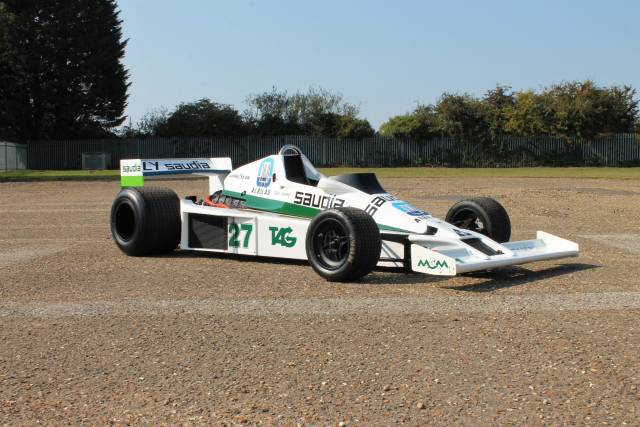
1978 | Williams FW06
Built for and raced by 1980 F1 world champion Alan Jones.

Create search alert
Let yourself be notified as soon as a listing is published that matches your search filters.
Create listing
Do you have a Williams FW06 that you want to sell? Then create a listing now.
Create listingWilliams FW06 Classic Cars: Prices & Market Values
History of the Williams FW06
The Williams FW06 made its debut in 1978 as the result of a new partnership between team founder Frank Williams and up-and-coming engineer Patrick Head. This was the very first Formula One car produced under the newly-formed Williams Grand Prix Engineering name, marking a rebirth for the Williams team. Built for independent British racing operations known as garagistes, the FW06 took full advantage of the proven Cosworth DFV 3.0-litre V8, which powered the majority of the field at the time. The FW06 competed in the 1978 and early 1979 Formula One seasons, impressing the paddock with its simple, lightweight and tidy design, which focused on reliability and handling over headline-grabbing innovations.
Model History of the FW06
The FW06 emerged as the direct successor to the problematic Williams FW05, marking a dramatic improvement in both design philosophy and racing results. Designed from scratch by Patrick Head, the FW06 adopted a compact and clean architecture, forgoing the experimental approaches seen on rivals. This model preceded the highly successful FW07, which would bring Williams its maiden Grand Prix win and lay the groundwork for future championships. While the FW06 scored modest points, it established the team's reputation for no-nonsense engineering and competitive spirit.
Special Features and Statistics
The FW06 was notable for its efficient packaging and dedication to mechanical simplicity, with a focus on weight distribution and suspension geometry. It rejected ground effect experimentation in favour of proven engineering, providing consistent feedback to the drivers. The car’s reliability and approachable set-up contributed to points finishes against far better funded teams. The FW06 also marks the starting point for Williams as a constructor, representing a major shift from purchasing chassis to in-house development.
Technical Data
Special Editions
There are no known factory special editions of the Williams FW06, as each example was crafted specifically for Grand Prix racing and tailored to driver or sponsor requirements.
Weak Spots and Common Issues
Information on typical weak spots for the FW06 is scarce due to its rarity and specialised use case. Like all period F1 machinery, buyers should expect that sourcing original mechanical components, especially the Cosworth DFV engine and bespoke chassis parts, can require significant specialist knowledge and contacts in historic motorsport circles.
Engine, Transmission and Handling
Powered by the legendary Cosworth DFV V8 – a mainstay in Formula One during the 1970s – the FW06 delivers a raw, direct mechanical connection. The V8, paired with a Hewland 5-speed gearbox, enables the car to exploit the lightweight chassis and well-balanced suspension. It is renowned for neutral handling and precise steering that rewarded driver input rather than relying on aerodynamics. The car’s straightforward set-up made it more predictable than many contemporary rivals, resulting in occasional points finishes. The FW06 is the only Williams model from this era on offer; its specification stands apart for its simplicity and focus on race-bred dynamics.
Interior, Comfort, Exterior and Design
Designed by Patrick Head, the FW06’s minimal cockpit is strictly functional, prioritising driver sightlines, quick access to controls and weight saving above all else. Aluminium bodywork, crisp cowlings and a low, purposeful stance define its appearance. There are no luxury features; all design elements are dictated by racing necessity – every gram saved and millimetre optimised for track effectiveness. The plain liveries of early cars contrast with later sponsor-driven schemes, and most remaining chassis retain period-correct instrument layouts and controls.
Other Features
The FW06 marks a turning point in Formula One history as the foundation upon which Williams built its subsequent success. Its straightforward approach made it accessible to private drivers in period historic racing, and original parts traceability now commands a premium among collectors.
Summary
The Williams FW06 is a historically significant Formula One car, both as the technical bedrock for the Williams team and as a standout example of late-1970s British engineering in Grand Prix racing. With all examples focused on purity, simplicity and performance derived from the iconic Cosworth DFV, the FW06 appeals to those seeking an unfiltered racing experience and a genuine piece of motorsport history.