Westfield Eagle classic cars for sale
The Westfield Eagle stands out as a purist driving machine, famed for its lightweight design and focus on pure roadster pleasure. Rooted in British kit car culture, the Eagle delivers unfiltered feedback and an experience rarely matched in the world of analogue sports cars.
Search results
Currently, there are no matching listings for your search.
Create search alert
Let yourself be notified as soon as a listing is published that matches your search filters.
Create listing
Do you have a Westfield Eagle that you want to sell? Then create a listing now.
Create listingWestfield Eagle listing references from Classic Trader
Below you will find listings related to your search that are no longer available on Classic Trader. Use this information to gain insight into availability, value trends, and current pricing for a "Westfield Eagle" to make a more informed purchasing decision.
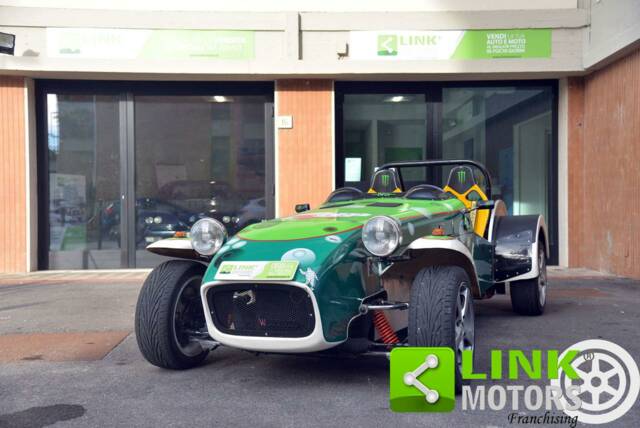
1976 | Westfield Eagle Custom
WESTFIELD Eagle 2"2 customizzata 7UP

1976 | Westfield Eagle Custom
WESTFIELD Eagle 2"2 customizzata 7UP
Create search alert
Let yourself be notified as soon as a listing is published that matches your search filters.
Create listing
Do you have a Westfield Eagle that you want to sell? Then create a listing now.
Create listingWestfield Eagle Classic Cars: Prices & Market Values
History of the Westfield Eagle
Westfield, established in the early 1980s in England, became synonymous with lightweight, Lotus-inspired sports cars. The Eagle, introduced as a nod to British open-road motoring, was designed to replicate the character and handling dynamics of legendary clubman racers. Built predominantly as a kit, the Eagle gave owners the thrill of not only driving a performance car but also assembling one tailored to their taste, a testament to the DIY spirit ingrained in Westfield's philosophy.
Model History
The Westfield Eagle continued the tradition of compact, rear-wheel-drive roadsters, drawing direct inspiration from the Lotus Seven heritage. Unlike mass-produced successors, the Eagle maintained its sharp and driver-focused ethos, offering minimal interference between driver and mechanics. Throughout its run, the Eagle saw incremental updates: options for different drivetrains, improvements in chassis rigidity, and minor body modifications, but it remained true to its roots. There is no direct named successor; instead, the Eagle set the tone for subsequent Westfield evolutions with a focus on individual driver engagement.
Highlights of the Westfield Eagle
Designed for uncompromising road feel and agility, the Westfield Eagle’s construction prioritises minimal weight and maximum performance. The open cockpit, exposed wheels, and direct steering connect the driver to the environment. The car's kit origins mean that almost every example benefits from custom touches, ranging from unique powertrains to bespoke interiors. Its pure focus on driving pleasure makes it a favourite among enthusiasts of classic British sports cars.
Technical Data
Special Editions and Collectible Models
Due to its kit car background, the Westfield Eagle does not follow standard special edition releases. However, some models are considered unique for featuring factory upgrades, specialised chassis configurations, or rare engine options. Particularly well-built examples — for instance, those with period-correct Ford engines or unique paintwork — are sometimes regarded within the community as especially desirable.
Weak Spots and Common Issues
Due to the kit-built nature, the biggest concerns center on build quality, which can vary significantly depending on the assembler’s skill and attention to detail. Corrosion on the chassis, especially at mounting points and suspension pick-ups, may be found if the car wasn’t protected properly. Electrical systems are often subject to modifications and may be less reliable than factory-finished vehicles. As always with lightweight, bespoke vehicles, regular inspection of steering, brakes, and all fluid lines is recommended. Replacement parts can typically be sourced via specialist suppliers familiar with British kit cars.
Engine and Performance, Transmission and Handling
The Westfield Eagle’s performance is directly linked to the engine fitted, but regardless of choice, nimbleness and agility define the driving experience. Power outputs can range from modest, classic Ford Kent engines to potent twincam or even modern motorcycle units, all driving the rear wheels via a close-ratio manual gearbox. Suspension setup is decidedly firm, prioritising feedback and cornering precision over comfort. Even lower-powered units feel lively thanks to the extremely low weight, while uprated Eagles offer levels of acceleration that rival much more expensive sports cars. Engines such as the Ford Kent and twin-cam derivatives are highly regarded among enthusiasts for their period authenticity and tunability. Builds that use performance motorcycle engines are noted for their extreme power-to-weight ratios and unique driving experience.
Interior, Comfort, Exterior and Design
The Westfield Eagle’s exterior displays clear influences from 1960s British roadsters: simplistic body lines, exposed wheels, and an upright windscreen. Interior accommodations are minimal, focused on essentials such as supportive bucket seats, a basic instrument cluster, and little beyond what is required to operate the vehicle. Customisation is the norm due to the kit-car background, leading to a wide variety of trim levels, materials, and colours—ranging from period-correct leather seats to modern racing harnesses. Some builders have fitted custom dashboards, roll bars, or specialty exterior paint schemes to further personalise their Eagle.
Other aspects
Many Westfield Eagle owners participate in club racing or track days, capitalising on the model’s lightweight construction and straightforward mechanics. The Eagle’s status as a DIY classic means enthusiast forums and clubs form an essential part of ownership, providing technical support as well as a venue to share modifications and upgrades.
Summary
The Westfield Eagle represents a pure interpretation of British sports car DNA, with every example reflecting its assembler’s passion. Lightweight construction, mechanical straightforwardness, and unfiltered driving dynamics define the Eagle, making it a genuine choice for motoring purists seeking analogue excitement and a connection to classic kit car engineering.