Volugrafo Bimbo 46 Classic Cars for Sale
The Volugrafo Bimbo 46 is a true rarity among Italian microcars, distinguished by its post-war history, distinctive engineering, and ultra-limited production. With only about ten known examples surviving today, this compact two-seater was designed for city use and is powered by a unique single-drive, 125cc engine borrowed from Volugrafo’s military motorcycles. Each Bimbo 46 tells a piece of Turin’s innovative spirit of the 1940s.
Resultados de la búsqueda
Actualmente no hay anuncios que coincidan con su búsqueda.
Create search alert
Let yourself be notified as soon as a listing is published that matches your search filters.
Create listing
Do you have a Volugrafo Bimbo 46 that you want to sell? Then create a listing now.
Create listingVolugrafo Bimbo 46 listing references from Classic Trader
Below you will find listings related to your search that are no longer available on Classic Trader. Use this information to gain insight into availability, value trends, and current pricing for a "Volugrafo Bimbo 46" to make a more informed purchasing decision.
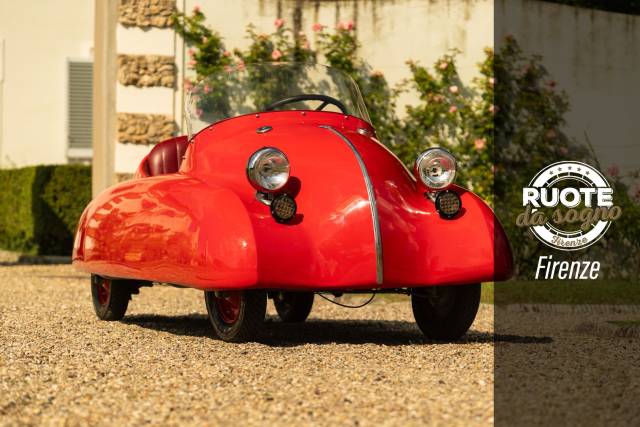
1946 | Volugrafo Bimbo 46
Create search alert
Let yourself be notified as soon as a listing is published that matches your search filters.
Create listing
Do you have a Volugrafo Bimbo 46 that you want to sell? Then create a listing now.
Create listingVolugrafo Bimbo 46 Classic Cars: Prices & Market Values
History of the Volugrafo Bimbo 46
Founded in Turin, Volugrafo initially gained recognition for its compact motorcycles specifically engineered for deployment from aircraft during World War II. In the wake of the conflict, the Bimbo 46 was conceived as one of Italy’s earliest microcars, intended for urban mobility at a time when the country’s road infrastructure and economic conditions demanded affordable, efficient vehicles. Debuting publicly in Florence’s Piazza della Signoria, the Bimbo 46 drew attention for its radical city-friendly concept and mechanical simplicity, setting a precedent for what would much later emerge in the form of smart urban transport.
Model History
Production of the Volugrafo Bimbo 46 was brief and highly limited—approximately fifty units left the factory. Two distinct versions were produced: the initial batch featured a vertical dashboard, while a subsequent run incorporated a horizontal dashboard and steering gear. The Bimbo 46 never had a direct predecessor or successor; its immediate lineage relates most closely to Volugrafo’s utilitarian motorcycles, particularly in drivetrain and engine design. By 1950, Italian regulation began to require license plates for these microcars, adding another chapter to their evolving story.
Highlights and Unique Features
The Volugrafo Bimbo 46 stands out for its historical significance as arguably Italy’s very first microcar and for technological quirks that were ahead of their time. Designed to accommodate two passengers, it offers city dwellers a compact form of mobility, powered by a robust 125cc motor. Unusually, only the left rear wheel is powered, a trait inherited from military motorcycle engineering. Both early and later versions of the Bimbo 46 are prized for their distinct dashboards. Today, surviving Bimbo 46s are almost exclusively seen in Italian museums, with only a single known example overseas in Mexico.
Technical Data
Special Editions and Collectible Models
Due to the extremely low production number, each Volugrafo Bimbo 46 could be considered a collectible. However, particular interest is given to the two main versions: the early vertical dashboard models and the later horizontal dashboard/steering gear models. These variations mark changes in driving experience and interior layout, providing collectors and enthusiasts with precise reference points for restoration and originality.
Engine, Transmission and Handling
The Bimbo 46’s 125cc engine, initially intended for military applications, provides modest power suited to short city commutes. Its innovative single-wheel drive concept limits traction but simplifies maintenance. The minimal mass and small size make it agile in tight urban confines, although high-speed stability and cornering grip are notably less than in larger, four-driven vehicles. The two-seater layout is optimised for driver and passenger proximity, with simple controls reflecting the car’s post-war function-oriented philosophy. The most significant distinctions in the Bimbo 46 lineup are those between the versions with vertical and horizontal dashboards. Both are powered by the same 125cc engine and feature the trademark single-wheel drive system.
Interior, Comfort, Exterior and Design
The Bimbo 46 exudes mid-1940s Italian industrial design. The switch from vertical to horizontal dashboards demonstrates a clear evolution in interior ergonomics. Comfort is sparse by modern standards but in keeping with the microcar tradition: only two seats, minimal trim, and a utilitarian, city-centric focus. Exterior styling prioritises functionality, with compact dimensions and basic bodywork. Colour options and materials were likely limited by immediate post-war supply constraints, further underlining the authentic utilitarian nature of each example.
Other Special Features
At its time of introduction, the Bimbo 46 did not require a license plate—in fact, registration only became mandatory from 1950 onward, reflecting its status as a truly early city car. Its debut on the Piazza della Signoria in Florence is testimony to its ambition as a forward-thinking urban vehicle.
Summary
The Volugrafo Bimbo 46 is a standout example in Italian automotive history for its early approach to city mobility and technological innovation. Its rarity—with only around ten known survivors—coupled with engineering tied to military roots and a unique urban design concept, make it a fascinating artefact. The distinct versions with their dashboard differences further deepen its collector appeal, cementing the Bimbo 46 as an unforgettable chapter in the evolution of microcars in Europe.