TVR 3000 S classic cars for sale
The TVR 3000 S stands for unfiltered roadster driving from the golden era of British sports car manufacturing. Lightweight fibreglass bodywork, a robust V6, and pure rear-wheel drive deliver a mechanical driving feel rarely experienced today. Explore available TVR 3000 S models and discover the essence of hands-on, analogue motoring.
Search results
Currently, there are no matching listings for your search.
Create search alert
Let yourself be notified as soon as a listing is published that matches your search filters.
Create listing
Do you have a TVR 3000 S that you want to sell? Then create a listing now.
Create listingTVR 3000 S listing references from Classic Trader
Below you will find listings related to your search that are no longer available on Classic Trader. Use this information to gain insight into availability, value trends, and current pricing for a "TVR 3000 S" to make a more informed purchasing decision.
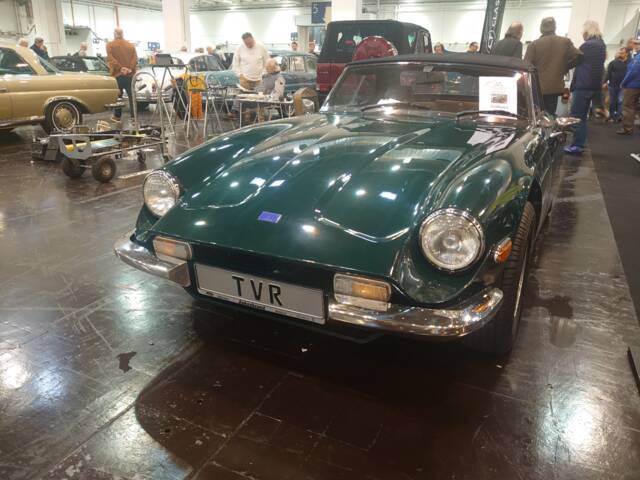
1979 | TVR 3000 S
sehr originaler Zustand
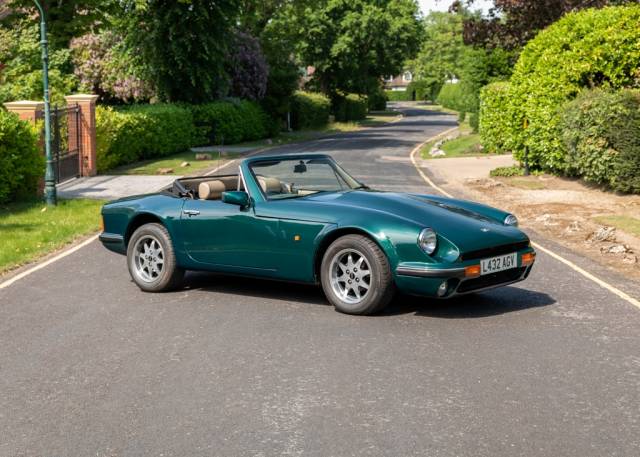
1994 | TVR 3000 S
TVR 3000S V8
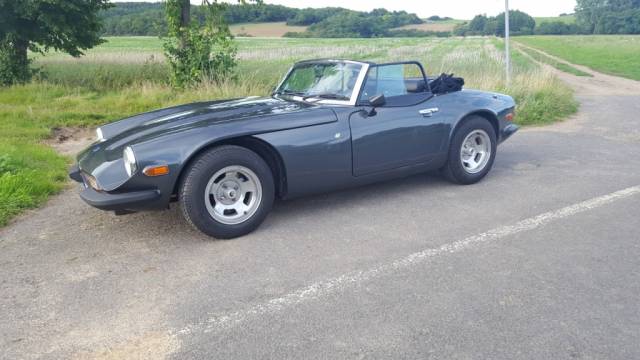
1980 | TVR 3000 S
Create search alert
Let yourself be notified as soon as a listing is published that matches your search filters.
Create listing
Do you have a TVR 3000 S that you want to sell? Then create a listing now.
Create listingTVR 3000 S Classic Cars: Prices & Market Values
History of the TVR 3000 S
The TVR 3000 S emerged during the 1970s as TVR sought to offer an alternative to the lightweight sports cars dominating Britain’s roads. Renowned for its compact dimensions and impressive agility, the 3000 S featured a glassfibre-reinforced plastic (GRP) body over a steel backbone chassis—a TVR hallmark. Building on TVR's reputation as a niche sports car maker, the 3000 S filled the gap for those who wanted uncompromised performance paired with unmistakable styling. Its introduction reinforced TVR’s commitment to constructing vehicles that prioritised driving dynamics and an undiluted connection between car and driver.
Model Range Evolution of the 3000 S
The roots of the TVR 3000 S lie firmly in TVR’s highly regarded Vixen series, which also used a similar chassis concept and fibreglass bodywork. The 3000 S was introduced as a convertible alternative with a targa-style roof, allowing open-air driving without major structural compromise. While the 3000 S is typically associated with the late 1970s, later TVR models shifted towards sharper-edged designs and, in the 1980s, introduced more angular bodywork. The V8 S model, as an evolutionary successor, featured uprated powertrains and chassis improvements.
Highlights and Unique Features of the TVR 3000 S
TVR’s lightweight construction philosophy made the 3000 S an exceptionally agile sports car. The GRP body, rear-wheel drive, and responsive chassis resulted in outstanding handling. The targa-top roof allowed for flexibility between coupe-like security and near-full open-air motoring. Engines were known for robust power delivery: the classic Essex V6 in the 3000 S balanced torque and tractability, while subsequent V8-powered models, such as the V8 S, raised the performance bar thanks to high-compression ratios, improved cylinder heads, and free-breathing manifolds. The five-speed Rover gearbox and limited-slip differential further complemented spirited driving. Styling was deliberately distinctive and unmistakably TVR, shunning mainstream norms for individuality.
When it comes to supply and demand, the TVR 3000 S stands alone as the most represented TVR on Classic Trader. It accounts for 100% of the TVR models listed and viewed, underlining a focused interest among TVR enthusiasts specifically for the 3000 S series.
Technical Data
Special Editions and Collectible Models
The most distinguishable derivatives of the 3000 S were the V8 S variants. These cars received the 3.9-litre Rover V8, uprated camshafts, improved cylinder head breathing, and a high (10.5:1) compression ratio. This transformed the car’s dynamics, offering acceleration and in-gear pulling power that eclipsed even contemporaries from Aston Martin and Ferrari. These V8-powered models, due to their performance and exclusivity, are especially sought after by marque purists and driving enthusiasts alike.
Weak Spots and Common Issues
As a low-volume sports car with a GRP body and bespoke chassis construction, buyers should pay close attention to the condition of the steel backbone chassis for rust, especially in older examples. The fibreglass bodywork is resilient but can suffer from crazing or delamination if neglected. The Essex V6 is generally robust, but regular attention to cooling and ignition is advised. Suspension bushes and steering components can wear quickly, reflecting the car’s enthusiastic driving style. Interior trim and switchgear may show wear due to small-batch, hand-built origins.
Engine, Performance, Transmission & Handling
The TVR 3000 S delivers a genuinely interactive driving experience. Its naturally aspirated V6, paired with a close-ratio manual transmission, ensures immediate throttle response and linear power delivery. Handling is shaped by the car's minimal mass, tubular chassis, and rear-wheel drive layout, making direction changes sharp and predictable. The V8 models set benchmarks for in-gear acceleration, bettering some of the era’s celebrated GTs. Firm suspension gives confidence at speed, while the limited-slip differential ensures controlled power delivery when cornering hard. Popular variants include:
- TVR 3000 S (Ford Essex V6): Blend of balance and classic TVR character.
- TVR V8 S (Rover 3.9-litre V8): Noted for high power, torque, and exceptional real-world performance.
Interior, Exterior, and Design Details
The TVR 3000 S is marked out by its bold styling: tightly drawn proportions, strong wheelarches, and an unmistakably aggressive stance. The targa roof was a rare feature amongst UK sports cars, providing genuine versatility. Interiors combined functional sports seats and classic analogue instrumentation, often trimmed in hard-wearing yet elegant materials. The focus was firmly on the needs of the driver. Original wheels and trim remain much prized, with many cars retaining their period look. Colour palettes ranged from restrained metallics to highly individual shades—a reflection of bespoke small-scale production. Practical options were limited, befitting a car focused primarily on performance and purity.
Other Noteworthy Features
TVR’s approach ensured that no two 3000 S examples are exactly alike—small customisation details in paint, trim, and interior help make each vehicle unique. The combination of a targa roof and lightweight chassis technology set the 3000 S apart from mainstream rivals. Club and specialist support remains strong, with parts and expertise relatively accessible through dedicated TVR circles.
Summary
TVR’s 3000 S stands as a paragon of specialist British sports car thinking: lightweight construction, innovative design, and characterful engines. Aimed at enthusiasts who value direct control and a distinctive driving experience, it remains a singular offering—one that continues to attract a dedicated following, both for its rarity and its driving purity.